Have you ever seen a beach without an ocean? White Sands National Park is one of America’s most beautiful and unique national parks. It comprises the world’s largest gypsum dune field, 275 square miles, with no ocean in sight. That massive dune field offers some of the most unique recreational opportunities in any national park. I want to share the top things to do in White Sands National Park so you can make the most of your adventure.
Disclosure: This post may contain affiliate links. If you make a purchase through one of these links, I may earn a small commission at no additional cost to you. Thanks for keeping Miles with McConkey going!
Sledding on the Dunes

Without question, one of the top White Sands National Park activities is sand sledding. When I first heard about this, I did not think it was possible to sled in sand. It is indeed real, and it is a blast.
Adding a layer of wax to the bottom of a plastic saucer allows you to slide down the gypsum dunes easily. Although climbing the dunes is tiring, sand sledding makes you feel like a kid again and is worth the effort.
You can rent sleds for $15 or buy them for $25 at the park’s onsite concessionaire, White Sands Trading Company, or bring your own. Wax costs $2.99 at the park. Yes, you need wax to glide down the dunes.
White Sands Sledding Tips
Go to the back of the park (last two miles of Dunes Drive) for the best sledding dunes. It has less vegetation, yielding cleaner runs. You should also find fewer people toward the back of the park. Many guests excitedly run to the first dunes they find.
Once you blaze a sledding path, repeatedly use that smoothed-out area. For best results, reapply wax often.
Hiking in White Sands
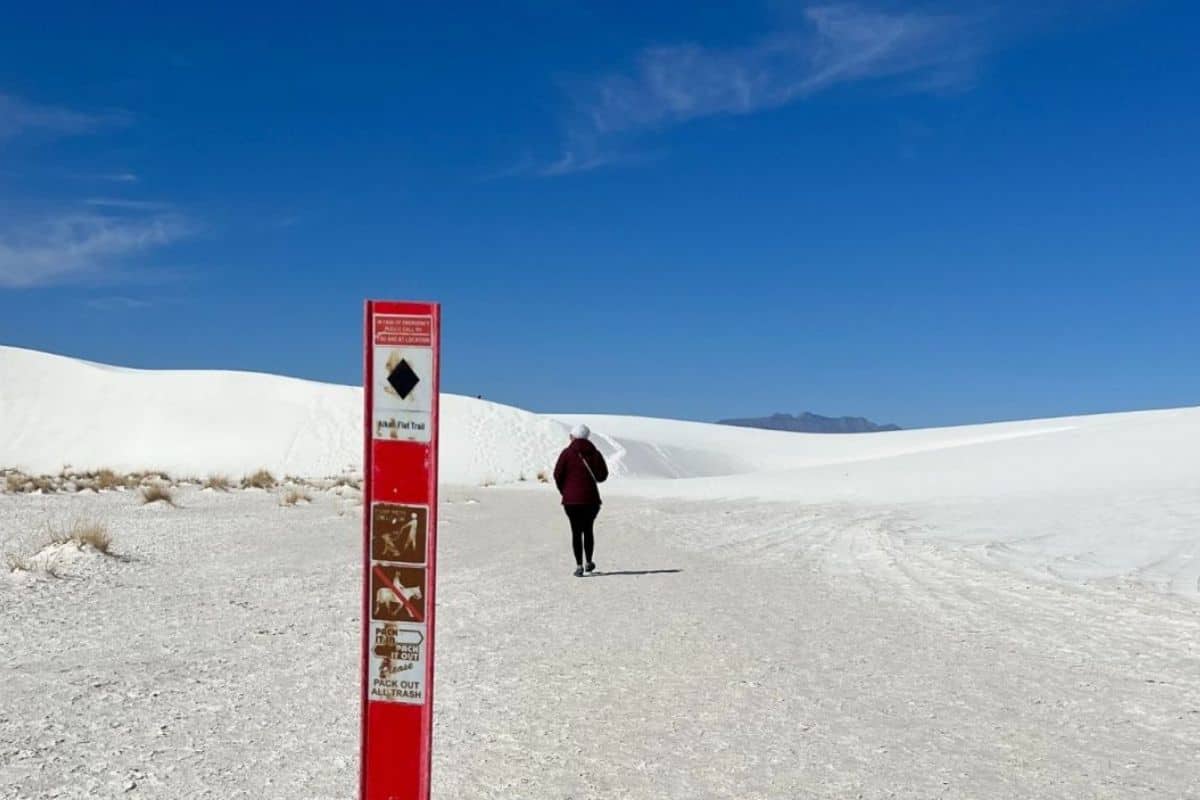
While White Sands sledding is the most unique activity, the park offers fantastic hiking, covering everything from a boardwalk stroll to a strenuous workout. Regardless of which type of hike you seek, the views are breathtaking.
The park comprises five hiking trails:
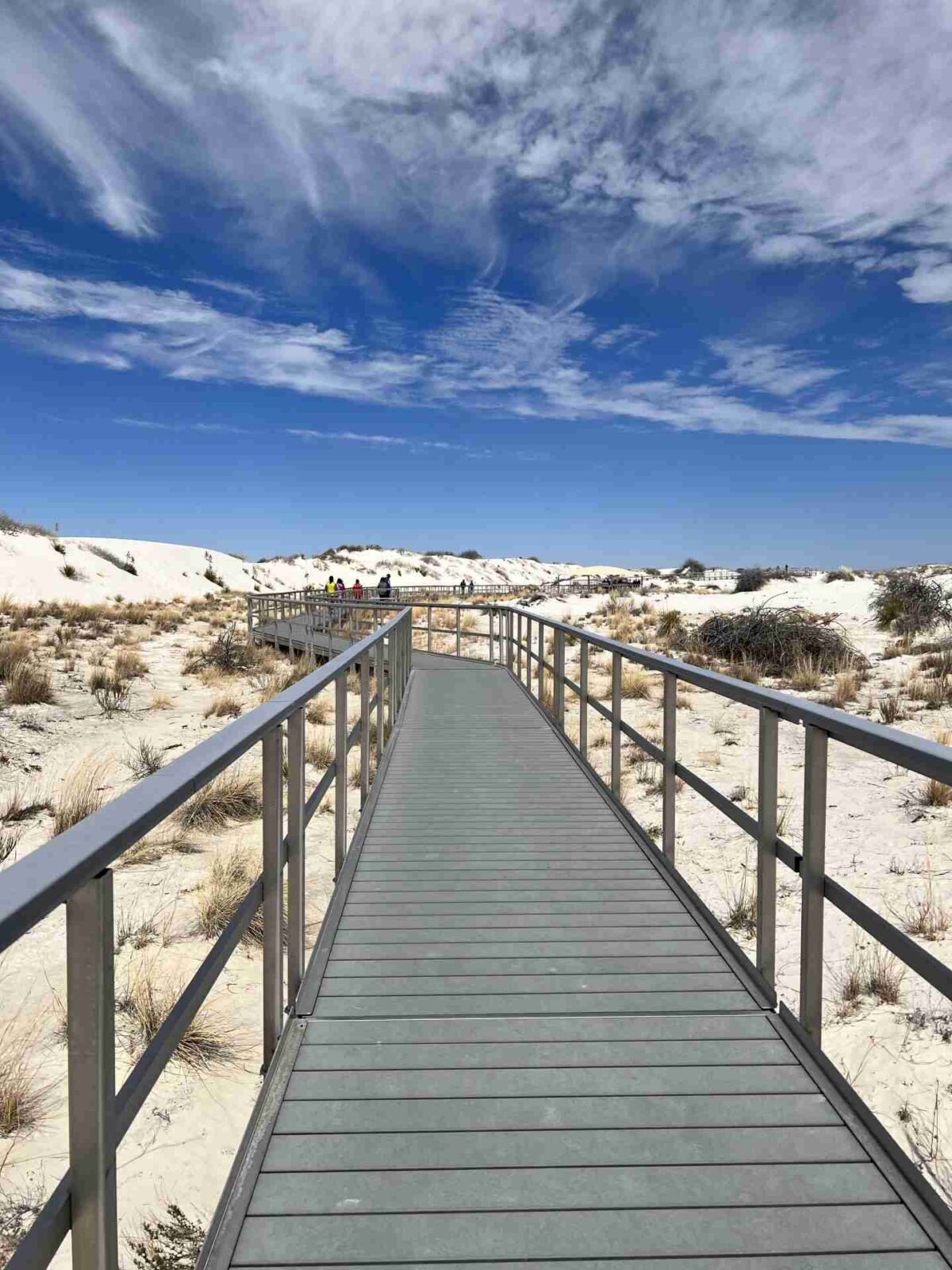
- Interdunes Boardwalk is an easy 0.4-mile stroll. Along the way, you will find a shaded canopy with a few chairs.
- Playa Trail is an easy 0.5-mile hike with brown sand sections and the namesake dunes.
- Dune Life Nature Trail is a moderate 1-mile hike that takes you over two steep dunes.
- Backcountry Camping Trail is a moderate 2-mile hike with several steep dunes.
- Alkali Flat Trail is a strenuous 5-mile hike. It is anything but flat. Trudging up and down dunes the entire way will leave you huffing and puffing.
Tips for Hiking in White Sands
It is essential to note that you can easily get lost in the park. Winds regularly blow away your footprints. Thankfully, the trails have colorful markers with symbols to help you find your way. Rangers recommend only proceeding when you see the next trail marker ahead.
Sun and wind can cause dehydration before you realize it. Drink plenty of water and bring healthy snacks for energy.
Playing in the Sand

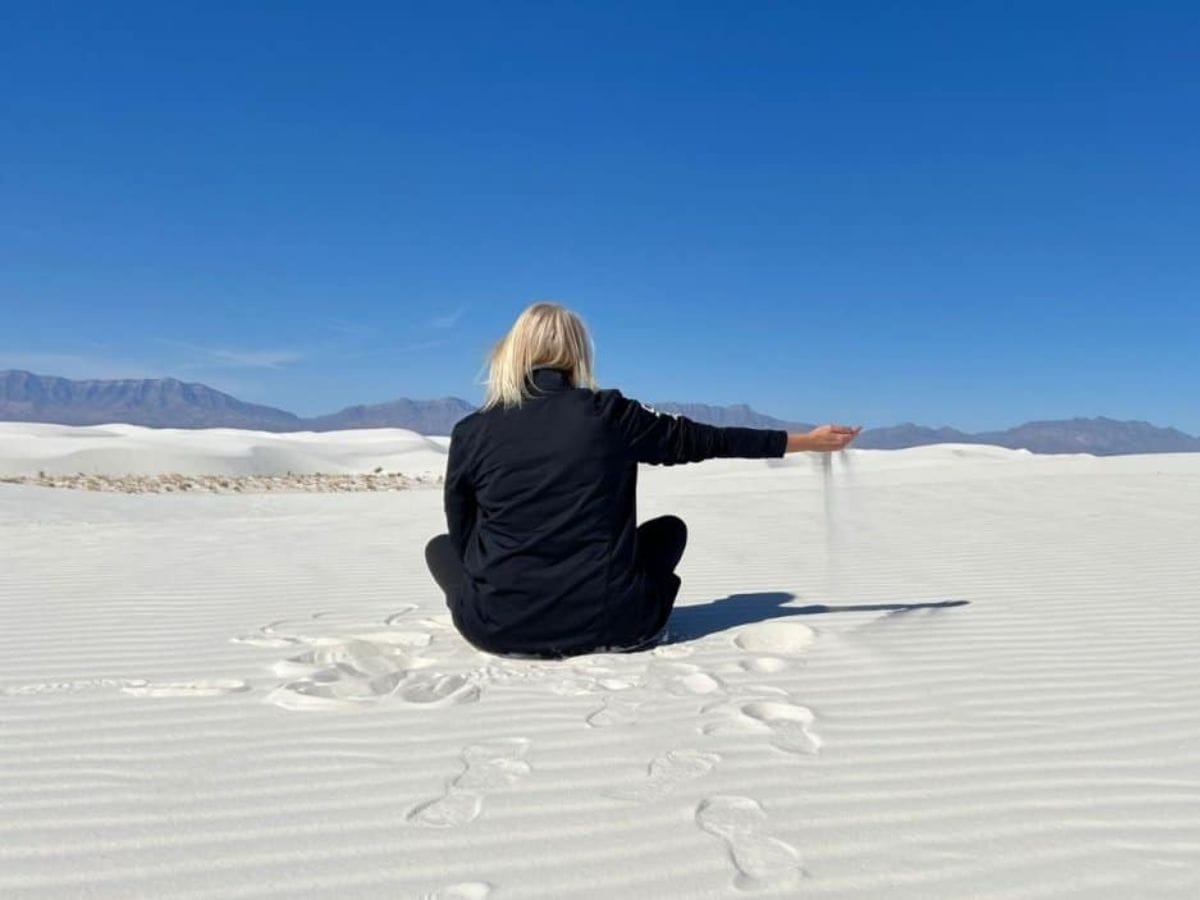
The park is a massive pocket of sand in the Chihuahuan Desert between the San Andres and Sacramento mountain ranges. It is the biggest sandbox I have seen. If you have kids, bring a pail and shovel. You can also play in the giant sandbox yourself.
While most sands consist of quartz, these sands are gypsum. Since gypsum does not absorb heat, the sand feels cool on your fingers and toes.
Photography
Glistening white dunes under an infinite blue sky are the perfect setting for pictures. Bring your camera to capture the moment.
People often ask about the best White Sands photography spots. From our experience, there are no bad spots. Stunning vistas abound in all directions.
If you prefer to include vegetation in your shot, the first half of the park has more trees and plants. Interdunes Boardwalk allows you to capture a boardwalk setting.
Julie and I loved taking pictures with mountains in the background. The mountains can be seen on the horizon almost anywhere in the park.
Wildlife Watching
Spotting wildlife is one of the most challenging things to do in White Sands National Park. Although many mammals, reptiles, and birds inhabit the park, most are nocturnal. You may spot animals such as desert cottontails, desert box turtles, various lizards, cactus wrens, horned larks, and greater roadrunners.
Tips for Spotting Wildlife
Since most animals in the park are nocturnal, your best chances of seeing wildlife are near dawn and dusk. Most guests observe wildlife near the visitor center and on hiking trails in the front half of the park. More vegetation in these areas means more food and shelter for the animals.
The sand often captures perfect imprints of animal tracks, and searching for and identifying them can be a fun challenge.
Watching Sunset Over the Dunes
Julie and I love catching sunrises or sunsets anywhere. Sunsets in White Sands are special because of the glistening dunes, shifting lights, and shadows.
It is essential to note that the park is open from 7 am to sunset. Catching the sunrise is challenging most of the year, but the park hours allow you to enjoy the sunset year-round.
Sunset Stroll
Consider joining a leisurely ranger-guided sunset stroll. These are typically offered Friday through Sunday as staffing allows. In addition to viewing the gorgeous sunset, you can learn more about the park’s geology, flora, and fauna.
Because the schedule varies seasonally, we suggest going to the park visitor center early in the day to verify the time and location. You do not need a reservation for this activity.
Picnicking
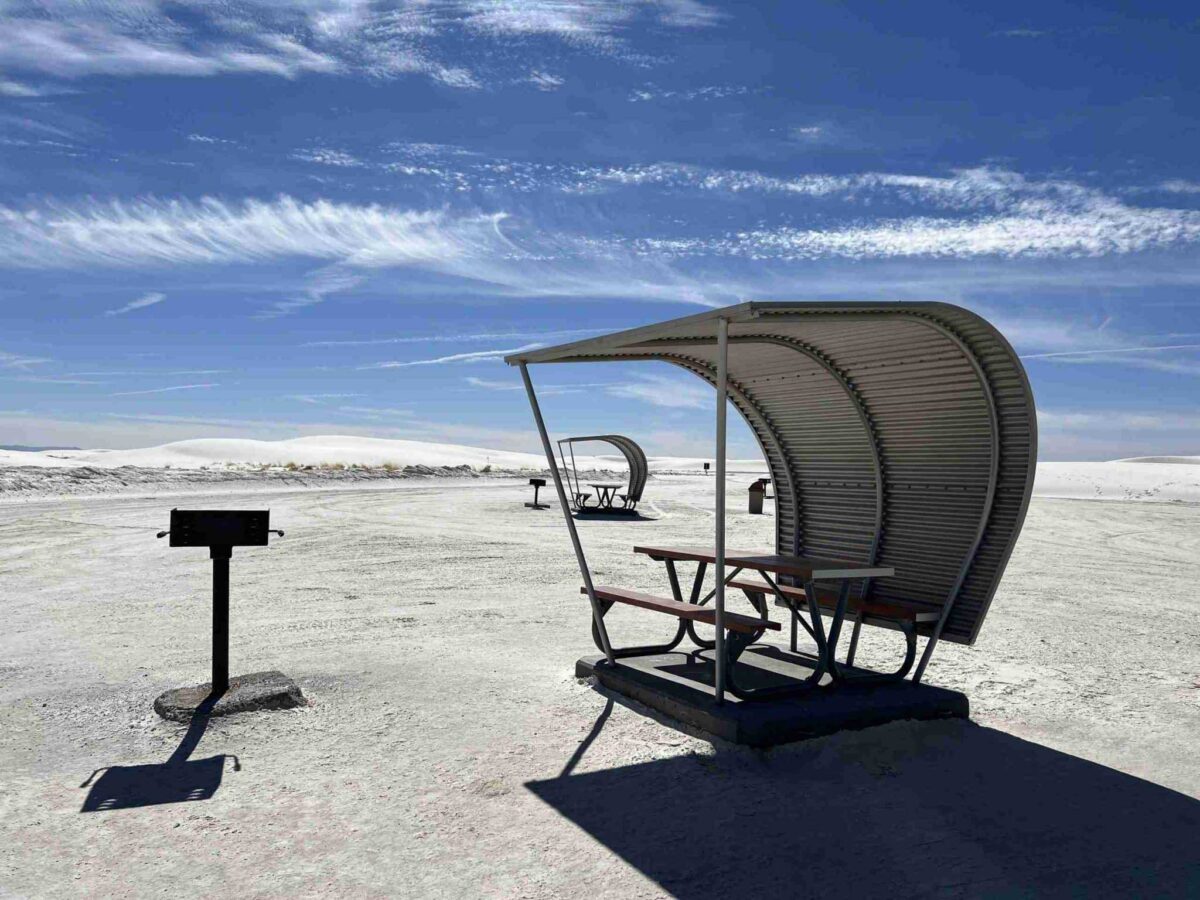
Enjoying a picnic is likely not one of the first White Sands National Park activities that comes to mind. However, there is nothing like a beach picnic. The park has three designated picnic areas with shaded tables, grills, and restroom facilities. Plus, the views are stunning.
Bicycling
White Sands National Park is the world’s only place to bicycle on a hard-packed gypsum sand road through the heart of a vast dune field. After sand sledding, it is likely the park’s most unique activity.
Tips for Bicycling in White Sands
Off-road biking is prohibited, and you will share the narrow, sand-covered road with vehicles. We suggest wearing a helmet.
The park does not rent bikes, so you must bring your own. Beach and mountain bikes with wide tires should perform well on the sandy roads.
Dunes Drive is 8 miles each way, making your journey a 16-mile ride. The road is paved for the first five miles, but consists of hard-packed sand for the final three miles. In addition to the change in surface conditions, wind can make the road slippery and impact your vision.
Stargazing
Due to its location, White Sands National Park has little light pollution. Since the park closes at sunset, camping is the only way to enjoy the dark skies from inside the park.
Traditionally, the park has offered backcountry, or primitive camping. Unfortunately, backcountry camping is closed so park staff can rehabilitate the camp sites. I hope backcountry camping is available in the near future. Stargazing in White Sands sounds fantastic, and we would love to experience it.
In the meantime, the park offers two other special night programs.
Full Moon Nights
The park extends its closing time by two hours on full moon nights from May through October. While the bright moon may limit your view of the stars, seeing the moon illuminate the dunes is equally special.
On these nights, the park may offer ranger talks, live music, or guest presenters. Tickets or reservations are not required.
Moonlight Hikes
From March through November, the park offers moonlight hikes either the day before or after a full moon. It sounds like a lot of fun, and Julie and I want to return to hike the dunes under the moon’s glow.
The program lasts 1.5 to 2 hours, and you must purchase a ticket. Spots are limited. Visit the park website for details.
Frequently Asked Questions
Here are some of the FAQs for White Sands National Park.
What to do in White Sands?
The park offers various activities, including hiking, sand sledding, biking, picnicking, and enjoying the views from Dunes Drive. Our complete guide to White Sands National Park provides more details.
How much time do you need at White Sands National Park?
You can experience the park’s highlights in one day. If you plan to hike Alkali Flats, consider a second day so you have time and energy to enjoy all the other highlights.
What is the closest city to White Sands National Park?
Alamogordo, New Mexico, is the nearest city and an excellent place to stay when visiting the park. The city has many accommodations and restaurants. Julie and I found the lodging rates reasonable compared to most other national park gateway towns.
Can you drive through White Sands National Park?
Yes, Dunes Drive is 8 miles each way, and it takes you from the front to the back of the park. However, we recommend getting out of the car to hike, play in the sand, take pictures, enjoy a picnic lunch, or go sand sledding. These experiences allow you to appreciate the park’s beauty more fully.
When is the best time to visit White Sands National Park?
The optimal time to go depends on your goals. Summer typically brings more ranger-guided activities. Winter has the lowest crowd levels. It is windy in spring and hot and rainy in summer. Fall offers the most comfortable temperatures.
Visit our guide to the best time to visit White Sands National Park, where we provide more details to help you plan your trip.
White Sands Tips

We suggest monitoring the park’s website for updates. Conditions regularly change, and rangers may have to close park sections or cancel planned activities.
Arrive early to get a head start on the crowds.
Head to the back of the park for more separation from the crowds and to find dunes with less vegetation for sand sledding.
If you plan to hike Alkali Flats, start early before the sun heats up the desert.
Drink lots of water to stay hydrated. The sun and wind can zap your energy before you realize it.
It often gets windy at White Sands. Pack a windbreaker. I love my Columbia windbreaker. It is light, easy to pack, and reliable.
Weather conditions often change rapidly in White Sands. Pack light layers to adapt as needed. Julie and I carry our necessities in a Venture Pal backpack. It is lightweight and has various pockets. We take it on all of our adventures.
Wear sunglasses to protect your eyes from the bright sun and blowing sand.
Keep your camera or phone covered when not in use. Sand can wreak havoc on your equipment.
If you plan to take a moonlight hike, check the schedule on the official park website and reserve your spot(s).
Take pictures to document your adventures, and enjoy your time in the beautiful park.
Featured image credit: Miles with McConkey