America may soon have a 64th national park, and this time the spotlight is on Chiricahua in southeastern Arizona.
Disclosure: This post may contain affiliate links. If you make a purchase through one of these links, we may earn a small commission at no additional cost to you. Thanks for supporting Miles with McConkey.
Congress has passed legislation that would redesignate Chiricahua National Monument as Chiricahua National Park. The bill now awaits the president’s signature. If signed, Chiricahua would become the 64th national park in the United States and Arizona’s fourth, joining Grand Canyon, Petrified Forest, and Saguaro.
For now, it remains Chiricahua National Monument. But if the president signs the bill, that could change very soon.
And honestly, this one caught us a little by surprise.
Why Is Chiricahua Special?
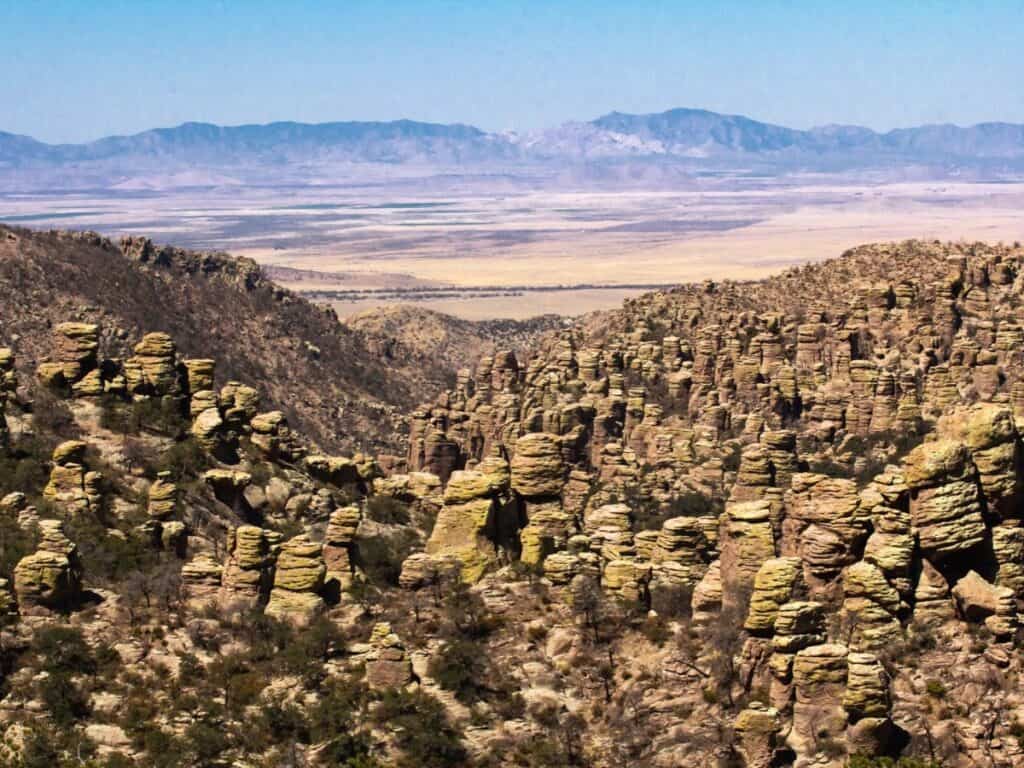
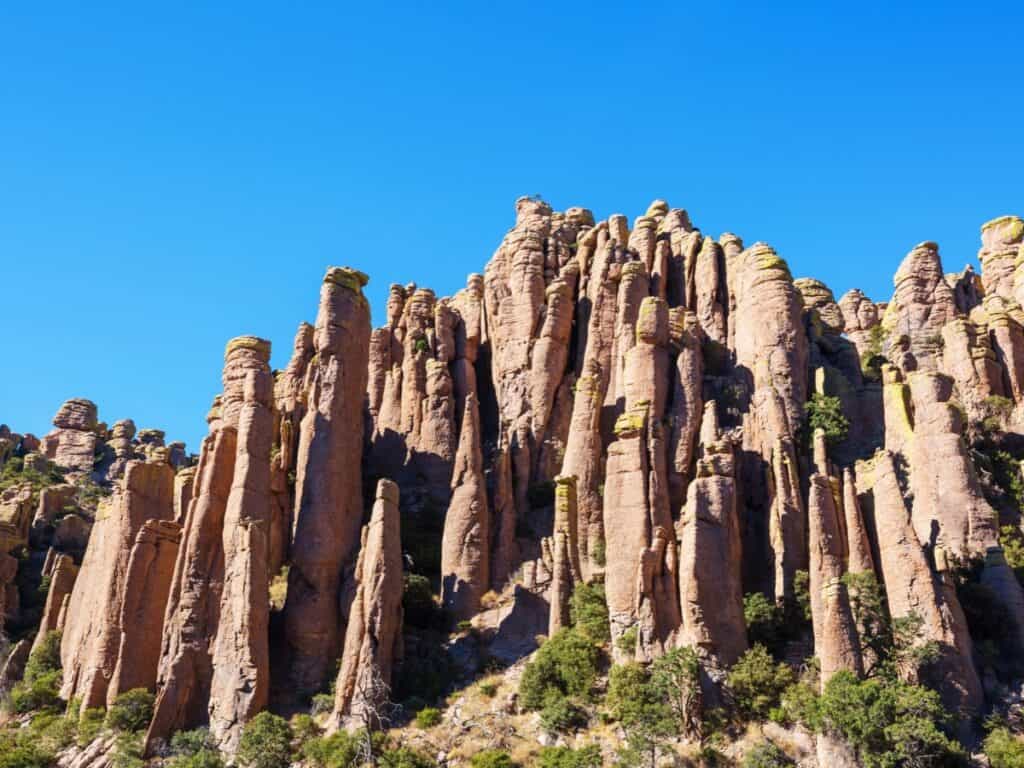
Chiricahua is often called the “Wonderland of Rocks,” and it is easy to see why.
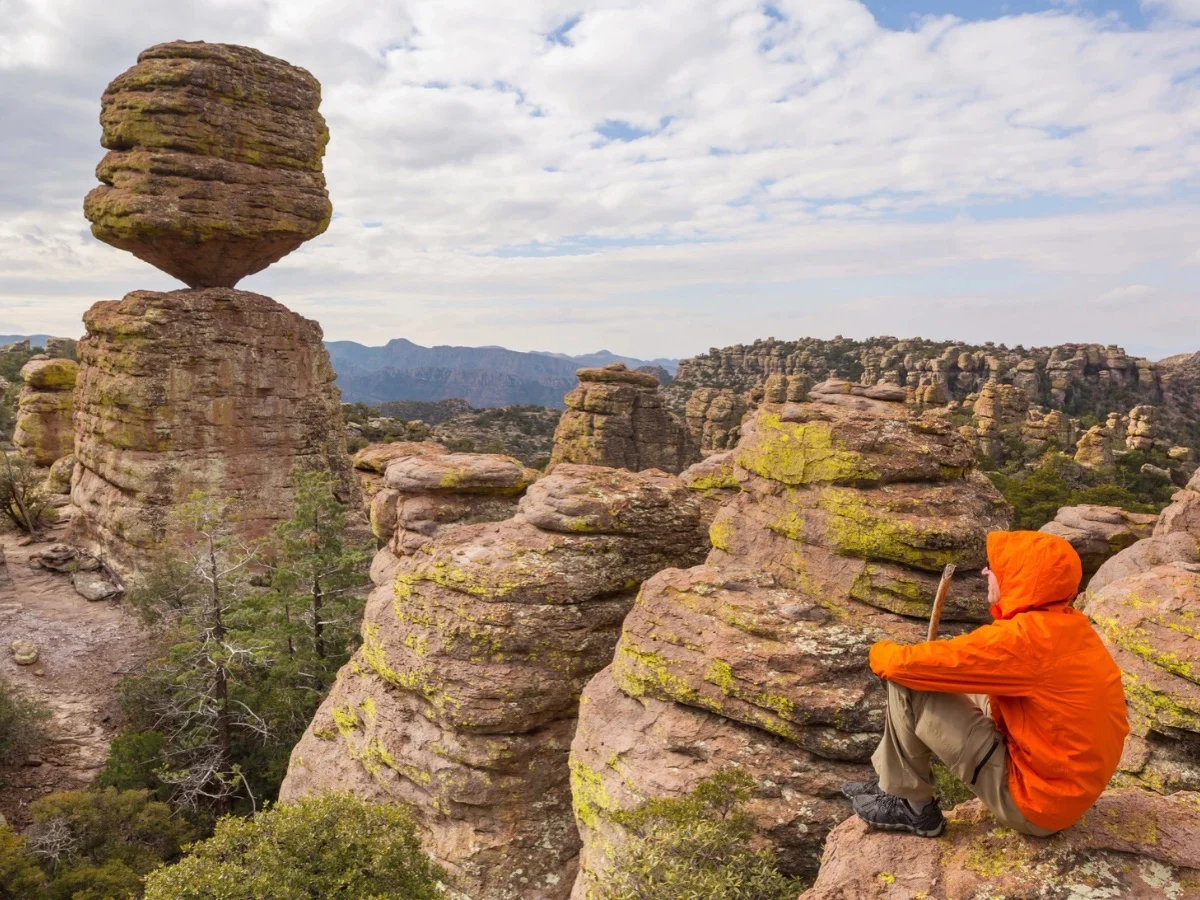
The landscape is filled with towering rhyolite pinnacles, massive balanced rocks, and unusual formations created by volcanic forces. Some of the formations look almost impossible, with enormous rocks seemingly perched on tiny points.
It is unlike the landscapes you find at most national parks.
Chiricahua is also part of a sky-island environment, where a mountain range rises between the surrounding Sonoran and Chihuahuan deserts. That combination creates a surprisingly diverse landscape, with forests, grasslands, rugged rock formations, and wildlife all packed into a relatively small area.
The result is a place that feels very different from the desert landscapes you might expect from southern Arizona.
And then there are the views.
From higher elevations, you can look across the Wonderland of Rocks toward the surrounding valleys and mountains. The scenery changes as you move through the monument, making the drive and hikes feel like a series of discoveries rather than one big overlook.
Top Things to Do in Chiricahua
You don’t have to be an avid hiker to enjoy Chiricahua. Some of the best experiences are accessible by car.
Drive Bonita Canyon Road
The 8-mile Bonita Canyon Drive winds through the heart of Chiricahua, climbing toward Massai Point. Along the way, you’ll pass towering rock formations, forests, and several pullouts where you can stop and take in the scenery.
Massai Point is the highlight.
At the end of the road, you’ll find sweeping views of the Wonderland of Rocks and surrounding mountains. There’s also a short nature trail and interpretive exhibits.
It’s the kind of scenic drive where you’ll probably find yourself stopping more often than you expected.
Visit Massai Point
Massai Point deserves some extra attention because it provides one of the best introductions to Chiricahua’s landscape.
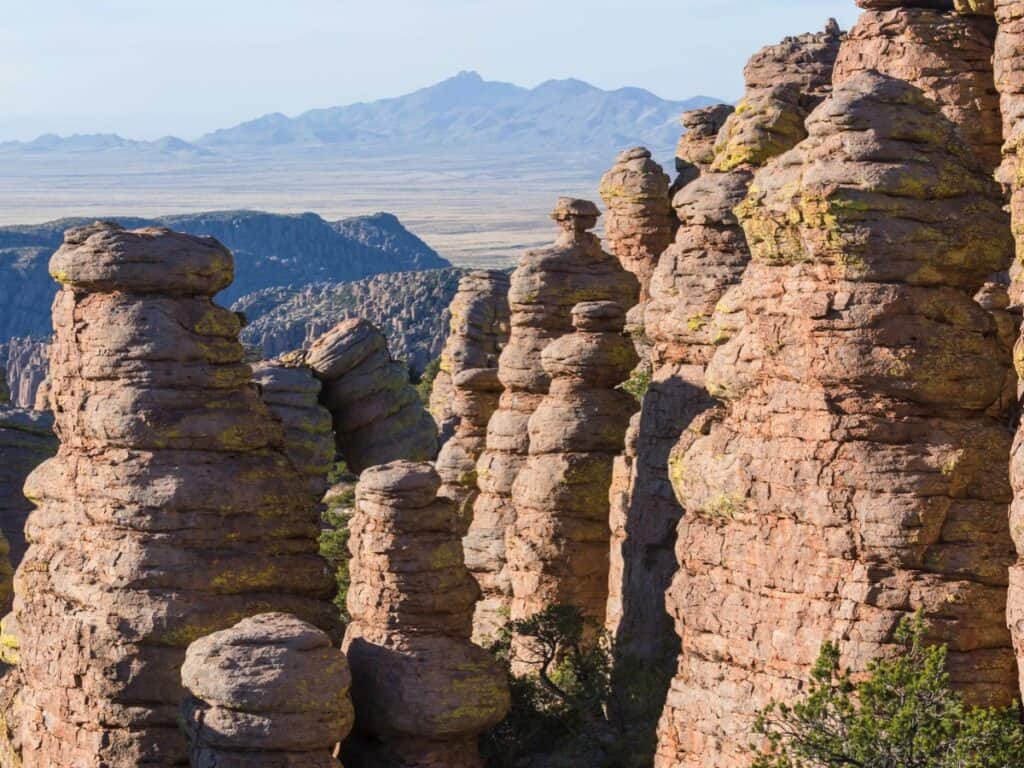
From the overlook, thousands of rock formations stretch across the mountainsides. The scale is impressive, and it’s one of those places where photos don’t quite capture what you see in person.
Hike Into the Rocks
Chiricahua has about 17 miles of hiking trails ranging from easy walks to strenuous backcountry routes.
One of the most popular options is the Echo Canyon Loop, which takes you directly into the rock formations. The trail passes through towering pinnacles and balanced rocks and includes the unusual Grottoes, tunnel-like formations tucked among the rocks.
For a longer adventure, trails lead deeper into the Wonderland of Rocks, where you’ll get a much closer look at the formations that make Chiricahua so unusual.
Look for Wildlife and Birds
The mountains rising between two deserts create an unusual habitat for wildlife and birds. Chiricahua is known for its birding opportunities, and the Bonita Creek area is one of the places the National Park Service highlights for birdwatching.
If you enjoy wildlife, bring your binoculars. That’s something I almost always recommend for national park trips anyway.
Chiricahua also has dark skies, making stargazing another reason to stick around after the sun goes down.
Chiricahua Wasn’t the National Park We Expected to See Next
I’ll admit it. We were a little surprised to see Chiricahua emerge as the likely 64th national park.
It’s not that we hadn’t heard of the possibility. Chiricahua has appeared on lists of potential future national parks before. But it wasn’t one of the places we typically saw discussed as the most obvious candidate to receive the designation next.
That made the announcement particularly interesting to us.
We’ve also seen Craters of the Moon National Monument & Preserve mentioned as a potential future national park.
We’ve actually visited Craters of the Moon, and I can understand why it comes up in those conversations. The landscape is completely unique, with ancient lava flows, cinder cones, and lava tubes that make you feel like you’ve landed on another planet.
What really surprised us, though, was the infrastructure.
Modern roads, well-designed parking areas, good signage, and an excellent visitor center make Craters of the Moon remarkably easy to explore. It has many of the visitor amenities you’d expect at a full-fledged national park.
If you’re curious about our experience there, check out our Craters of the Moon National Monument & Preserve guide.
That doesn’t mean every national monument needs to become a national park. But after visiting Craters of the Moon, I can understand why people continue to discuss its potential.
What Other National Parks Can You Pair With Chiricahua?
If you’re planning a southeastern Arizona road trip, Saguaro National Park is the obvious national park to pair with Chiricahua.
Saguaro is located near Tucson, roughly 120 miles northwest of Chiricahua, making the two parks a natural combination for an Arizona adventure.
We’ve visited Saguaro’s West District, and it completely surprised us. We expected to see some giant cacti, but the sheer number and size of the saguaros spread across the landscape made a much bigger impression than we anticipated.
It really is an incredible sight.
We still want to return to explore Saguaro’s East District, which we haven’t experienced firsthand yet. Having visited the West District, though, we’re definitely interested in seeing how the two sides compare.
If you’re planning your own trip, our Saguaro National Park guide has our firsthand experience and planning information.
There are also several other National Park Service sites in southeastern Arizona that could fit into a longer road trip, including Fort Bowie National Historic Site and Coronado National Memorial.
So if Chiricahua becomes a national park, it could easily become part of a larger southern Arizona national parks itinerary.
Could National Park Status Mean More Visitors?
One question we have is whether becoming a national park would bring significantly more visitors to Chiricahua.
New River Gorge offers an interesting example.
Before becoming a national park and preserve in 2020, New River Gorge was already attracting roughly 1 million visitors annually. Visitation jumped to more than 1.68 million in 2021 and continued climbing, reaching nearly 2 million visits in 2025.
There are plenty of factors behind those numbers, so national park designation isn’t the only explanation. Still, New River Gorge demonstrates how much attention a new national park designation can bring.
Chiricahua has historically been a quieter destination. That could change if it becomes the 64th national park.
What Happens Next?
For now, we’re in the waiting game.
Congress has passed the legislation, but Chiricahua is not officially a national park until the president signs the bill.
If that happens, Chiricahua National Monument will become Chiricahua National Park, making it America’s 64th national park and Arizona’s fourth.
We’ll watch for the announcement and update this post once it happens.
In the meantime, we’re curious what you think.
Do you think Chiricahua is a good choice for America’s next national park? Have you visited it, or is it still on your list?
Join the conversation in National Parks & Beyond, our community for travelers who love national parks, state parks, and the great outdoors. We’d love to hear your thoughts and experiences.
Featured image credit: kamchatka via Deposit Photos