
North Dakota quietly harbors a beautiful national park that I rarely hear fellow travelers mention. While part of me is happy to keep the secret to myself, another part feels obligated to tell the world about this natural wonder. The Theodore Roosevelt National Park North Unit should be on your travel bucket list if you love scenic drives and wildlife.
Julie and I are genuinely grateful to the North Dakota Department of Commerce for inviting us to explore the state and its national park. We thoroughly enjoyed our time here and want to share our experiences so you can plan your adventure.
Disclosure: This post may contain affiliate links. If you make a purchase through one of these links, I may earn a small commission at no additional cost to you. Thanks for keeping Miles with McConkey going!
Why Is the Park Named for a President?

Although Theodore Roosevelt was not born in North Dakota, he spent considerable time there, finding peace in the beautiful Badlands. While he established five national parks during his presidency, his namesake park is not one of them. President Truman established the park in 1947 to honor Theodore Roosevelt, providing a place for all of us to enjoy the Badlands he loved so dearly.
Three Park Units
It is essential to note that Theodore Roosevelt National Park comprises three districts: Elkhorn Ranch Unit, North Unit, and South Unit. Elkhorn Ranch requires an hour’s drive on unpaved roads to access. It is the historical site of Roosevelt’s home ranch after the deaths of his wife and mother. Due to its remote location and the lack of scenic driving and hiking opportunities, it is the least visited district.
The North and South Units offer scenic drives, hiking, and wildlife watching. Near Medora, the South Unit is easily the park’s most visited section. The North Unit sits on the doorstep of Watford City, 68 miles north of the South Unit. Many visitors skip the North Unit, assuming they have seen everything in the most popular district. That is a big mistake.
Time Zones
Planning your visit to the Theodore Roosevelt National Park is crucial, especially considering the time zones. The South Unit is in the Mountain Time Zone, while the North Unit is in the Central Time Zone. If you’re planning to explore both districts in a day, we suggest starting in the North Unit to gain an hour when you arrive in the South Unit. This way, you can make the most of your time and experience everything the park offers.
How Much Time Do You Need?
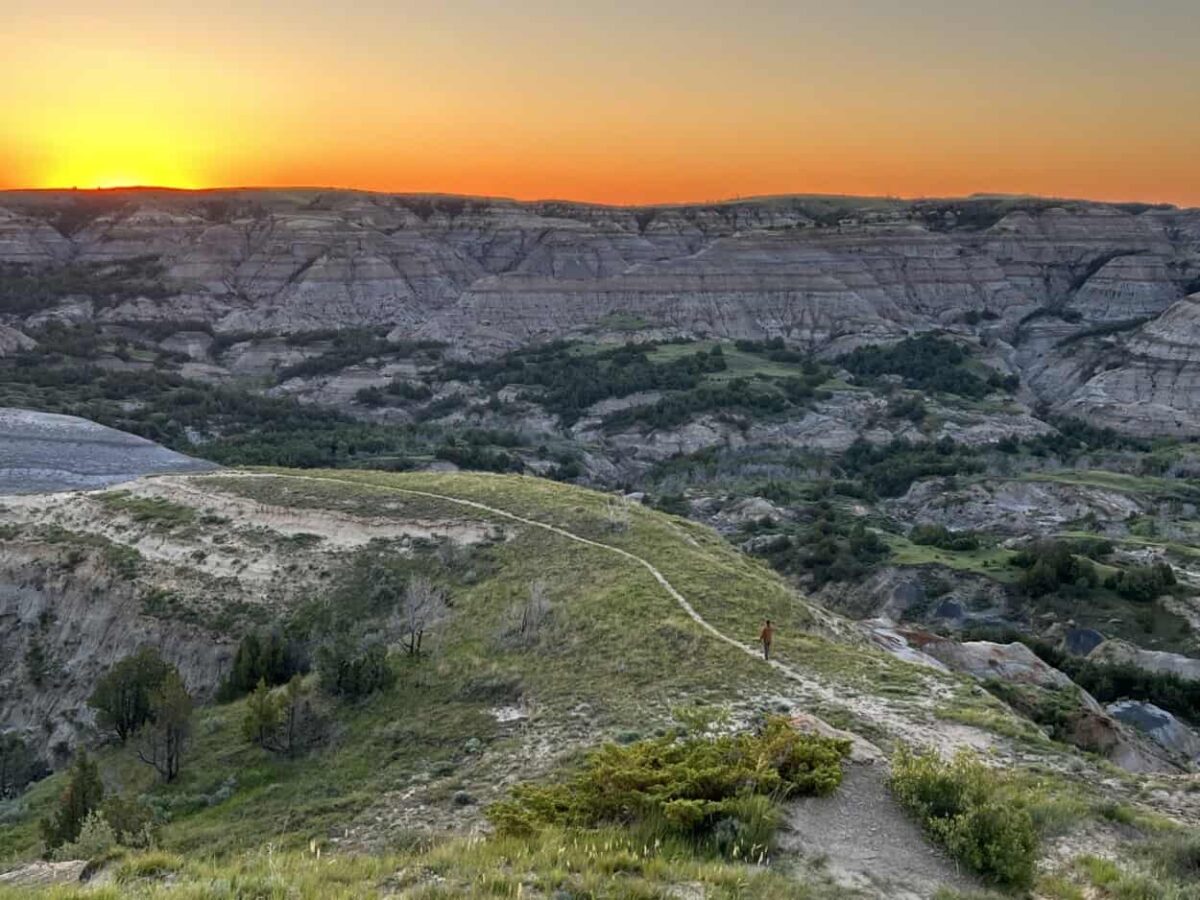
A half-day to a full day in the North Unit should be sufficient if your primary objective is to complete the scenic drive and spot wildlife. You can also squeeze in a short hike in that time frame. Julie and I visited the North and South Units on the same day, taking a couple of short hikes and spotting tons of wildlife. To say it was an exciting day is an understatement.
For those who prefer to take longer hikes to explore more of the park’s interior, plan to spend a whole day, possibly two days, in each park section.
Getting There
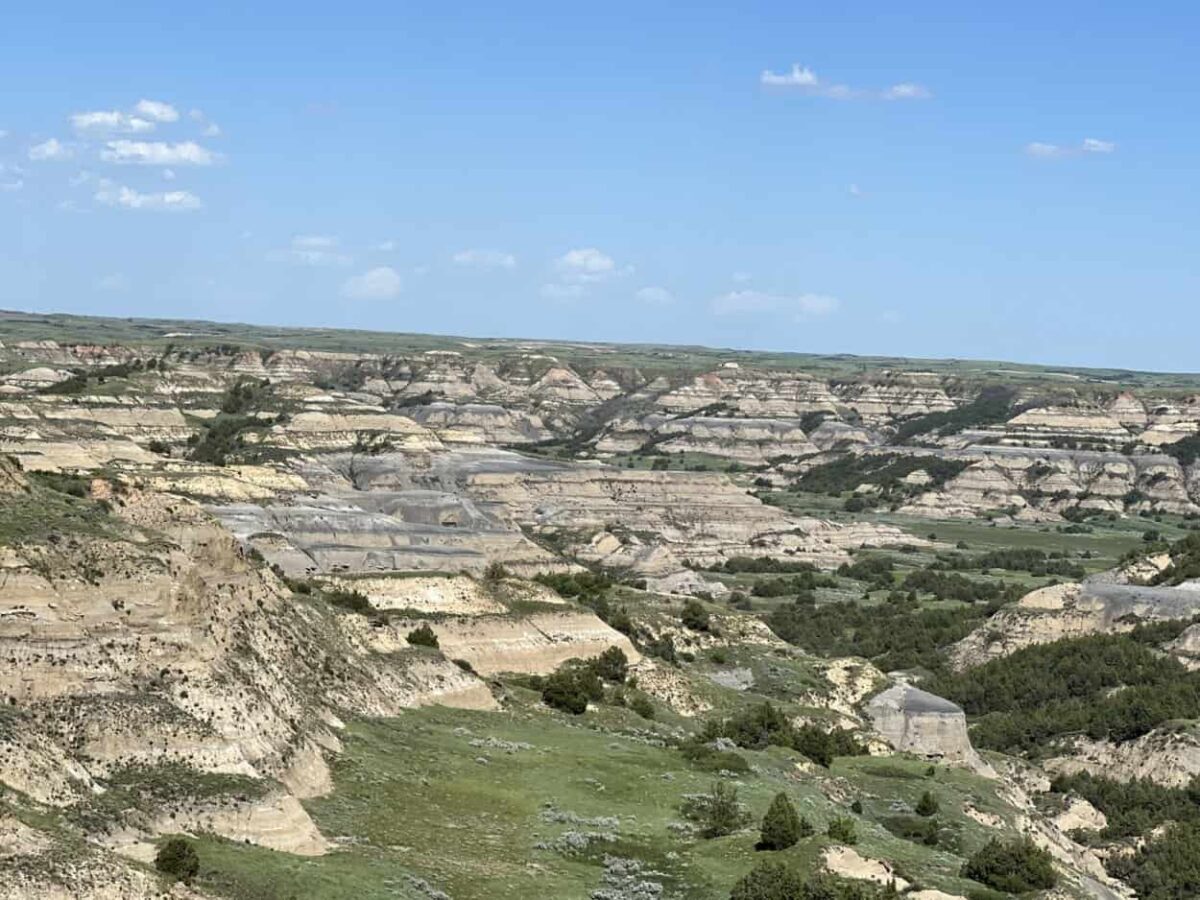
The North Unit entrance is accessible on U.S. Highway 85, about 14 miles south of Watford City. Input this address for GPS directions: 208 Scenic Drive, Watford City, ND 58854.
Weather
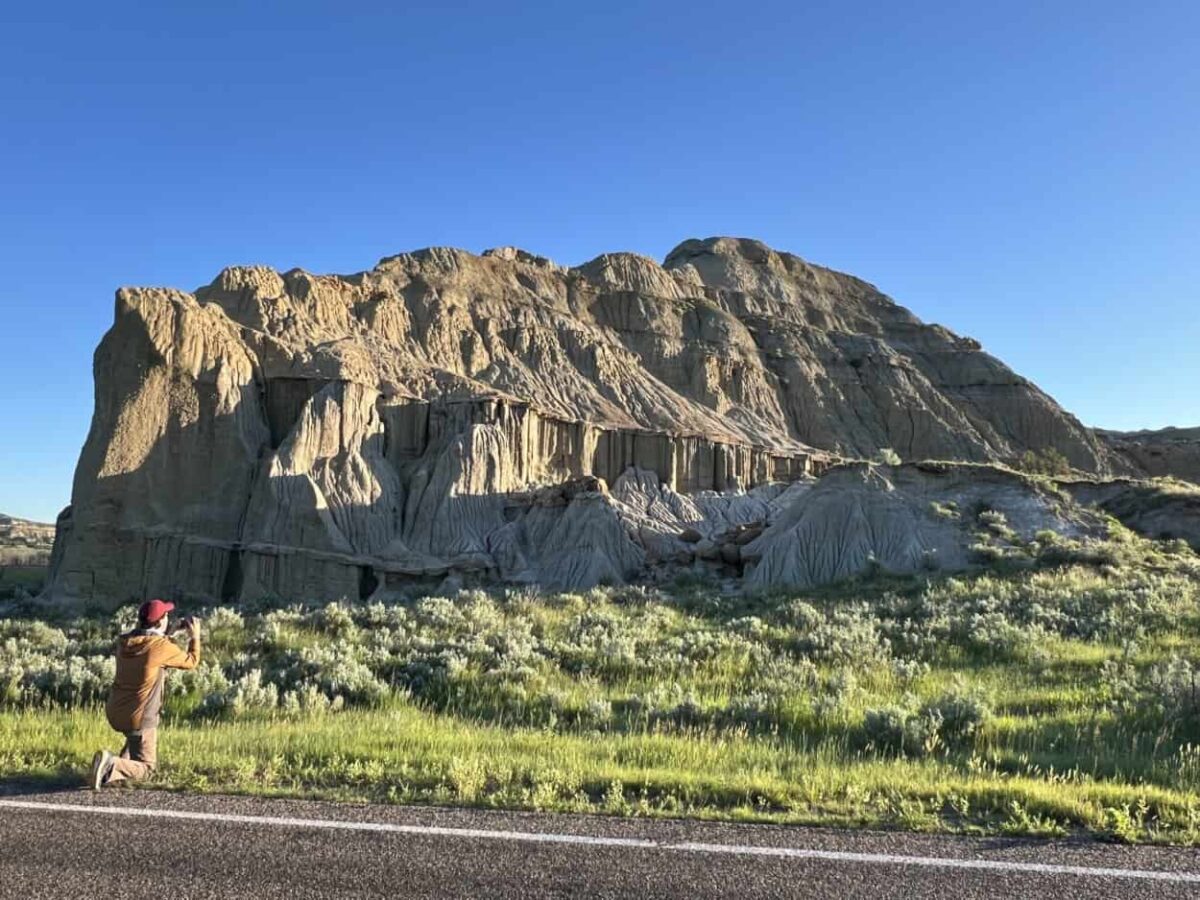
The first thing to know about the park, regardless of when you visit, is to expect strong winds. During our visit, the average wind speed was 17 miles per hour, which was noticeable the entire time. While it is fascinating to observe the grasslands transform into ocean waves, those gusts feel dangerous when walking along the edge of a cliff. A park ranger jokingly advised, “This is a good day. It is normal to see winds at 20 or 30 miles per hour.”
The thermometer typically peaks in the 70s or 80s in summer and may bottom out in the low single digits in winter. Due to regularly gusty conditions, I suggest packing layers, a windbreaker, and sunglasses to protect your eyes from blowing dust.
If you’re deciding when to visit, our guide to the best time to go breaks down seasonal weather, wildlife activity, and crowd patterns so you can choose the moment that fits your style.
Hours of Operation and Entrance Fees
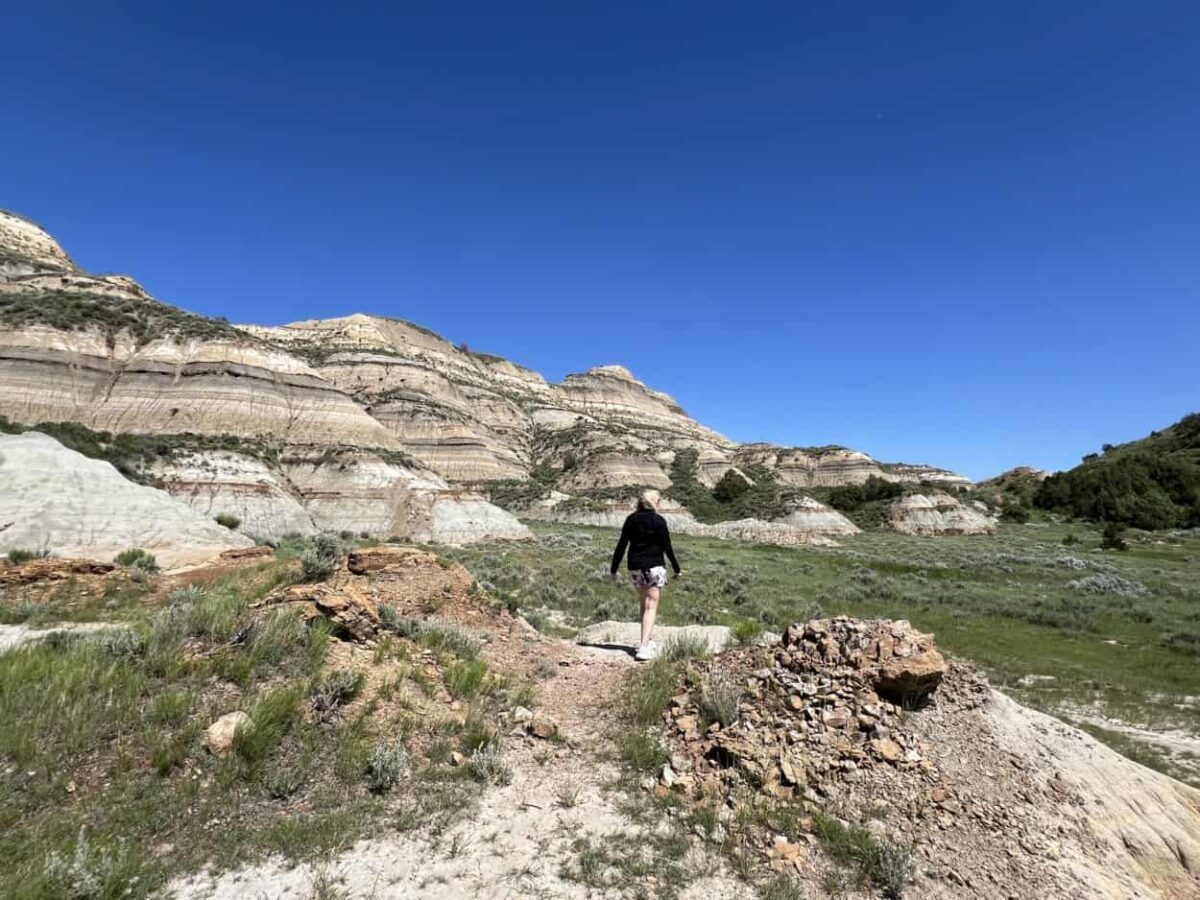
The park is open 24 hours a day, seven days a week.
Park admission is $30 per vehicle, or you can purchase an annual pass for $55. Another option is to buy an America the Beautiful annual pass for $80, valid at all United States national parks.
Simplicity
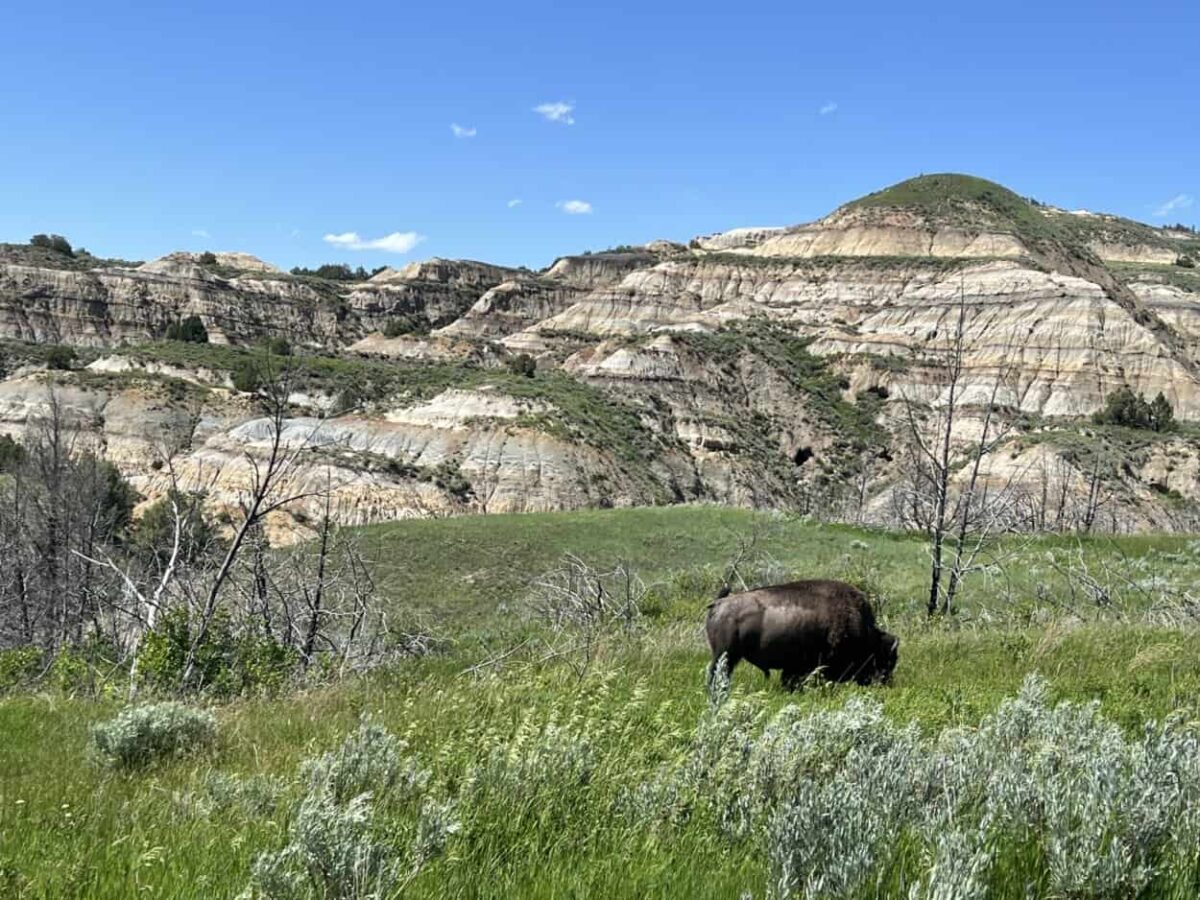
The Theodore Roosevelt National Park North Unit is easy to navigate, with one entrance, one road, and a small Visitor Center just beyond the entrance. I recommend you stop at the Visitor Center to confirm road and trail conditions with the park rangers. We found the rangers helpful, as they answered our questions and provided a few suggestions.
What is Driving in the Park Like?
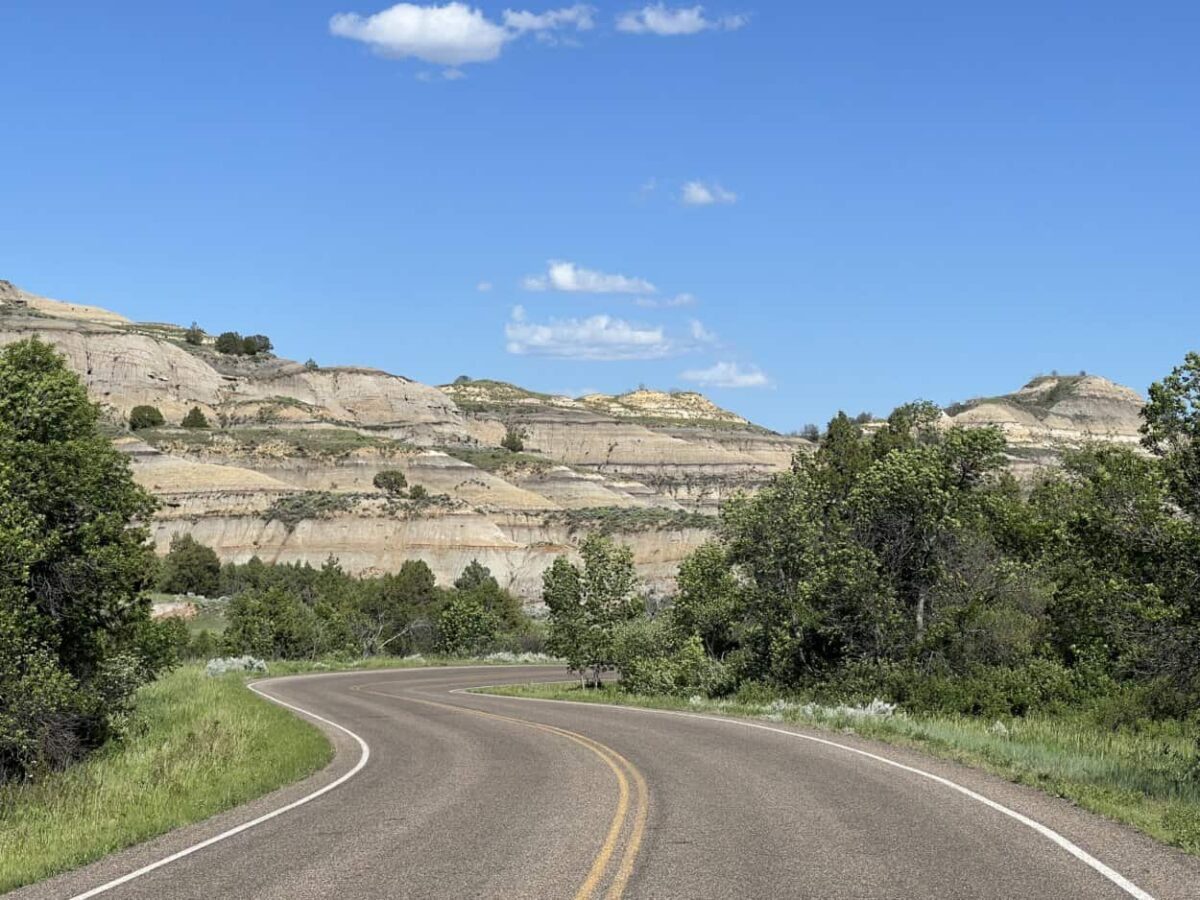
Scenic Drive is the primary way to explore the park. The mostly paved road is 14 miles long, suitable for standard vehicles, and has mile markers. Since there is only one road, your drive is a 28-mile out-and-back journey.
Does the out-and-back drive feel redundant? Not at all. We were on pins and needles, excited to see what kinds of wildlife might be around each bend. The good news is you get two passes at each area to spot wildlife. Yes, most visitors spot bison along Scenic Drive. We saw numerous bison during our visit.
The road provides plenty of overlooks and stops for you to get out of the car to savor views or explore. While the park features rugged badlands, you will encounter grasslands, forests, and glimpses of the Little Missouri River, which snakes through the park. Between the diverse, beautiful landscapes and wildlife, we found pure joy while on Scenic Drive.
Bison

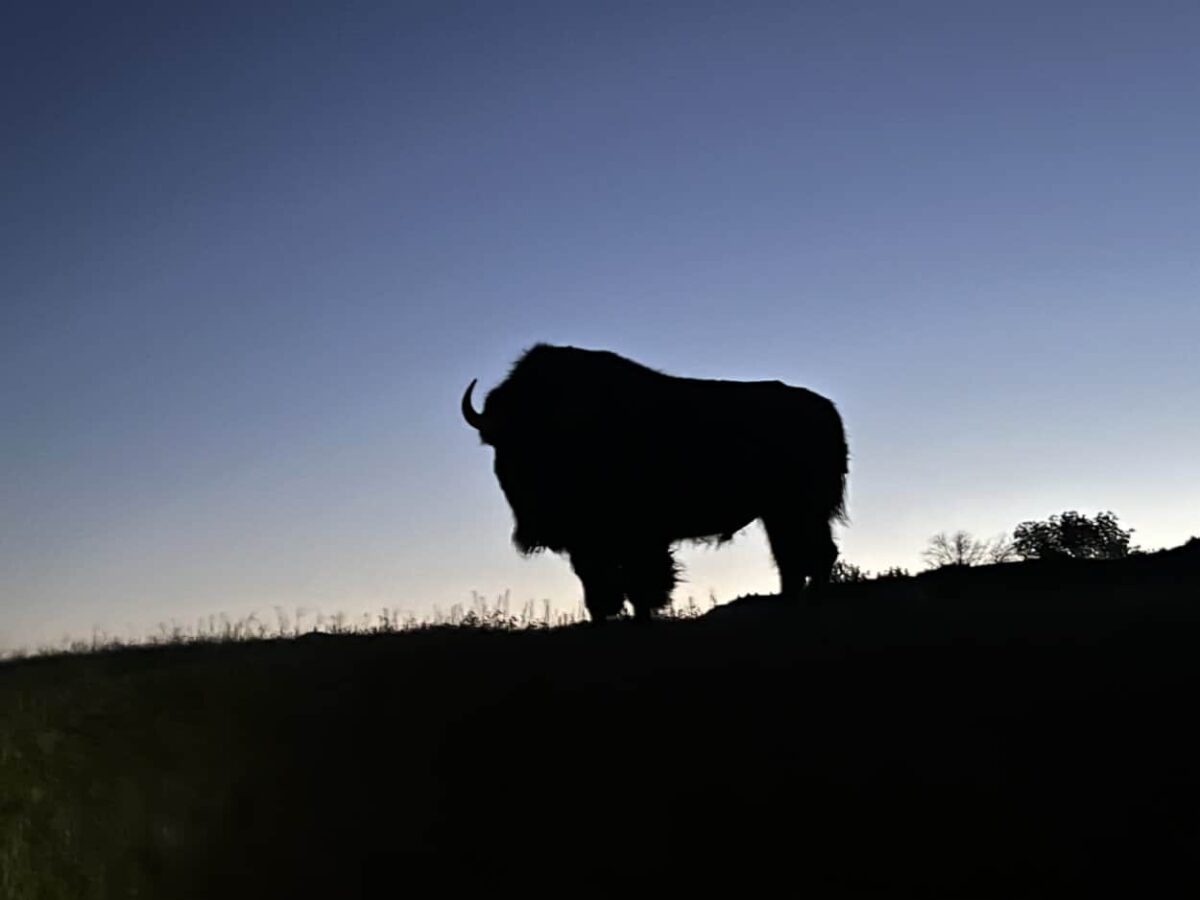
While Theodore Roosevelt National Park is known for its variety of wildlife, many visitors hope to see bison. Most guests accomplish this by driving through the park. Julie and I spotted many bison during our visit, and I want to share a few tips with you.
While visiting Custer State Park and the famous Badlands National Park in South Dakota, we typically spotted bison in herds. Occasionally, we saw a lone bison or a pair, but we always saw them grazing in the grasslands.
Our experience in Theodore Roosevelt National Park was different. While we saw many bison, it was often one or two at a time. To our surprise, we found them on buttes and near badlands. It is essential to note that badlands in South Dakota rarely contain vegetation, while those in North Dakota are often partially covered in grass. Keep this in mind as you drive through Theodore Roosevelt National Park. Bison may appear along badlands and grasslands; you may only sometimes find them in herds.
A park ranger advised us that bison jams can occur in the park. So, you may encounter a herd of bison crossing the road, leaving you at a standstill until they decide to move. If that happens, sit back and enjoy the show.
Additional Wildlife Tips
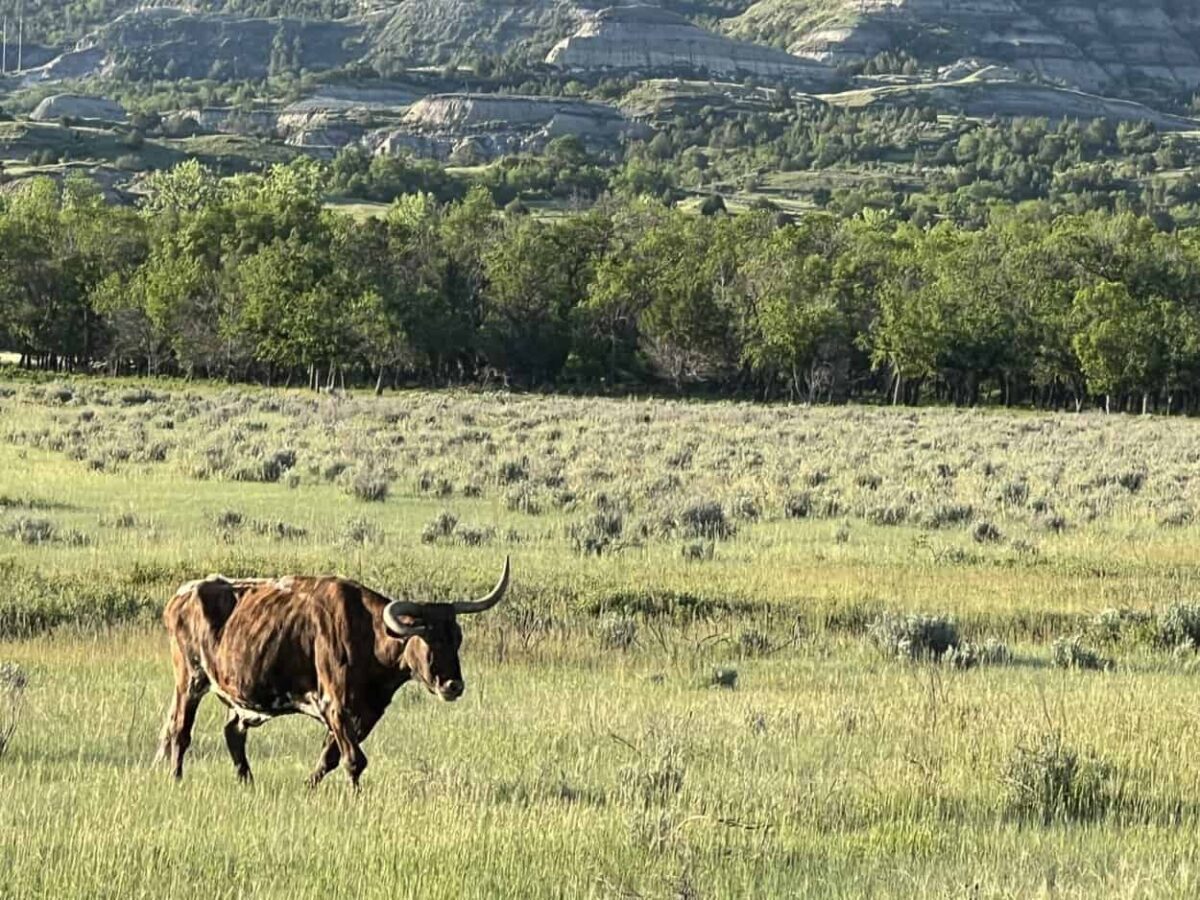
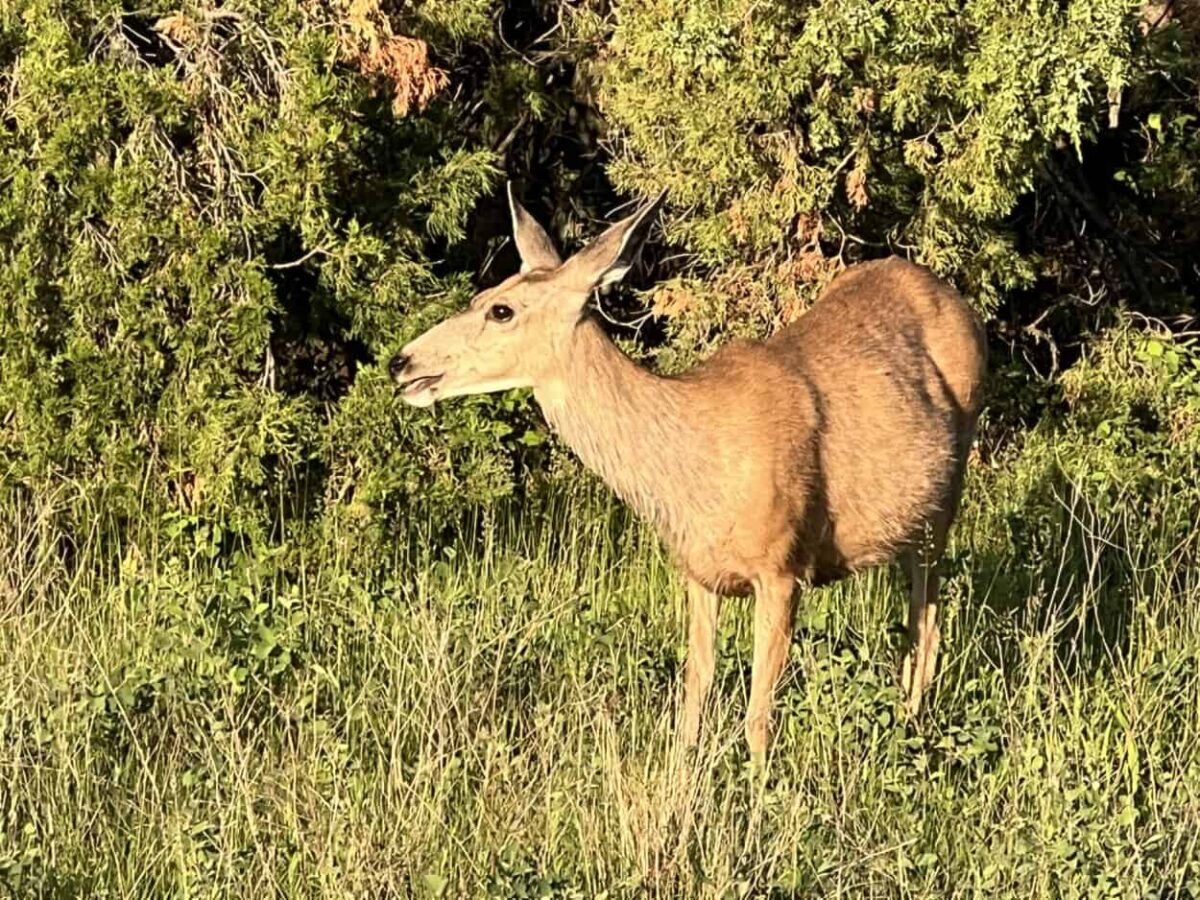
Beyond the bison, Julie and I spotted many other animals, including deer, rabbits, wild turkeys, porcupines, and longhorns. Driving through the park feels like a safari, and it is one of the most thrilling experiences you can have in a national park.
Keep your eyes out for wildlife as you approach the park entrance. On our way to the park, we found pronghorns running in the fields a few miles from the park along U.S. Highway 85. You will pass a scenic overlook about two miles south of the park entrance. I encourage you to stop here. It is a fantastic view, and we also found bighorn sheep at the overlook.
We always experience more wildlife sightings close to sunrise and sunset. Our deer, rabbit, wild turkey, and porcupine sightings were early in the morning and on the last few miles of Scenic Drive.
Longhorns tend to hang out around Mile 2 on Scenic Drive, precisely where we found them.
What Wildlife You Will Not Find Here
You may have heard that wild horses inhabit Theodore Roosevelt National Park. While this is true, horses only roam the South Unit, and the same is true of elk.
Visitors regularly spot prairie dogs along the South Unit’s main road. While the North Unit has a small population of prairie dogs, you must take a short hike to see them. The trailhead is marked and sits at the Caprock Coulee parking area, accessed along Scenic Drive.
Cannonball Concretions
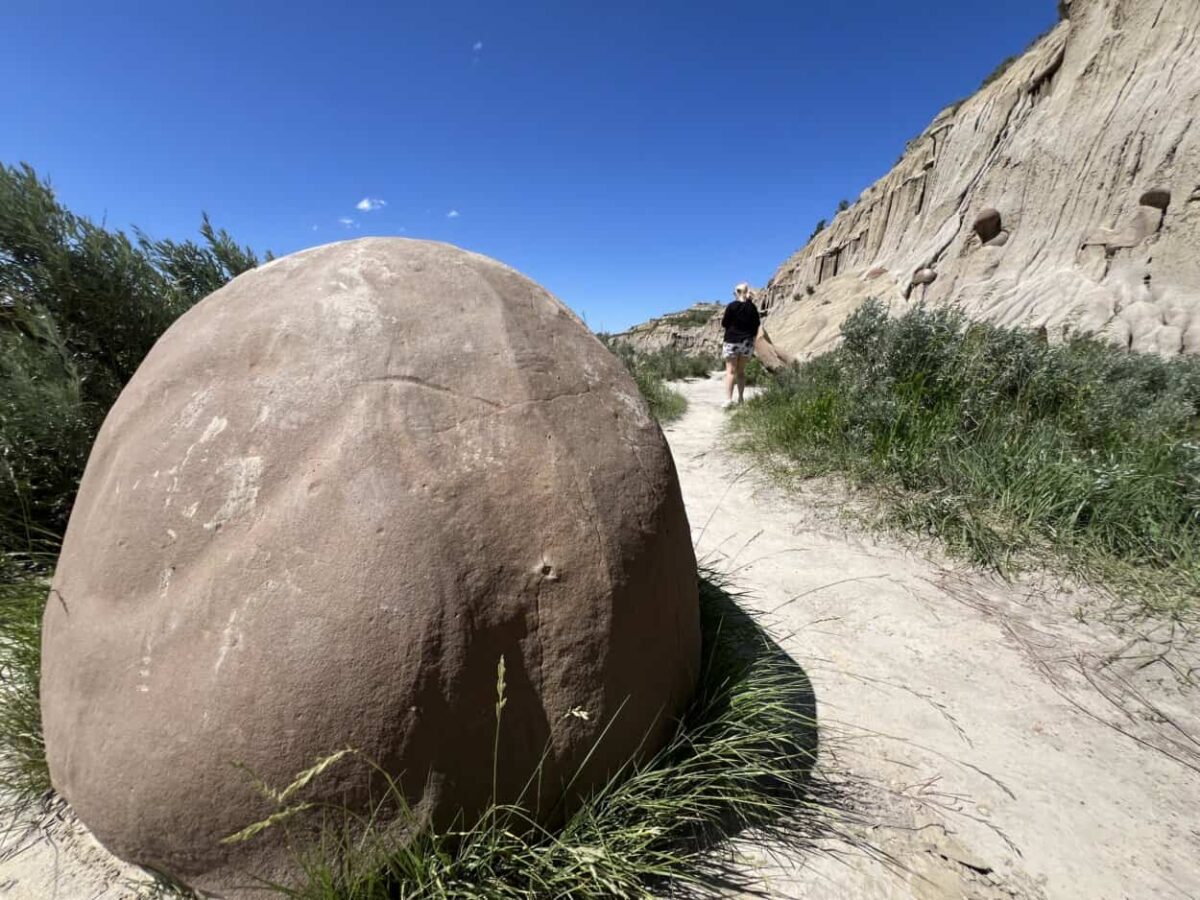
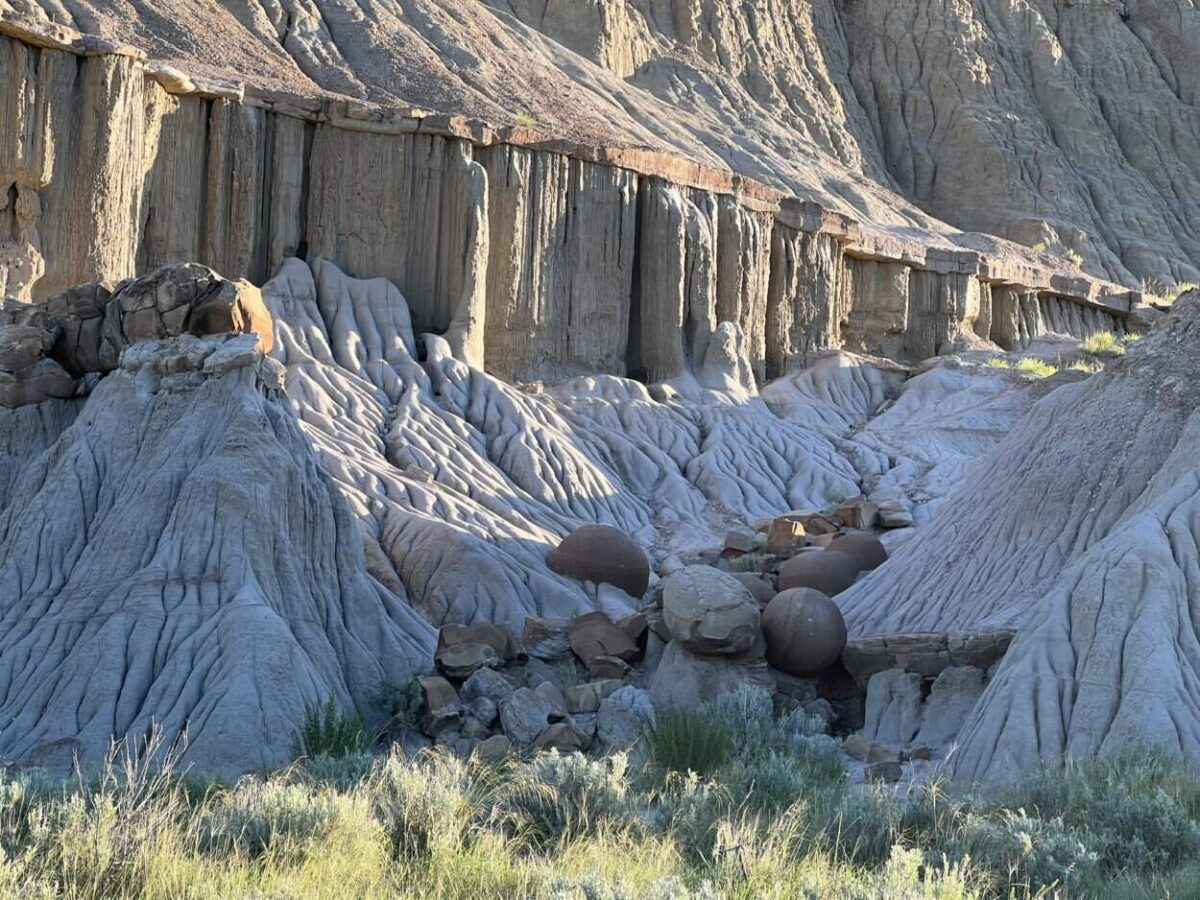
The North Unit has a unique geological formation you will not find in the South Unit. Park rangers call the area “Battleship Butte.” Near Mile 5 on Scenic Drive, you will discover a parking area. Pull over, and you will see strange round and oval rock formations that are darker in color than the surrounding badlands. They look like cannonballs fired into the rugged landscapes. Because it is so unique, the cannonball concretions make the North Unit worth visiting.
River Bend Overlook
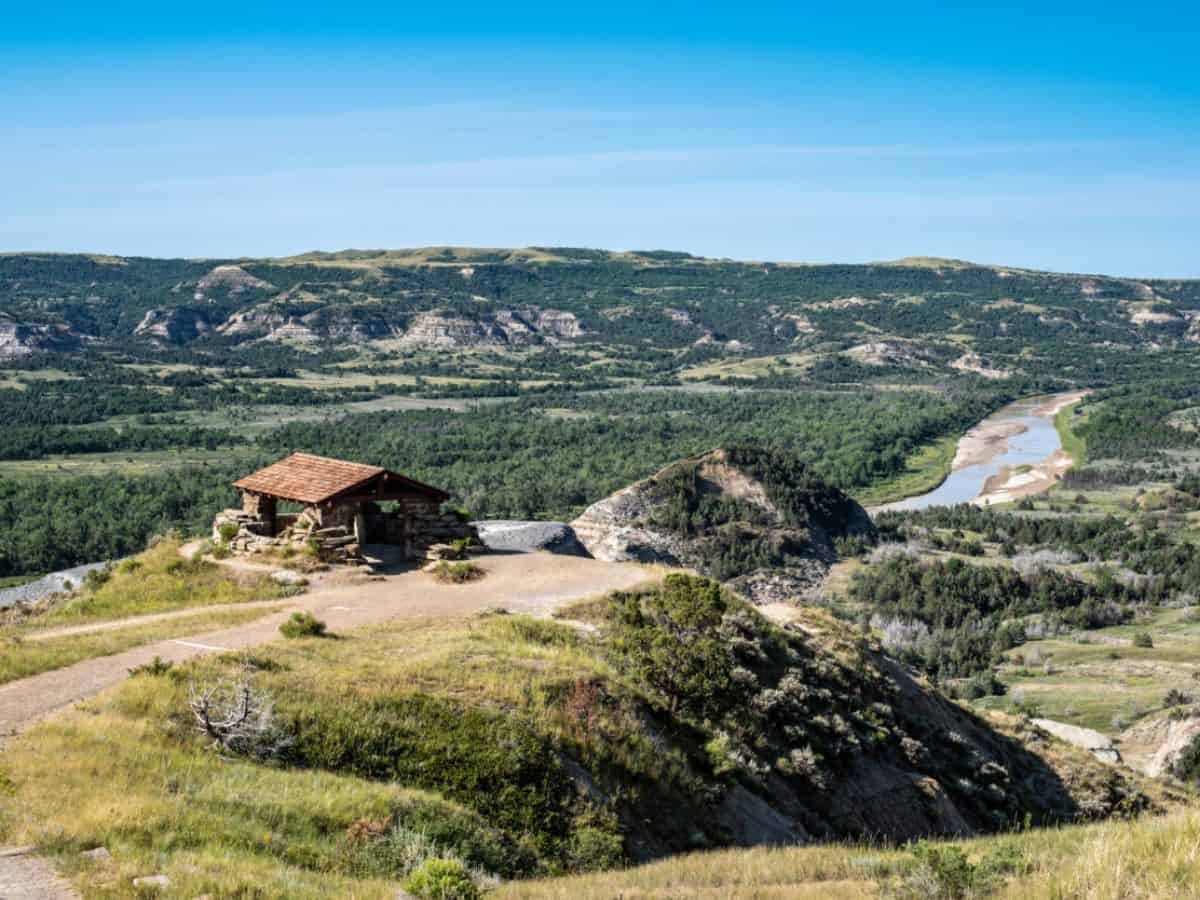
Julie and I were disappointed to discover that the North Unit’s most prized overlook, with a stone shelter and sweeping views of the Little Missouri River, was closed for construction. We parked near the area and looked over the river valley, but the actual overlook provides a superior vantage point and experience. Hopefully, it will open soon. When open, the overlook is a must-see highlight.
Little Mo Trail
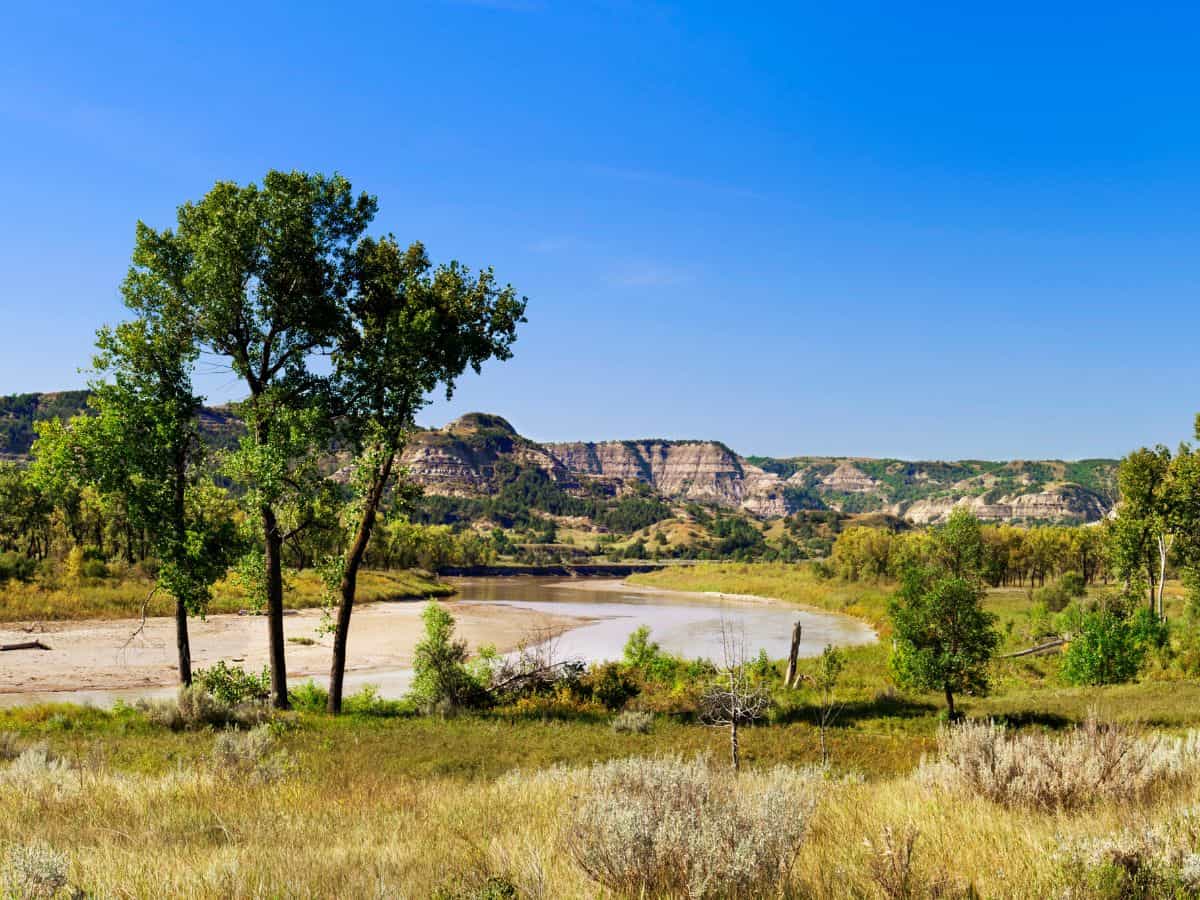
The Little Mo Trail is a leisurely nature hike along a paved path through river bottom habitat. You can grab a brochure at the trailhead and learn as you go. The hike highlights that the park comprises habitats beyond badlands. You can take either the 0.7-mile inner loop or the 1.1-mile outer loop. Please note the outer loop is unpaved.
Caprock Coulee Trail
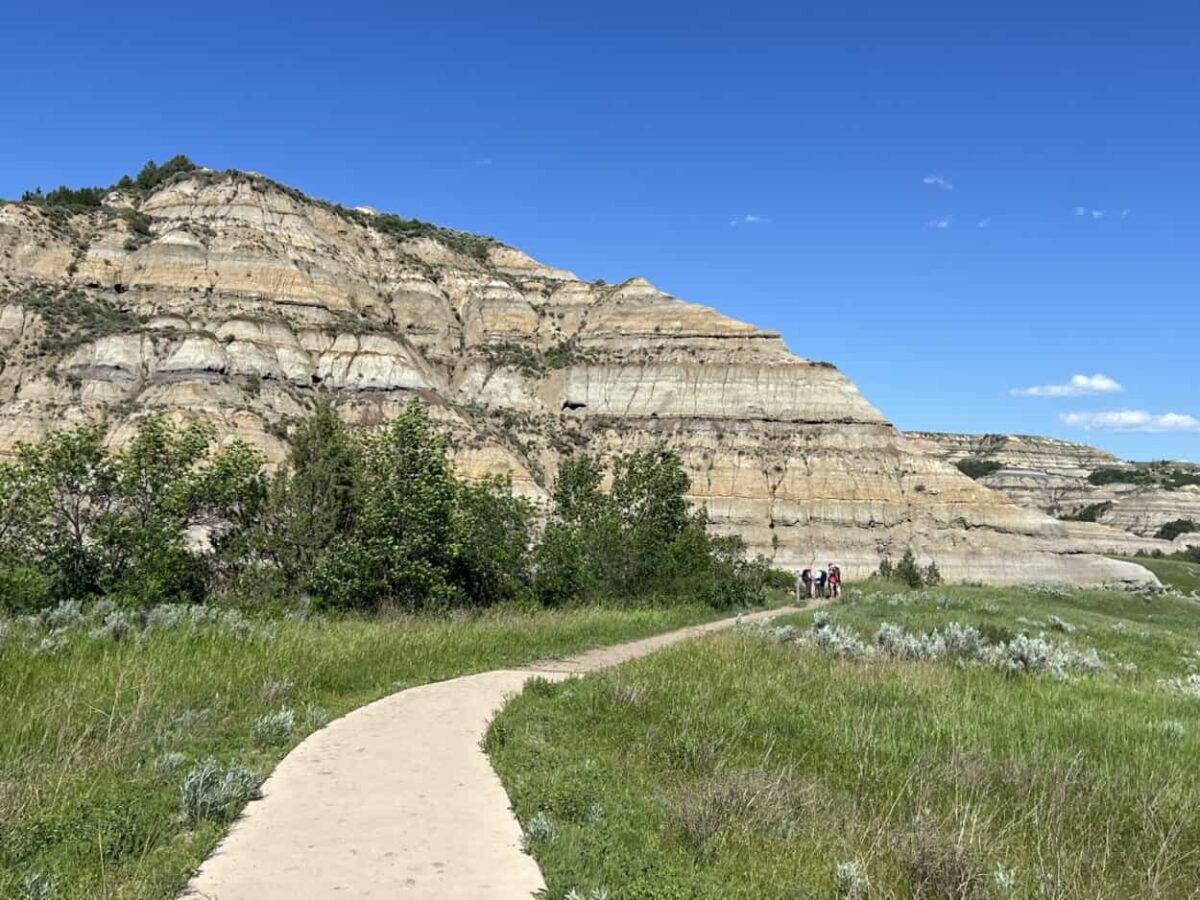
The Caprock Coulee stop along Scenic Drive is a haven for hikers. You can choose from three options at the trailhead. Caprock Coulee Nature Trail is a moderate 1.6-mile round-trip hike, while the Caprock Coulee Trail Loop is a moderate 4.1-mile hike. Or, you can hike the easy 2-mile out-and-back Buckhorn Trail to see the North Unit’s prairie dog town. Regardless of which trail you select, it is an excellent opportunity to learn about badlands and coulees firsthand.
Oxbow Overlook

At the end of Scenic Drive, you will come to Oxbow Overlook, yielding breathtaking views of badlands and a sharp bend in the Little Missouri River in the valley below. You will find restroom facilities here and the trailhead for the rugged and remote Achenbach Trail. If you take the South Achenbach Trail, an easy 2.4-mile out-and-back hike leads you to a scenic viewpoint called Sperati Point.
The famed Sperati Point offers excellent sunrise views, but park rangers warned us that poison ivy lines the path. Oxbow Overlook is also a prime location to enjoy sunrise. Since I get a rash from merely looking at poison ivy, we chose to savor the sunrise at Oxbow Overlook.
I will always treasure hearing animals wake up in the morning and watching the sun light up the Little Missouri River Valley. Plus, on the morning drive, we saw a lot of wildlife.
Where To Stay
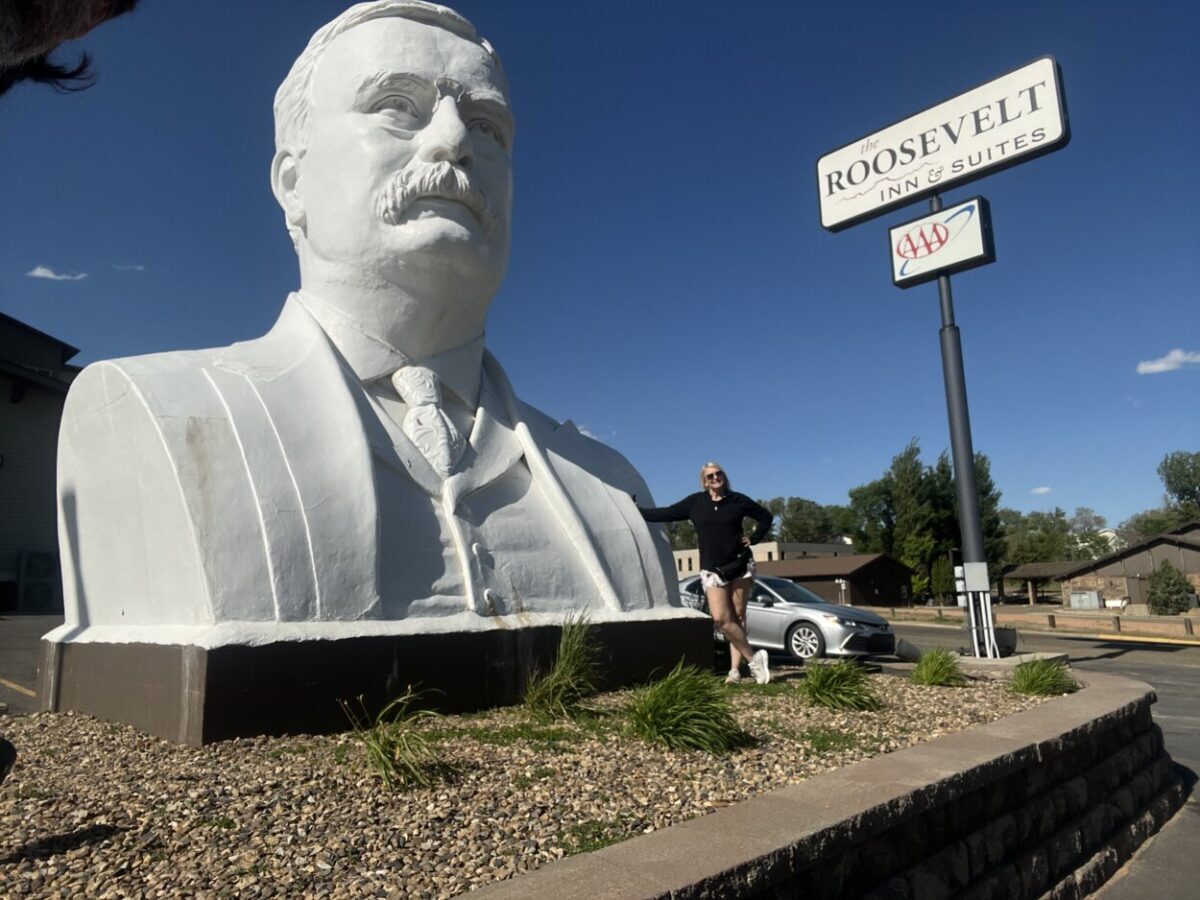
There are no dining services or lodgings in the park. For those who like to camp, Juniper Campground in the North Unit has primitive campsites available on a first-come, first-served basis. Group sites require a reservation. Backcountry camping is available with a free permit. You can obtain detailed camping information on the national park website.
We stayed at Theodore Roosevelt Inn & Suites in the North Unit’s gateway, Watford City, a quick 15-to 20-minute drive from the park. You cannot miss it due to the massive Theodore Roosevelt bust outside the facility. Our room was clean and spacious, and the staff was friendly and helpful. In the evening, you can enjoy the outdoor courtyard with a fire pit, grilling stations, and picnic tables. It is the perfect place to stay and explore the national park and surrounding attractions.
Watford City offers plenty of dining options and boutique shops. Beyond the national park, you can visit iconic attractions like Fort Union Trading Post National Historic Site and Fort Buford State Historic Site. The city recently added a concert venue and athletic facility called Rough Rider Center, which is fantastic.
Where To Eat
We want to share our favorite breakfast and dinner experiences in Watford City so you know where to eat. For breakfast, we recommend Little Missouri Grille. You will find many locals enjoying a hearty meal at the mom-and-pop diner. Like the Old West, the eatery serves steak or a pork chop with eggs. Or, you can savor biscuits and gravy, a breakfast bowl, sunrise hashbrowns, or a breakfast burrito. The menu includes many other options, including fluffy pancakes, French toast, and an extensive list of omelet options. Everything is hot, fresh, and tasty, an excellent way to start your day.
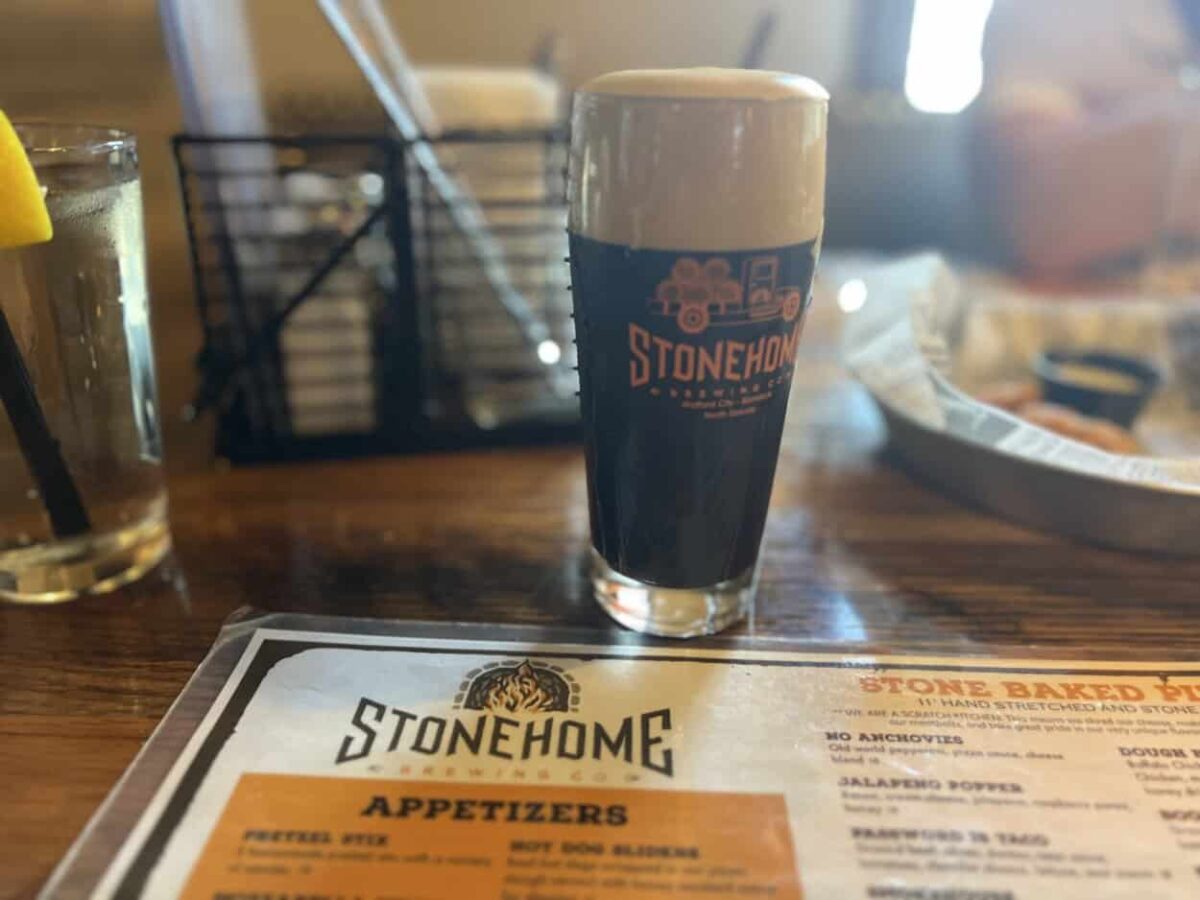
For dinner, we suggest Stonehome Brewing Company. The establishment aims to be “the every person’s microbrewery,” and they deliver. While they serve several tempting appetizers, try the gouda mac bites. The smoky gouda and creamy ranch sauce will awaken your taste buds. Julie and I both looked at each other and said, “Wow! These are good!”
The main menu includes sandwiches, plates of pasta, mac and cheese dishes, strombolis, calzones, and their signature stone-baked pizzas. Julie ordered their Big Mac pizza, and I had the New Yorker. Both of us left the eatery with wide grins and satisfied bellies.
As you can guess from the name, Stonehome is renowned for its craft beers. I paired my pizza with their Traust, a nitro stout somewhat reminiscent of a Guinness. It was every bit as good as the food.
Plan Your Adventure
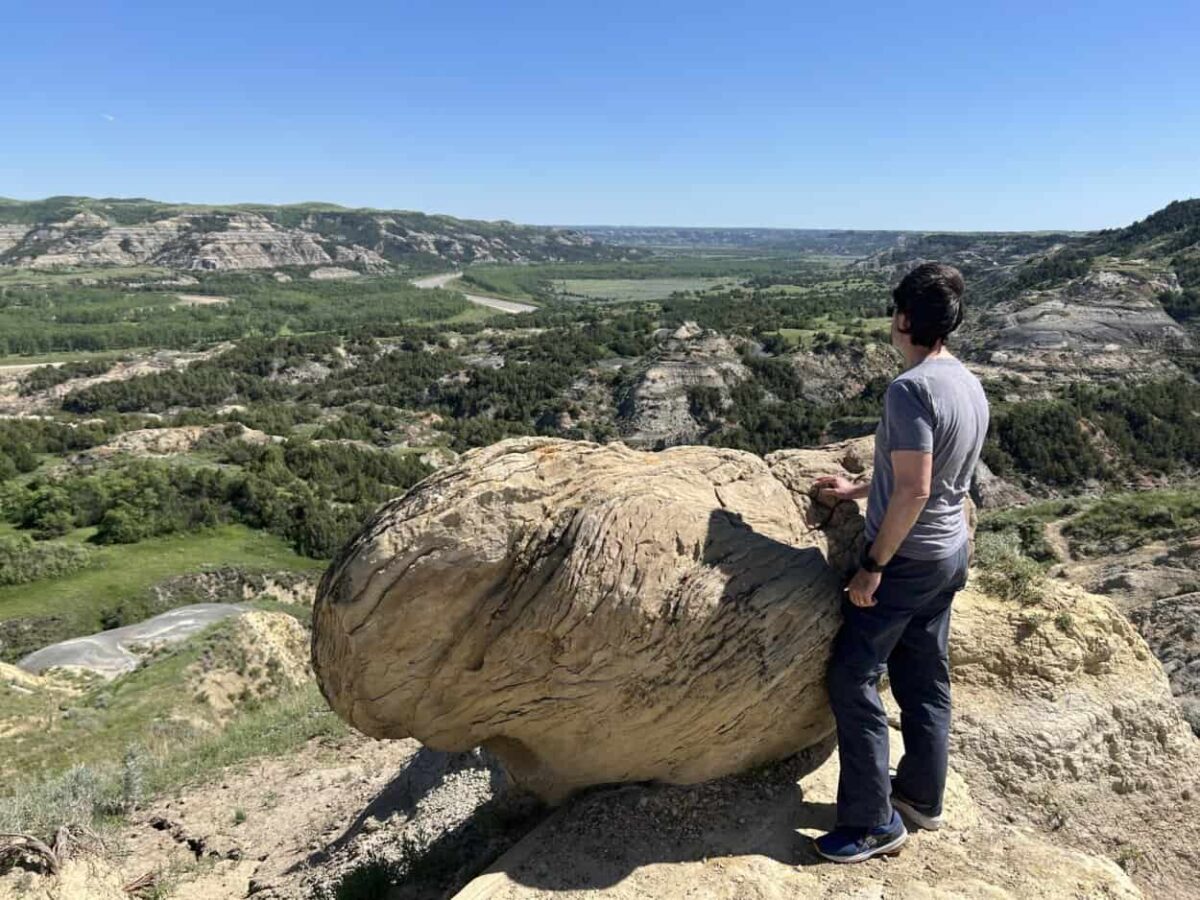
Theodore Roosevelt National Park North Unit offers a rewarding experience with small crowds. Along its Scenic Drive or through short hikes, you can savor stunning views of the Badlands and the Little Missouri River. It defies logic that rugged landscapes are so readily accessible. Add the exotic wildlife to the mix, and you will have an unforgettable experience.
Theodore Roosevelt found peace and comfort in the Badlands. A trip to the park may soothe your soul. I know it did mine.
Featured image credit: Miles with McConkey