
Julie and I have explored America’s most-visited national park at various times of the year, but spring in the Smokies is special. A spring trip is all about timing based on your interests. A visit in March looks very different from a visit in May.
Whether your primary interest is hitting the hiking trails or sitting in a cabin by a warm fire, we will blaze your path. We cover everything you need to know, from winter closures to when to spot bears.
Let’s plan your spring getaway in the Smokies.
Disclosure: This post may contain affiliate links. If you make a purchase through one of these links, I may earn a small commission at no additional cost to you. Thanks for supporting Miles with McConkey.
What Is So Special About Great Smoky Mountains National Park?
The Smokies will always be special to Julie and me. It is our first visited national park. Plus, we got married in Gatlinburg, as did one of our daughters.
Why will the Smoky Mountains be special to you? Its varied landscapes feature ancient mountains, rushing rivers, tranquil forests, sprawling meadows, and magical waterfalls.
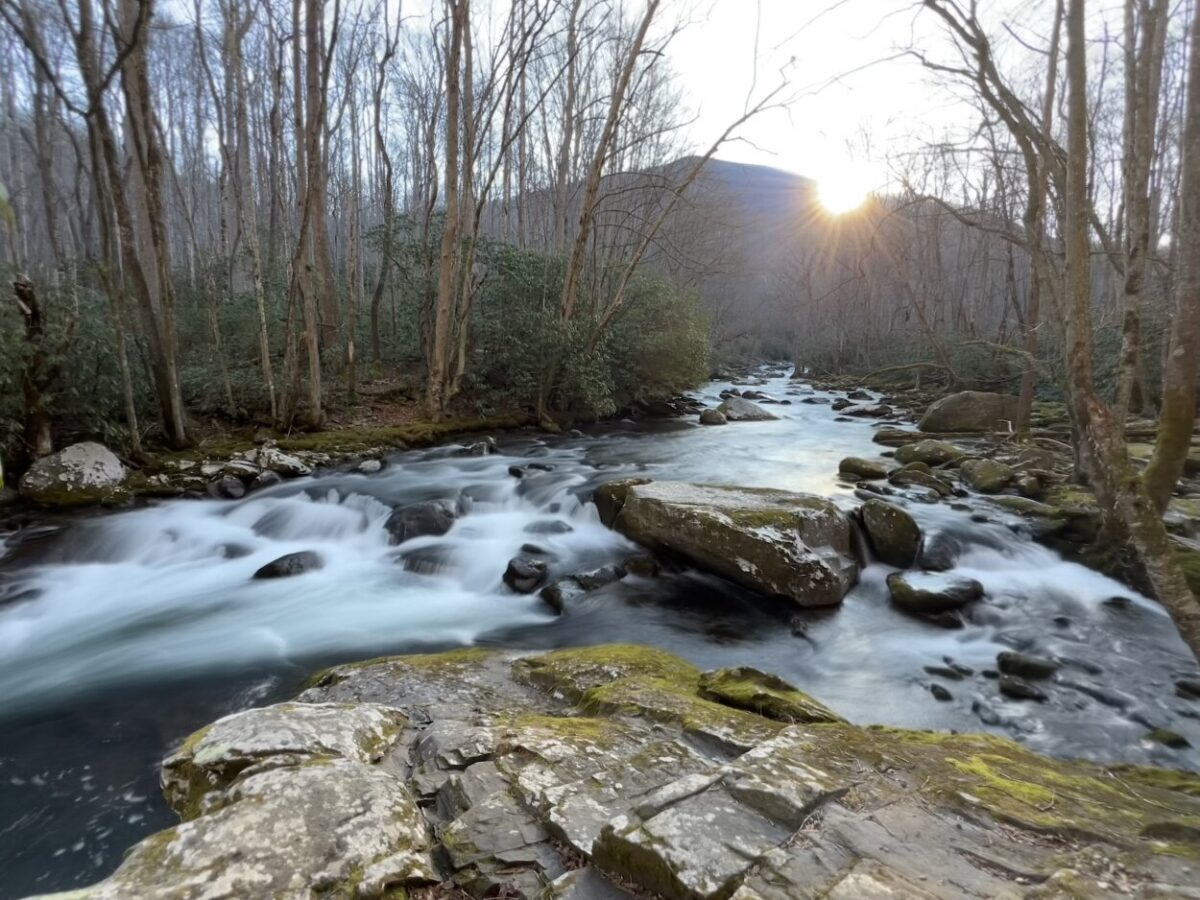
The mysterious lingering morning fog along the forested ridges induces serenity. Many of the park’s trails and scenic drives take you along the foothills, where the peaceful sounds of flowing streams fill your soul.
You have realistic opportunities to spot elk and black bears in the park.
Those who enjoy history will appreciate the historic cabins and mills representing southern Appalachian mountain culture.
Interesting Facts About Great Smoky Mountains National Park
Great Smoky Mountains National Park was established on June 15, 1934, and became a UNESCO World Heritage Site on December 6, 1983. It covers over 522,000 acres across Tennessee and North Carolina.
Geologists estimate the Smoky Mountains are 200 to 300 million years old, making them some of the world’s oldest. According to NPS statistics, the park features 16 peaks above 6,000 feet. Clingman’s Dome is the tallest at 6,643 feet.
The park has over 800 miles of trails, including sections of the famous Appalachian Trail.
Approximately 1,900 bears inhabit the park, which is also home to 30 different species of salamanders. Thus, it is dubbed the “salamander capital of the world.”
Where to Stay for Your Great Smoky Mountains National Park Visit
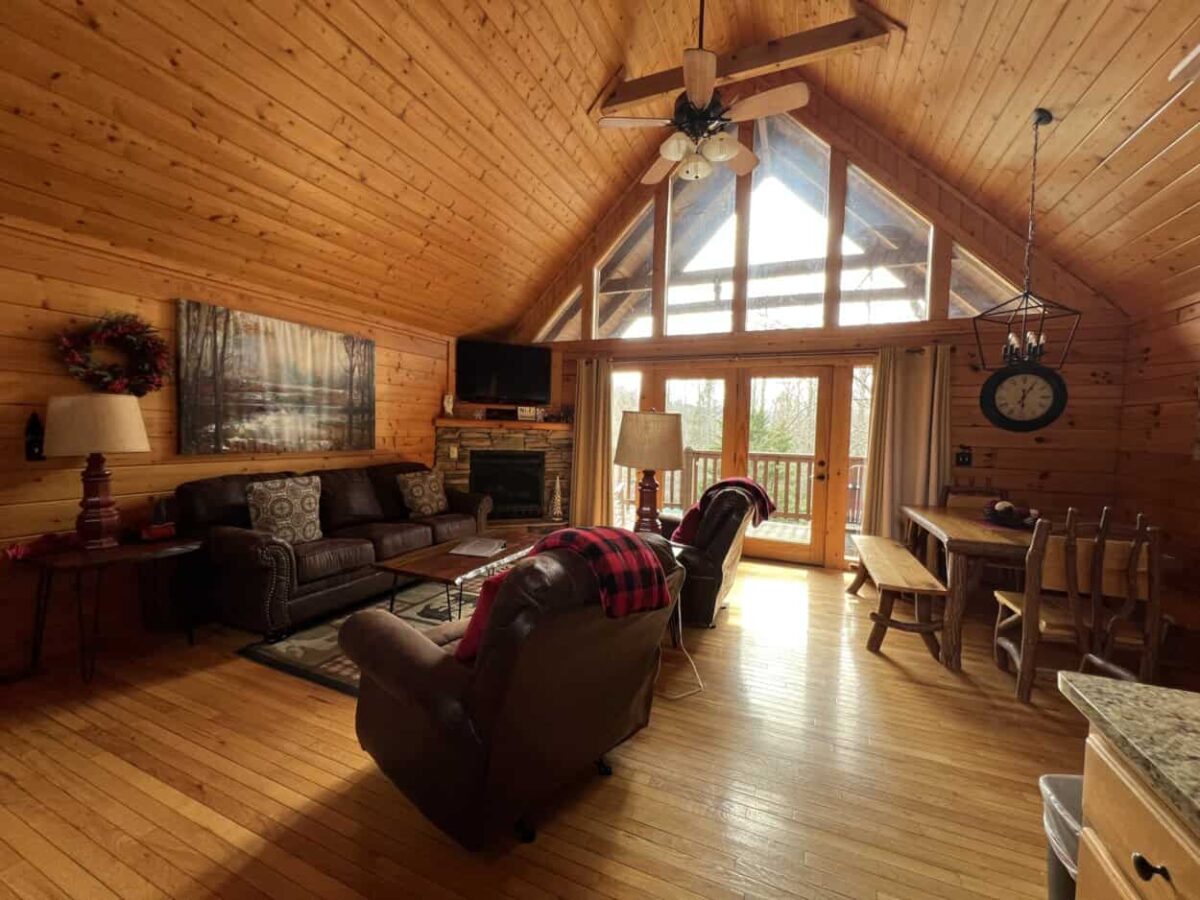
Various communities surround the national park in Tennessee and North Carolina. Accommodations span from hotels to cabins. Julie and I prefer to stay in a cabin. We find the experience more immersive and rewarding for a mountain getaway. Some cabins provide mountain views, while others nestle in the forest.
On our most recent visit, we stayed in a cabin through Jackson Mountain Rentals in the Gatlinburg area. Although a bustling city chock full of tourist attractions, Gatlinburg provides easy access to the park.
We felt utterly removed from the touristy town. Our spacious cabin included a wrap-around deck with lovely forest views, perfect for relaxing and birding. It was equipped with a stocked kitchen, comfortable furniture, a gas fireplace, a hot tub, a pool table, and an arcade machine. After exploring the park, the haven is a wonderful place to recharge.
We prepared our meals in the kitchen each evening and savored the food with a refreshing beverage by the cozy fire or out on the peaceful deck. I’m ready to go back!
Is Spring a Good Time to Visit the Smoky Mountains?
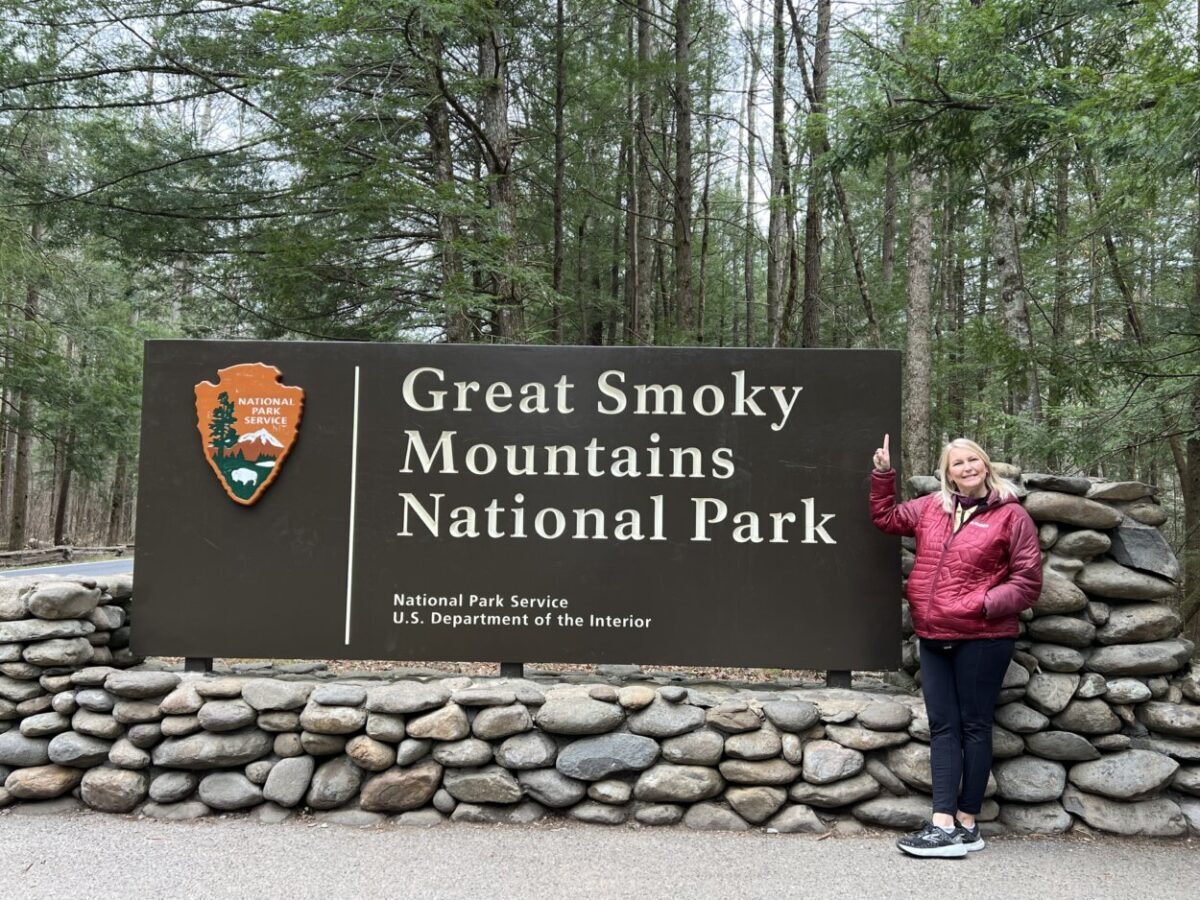
Absolutely! Many believe it is the best time of year to go. However, it is essential to understand what to expect each month of the spring season.
Crowd Levels
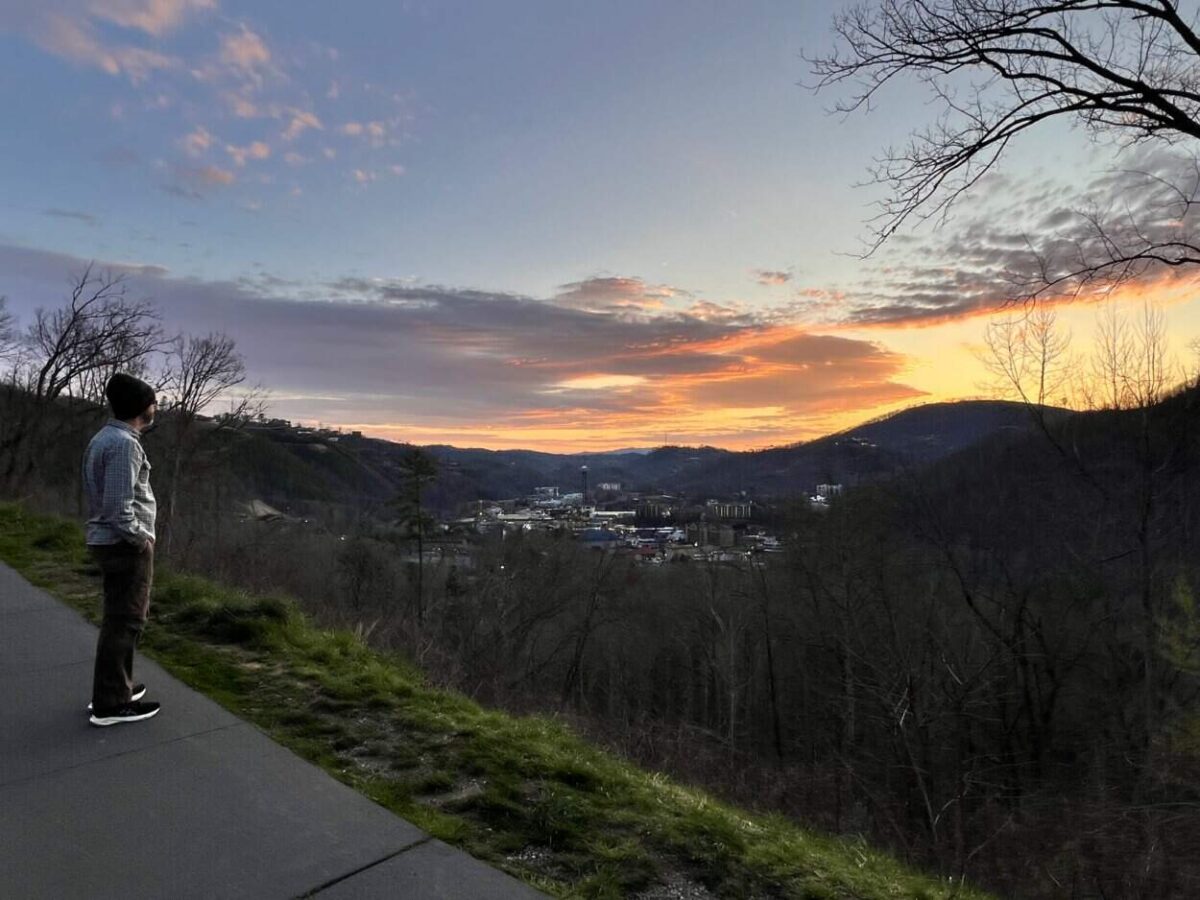
Crowd levels are lighter in spring than in the busy summer months. However, as America’s most-visited national park, it will still seem crowded even in spring.
Approximately 900,000 people visit each March, 1 million in April, and 1.2 to 1.3 million in May. Yes, there are a lot of people, but it is not as crowded as in summer.
Spring Weather in the Smokies
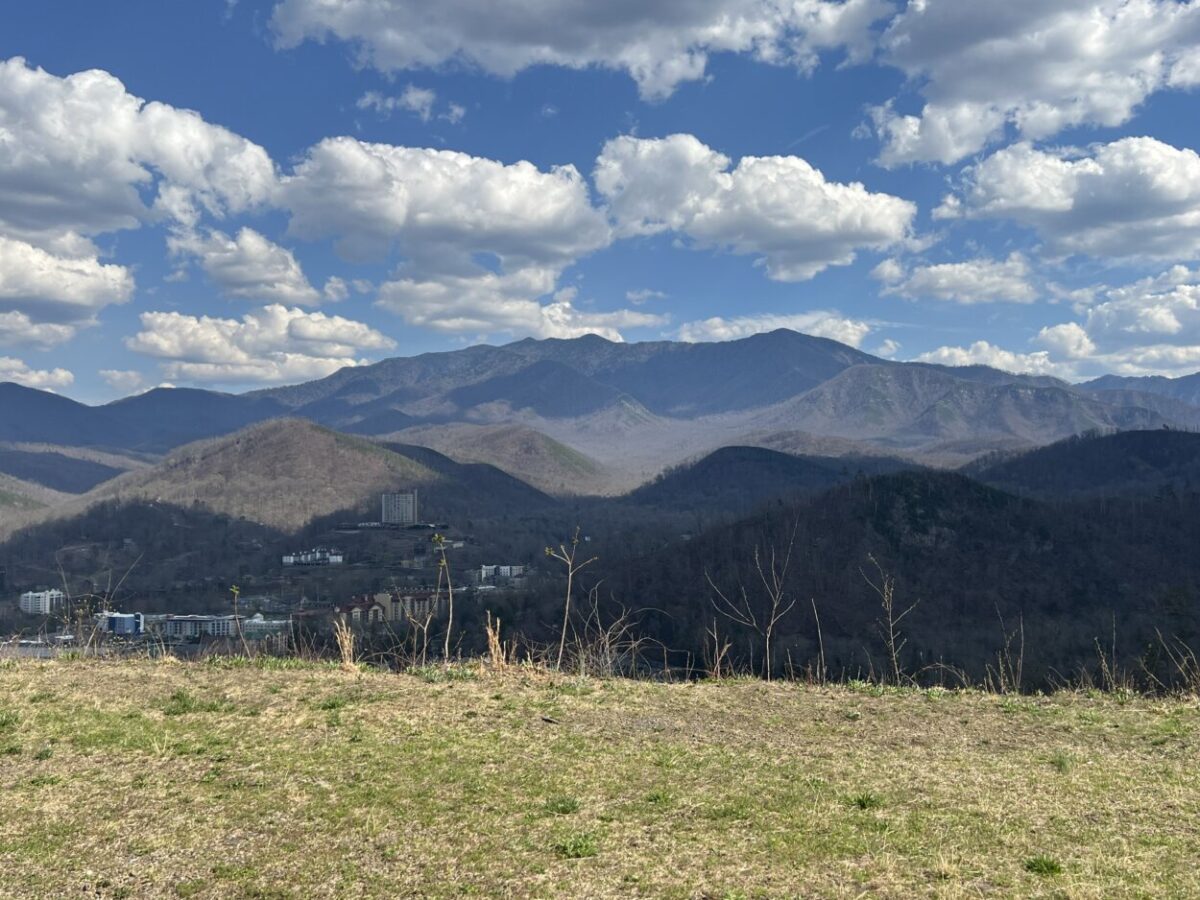
For those who long for plenty of cabin time by a cozy fire, an early spring visit is for you. Snow can fall in March, but the average high for the month is 61 degrees Fahrenheit.
Mild weather is expected by mid-April, when below-freezing nighttime temperatures are uncommon. April regularly sees daytime temperatures in the 70s.
May offers highs in the 70s or 80s and nighttime lows in the 40s or 50s.
Keep in mind that mountain elevation significantly impacts the temperature. Precipitation is another factor to consider. April and May each average over 4 inches of rain.
Winter Closures
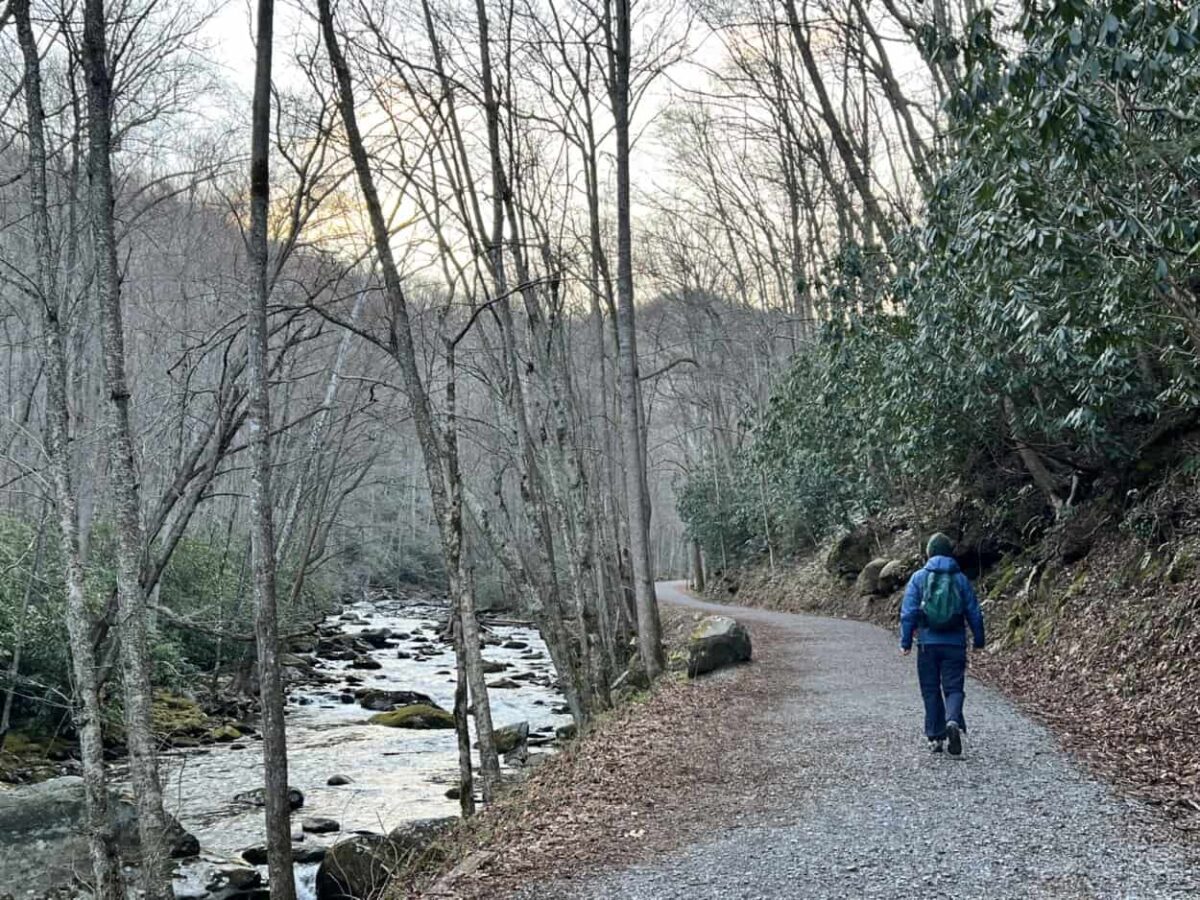
Some park roads and their corresponding areas close for the winter and typically reopen in mid-April. Visit the park website to verify road and area closures.
During our March visit, the popular Clingmans Dome area was still closed. It typically opens in mid-April. Trust me, we had plenty to explore in the Sugarlands, Cades Cove, and Oconaluftee areas.
Bears
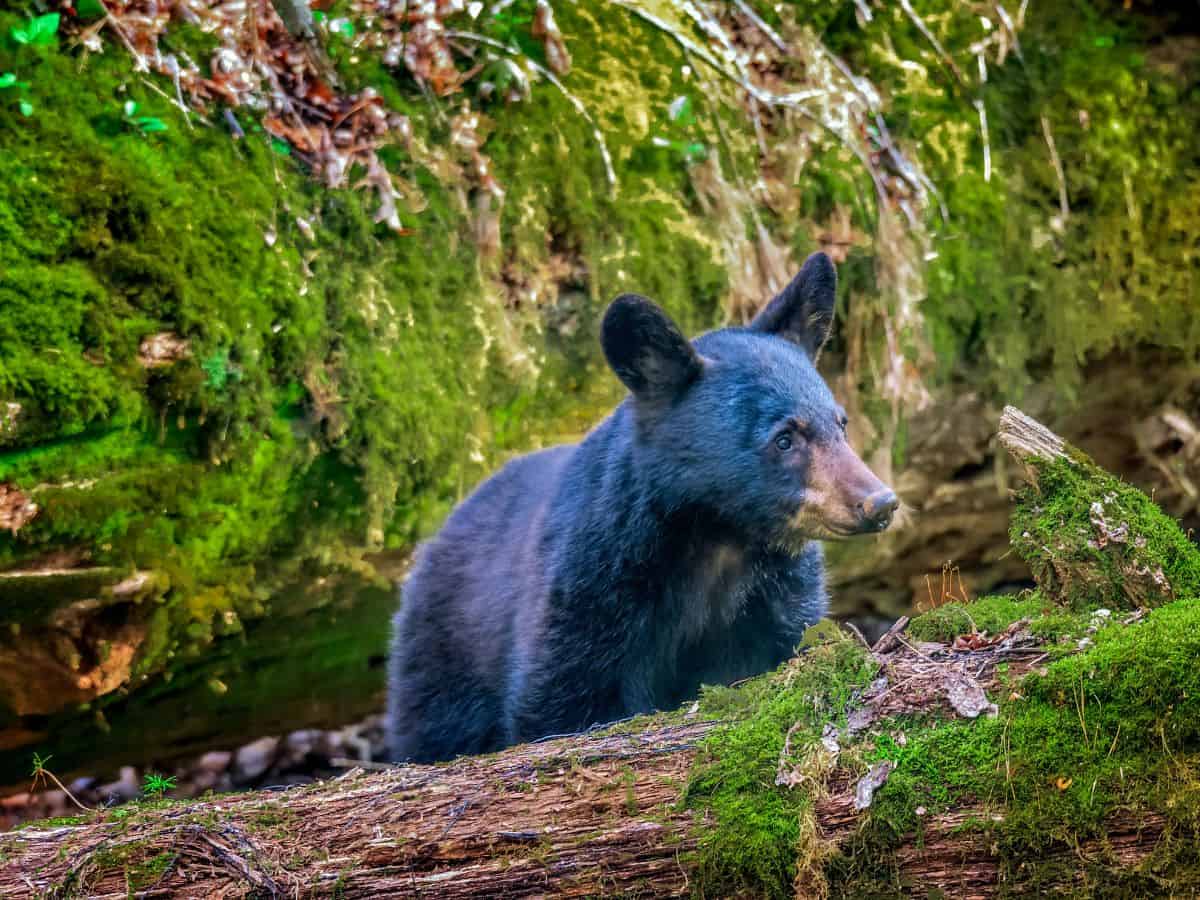
Many visitors hope to spot bears in the park. If seeing black bears is a priority, it is vital to note that bears hibernate in winter. Males emerge from hibernation in late March and early April, and females and cubs appear in late April and early May.
Our May visit a few years ago yielded a handful of bear sightings. We saw one black bear on our last day during our late March visit.
Stay alert and mind your surroundings when driving and hiking in the park. We have encountered bears near the main road and along hiking trails.
To our surprise, Julie and I discovered a mother bear and two cubs near a restroom. Imagine our surprise! They could be anywhere in the park. However, most of our sightings have occurred within a few short miles of Gatlinburg.
Birding

Some birds begin migrating through the park in March. Migration increases in April, often peaking in early- to mid-May.
Julie and I are admittedly novices, but we enjoy looking for birds. During our recent late March visit, we spotted six new species for our life list: field sparrow, eastern meadowlark, eastern phoebe, Louisiana waterthrush, yellow-bellied sapsucker, and white-breasted nuthatch.
If you enjoy birding in national parks, we’ve also rounded up the best national parks for birdwatching across the U.S. These parks offer incredible habitats and high species diversity — perfect for beginners and seasoned birders alike.
Our most productive birding areas were Cades Cove and hiking trails near the Sugarlands Visitor Center and Elkmont Campground.
Waterfalls
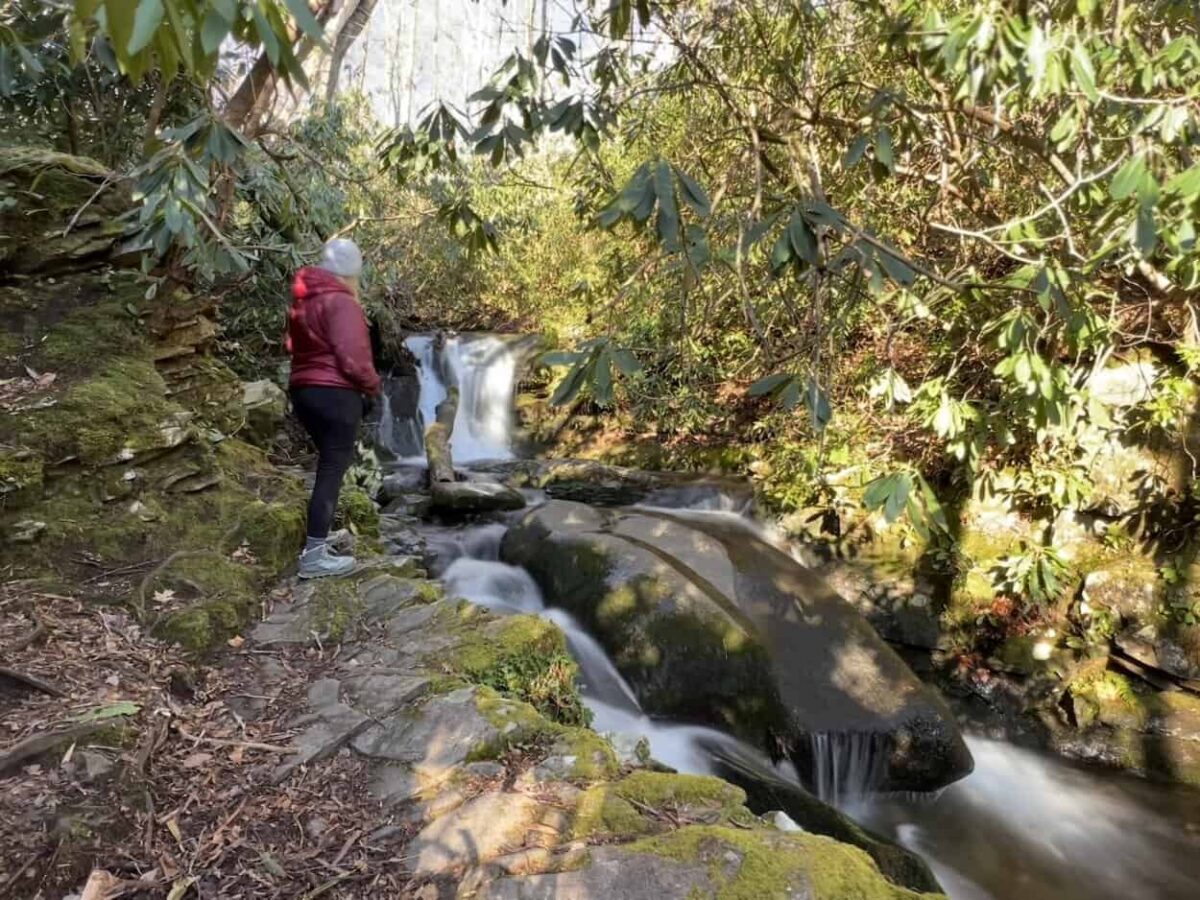
The park’s waterfalls can seem lackluster during the drier summer months. However, the falls gush due to snowmelt from the spring thaw in mid-to-late March. Heavy rainfall in April and May produces bountiful falls.
Great Smoky Mountains National Park has several popular waterfalls, which often draw big crowds. The good news is that you will discover many small waterfalls in spring, away from the thicker crowds.
Grotto Falls is a popular attraction. One of my favorite memories is hiking behind Grotto Falls during a May visit with our kids. Many of the park’s hikes reward you with mountain views, but walking behind a waterfall is a special treat.
Other popular waterfall hikes include Abrams Falls in Cades Cove and Laurel Falls near the Sugarlands Visitor Center. Abrams Falls is a 5-mile round-trip hike with a 25-foot waterfall, while Laurel Falls is a 2.6-mile round-trip hike with an 80-foot waterfall.
Please note that the trail to Laurel Falls is closed for rehabilitation. Park rangers hope to reopen the trail in summer 2026.
Wildflowers

Some call the Great Smoky Mountains National Park the “Wildflower National Park.” It houses over 1,500 types of flowering plants, more than any other North American national park.
While you can see blooms year-round, wildflower blooming regularly peaks in mid-to-late April at lower elevations and a few weeks later at higher altitudes. The park holds its annual Spring Wildflower Pilgrimage in late April, which includes guided walks, exhibits, and educational experiences.
Julie and I observed some trees leafing out in late March and a few flowers blossoming. A few years ago, our May visit yielded a green canopy with colorful blossoms highlighting the landscape.
For those who enjoy trails with breathtaking views of colorful flowers, some of the park’s best wildflower hikes include the Oconaluftee River Trail, the Little River Trail, the Deep Creek Trail, and the Porters Creek Trail.
Now that we have discussed the essential categories that can impact which spring month is best let’s cover the other things you need to know before your visit.
Admission Is Free, but Parking Is Not
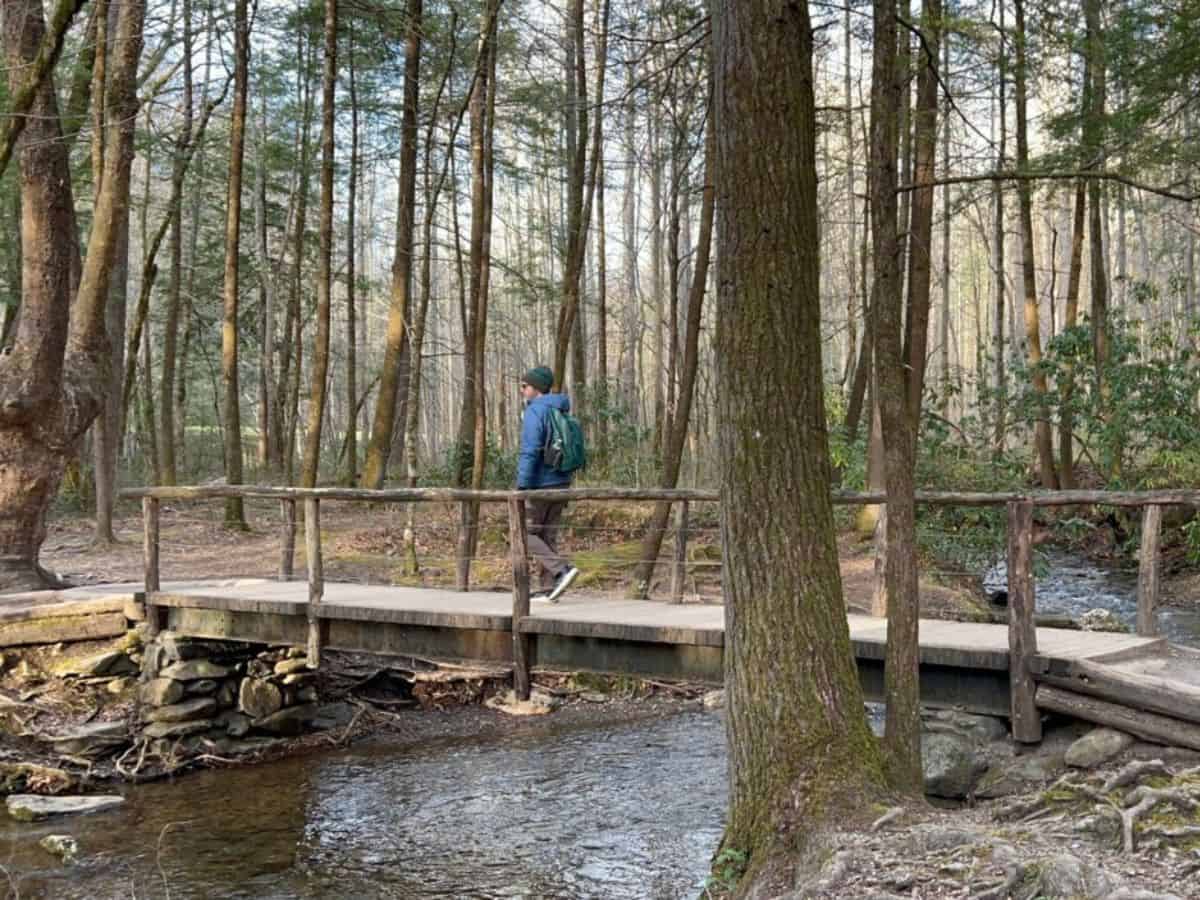
Great Smoky Mountains National Park is free to enter year-round, but parking fees apply. A parking pass costs $5 daily, $15 weekly, or $40 annually.
Parking passes can be purchased online through the park website, at kiosks throughout the Smokies, or in person at the park visitor centers and some area welcome centers. Julie and I purchased ours at the Gatlinburg Welcome Center.
Great Smoky Mountains National Park Visitor Centers
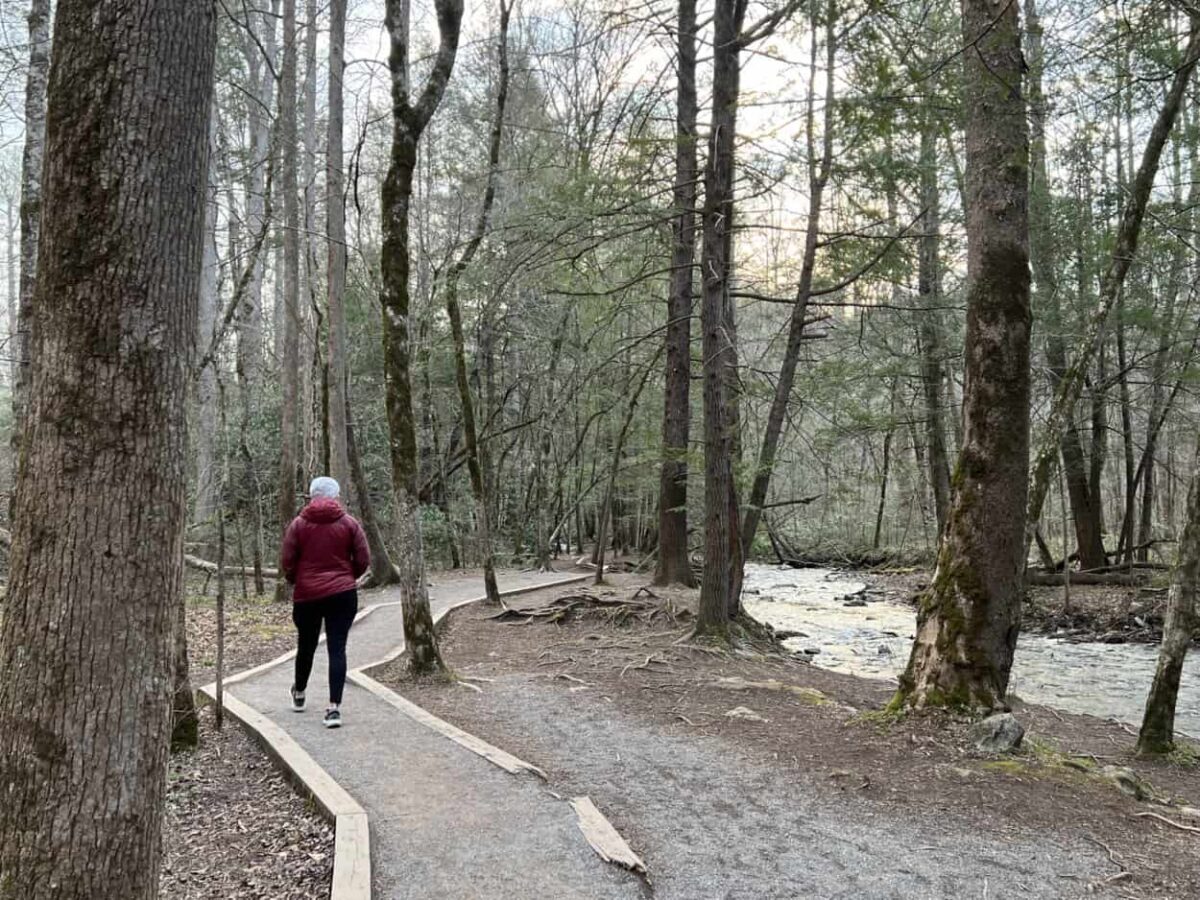
Great Smoky Mountains National Park has so many places to explore that it can be challenging to know where to begin. We suggest focusing on the park’s four visitor centers as a starting point, and then expanding from there.
Cherokee, NC, has the Oconaluftee and the Kuwohi Visitor Centers. The latter provides access to Clingmans Dome and is typically closed until mid-April, as was the case during our visit.
The Sugarlands Visitor Center is in Gatlinburg, the gateway to the park’s north district.
You will find the Cades Cove Visitor Center southwest of Gatlinburg near Townsend, TN, famously called the “Peaceful Side of the Smokies.”
Here are the highlights of what we experienced during our late March trip, plus other insights to help you plan your adventure.
Sugarlands
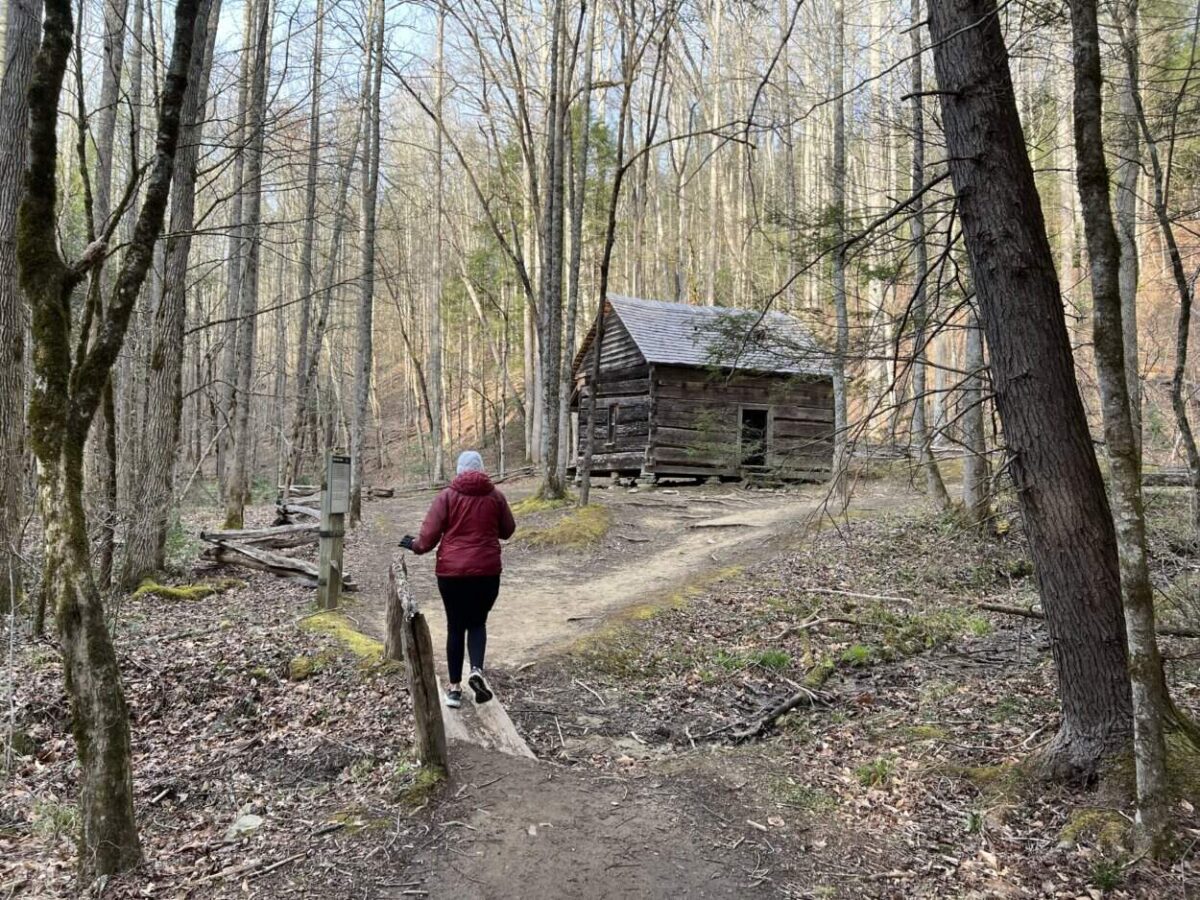
Julie and I were shocked to find the visitor center so busy. It was the worst we have ever seen, and it occurred on a weekday in March — however, the area houses terrific hiking trails, a waterfall, and excellent birding. We suggest arriving early to beat the crowds.
Julie and I hiked three trails from the visitor center. The Gatlinburg Trail is a heavily traveled path connecting the visitor center to the edge of town. Although you can faintly hear cars along the main road, the 3.8-mile round-trip hike takes you along the rushing waters of the Little Pigeon River and through beautiful woodlands. Dogs and bicycles are permitted on the trail.
The Fighting Creek Nature Trail is an easy loop, a little over a mile, with a historic cabin and peaceful forests. Cataract Falls is a lovely 0.7-mile round-trip hike culminating in a narrow, 40-foot waterfall. We spotted numerous birds in this area. If you enjoy birding, bring your binoculars for these two trails.
Newfound Gap Road
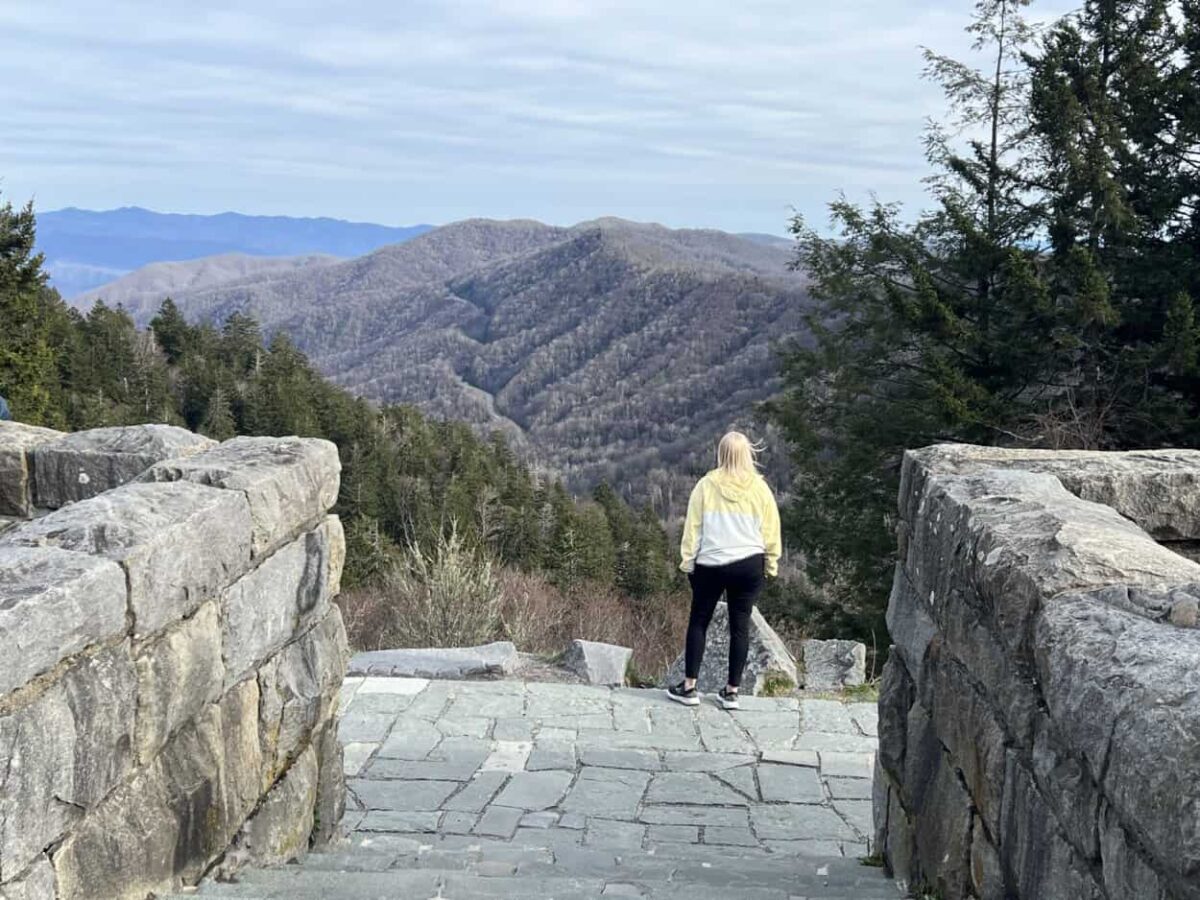
Julie and I made the beautiful drive from Gatlinburg to Cherokee on our first evening. Newfound Gap Road is full of twists and turns but offers splendid forest and mountain views. Along the way, you will discover overlooks, trailheads, and points of interest. Plan on an hour-long drive without stops.
Newfound Gap Overlook is about halfway and has some key points of interest. In addition to the excellent views, the Appalachian Trail passes through here, and you can stand in two states at the same time at the Tennessee and North Carolina state lines. If you only make one stop on the curvy road, this is the one we recommend.
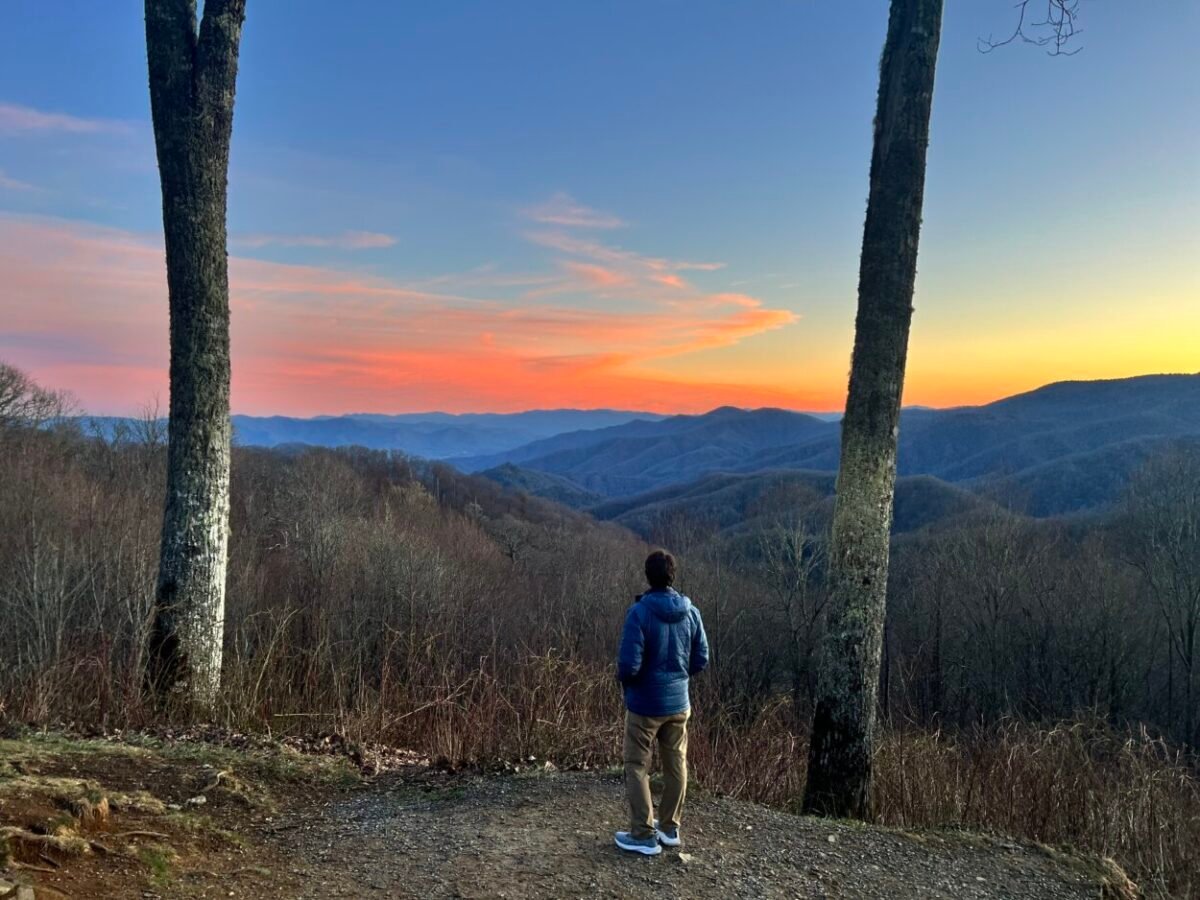
On the return trip to Gatlinburg, we stopped at the Charles A. Webb Overlook, a fantastic vantage point for sunset.
Oconaluftee
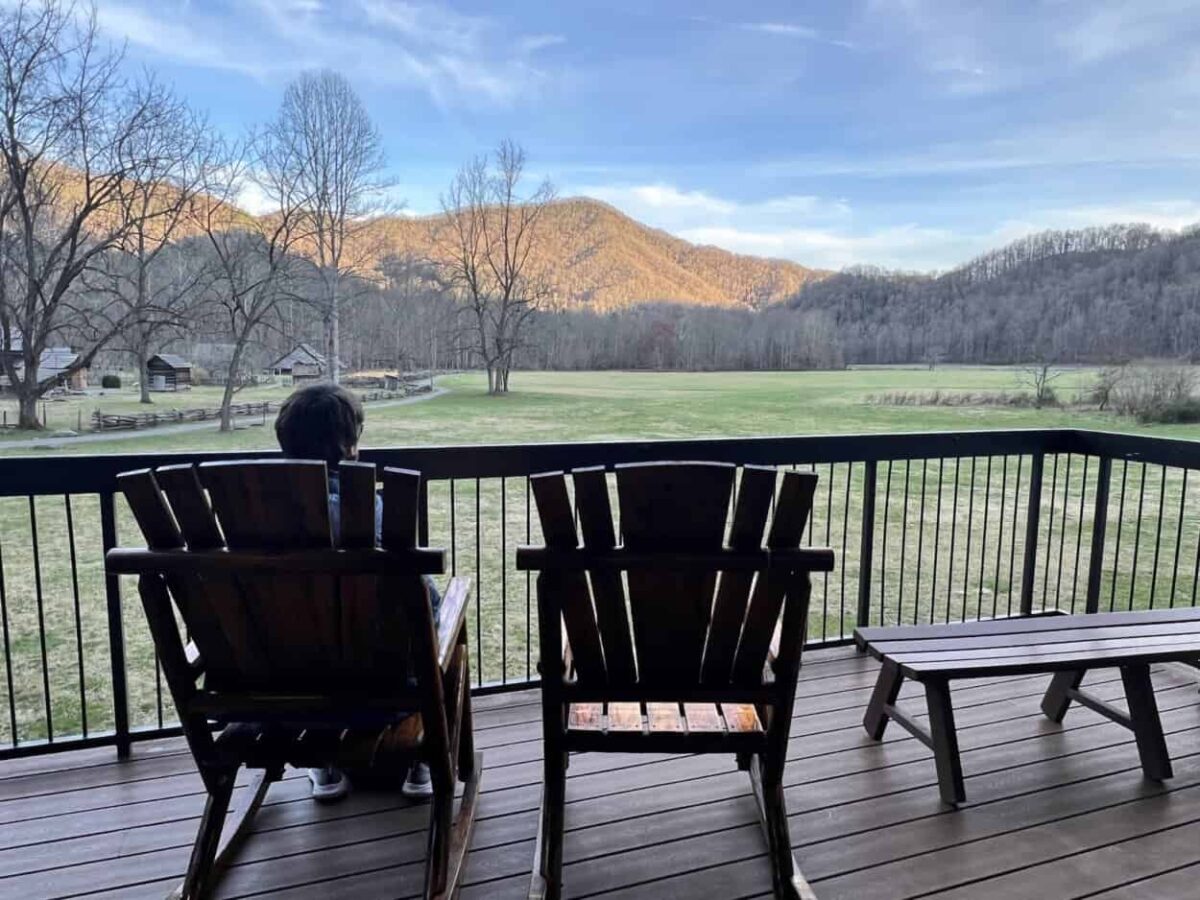
Newfound Gap Road leads to the Oconaluftee Visitor Center in Cherokee. A bit further south, you will find the junction for the famous Blue Ridge Parkway.
The visitor center has excellent cultural history exhibits on life in the Smokies. Behind the visitor center, you will find chairs on a covered deck. Julie and I enjoyed a peaceful picnic dinner here.
The area has hiking trails and historic structures to explore. Julie and I plan to return to explore this area further. However, we ran short on daylight hours. Before leaving the area, we saw lots of wildlife.
Elk
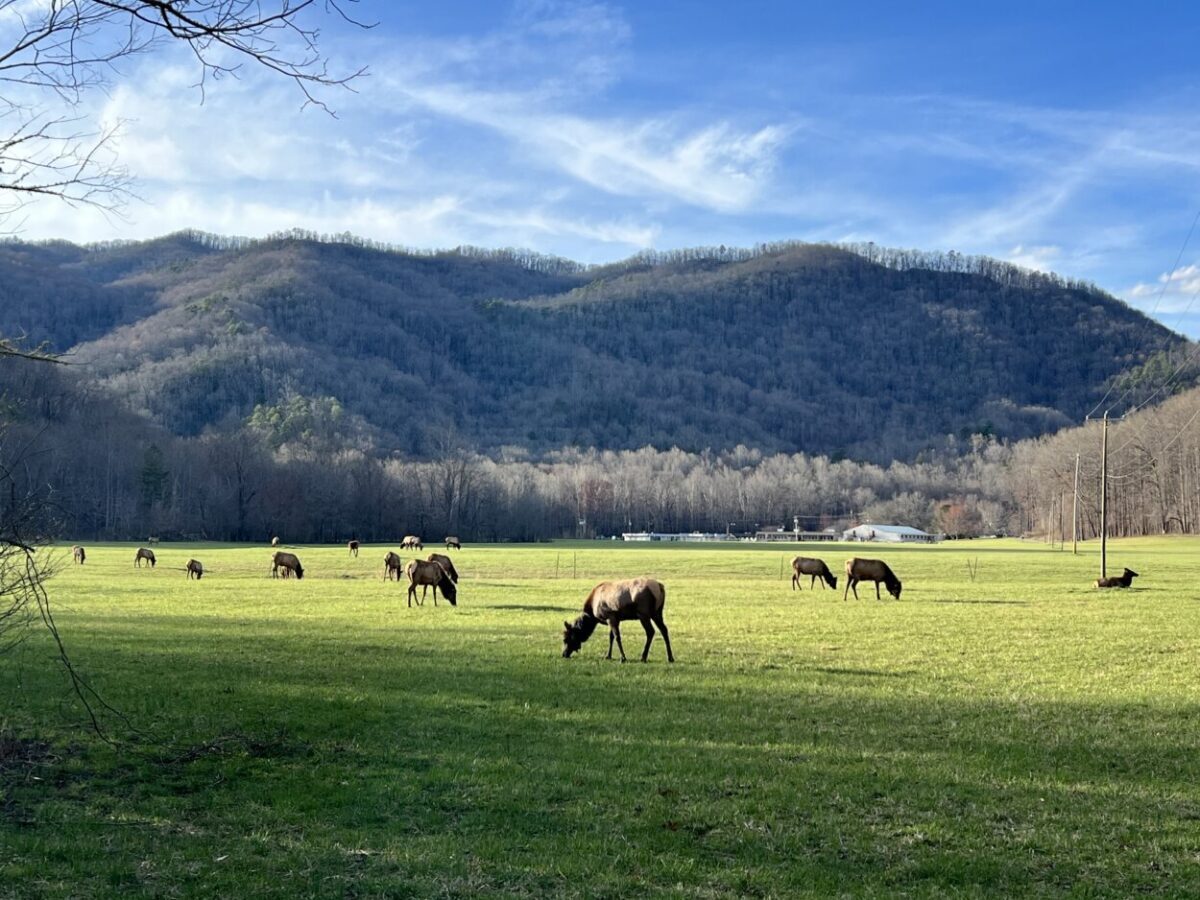
You can spot elk in Great Smoky Mountains National Park in two primary areas. The Cataloochee area is renowned for elk sightings. However, it was closed during our visit.
The Oconaluftee area is the second-best region for elk. The large mammals regularly graze along Newfound Gap Road and near the visitor center. We saw one along Newfound Gap Road.
We turned onto a road with a bridge just north of the visitor center and could not believe our eyes. Julie and I spotted over 50 elk peacefully grazing in the meadow. We have seen elk before, but never this many. It is something we will never forget.
We suggest visiting Oconaluftee near sunrise or sunset to improve your odds of seeing elk. However, please learn from our mistakes. Give yourself plenty of time to explore the historic structures and take a hike.
Now, let’s head to Cades Cove.
Little River Road
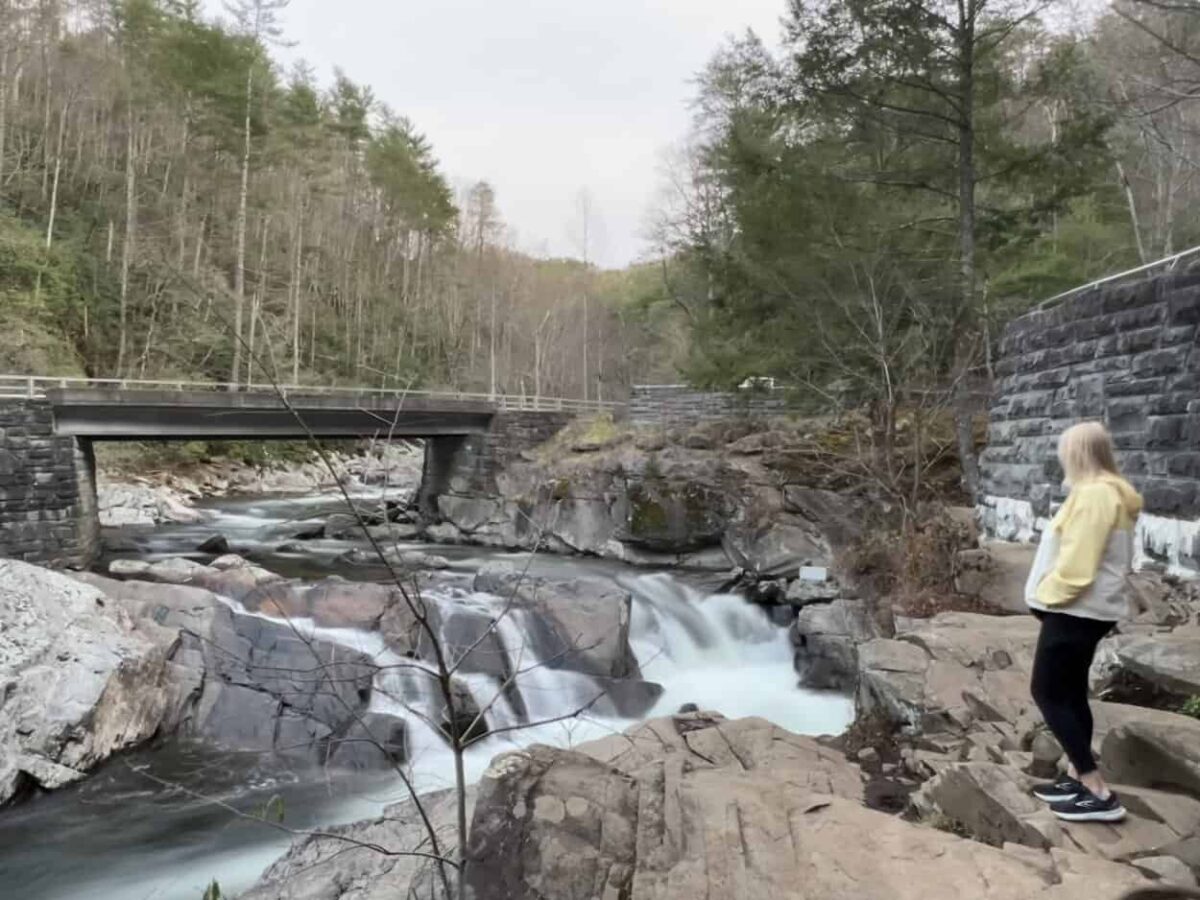
The scenic drive from Gatlinburg to Cades Cove winds through a tranquil forest, offering views of rushing waters and mountains along the way. Depending on traffic, it can take an hour or longer, but it is worth the drive. After the Sugarlands Visitor Center, turn right on Little River Road, which takes you the rest of the way.
You will pass through a short tunnel and encounter various overlooks and trailheads. Maloney Point is an excellent overlook for sunrise. The Sinks offers lovely views of a bridge and a small roadside waterfall.
Cades Cove

Little River Road leads to the famous Cades Cove Loop, an 11-mile one-way road that circles a valley with hiking trails, historic homesites, cemeteries, and churches. The area includes a vast meadow surrounded by mountains. Julie and I stood in the meadow for quite some time to take in the wonderful view.
Cades Cove is an excellent area for bird and wildlife viewing. Although we did not find bears here, Julie and I saw many birds, deer, and wild turkeys.
We took the advice of a park ranger for the best spots. Two roads cut across the loop. Each has sections of forest and open meadows. Most visitors stay on the main loop, fearing they will miss something. Although narrow, these are two-way roads, so you can get back on the loop to complete the whole circuit. Keep a watchful eye out for Sparks Lane and Hyatt Lane.
Cades Cove also has a visitor center, picnic area, campground, and horseback riding stable. Please note that the area gets quite crowded. Although the loop is just 11 miles, it can take two to four hours to complete. Plan on additional time if you hike any of the trails.
If you want to escape the heavy crowds, we have two suggestions.
Greenbrier
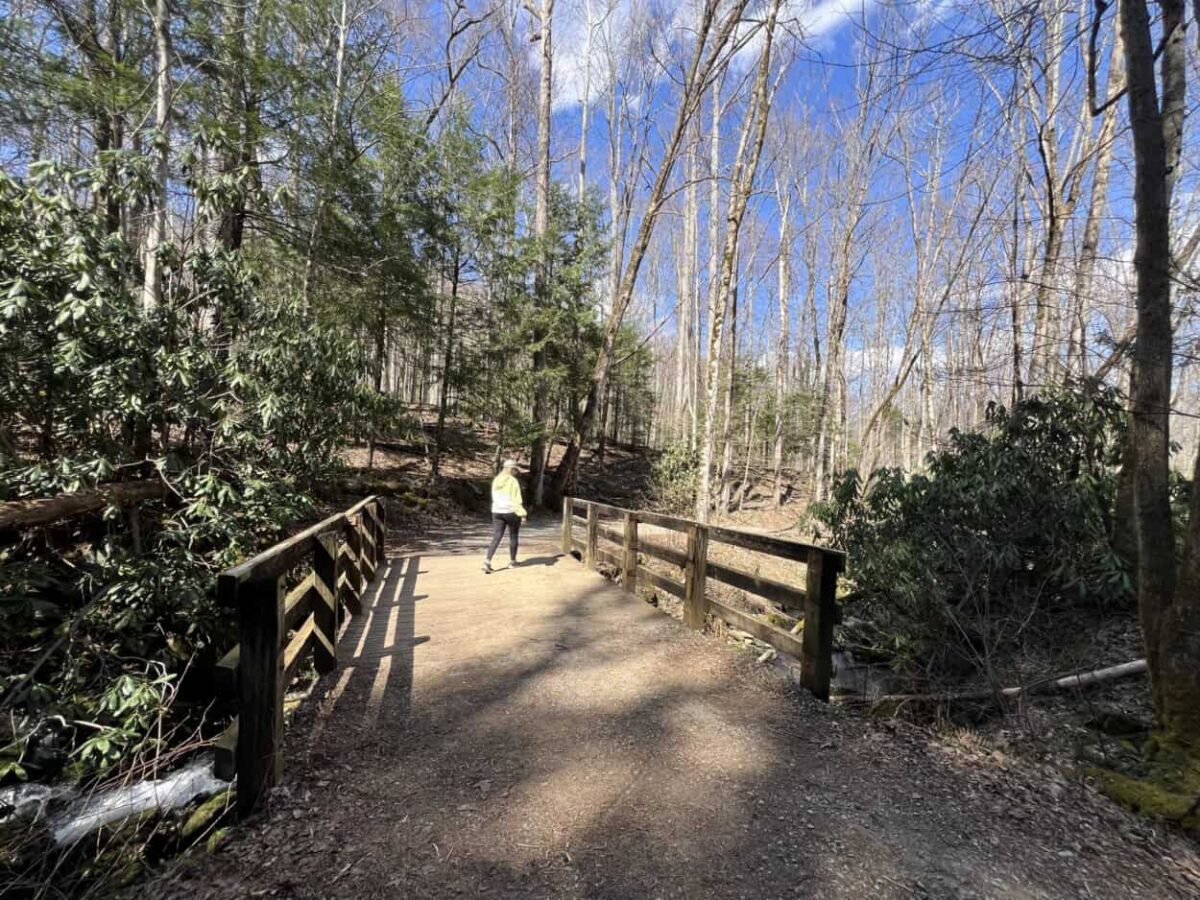
The Greenbrier area nestles about 20 minutes east of Gatlinburg in the park’s northeast region. Greenbrier offers more rugged landscapes and lighter crowds. The heavily forested section has wildflowers, waterfalls, and historic cemeteries and structures.
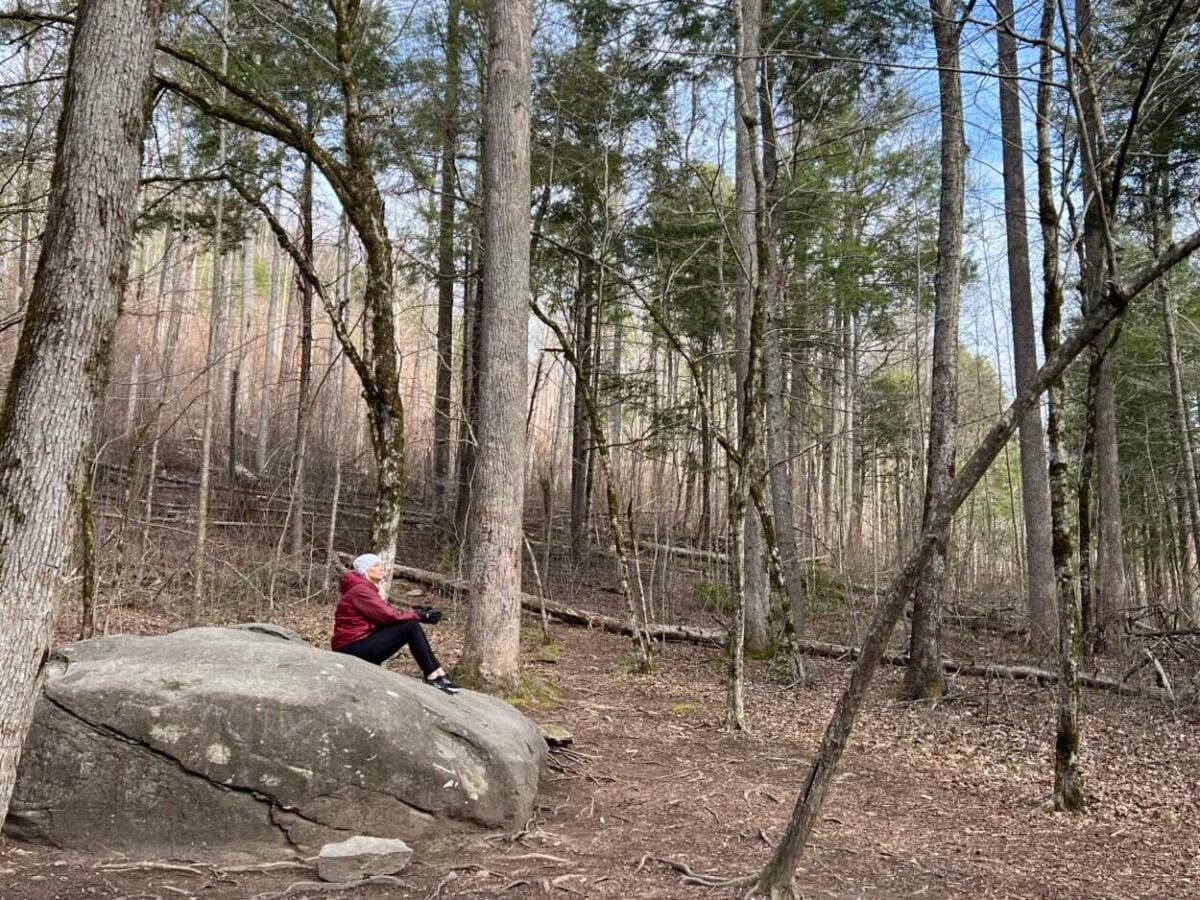
Julie and I hiked the Porters Creek Trail, enjoying the sound of the rushing river through the thick forest. We found a peaceful place with a large fallen log, where we savored nature’s solitude and a snack.
Elkmont
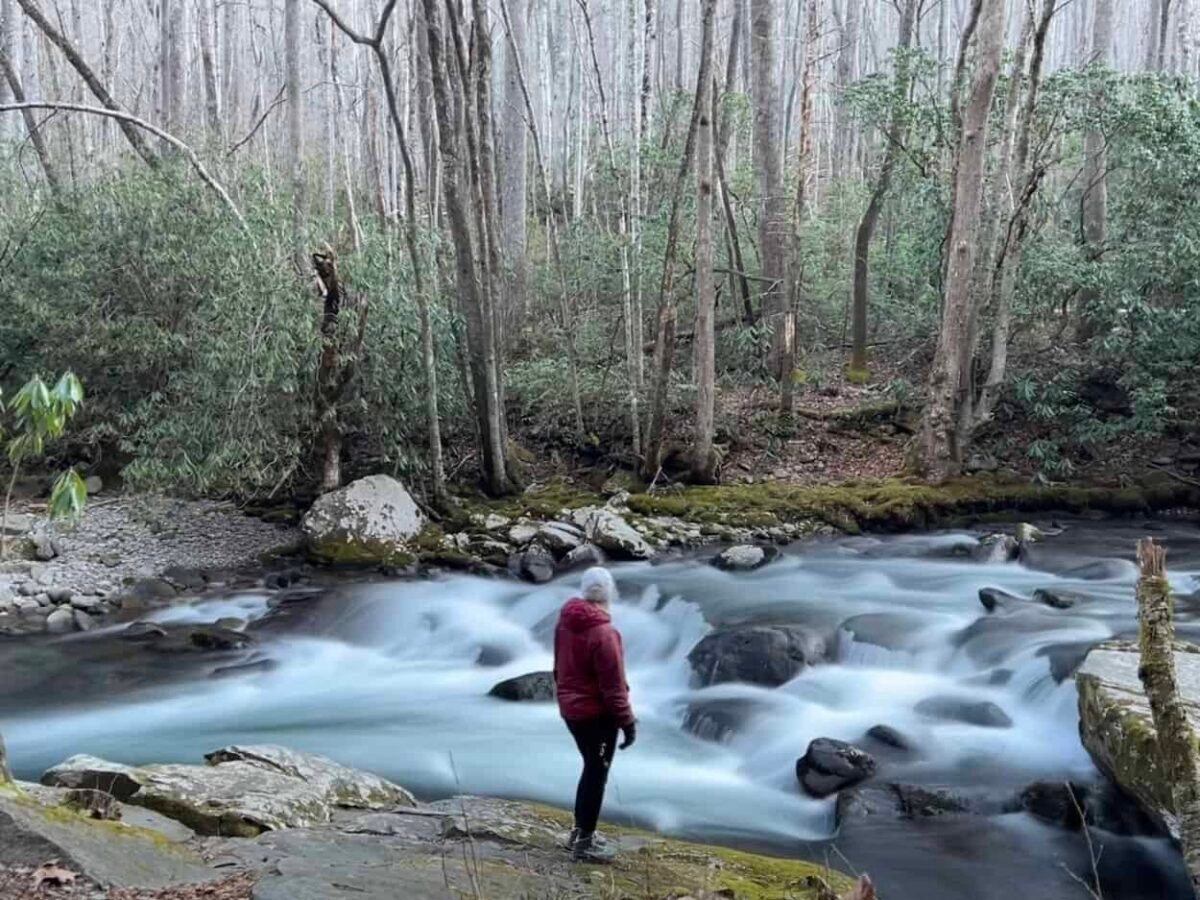
The Elkmont area features a large campground, peaceful trails, and mountain streams. It sits about 8 miles southwest of Gatlinburg.
Elkmont has a trailhead for the Little River Trail and Jakes Creek Trail. It may be our favorite hiking area. Julie and I saw lots of birds here. Most of the trails are made of crushed stone and are easy to navigate. The steady sound of flowing mountain streams makes the experience a genuine escape.
Speaking of escapes, is it possible to skip the masses?
Tips to Avoid Crowds
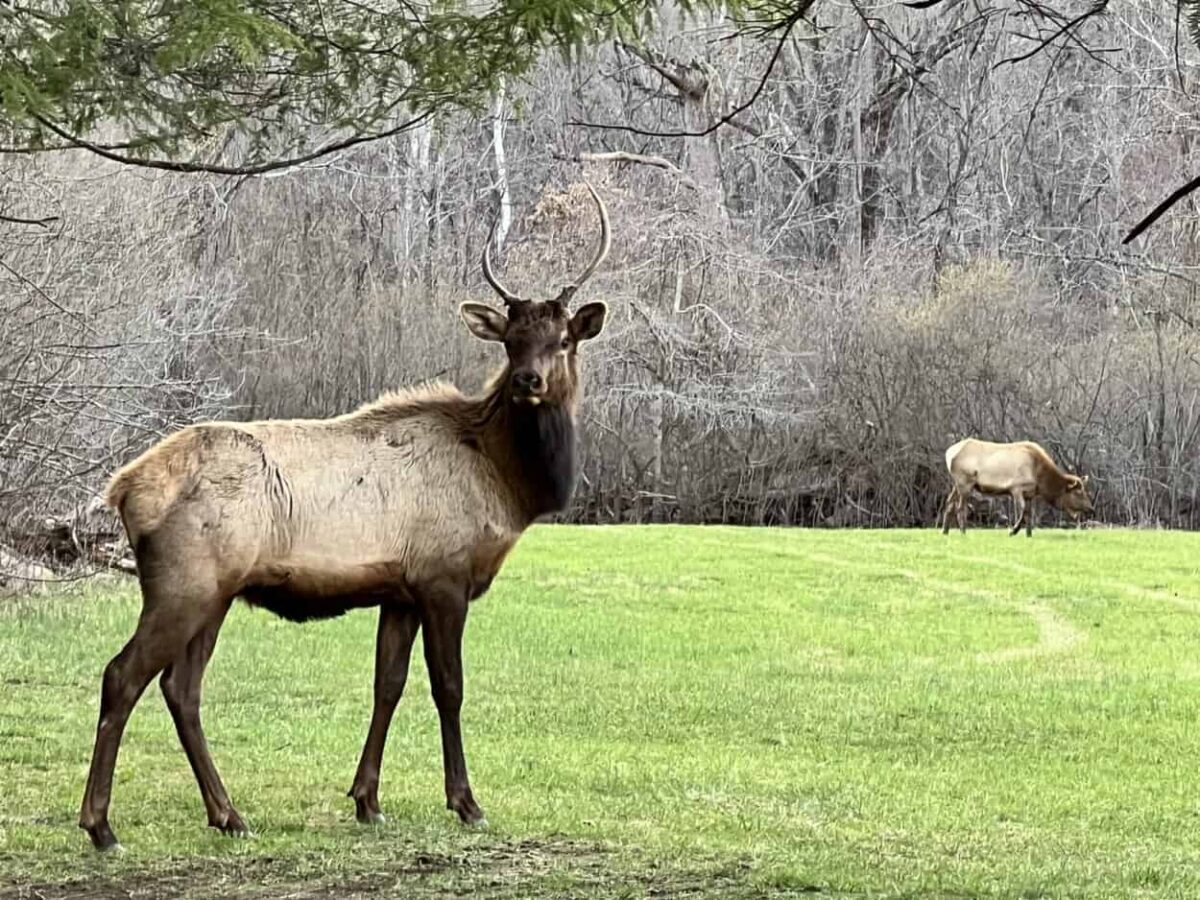
Although avoiding the crowds in the Smokies is difficult, we have a few suggestions. Enter the park early in the day (before 9 am) or in the evenings.
Stay in a park campground or an accommodation near the park. A shorter drive combined with an early start, puts you ahead of the masses.
Explore less popular areas like Greenbrier and Elkmont. We found the crowds noticeably lighter in both places.
If you enjoy stargazing, enter Cades Cove before sunset. The Cades Cove entrance gate closes at sunset, but you can still exit anytime. Be sure to notify a park ranger at the gate about your plans. You should have dark skies with few people around.
Check the events calendar for nearby towns like Pigeon Forge and Gatlinburg. The park crowds are heavier when these towns hold festivals or special events. Try to avoid those dates if you can.
Plan Your Great Smoky Mountains National Park Adventure
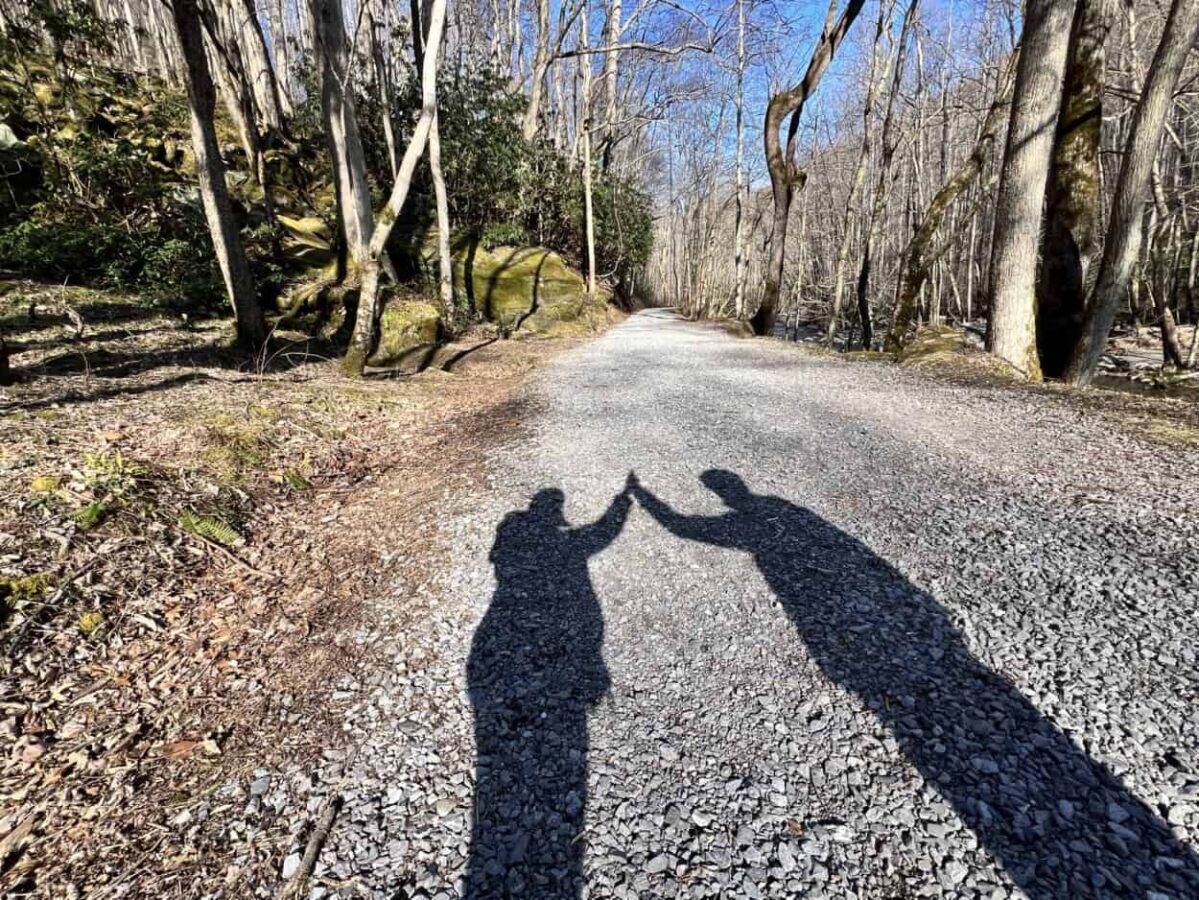
Great Smoky Mountains National Park is a special place. With mild temperatures, lighter crowds than summer, gushing waterfalls, colorful wildflowers, and the re-emergence of wildlife, spring may be the best time to visit.
The key is to select the best spring month based on what you want to experience most. Then, you can enjoy the park and all it offers. Cheers to spring in the Smokies!
Featured image credit: Miles with McConkey