
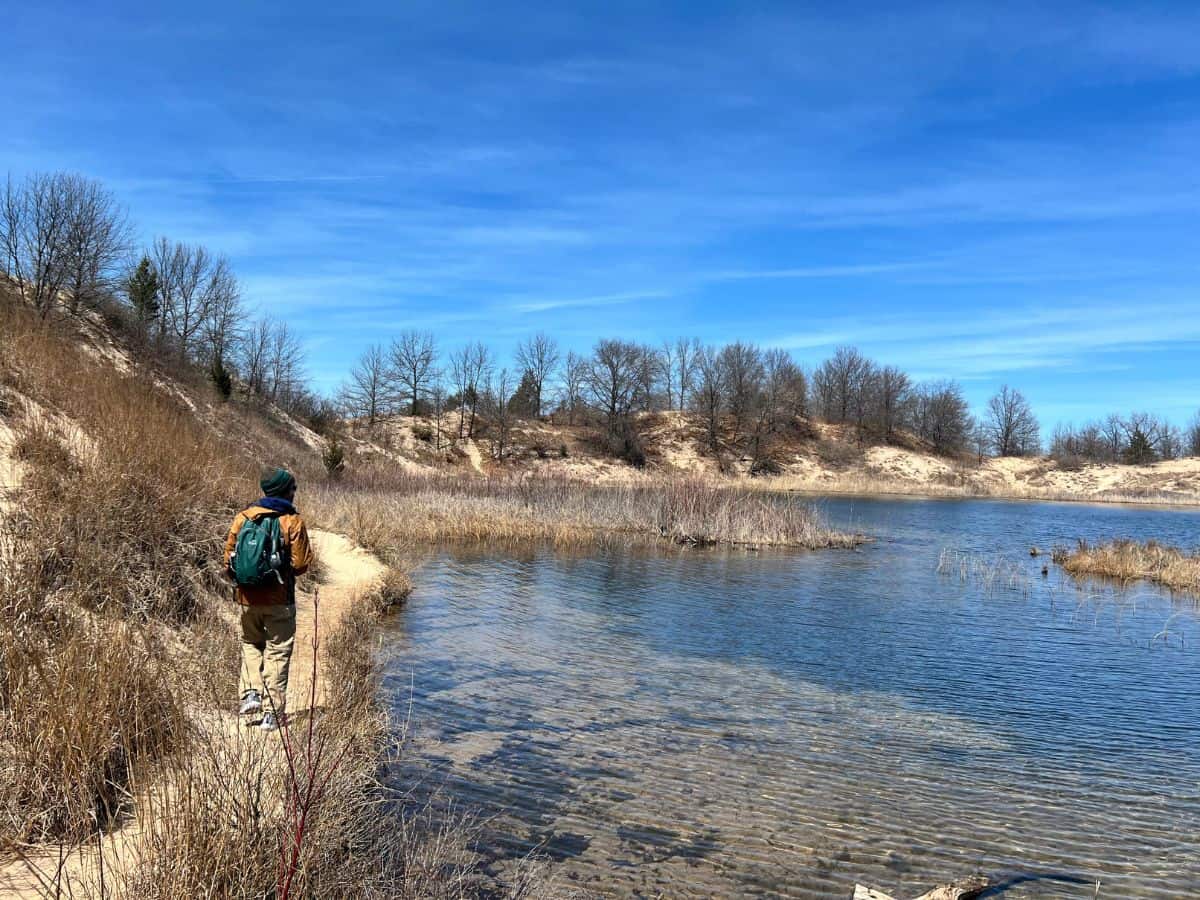
Wondering about the best time to visit Indiana Dunes National Park? Your timing will shape everything—from bird sightings and wildflower blooms to crowd levels and costs. We visited in mid-April and loved the peaceful hikes, lake views, and variety of ecosystems. In hindsight, late April to early May might have offered even more birding and wildflower magic—including the stunning lupine bloom that transforms the landscape with waves of purple.
This underrated gem along Lake Michigan is a delight for those who appreciate birding, quiet trails, and diverse habitats. Where else can you hike through sand dunes, beaches, forests, and wetlands—sometimes all on the same trail?
Disclosure: This post may contain affiliate links. If you make a purchase through one of these links, I may earn a small commission at no additional cost to you. Thanks for keeping Miles with McConkey going!
Let’s explore how each season affects your experience.
🗓️ Seasonal Tips for Indiana Dunes
Curious how Indiana Dunes transforms throughout the year? Tap below to explore seasonal tips for spring wildflowers, summer beach days, fall foliage, and winter solitude.
🌸 Spring Tips
- Visit in late April to early May for peak birding and wildflower blooms.
- Trails may be muddy—waterproof footwear helps.
- Migratory birds are active early mornings; bring binoculars and layers.
- Spring festivals like Maple Sugar Time and the Birding Festival add local flavor.
☀️ Summer Tips
- Arrive early or late in the day to avoid peak beach crowds.
- Watch for rip current warnings before swimming.
- Ranger-led programs are abundant—check the schedule at the visitor center.
- Bring sun protection and hydrate often; humidity can be intense.
🍂 Fall Tips
- Mid-October is peak foliage—ideal for photography and scenic hikes.
- Fall migration brings raptors and songbirds; quieter trails enhance the experience.
- Layer up—mornings can be chilly even in early fall.
- Chellberg Farm offers seasonal charm and family-friendly activities.
❄️ Winter Tips
- Snowshoe rentals available at the Douglas Center—perfect for snowy days.
- Shelf ice is beautiful but dangerous—observe from a safe distance.
- Trails are not groomed; check conditions before heading out.
- Sledding is permitted only at West Beach—bring your own gear.
Now that you know what each season brings, let’s talk about timing your visit to avoid the biggest crowds.
📊 Crowd Levels and Visitation Trends
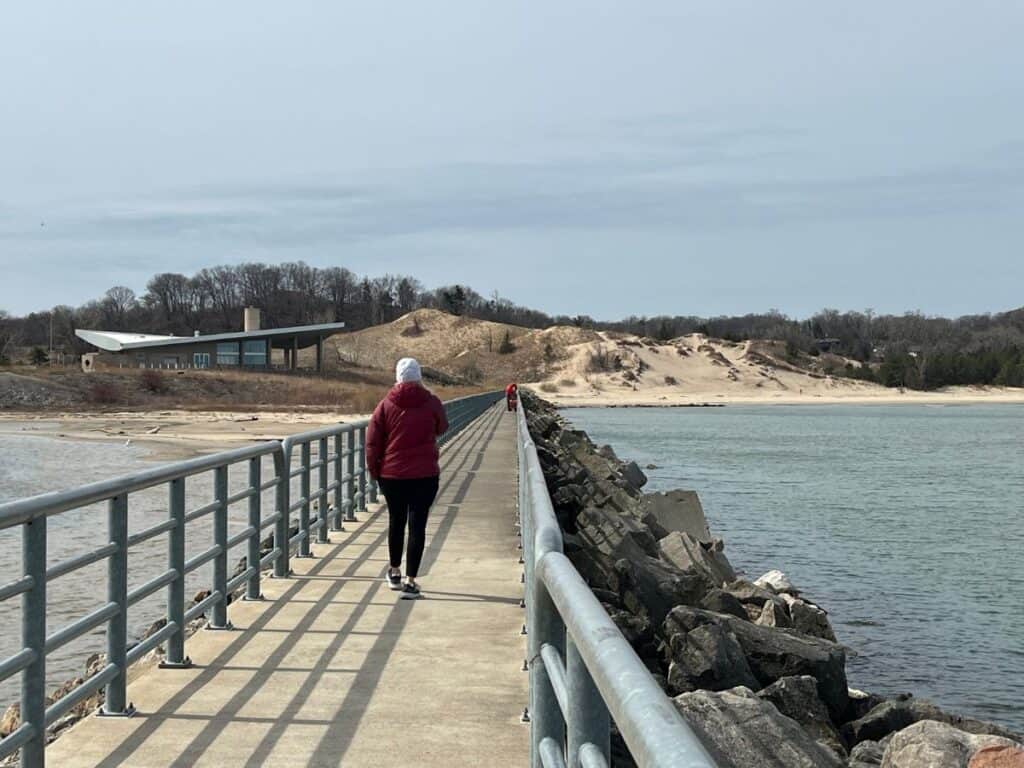
Indiana Dunes National Park welcomes about 2.8 million visitors annually. Summer is the busiest season, with June through August each drawing over 400,000 guests—sometimes exceeding 500,000. Expect packed beaches and full parking lots.
| Month | Avg. Visitors |
|---|---|
| Jan-Feb | Under 100K |
| Mar-Apr | 120K-170K |
| May | 250K+ |
| June-Aug | 400K-500K+ |
| Sept-Oct | 200K-250K |
| Nov-Dec | 80K-115K |
Spring and fall offer a sweet spot—fewer crowds, active wildlife, and comfortable hiking weather. Just note that Lake Michigan is typically too cold for swimming until mid-summer; July through September offer the warmest water.
If birding’s on your radar, Indiana Dunes is a prime stop during migration season. You can also explore our top national parks for birding to find more incredible destinations for spotting feathered friends.
🌦️ Weather Overview
Lake Michigan heavily influences the park’s weather, which can change quickly.
- Summer: Warm and humid, highs in the mid-80s°F, lows in the mid-60s°F. About 15 days/year exceed 90°F.
- Winter: Highs in the low 30s°F, lows in the 20s°F. About 15 days/year drop below 0°F.
- June: Wettest month, averaging 4.66 inches of rain.
- July: Warmest month; record high of 105°F (1934).
- January: Coldest month; record low of -25°F (1985).
☀️ Sunshine is abundant in summer, while winter tends to be cloudy—except during extreme cold snaps.
⚠️ Seasonal Safety Considerations
While Indiana Dunes offers year-round beauty, each season brings its own safety considerations—especially along the Lake Michigan shoreline.
Summer: Rip Currents
Rip currents are powerful, narrow channels of water that can pull swimmers away from shore. They’re strongest near the surface and can reach speeds of 8 feet per second.
If caught in a rip current:
- Don’t fight the current.
- Swim parallel to shore to escape.
- If you can’t escape, float or tread water.
- Signal for help if needed.
Safety Tips:
- Know how to swim.
- Never swim alone.
- If in doubt, don’t go out.
Check current water temperatures before swimming. August typically sees peak temps around 73–77°F.
Winter: Shelf Ice
Shelf ice may look solid, but it is dangerously unstable. It cannot support weight and can shift suddenly. Never walk on shelf ice—admire it from a safe distance.
🎟️ Seasonal Activities and Amenities
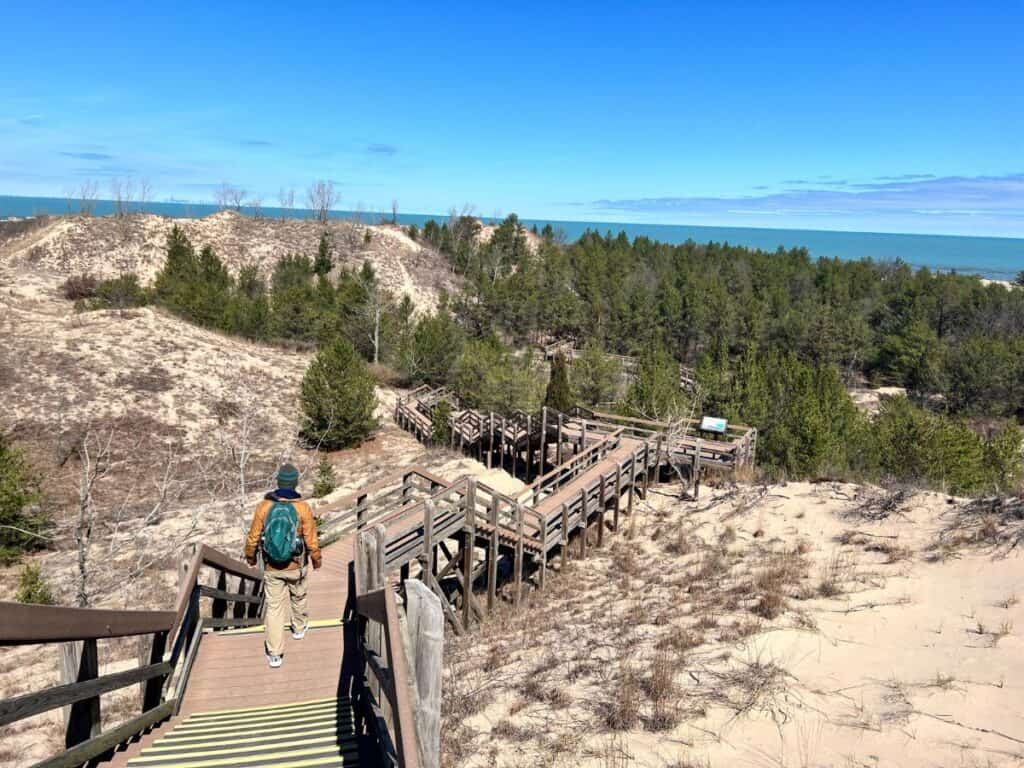
Indiana Dunes National Park is open year-round, but amenities vary by season.
| Season | Activities | Amenities |
|---|---|---|
| Spring | Birding, wildflowers, festivals | Campground opens Apr 1 |
| Summer | Swimming, hiking, ranger programs | Full visitor center hours |
| Fall | Foliage hikes, farm visits, birding | Mild weather, fewer crowds |
| Winter | Snowshoeing, sledding, quiet trails | Reduced hours, free snowshoe rentals at Douglas Center |
🛶 Fishing and camping are popular from April through October. Try steelhead fishing in the Little Calumet River or lakeside casting at Portage Lakefront Pier.
💰 Costs and Lodging
- $25/vehicle entrance fee.
- Note: Indiana Dunes State Park (surrounded by the national park) charges a separate fee.
Dunewood Campground operates April through October, with wooded sites tucked near trails and beaches. For those seeking hotels or vacation rentals, nearby towns like Chesterton and Michigan City offer plenty of choices.
🏨 Average Lodging Costs by Season
| Season | Avg. Hotel Rate (Chesterton/Porter area) | Notes |
|---|---|---|
| Spring | $90-$130/night | May rates rise with birding festival |
| Summer | $110-$160/night | Peak demand near beaches |
| Fall | $95-$135/night | Foliage boosts weekend rates |
| Winter | $70-$100/night | Lowest prices, limited amenities |
Lodging rates vary by season. Use the interactive map below to explore current options and find the best fit for your trip.
🌟 Why Indiana Dunes Is Worth Visiting
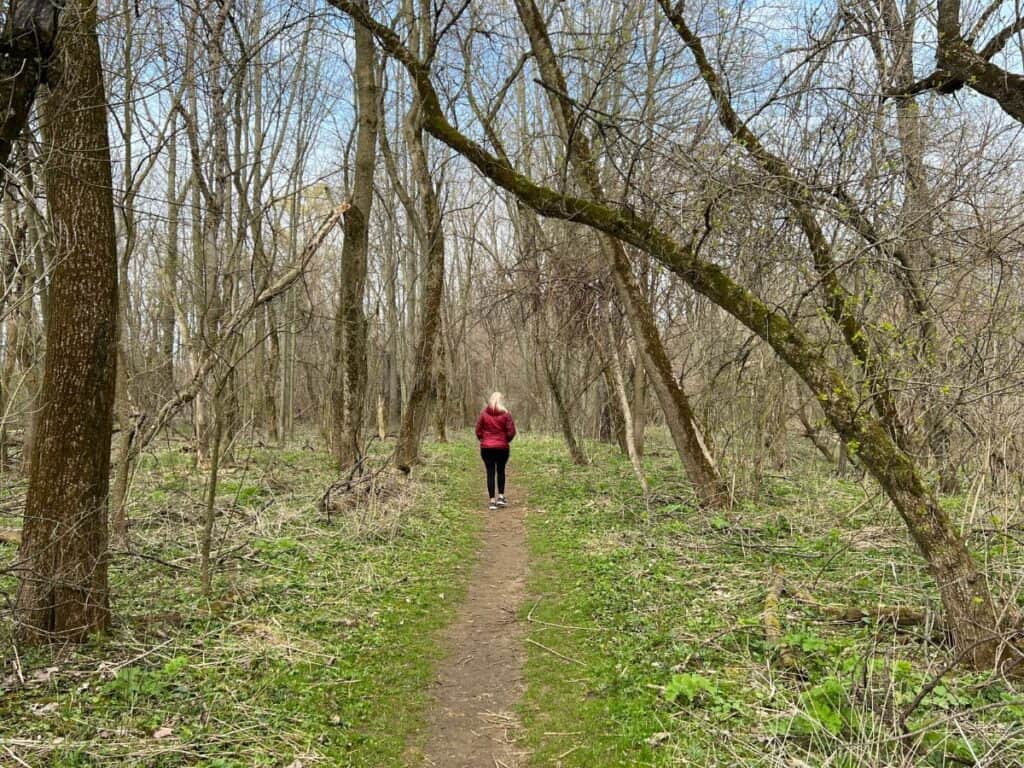
Set along Lake Michigan’s southern shore, Indiana Dunes National Park packs an astonishing range of landscapes into a compact footprint. Sandy beaches, rolling dunes, quiet woodlands, wetlands, and prairies support one of the most biodiverse ecosystems in the national park system.
With over 350 recorded bird species and a prime location along a major migratory route, it’s a birding hotspot—especially in spring and fall. Whether you’re hiking, biking, or relaxing on the beach, the park offers something for every kind of traveler.
🚫 Worst Time to Visit
If you’re seeking solitude, summer may not be ideal. June through August bring peak crowds, packed beaches, and higher lodging costs. Winter offers quiet trails but limited amenities and unpredictable weather. Shelf ice and frigid temps can restrict access to certain areas.
For a balanced experience, aim for late spring or early fall—when wildlife is active, trails are peaceful, and weather is comfortable. If swimming in Lake Michigan tops your list, September strikes a sweet spot: the summer crowds begin to thin, but the water often remains warm enough for a refreshing dip.
❓ FAQs
Curious about logistics, park rules, or seasonal tips? We’ve got you covered with quick answers to help you plan confidently.
Is Indiana Dunes open year-round?
Yes, the park is open year-round, though amenities like visitor center hours and campground access vary by season.
Can you swim in Lake Michigan at Indiana Dunes?
Yes, but swimming is most comfortable from July through September. Always check for rip current warnings.
Are pets allowed?
Leashed pets are allowed on most trails and beaches, but check signage and park rules for restricted areas.
Do I need a reservation to visit?
No reservation is required for day visits. Campground reservations are recommended during peak season.
Is Indiana Dunes good for kids?
Absolutely! Beaches, short hikes, Chellberg Farm, and ranger programs offer family-friendly fun.
📚 Ready to Plan Your Visit?
Explore our full guide to Indiana Dunes National Park for insider tips, trail recommendations, and seasonal highlights.
Don’t miss our full guide to Indiana Dunes!
We’ve got everything you need to plan your perfect trip.
Featured image credit: Miles with McConkey