Navigating Olympic National Park can feel like a logistical puzzle, with sprawling ecosystems, disconnected regions, and long drives between trailheads. But what caught me off guard wasn’t just the terrain—it was the names.
This Olympic National Park pronunciation guide was born out of my own nervousness about saying things incorrectly, especially when it came to Indigenous place names and local landmarks. I wanted to explore with confidence, not cringe, and most importantly, to show respect to the people and cultures tied to this land.
Disclosure: This post may contain affiliate links. If you make a purchase through one of these links, I may earn a small commission at no additional cost to you. Thanks for keeping Miles with McConkey going!
Why Pronunciation Matters in Olympic National Park
- Many names originate from Indigenous languages, particularly those of the Quileute, Quinault, and Makah.
- Mispronunciations are common—and often unintentional—but effort shows respect.
- Saying names correctly builds trust with locals and deepens your connection to the place.
- It helps you avoid awkward moments when asking for directions or chatting with fellow hikers.
Olympic National Park Pronunciation Guide
The following names span Olympic National Park and its surrounding areas—including places you’ll likely encounter while hiking, driving, or exploring nearby communities. Each entry includes phonetic help, location tips, and cultural or historical context. For easy reference, the list is organized alphabetically.
Bogachiel (BOH-guh-sheel)
- Where: Bogachiel River near Forks and Bogachiel State Park, in the northwestern section of Olympic National Park.
- Why Visit: Hiking, camping, river access, and a quieter gateway to the Hoh Rainforest.
- Background: Quileute word meaning “muddy waters,” reflecting the river’s sediment-rich flow.
- Common Mistake: Often mispronounced as “BOH-guh-cheel” or “BOH-guh-chill”—but the ending is smooth and soft: (BOH-guh-sheel).
Calawah (KAL-uh-wah)
- Where: Calawah River near Forks, in the northwestern section of Olympic National Park.
- Why Visit: Fishing, scenic drives, quiet forest access, and a peaceful alternative to busier river corridors.
- Background: Name of Quileute origin, tied to the region’s rich ecological and cultural landscape.
- Common Mistake: Sometimes mispronounced as “KAL-uh-way” or “KAL-uh-wack”—but it’s a smooth three-syllable name: (KAL-uh-wah).
Crescent (KRES-ent)
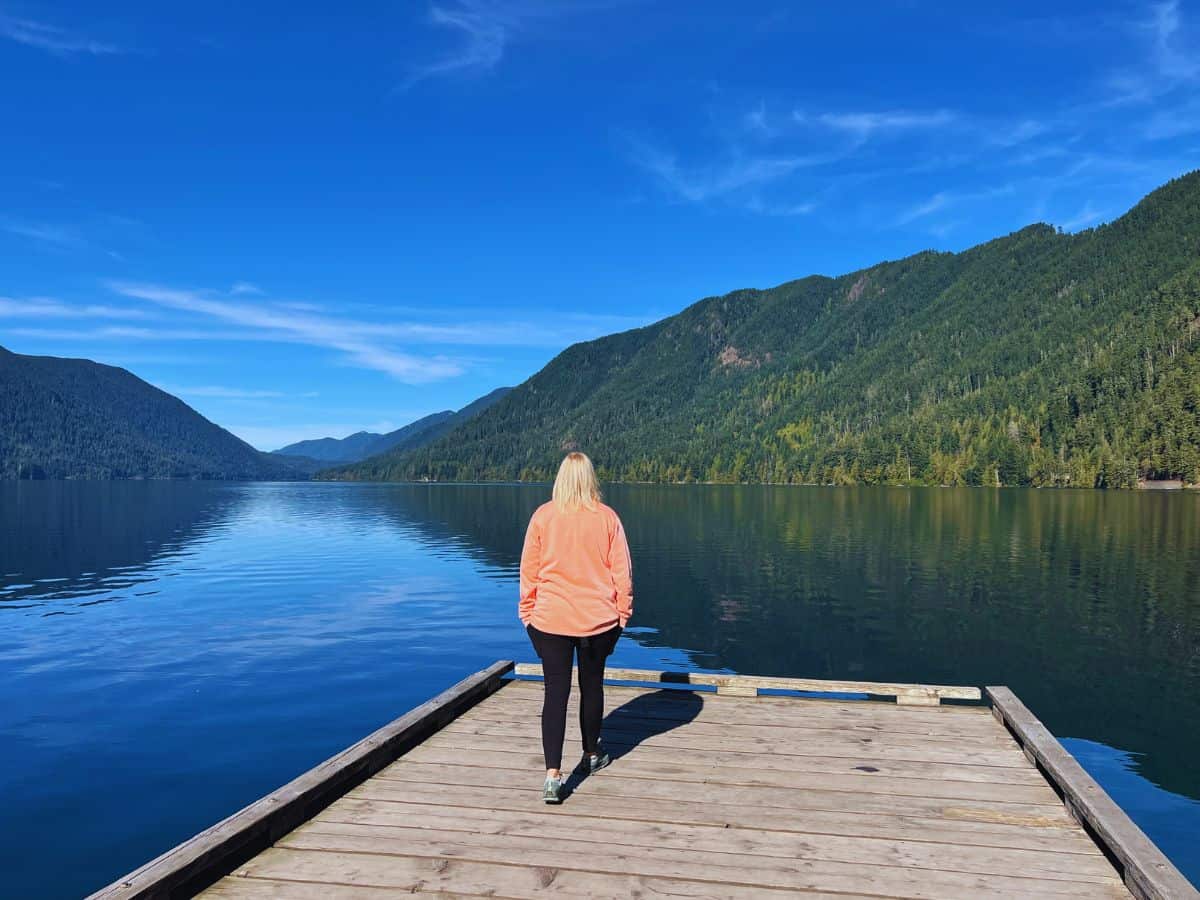
- Where: Lake Crescent, nestled along Highway 101 in the northern section of Olympic National Park, west of Port Angeles.
- Why Visit: Deep blue lake, kayaking, scenic drives, and a stay at the historic Lake Crescent Lodge.
- Background: Known for its striking clarity and depth, Lake Crescent is a glacially carved lake surrounded by steep forested slopes.
- Common Mistake: Sometimes misread as “CREE-sent”—but it’s a crisp, single-syllable name: (KRES-ent).
Elwha (EL-wah)
- Where: Near Port Angeles, including the Elwha River and Elwha Valley area.
- Why Visit: Site of major dam removal, river restoration, hiking trails, and ecological rebirth.
- Background: Central to the Lower Elwha Klallam Tribe’s history, with deep cultural and environmental significance.
- Common Mistake: Occasionally mispronounced as “EL-wuh” or “EL-wahh”—but it’s a clean, two-syllable name: (EL-wah).
Hoh (HOH)

- Where: Hoh Rainforest in the western section of Olympic National Park, inland from the Pacific Coast.
- Why Visit: Moss-draped trails, lush temperate rainforest, and access to the Hoh River.
- Background: Named after the Hoh River and the Hoh people, with deep cultural and ecological significance.
- Note: Most pronounce this correctly, but it’s worth including for clarity.
Kalaloch (KLAY-lock)
- Where: Southwestern coast, off Highway 101.
- Why Visit: Driftwood beaches, tidepools, Tree of Life.
- Background: From the Quinault language, often translated as “good place to land.”
- Common Mistakes: We heard everything from “Kaalalock” to “Kaalalooch.”
- Note: Some sources list the pronunciation as (kuh-LAY-lock), but local rangers and longtime residents often say (KLAY-lock). Either way, effort and curiosity go a long way.
Makah (muh-KAH)
- Where: Makah Indian Reservation in Neah Bay, at the northwestern tip of the Olympic Peninsula.
- Why Visit: Museum at the Makah Cultural & Research Center, Cape Flattery Trail, and breathtaking coastal views.
- Background: Home to the Makah people, renowned for their maritime traditions and stewardship of the land and sea.
- Common Mistake: Occasionally mispronounced as “MAH-kah” or “MACK-ah”—but the emphasis is on the second syllable: (muh-KAH).
Ozette (oh-ZET)
- Where: Remote northwestern corner of Olympic National Park, near Lake Ozette and Cape Alava.
- Why Visit: Long coastal hikes, archaeological significance, and access to one of the most secluded stretches of Washington’s coastline.
- Background: Makah origin; site of ancient village remains uncovered after a mudslide in the 1970s.
- Common Mistake: Sometimes mispronounced as “OH-zett” or “oh-ZEET”—but the emphasis is on the second syllable: (oh-ZET).
Queets (KWEETS)
- Where: Remote southwestern corner of Olympic National Park, along the Queets River.
- Why Visit: Backcountry hiking, solitude, river access, and one of the least-visited rainforests in the park.
- Background: Named after the Queets River, which flows through dense temperate rainforest and holds cultural significance for the Quinault people.
- Common Mistake: Occasionally mispronounced as “KWETS” or “KWAY-ts”—but it’s a clean, single syllable: (KWEETS).
Quileute (KWIL-yoot)
- Where: Quileute Indian Reservation in La Push, on the western edge of Olympic National Park.
- Why Visit: Driftwood beaches, tidepooling, and the Quileute Oceanside Resort and Cultural Center.
- Background: Home to the Quileute people, whose rich oral traditions and coastal heritage are deeply tied to this land.
- Common Mistake: Often mispronounced in a wide range of ways—this name is frequently butchered, but effort and curiosity go a long way.
- Note: Some sources list the pronunciation as (KWIL-ee-yoot), but local usage overwhelmingly favors (KWIL-yoot).
Quillayute (KWIL-yoot)
- Where: Quillayute River near La Push, flowing through the western edge of Olympic National Park.
- Why Visit: Scenic drives, river access, wildlife viewing, and a quieter gateway to coastal trails.
- Background: Closely tied to the Quileute people and often confused with “Quileute,” though it specifically refers to the river and watershed.
- Common Mistake: Like its cousin name, “Quillayute” is frequently mispronounced—heard everything from “Quill-uh-yoot” to “Quill-ee-oot.”
- Note: While some guides include (KWIL-ee-yoot), most locals and rangers say (KWIL-yoot).
Quinault (kwin-AWLT)
- Where: South of Lake Quinault, near the Quinault Rainforest and historic lodge.
- Why Visit: Rainforest hikes, lake views, and a cozy base for exploring the park’s southwest corner.
- Background: Named after the Quinault people, whose ancestral lands surround the area.
- Common Mistake: We once heard someone say “QuiNO”—a reminder that even confident guesses can go sideways.
Rialto (ree-AL-toh)
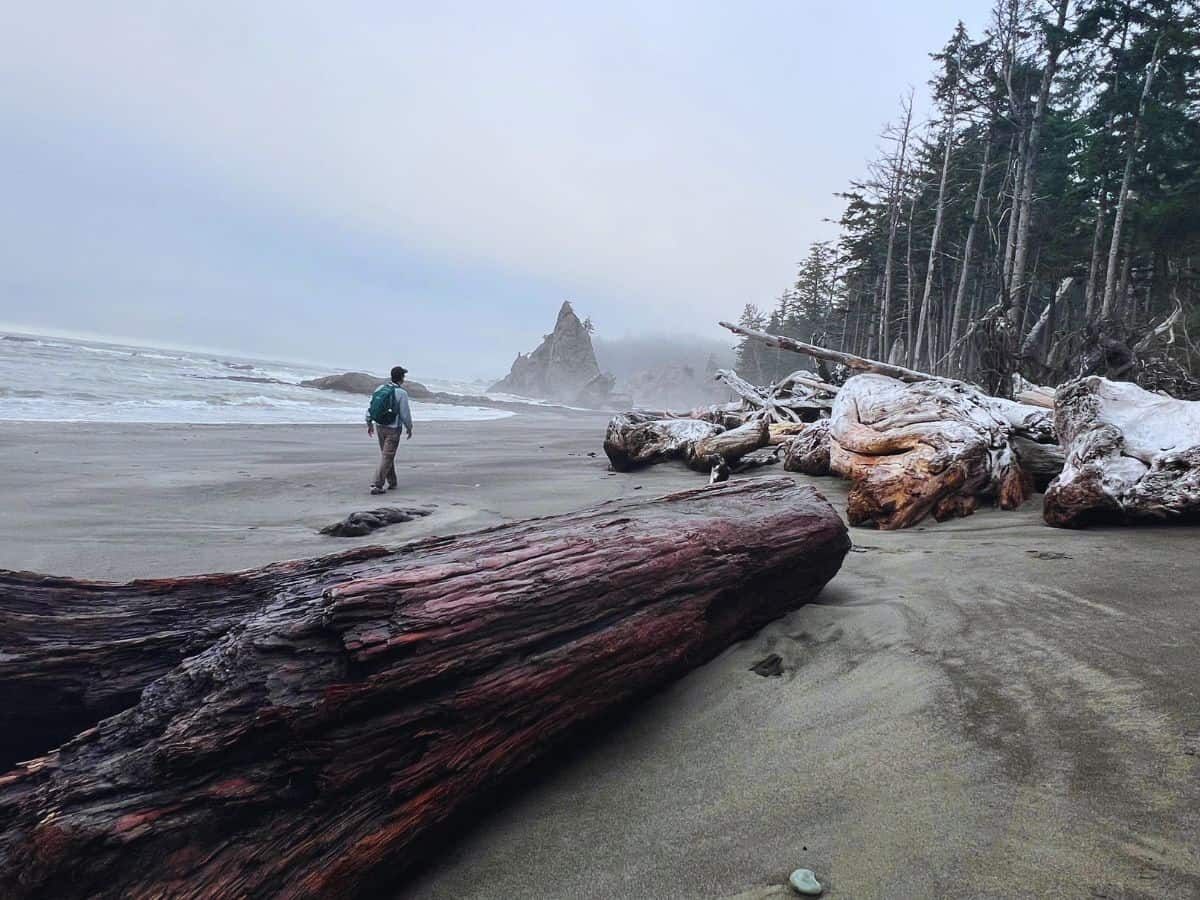
- Where: Rialto Beach, north of the Quillayute River mouth, just outside La Push on the park’s northwestern coast.
- Why Visit: Sea stacks, tidepools, dramatic surf, and the popular hike to Hole-in-the-Wall.
- Background: Though not of Indigenous origin, the name is deeply tied to the rugged coastal experience of Olympic’s western edge.
- Common Mistake: Often mispronounced as “REE-al-toh,” with misplaced emphasis—correct pronunciation stresses the second syllable: (ree-AL-toh).
Sequim (SKWIM)
- Where: Northeast Olympic Peninsula.
- Why Visit: Lavender farms, Dungeness Spit, frequent elk sightings, and dry-weather hikes in the park’s unique rain shadow.
- Background: From a Klallam word meaning “calm waters.”
- Common Mistake: Many pronounce it phonetically as “SEE-kwim” or “SEK-wim.”
Shi Shi (shy shy)
- Where: Shi Shi Beach on the northwestern coast of Olympic National Park, near Neah Bay.
- Why Visit: Stunning sea stacks, remote wilderness camping, and one of the most dramatic coastal hikes in the park.
- Background: Makah origin; the repetition is intentional and reflects the original pronunciation.
- Common Mistake: Often pronounced “She She,” which misses the sharpness and rhythm of the original name.
Sol Duc (SOHL duck)
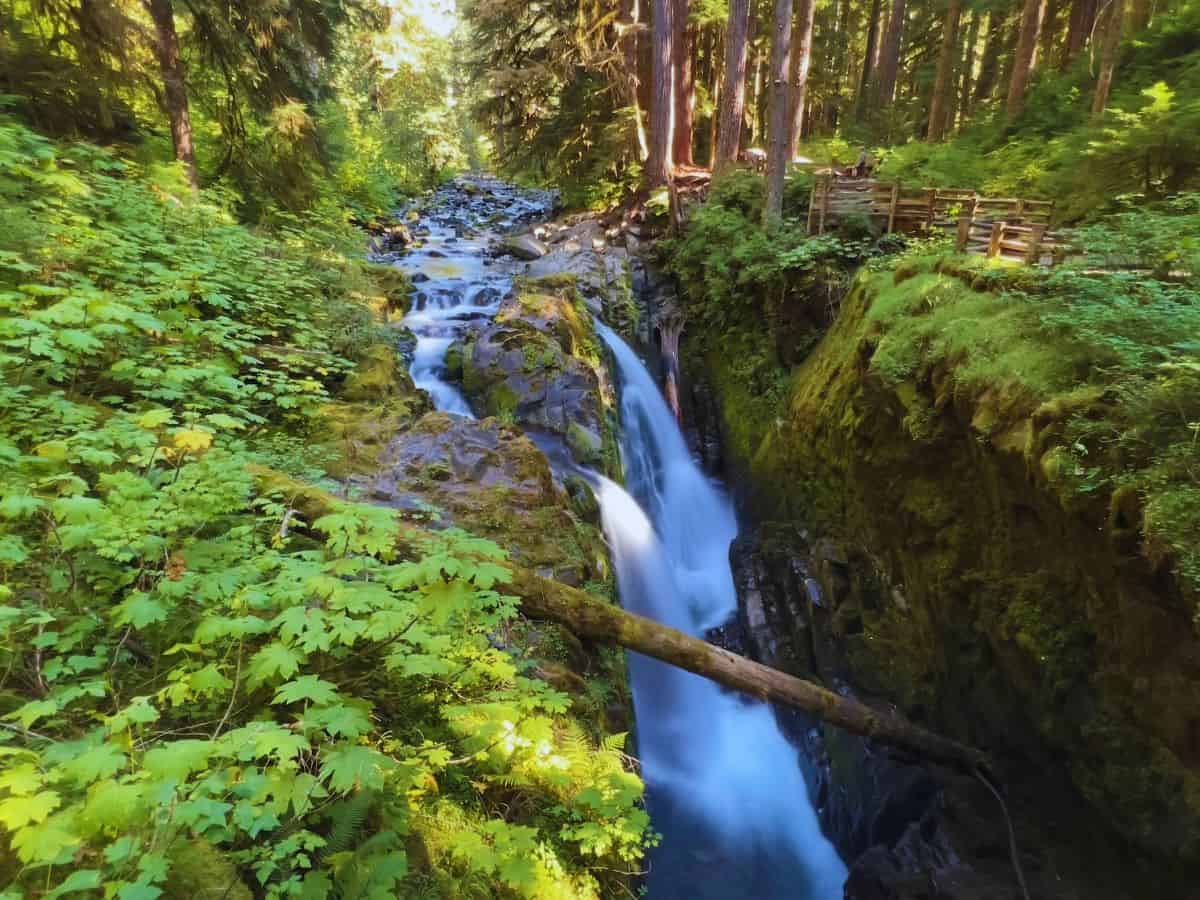
- Where: In the north-central section of Olympic National Park, west of Lake Crescent.
- Why Visit: Soaking tubs at Sol Duc Hot Springs, lush forest trails, and the iconic Sol Duc Falls.
- Background: Derived from a Quileute word meaning “sparkling waters.”
- Common Mistake: “Sole Duke” is a frequent mispronunciation.
Taholah (tuh-HOH-luh)
- Where: Taholah, located on the Quinault Reservation at the mouth of the Quinault River.
- Why Visit: Cultural center, river mouth views, and a meaningful stop for understanding Quinault heritage.
- Background: Administrative center of the Quinault Indian Nation, with deep ties to the land and water.
- Common Mistake: Sometimes mispronounced as “tuh-HALL-uh” or “tuh-HO-lah”—but the emphasis is on the second syllable: (tuh-HOH-luh).
Planning Your Visit
Need help mapping your route or choosing where to stay? Check out our Olympic National Park trip planning guide for practical tips, scenic routes, and reader-first advice.
Final Thoughts
Pronouncing place names correctly isn’t about perfection—it’s about effort, respect, and connection. Whether you’re hiking to Shi Shi or soaking in Sol Duc, speaking with care helps you travel with intention. If a name ever gives you pause or sparks a story, hold onto it—those moments are part of the journey.
Featured image credit: Miles with McConkey