

We didn’t plan to visit Saguaro National Park. Julie and I were wrapping up a whirlwind Arizona road trip—Sedona, the Grand Canyon, Petrified Forest—when we discovered Saguaro’s existence on our final day. As Julie drove south from Flagstaff, I did research in the passenger seat and quickly learned the park has two districts: Saguaro East and Saguaro West. One had a greater concentration of giant cacti, and that sealed it—we headed west.
Since then, I’ve often wondered what we missed. So I dug deeper into Saguaro East vs West to help fellow travelers decide which side fits their style. This guide offers quick comparisons and deeper insights based on our experience in the West and research on the East—so you can plan with confidence, not guesswork.
Disclosure: This post may contain affiliate links. If you make a purchase through one of these links, I may earn a small commission at no additional cost to you. Thanks for keeping Miles with McConkey going!
Saguaro East vs West: Quick Comparisons to Guide Your Visit
If you’re short on time or just want the highlights, this section breaks down the key differences between Saguaro National Park’s two districts. Whether you’re chasing cactus-studded trails, scenic drives, or quiet moments in nature, these quick comparisons will help you choose the side that fits your travel style.
Use the toggles below to explore each category:
- East: Longer trails with elevation gain and sweeping mountain views.
- West: Shorter, flatter trails with dense cactus forests and easy loops.
- East: Scattered cactus stands with more open terrain.
- West: Iconic “forest” of giant saguaros—denser and more dramatic.
- East: Cactus Forest Drive (paved, 8-mile loop with overlooks).
- West: Bajada Loop Drive (unpaved, 6-mile loop with trailheads and views).
- East: Better chance of spotting deer, javelina, and birds in higher elevations.
- West: Reptiles, desert birds, and occasional coyotes in lower desert terrain.
- East: Fewer visible petroglyphs, more natural history.
- West: Signal Hill trail features ancient petroglyphs and cultural sites.
- East: Paved scenic drive and accessible viewpoints.
- West: Some trails and picnic areas are accessible, but roads are rougher.
- East: No campgrounds; backcountry camping with permit.
- West: No campgrounds; backcountry camping with permit.
- East: Rincon Mountain Visitor Center—larger, more exhibits.
- West: Red Hills Visitor Center—smaller but scenic and welcoming.
- East: Sunrise views, mountain backdrops, and wide-open desert.
- West: Sunset magic, dense cactus silhouettes, and golden hour glow.
- East: Quieter trails, fewer visitors.
- West: More popular, especially at sunset—but worth it for the views.
A Closer Look at Saguaro East and West
If the quick comparisons sparked your curiosity, this section dives deeper into what each district offers. From trail types and terrain to accessibility and atmosphere, here’s what you can expect when exploring Saguaro East and Saguaro West.
🏔️ Saguaro East: Rincon Mountain District
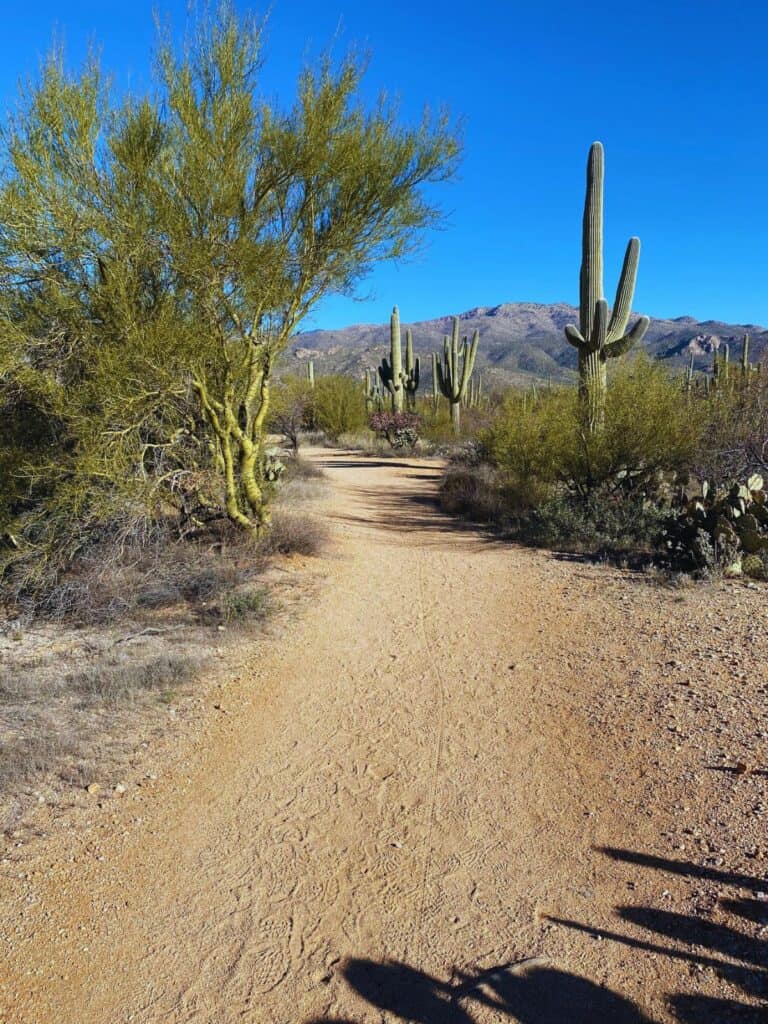
Saguaro East offers a more expansive, mountainous landscape with longer trails and fewer crowds. It’s a haven for those who crave elevation gains, quiet trails, and wide-open desert vistas that stretch toward the Rincon Mountains.
- Landscape & Terrain: Rolling foothills leading into the Rincon Mountains, with open desert and scattered cactus stands.
- Popular Trails: Freeman Homestead Trail (easy, interpretive), Tanque Verde Ridge Trail (challenging, panoramic).
- Scenic Drive: Cactus Forest Drive—an 8-mile paved loop with overlooks, trailheads, and pullouts.
- Accessibility & Facilities: Paved roads, accessible viewpoints, and a well-equipped visitor center.
- Seasonal Notes: Spring brings bursts of wildflowers along the trails and drive, adding color to the desert palette.
- Vibe: Peaceful, spacious, and less trafficked—great for reflection and longer hikes.
- Best For: Solitude-seekers, long-distance hikers, and those who prefer elevation and quiet over crowds.
🌵 Saguaro West: Tucson Mountain District
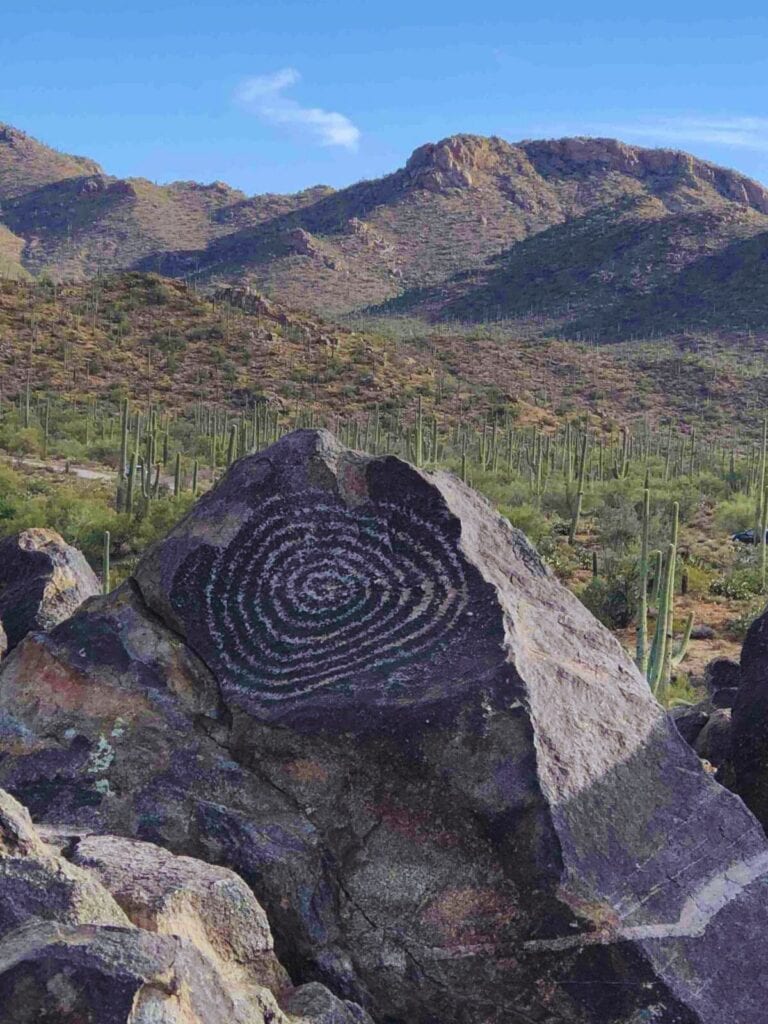
Saguaro West delivers the classic Sonoran Desert experience—dense cactus forests, dramatic sunsets, and shorter trails with big visual payoff. It’s more popular, but for good reason.
- Landscape & Cactus Density: Rugged desert terrain with a stunning concentration of giant saguaros.
- Popular Trails: Valley View Overlook Trail (easy, scenic), Signal Hill Trail (short hike to petroglyphs).
- Petroglyphs & History: Signal Hill features ancient rock carvings and cultural significance.
- Road Conditions & Accessibility: Bajada Loop Drive is unpaved but navigable; some trails and picnic areas are accessible.
- Seasonal Notes: Winter’s golden hour casts a warm glow across the cactus forest—ideal for photographers and sunset lovers.
- Vibe: Iconic desert views, more visitors, and unforgettable sunsets—especially for photographers.
- Best For: Families, casual hikers, and anyone chasing that quintessential desert photo moment.
Personal Experience & Recommendations
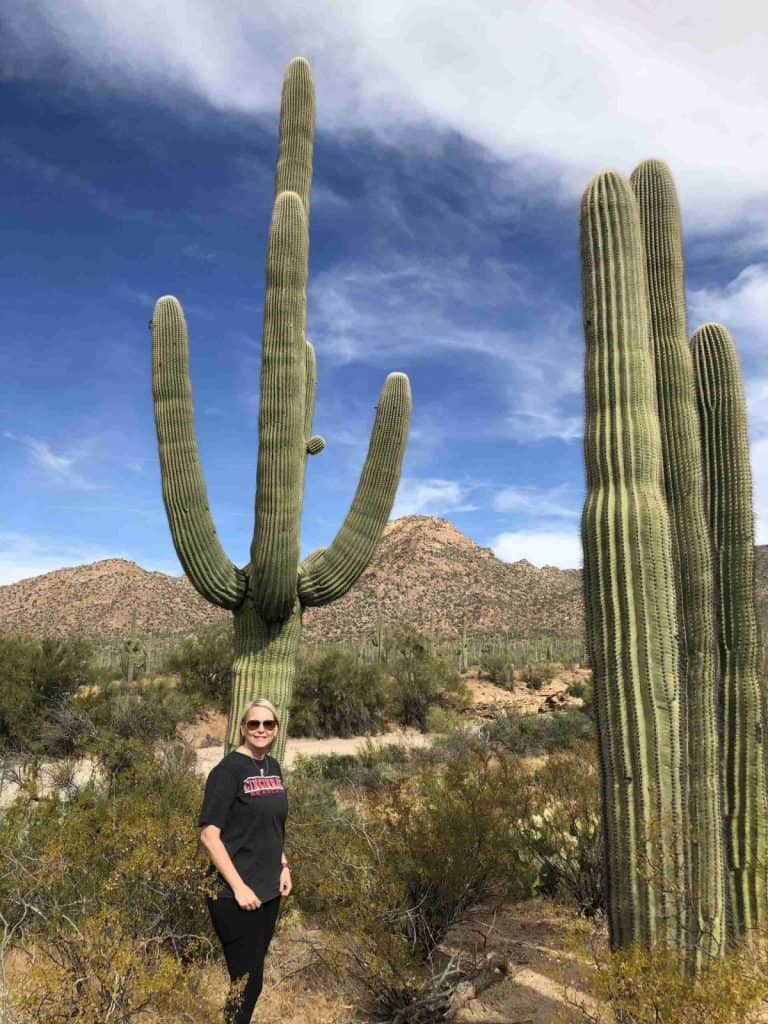
Julie and I only explored Saguaro West on our visit—but it left a lasting impression. Like many first-time visitors, we expected to see giant cacti scattered across Arizona. We were stunned to learn they only grow in the Sonoran Desert. So when we arrived and saw thousands of saguaros stretching across the landscape, it felt like stepping into a dream.
🌵 Cactus Personalities & Desert Wonder
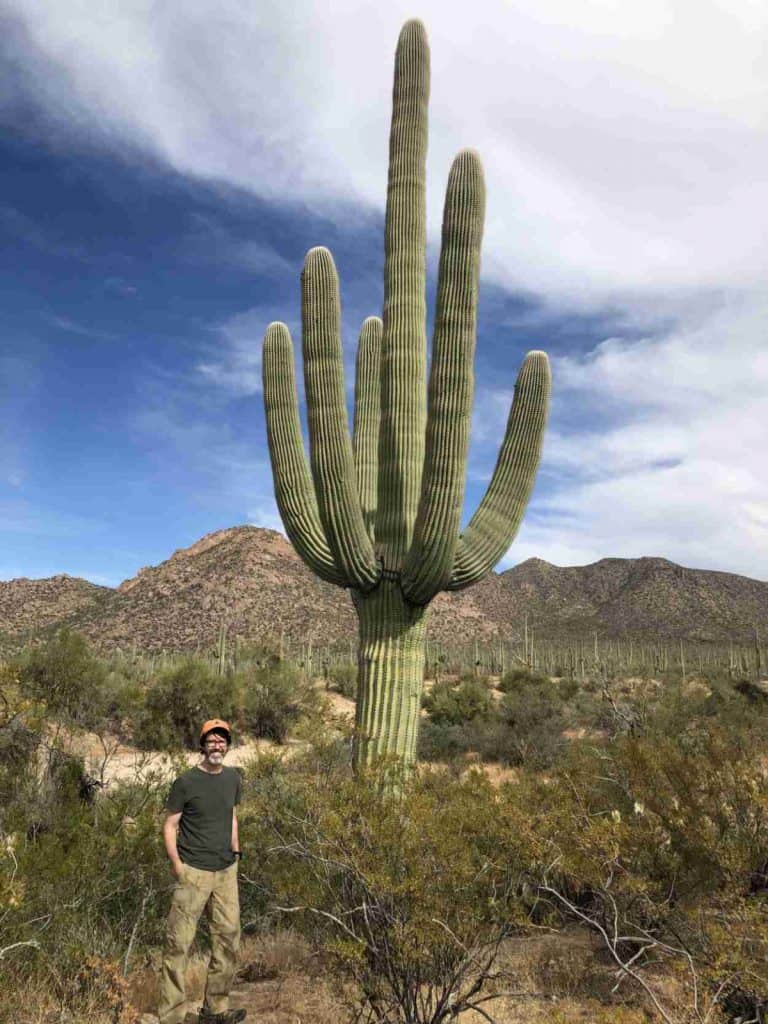
They came in every size and shape imaginable—some towering and regal, others with wild, twisted arms that seemed to wave hello. It was as if each cactus had its own personality. That sense of wonder stayed with us throughout the day.
We hiked the Valley View Overlook Trail and were rewarded with sprawling desert vistas—saguaros silhouetted against distant mountains. Signal Hill was another favorite, where ancient petroglyphs added a layer of mystery and history to the rugged terrain. The visitor center was a lovely surprise, with panoramic views and some of the most enthusiastic rangers we’ve ever met. Their passion for the park made our experience even more memorable.
🌇 Sunset Magic & Nightfall in the Desert
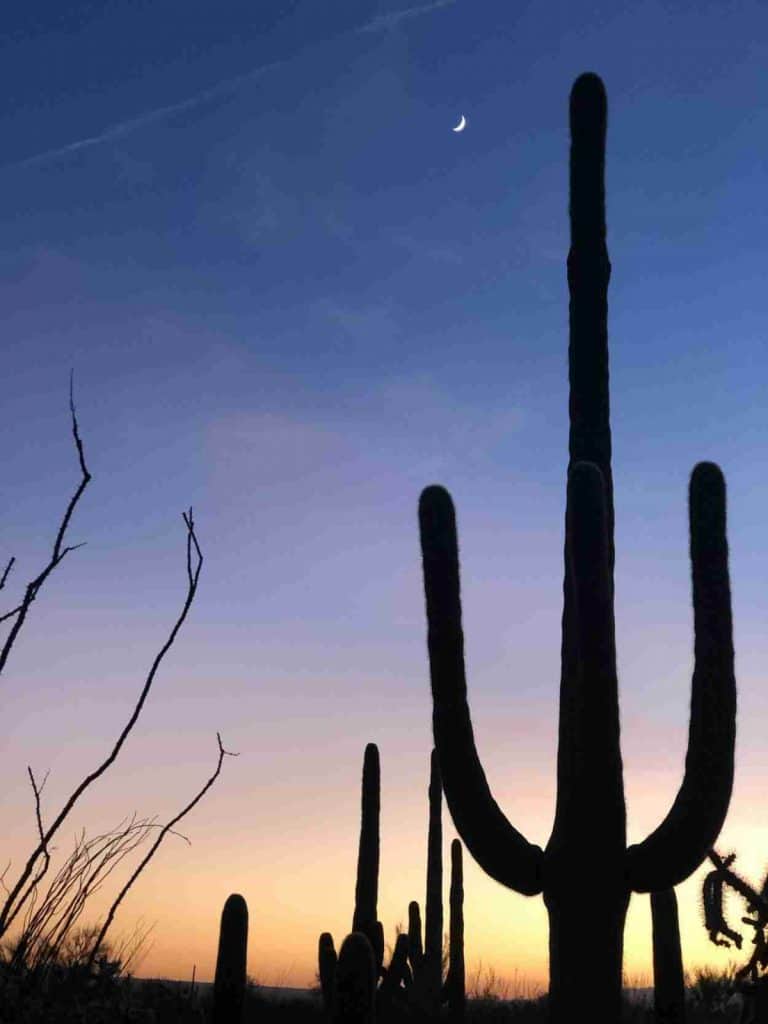
But sunset—that was the true showstopper. As the sky turned pink and orange, the saguaros became dark silhouettes, standing watch over the desert. Julie and I couldn’t stop taking photos and video, trying to capture the magic. As night fell, the desert came alive with birdsong and rustling wildlife. The stars emerged one by one, and the night sky nearly rivaled the sunset. It was surreal, spectacular, and easily my favorite sunset moment in any national park to date.
Driving through Saguaro West kicked up a bit of dust, and the road was bumpy in places—but we had no trouble navigating. In fact, the ruggedness added to the adventure. It felt like we were earning the experience, cactus by cactus.
🌄 Looking Ahead to Saguaro East
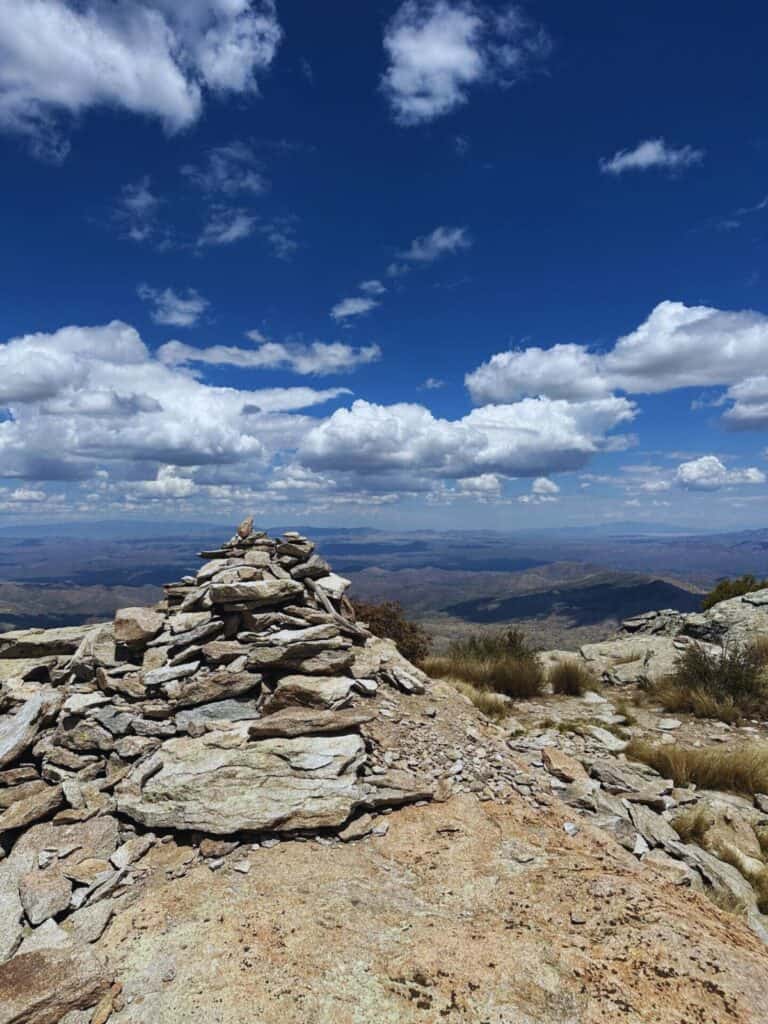
We haven’t yet visited Saguaro East, but it’s high on our list. From everything we’ve read and heard, it offers a different kind of beauty—more elevation, more solitude, and longer trails that wind through mountainous terrain. The paved scenic drive sounds ideal for soaking in the views without the bumps, and the larger visitor center promises more exhibits and ranger programs.
I’m especially eager to hike the Freeman Homestead Trail and explore the Rincon Mountains. And if we time it right, I’d love to see the wildflowers in bloom—adding bursts of color to the already stunning desert palette. It feels like Saguaro East will offer a quieter, more contemplative experience. We’re ready for it.
Recommendations Based on Our Experience
If you’re planning a visit, here’s how we’d break it down:
| Traveler Type | Recommended District | Why |
|---|---|---|
| First-time visitors | Saguaro West | Classic desert views, easy trails, and unforgettable sunsets |
| Families | Saguaro West | Short hikes, petroglyphs, and accessible picnic areas |
| Serious hikers | Saguaro East | Longer, more challenging trails with elevation and solitude |
| Photographers | Saguaro West | Dense cactus forests and dramatic golden hour light |
| History buffs | Saguaro West | Signal Hill’s petroglyphs and cultural significance |
Practical Tips for Visiting Saguaro East or West
Whether you’re planning a quick stop or a full-day adventure, a little preparation goes a long way in Saguaro National Park. Here are some practical tips to help you make the most of your visit—no matter which side you choose.
🚗 Getting There
- Saguaro West (Tucson Mountain District): About 30–40 minutes from downtown Tucson. The drive includes some unpaved roads, but they’re manageable with a standard vehicle.
- Saguaro East (Rincon Mountain District): Roughly 30 minutes from downtown Tucson via paved roads. Easier access and smoother driving conditions.
If you only have one day, you can technically visit both districts—but we recommend focusing on one to avoid feeling rushed.
🎟️ Entrance Fees & Passes
- Standard entrance fee: $25 per vehicle (valid for 7 days).
- America the Beautiful Pass: Accepted and highly recommended if you’re visiting multiple parks.
- No separate fee for East vs West—your pass covers both districts.
🌤️ Best Time to Visit
- Time of year: October through April offers cooler temps and better hiking conditions. Spring (March–April) brings wildflowers and vibrant desert color.
- Time of day: Early morning or late afternoon is ideal for hiking and photography. Sunset in the West is especially stunning, while East offers peaceful sunrise views.
🎒 What to Pack & Prepare For
- Water: Bring more than you think you’ll need—there’s little to no water on the trails.
- Sun protection: Hat, sunglasses, sunscreen, and lightweight long sleeves.
- Footwear: Sturdy hiking shoes or trail runners—some trails are rocky or uneven.
- Navigation: Trail maps or GPS—cell service can be spotty.
- Other essentials: Snacks, camera, layers for cooler evenings, and a flashlight if you’re staying past sunset.
Frequently Asked Questions About Saguaro East vs West
Planning your visit to Saguaro National Park? These quick answers address common questions travelers ask when deciding between the East and West districts.
Can you visit both sides of Saguaro National Park in one day?
Yes, but it’s a tight squeeze. Each district deserves several hours to explore. If you’re short on time, choose the side that best matches your interests—scenic drives, hiking, or photography.
Which side of Saguaro has more giant cacti?
Saguaro West (Tucson Mountain District) has a denser concentration of giant saguaros, creating that iconic cactus “forest” feel.
Is Saguaro National Park good for families?
Absolutely. Saguaro West is especially family-friendly with short trails, petroglyphs, and accessible picnic areas.
Are the scenic drives paved in both districts?
Saguaro East’s Cactus Forest Drive is fully paved. Saguaro West’s Bajada Loop Drive is unpaved but manageable with a standard vehicle.
What’s the best time of year to visit Saguaro National Park?
October through April offers cooler temperatures and ideal hiking conditions. Spring brings wildflowers, while winter sunsets are especially stunning.
Do I need a reservation to visit Saguaro National Park?
No reservations are required. Just pay the entrance fee or use your America the Beautiful Pass.
Final Verdict: Which Side of Saguaro Is Right for You?
Both districts of Saguaro National Park offer unforgettable desert experiences—but they shine in different ways.
- Saguaro West is ideal for dramatic landscapes, iconic cactus silhouettes, and jaw-dropping sunsets. It’s a photographer’s dream and perfect for short scenic hikes.
- Saguaro East offers a quieter, more immersive experience with longer trails, mountain views, and peaceful solitude. It’s great for hikers and those seeking a deeper connection with the desert.
If you’re short on time, choose the district that best matches your interests—whether it’s photography, hiking, or simply soaking in the scenery. But if your schedule allows, visiting both sides gives you a fuller picture of this unique ecosystem.
On our visit, our goal was simple: see as many saguaros as possible. Saguaro West delivered in spades. Pairing that with an unforgettable sunset, we left with full hearts and no regrets. That said, we’re already dreaming of a return trip to explore the legendary views of the Rincon Mountains in Saguaro East.
No matter which direction you head, you’ll find the magic of the Sonoran Desert waiting for you.
Ready to Plan Your Visit?
Explore our full guide to Saguaro National Park for insider tips, trail recommendations, and seasonal highlights.
Ready to explore Saguaro National Park?
We’ve got everything you need to plan your perfect trip.
Featured image credit: Miles with McConkey