
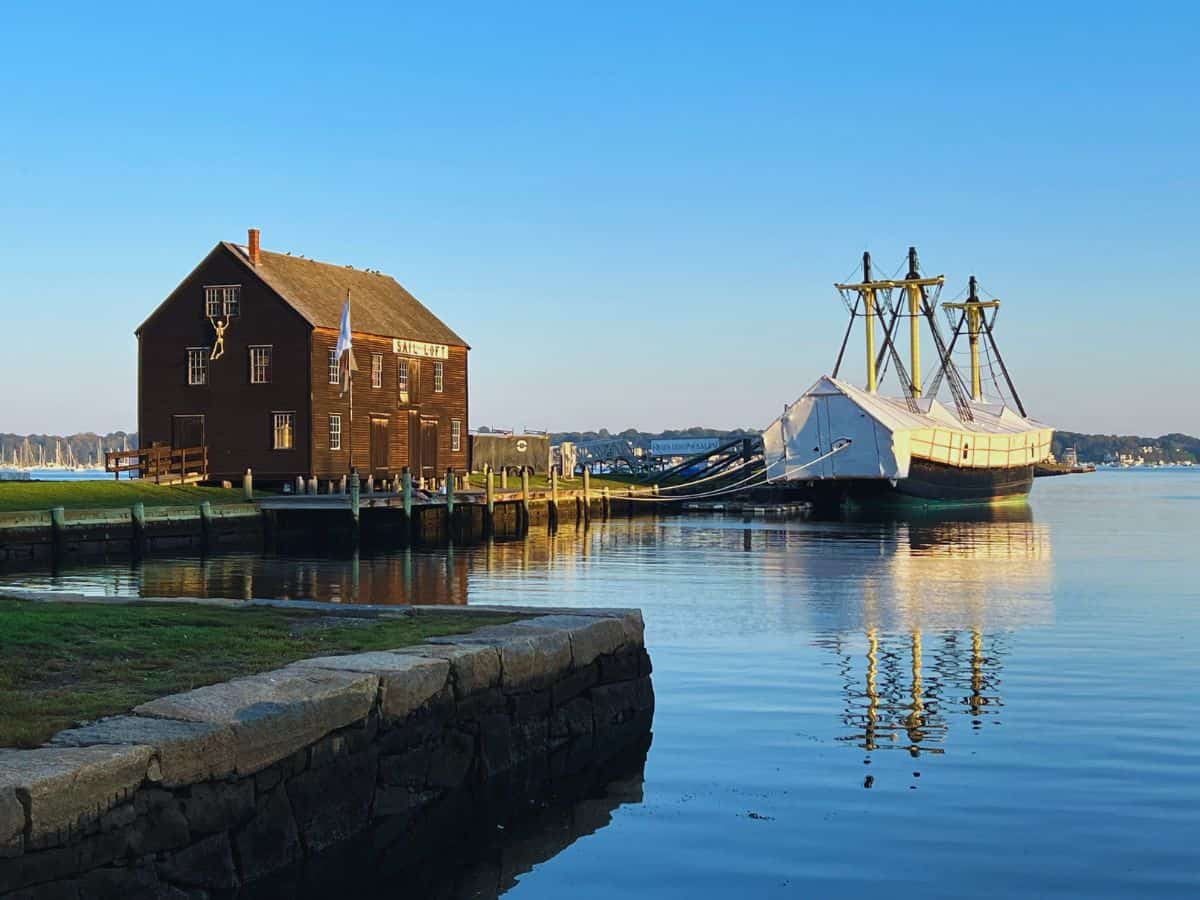
While Salem is best known as “Witch City,” its deeper legacy unfolds along the waterfront at the Salem Maritime National Historic Site—the first National Historic Site established in the United States. Here, travelers can explore over 600 years of maritime history, from global trade routes and privateering to the birthplace of the National Guard.
Disclosure: This post may contain affiliate links. If you make a purchase through one of these links, I may earn a small commission at no additional cost to you. Thanks for keeping Miles with McConkey going!
Discovering Salem’s Maritime Legacy
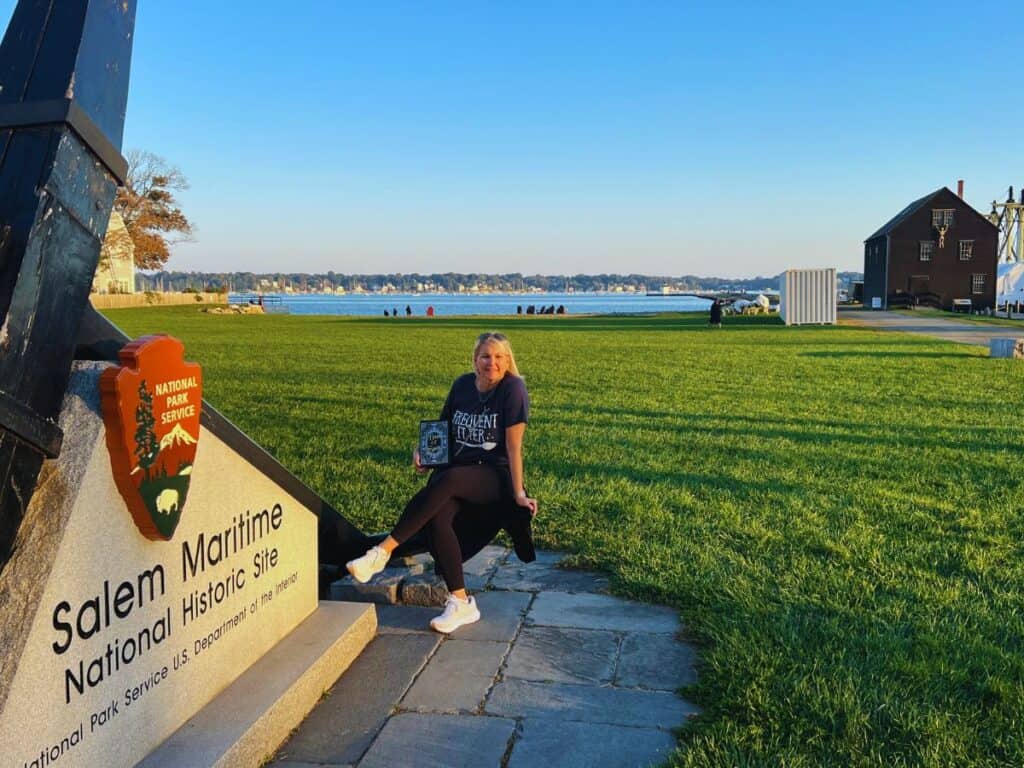
Like many travelers, we arrived in Salem with witch trials on the brain. But what we didn’t expect was how quickly the waterfront pulled us into a different story—one of global trade, privateers, and the birth of the National Guard. The Salem Maritime National Historic Site isn’t just a quiet corner of town—it’s a portal to New England’s early days, where cobblestone paths and historic storefronts whisper tales of a bustling seaport.
We were surprised to learn that this was the first National Historic Site ever established in the United States, dating back to 1938. It spans nine acres along Salem Harbor and includes twelve historic structures, a replica tall ship, and a downtown visitor center. And while most tourists dart between witch-themed shops and museums, we found peace and perspective along the water’s edge.
Derby Wharf: A Walk Through History
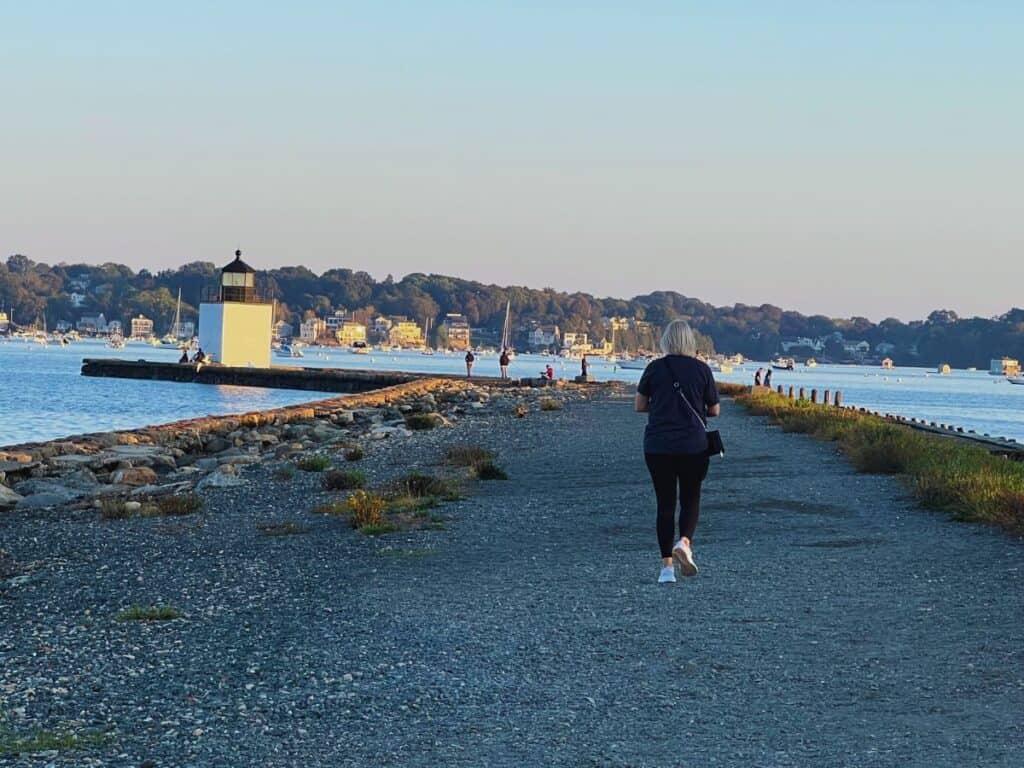
Stretching over 2,000 feet into Salem Harbor, Derby Wharf was once the beating heart of Salem’s maritime empire. Built in 1762 and extended in 1806, it was lined with warehouses and served as the headquarters for Elias Hasket Derby’s international trading business.
Today, it’s a scenic walkway dotted with interpretive signs and anchored by the Friendship of Salem, a replica of a 1797 East Indiaman merchant ship.
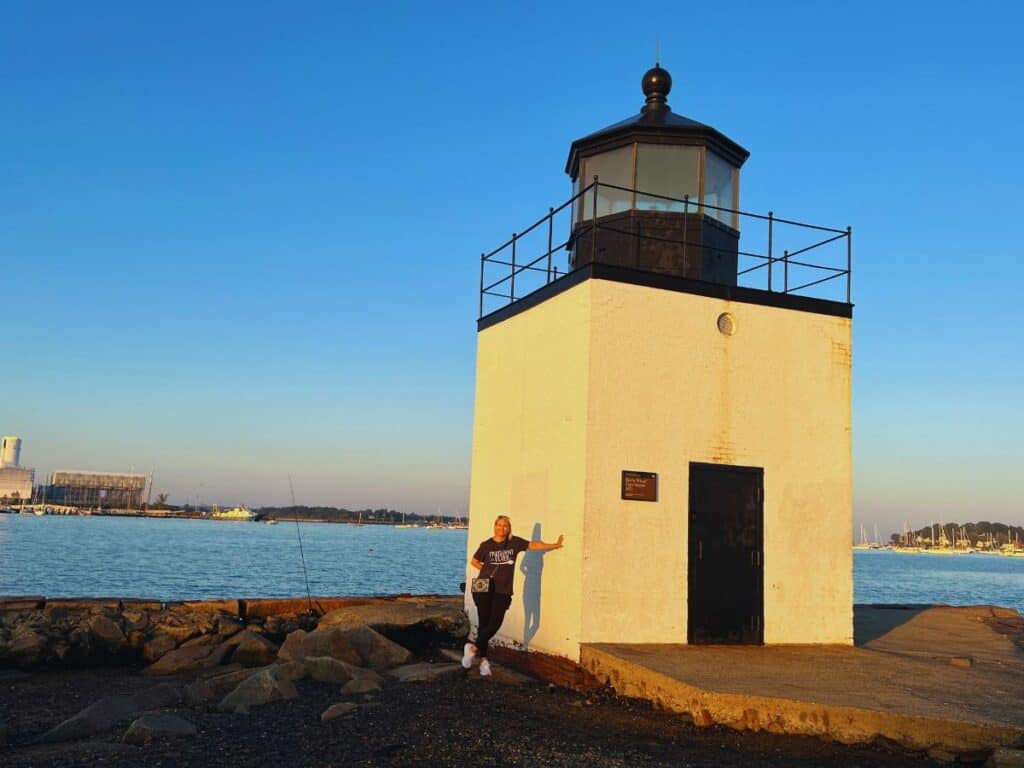
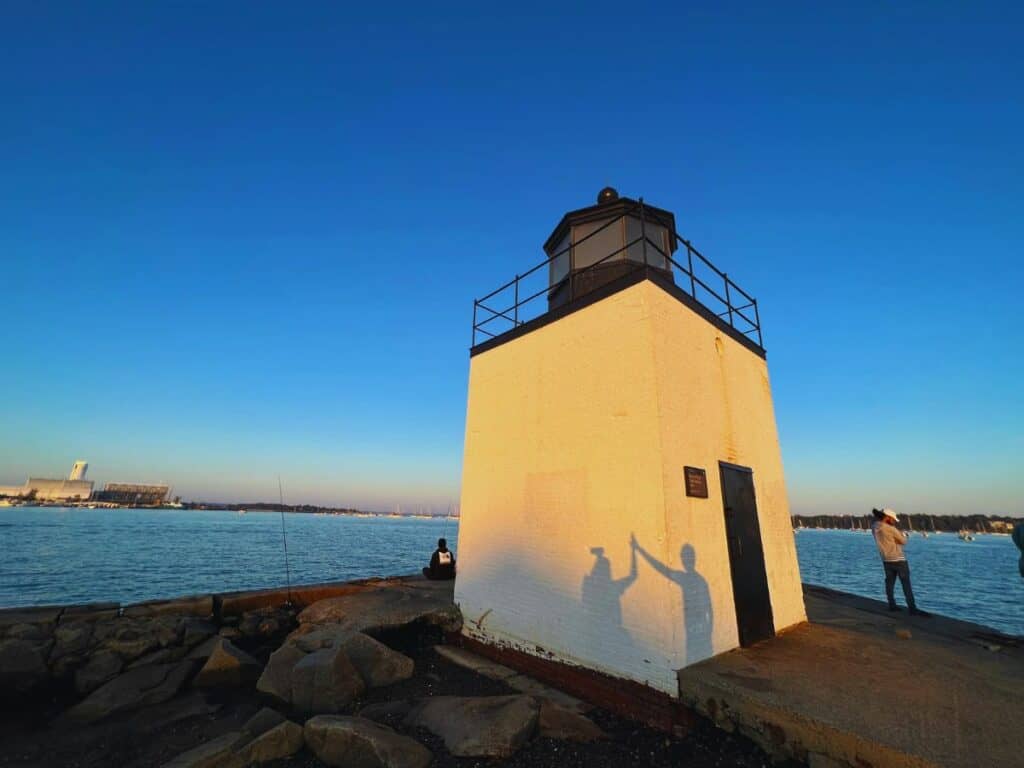
You can stroll all the way to the Derby Wharf Light, a short but charming lighthouse built in 1871. It’s not open to the public, but you can walk right up to it—and yes, we touched it. For lighthouse lovers, it’s a quiet thrill.
We explored the wharf and lighthouse near sunset, which gave the area a peaceful glow—though I can only imagine how magical it must be at sunrise.
💡 Quick Tip
Derby Wharf is open 24 hours a day, year-round. Whether you’re hoping to catch sunrise, enjoy a moonlit stroll, or explore without the crowds, this waterfront walk is always available.
If you’re into lighthouses, you might also enjoy our Cape Cod lighthouse road trip guide, which covers some of the most iconic towers in New England.
The Friendship of Salem: A Replica with a Story
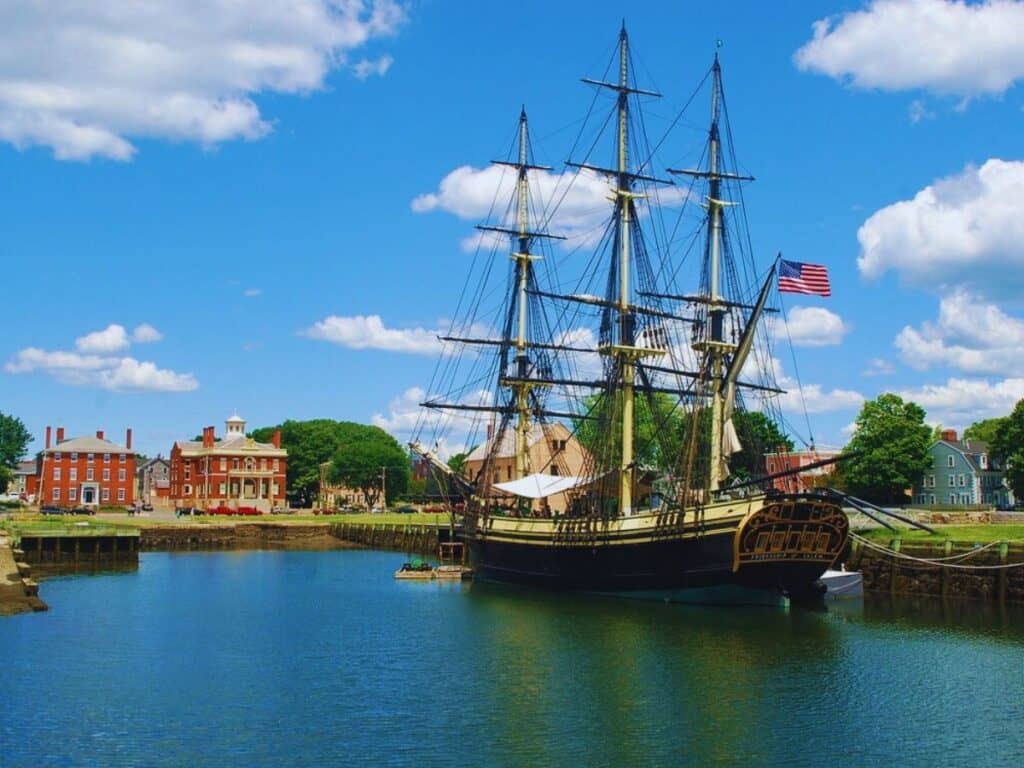
Docked at Derby Wharf, the Friendship of Salem is a fully functional replica of the original ship that made 15 voyages around the world—from China and India to Russia and Venezuela. The replica was built in the late 1990s and serves as both a museum and an ambassador vessel for the National Park Service.
When open, visitors can explore the weather deck and tween deck, where crew quarters and cargo storage come to life. Even if you can’t board the ship, it’s worth admiring from the wharf—it’s a striking reminder of Salem’s global reach.
The Custom House: Where Hawthorne Worked
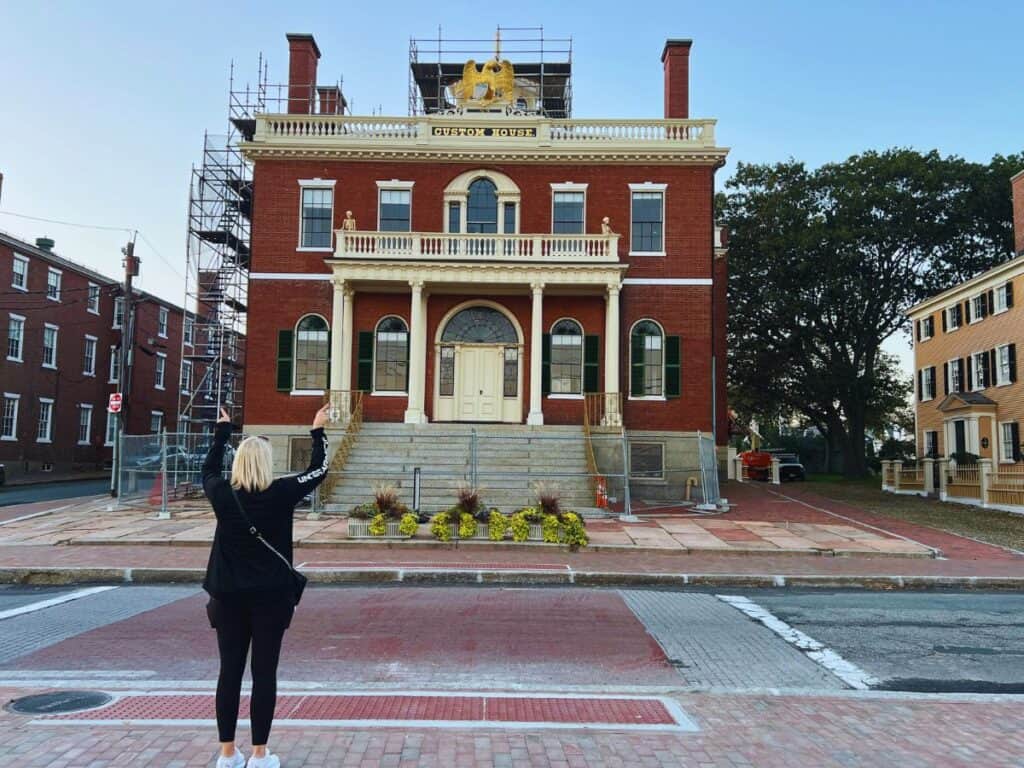
Built in 1819, the Salem Custom House was the last of thirteen custom houses in town. It collected taxes on imported goods and symbolized the federal government’s presence in Salem. The building’s elegant woodwork, sweeping staircase, and iconic eagle sculpture (now a replica) reflect its importance.
During our visit, the Custom House was undergoing renovations, so it was wrapped in scaffolding. While we couldn’t fully admire its exterior detail, it was still impressive to stand where Hawthorne once worked.
Inside, you’ll find exhibits on the U.S. Customs Service and the office of Nathaniel Hawthorne, who worked here before writing The Scarlet Letter. His desk and personal items are on display, offering a literary twist to the maritime narrative.
To understand how goods were managed beyond taxation, head just behind the Custom House.
Scale House: Weighing the Wealth of a Seaport
Tucked behind the Custom House, the Scale House was built in 1829 to store the equipment used for weighing cargo from incoming ships. Customs officials would haul the scales to the wharf, assess duties, and collect taxes, sometimes totaling tens of thousands of dollars per shipment. Though small, the building played a significant role in Salem’s economic engine. Today, it features exhibits on 19th-century customs operations and is open when the Custom House is staffed.
And once those goods were weighed and taxed, they needed secure storage.
Public Stores: Where Cargo Waited for Its Worth
Built in 1819 alongside the Custom House, the Public Stores served as a bonded warehouse, holding imported goods until merchants paid the required duties. Inside, barrels and crates once brimmed with pepper, silk, porcelain, and other luxuries that fueled Salem’s global trade.
Today, the first floor features exhibits showcasing these items, along with a historic rowboat used by customs inspectors to meet incoming ships. It’s a quiet but powerful reminder of the wealth and regulation that shaped the seaport’s rise.
Derby House and Narbonne House: Two Centuries of Domestic Life
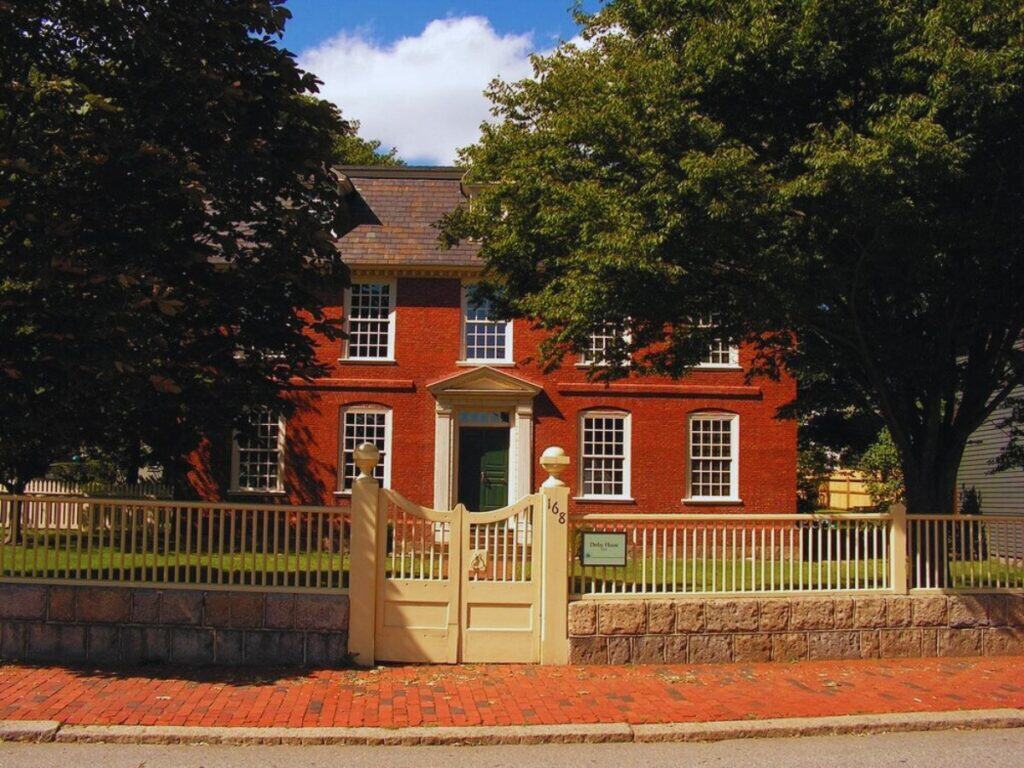
The Derby House, built in 1762, was a wedding gift from Richard Derby to his son Elias Hasket Derby. It’s a beautifully preserved Georgian home that reflects the lifestyle of one of America’s wealthiest merchants. Guided tours are free but limited to eight people, and reservations are required.
Just steps away, the Narbonne House dates back to 1675 and offers a self-guided experience through nearly 300 years of history. Although unfurnished, the Narbonne House features displays of select artifacts from a backyard excavation that uncovered nearly 150,000 items—offering a rare glimpse into centuries of domestic life.
To complete the picture of early Salem households, one nearby home reveals a story tied to shipbuilding and architecture.
Hawkes House: A Federal-Style Gem with Shipbuilding Roots
Designed by famed architect Samuel McIntire in 1780, the Hawkes House was originally commissioned by Elias Hasket Derby but never completed by the family. Shipbuilder Benjamin Hawkes purchased and finished the home in 1800, transforming it into a fine example of Federal-style architecture. Although not open to the public, the house adds depth to the waterfront’s story, linking Salem’s merchant elite with its shipbuilding legacy.
Before diving into maritime history at the Visitor Center, one building tells a lesser-known story of community and cultural identity.
St. Joseph Hall: A Polish-American Landmark
Built in 1909, St. Joseph Hall served as the headquarters of the St. Joseph Society, a fraternal organization supporting Salem’s growing Polish immigrant community. The building housed retail shops, a second-floor event hall, and top-floor apartments for new arrivals.
Today, it’s used by the National Park Service for administrative purposes. Still, its restored façade and window exhibits offer a glimpse into Salem’s 20th-century social history—an unexpected layer within the maritime park.
The Visitor Center: A Blend of Witch and Wharf

Located in the old Salem Armory Drill Shed, the Salem Visitor Center is one of the most unique we’ve seen. It covers both the Salem Maritime National Historic Site and the Essex National Heritage Area, and it even includes exhibits and films on the witch trials.
We appreciated the dual focus—acknowledging Salem’s infamous past while celebrating its maritime legacy. The center offers two short films: Where Past is Present (maritime and industrial history) and Salem Witch Hunt: Examine the Evidence (witch trials). It’s a great place to start your visit and get oriented.
And just around the corner, another spot offers a blend of history, treats, and local charm.
Waite & Peirce Park Store: History, Souvenirs, and Sweet Treats
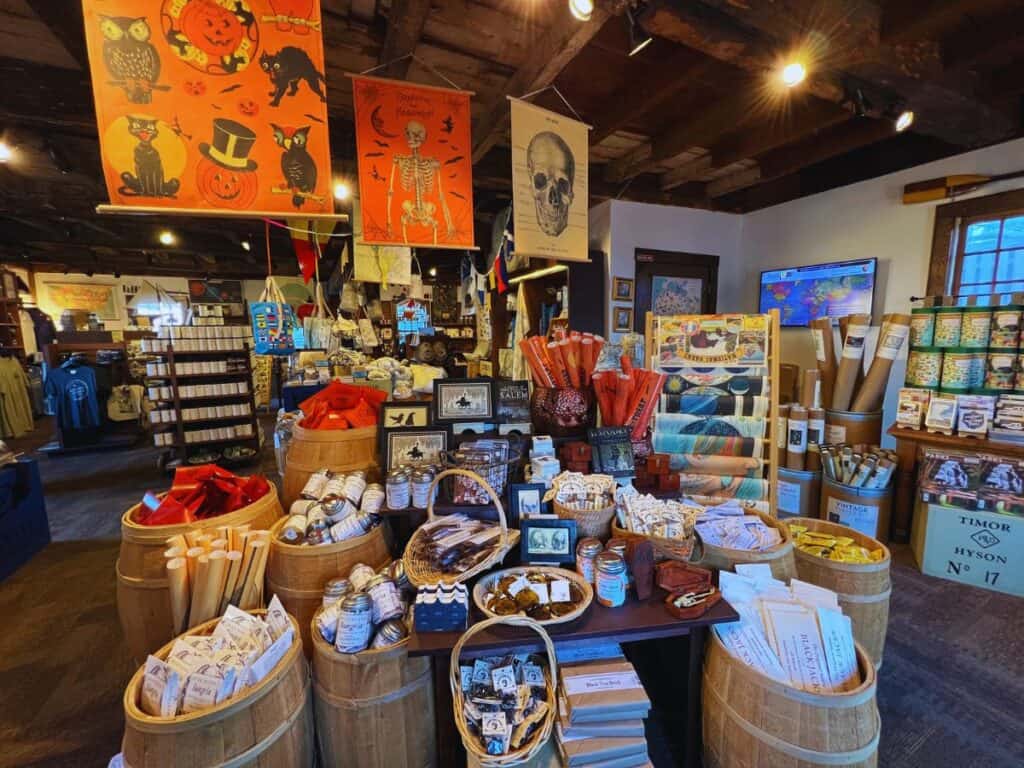
Just steps from Derby Wharf, the Waite & Peirce Park Store is part gift shop, part information center—and one of Salem’s most distinctive stops. Visitors will find maritime and witch-themed souvenirs, regional books, and even traditional confections like Gibralters and Black Jacks from Ye Olde Pepper Candy Companie, America’s oldest candy company. If you’re visiting in October and want to skip the long lines at the candy shop itself, this tucked-away alternative offers a sweet slice of history. Whether you’re browsing ship logs or stocking up on Salem keepsakes, Waite & Peirce blends the city’s dual identity in a way that’s both educational and enchanting.
During our visit, the staff was remarkably friendly—so much so they let us linger after closing and shared tips for exploring the town. That kind of generosity added to the charm and made the experience feel truly personal.
The West India Goods Store and Pedrick Store House
The West India Goods Store, built in the early 1800s, once sold imported luxuries like pepper, silk, and porcelain. Today, it operates as a park store and gift shop, offering souvenirs that reflect both Salem’s maritime and witch-related history.
Nearby, the Pedrick Store House is a relocated rigging and sail loft from Marblehead, now used to maintain the Friendship of Salem. It’s open to visitors and adds another layer to the waterfront’s working history.
Know Before You Go: Hours Vary by Site
While all of these sites are within walking distance, each has its own operating hours. Some buildings are open seasonally, and guided tours may require reservations. We recommend checking the official NPS website before your visit to confirm hours and availability.
We learned this the hard way—arriving at one site only to find it closed, while another was bustling. Planning ahead ensures you won’t miss out on the full experience.
Where to Stay Near Salem’s Maritime Sights
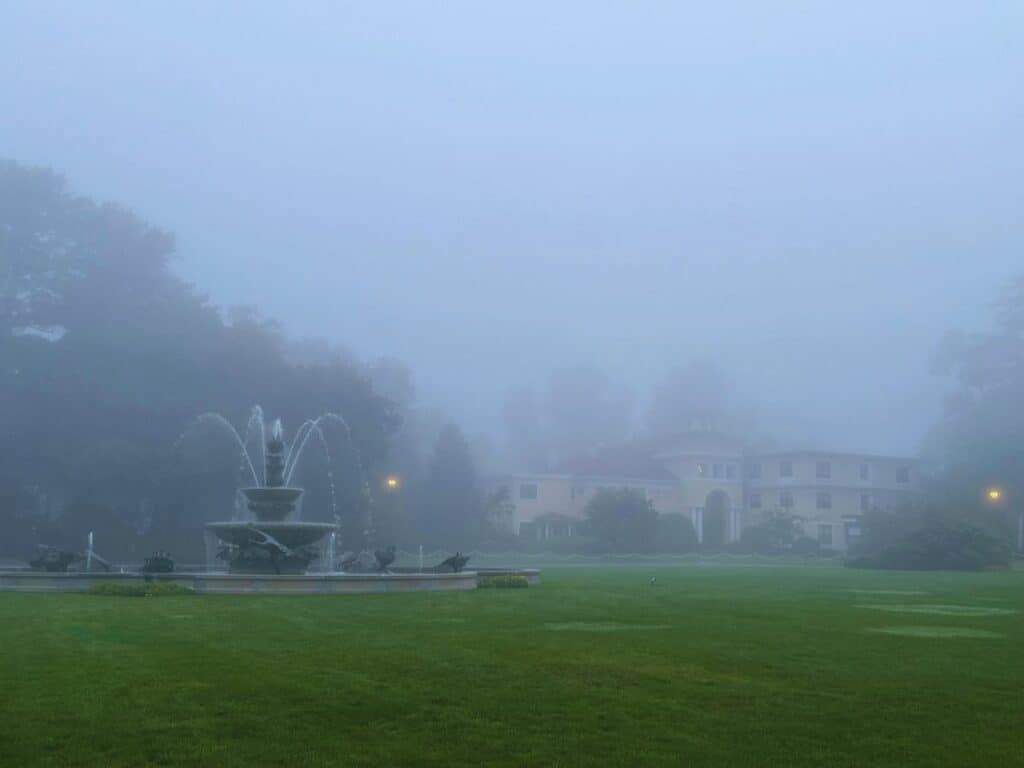
While Salem offers plenty of lodging options close to downtown, we stayed at the Wylie Inn and Conference Center at Endicott College, just a short drive from the heart of the city. The rooms were comfortable, the staff welcoming, and the entire property had an inviting atmosphere. What made it truly special was the ability to take a peaceful morning walk behind the manor straight to the water—an invigorating start to our day and a serene contrast to the lively pace of Salem.
Whether you’re looking for a quiet retreat with coastal views or want to stay steps from Salem’s historic core, the area offers something for every travel style. Use the interactive map below to compare locations, pricing, and amenities across nearby hotels and inns.
Salem’s Other Story Is Worth Your Time
If you’re visiting Salem for its witch history, don’t skip the waterfront. The Salem Maritime National Historic Site offers a quieter, deeper look at the city’s role in shaping early America. It’s a place where history breathes through the buildings, the harbor breeze, and the stories told by park rangers.
For those curious about Salem’s spooky side, we’ve also written about the pros and cons of visiting Salem in October, when the town transforms into Witch City in full force.
But if you’re looking for a different kind of magic—the kind found in quiet wharves, historic homes, and a lighthouse you can touch—Salem’s maritime story might just surprise you.
For a deeper dive into the waterfront and its historic treasures, explore our full Salem Maritime National Historic Site guide—where America’s maritime story still lingers in the salt air.
Featured image credit: Miles with McConkey