
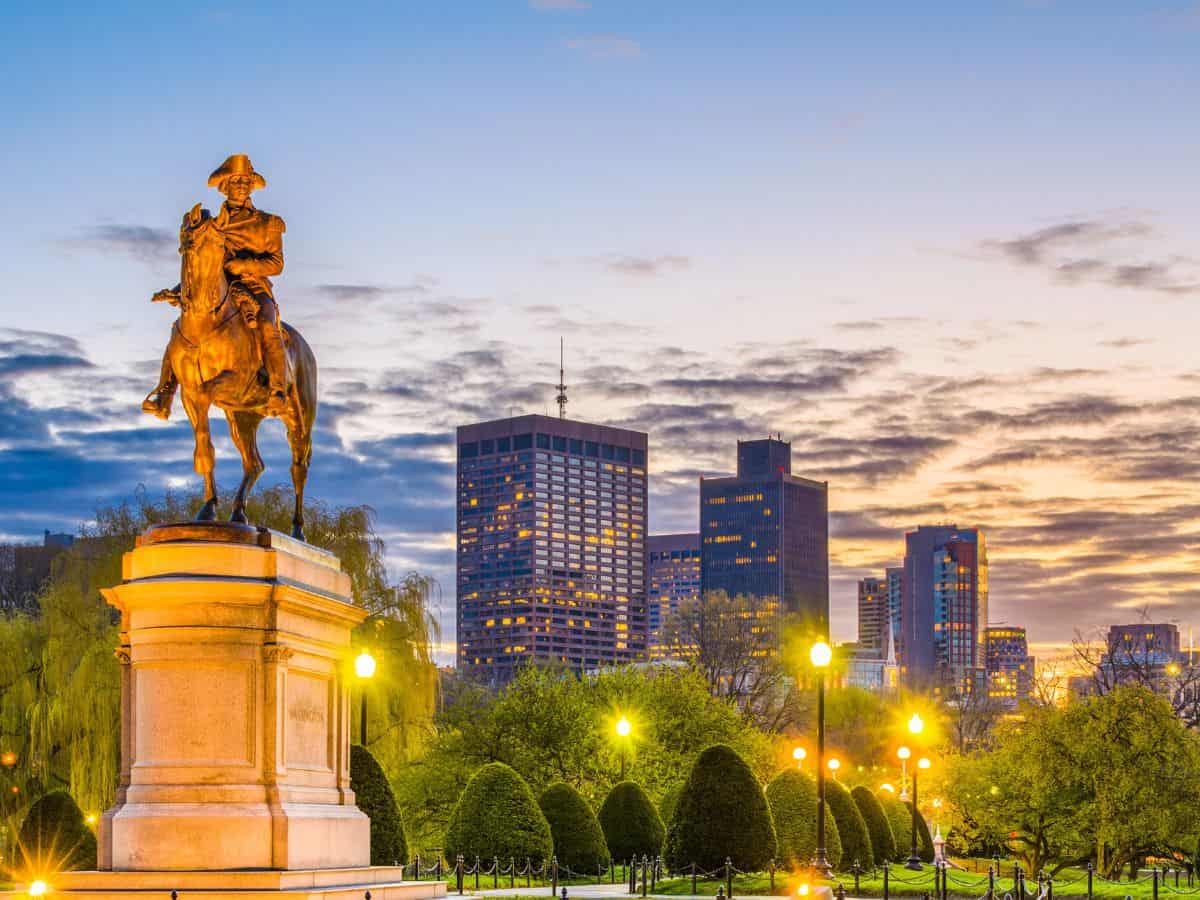
Growing up a die-hard Boston Celtics fan with a deep love for American history, I’d always dreamed of visiting Boston. In October 2023, Julie and I finally made the trip—and the most memorable experience was our self-guided Freedom Trail tour.
We loved going back in time, walking the iconic red line through the heart of the city, and exploring history at our own pace. It was a fun and educational experience that made for a truly unforgettable day in Boston.
Disclosure: This post may contain affiliate links. If you make a purchase through one of these links, I may earn a small commission at no additional cost to you. Thanks for keeping Miles with McConkey going!
🧭 What Is the Freedom Trail?
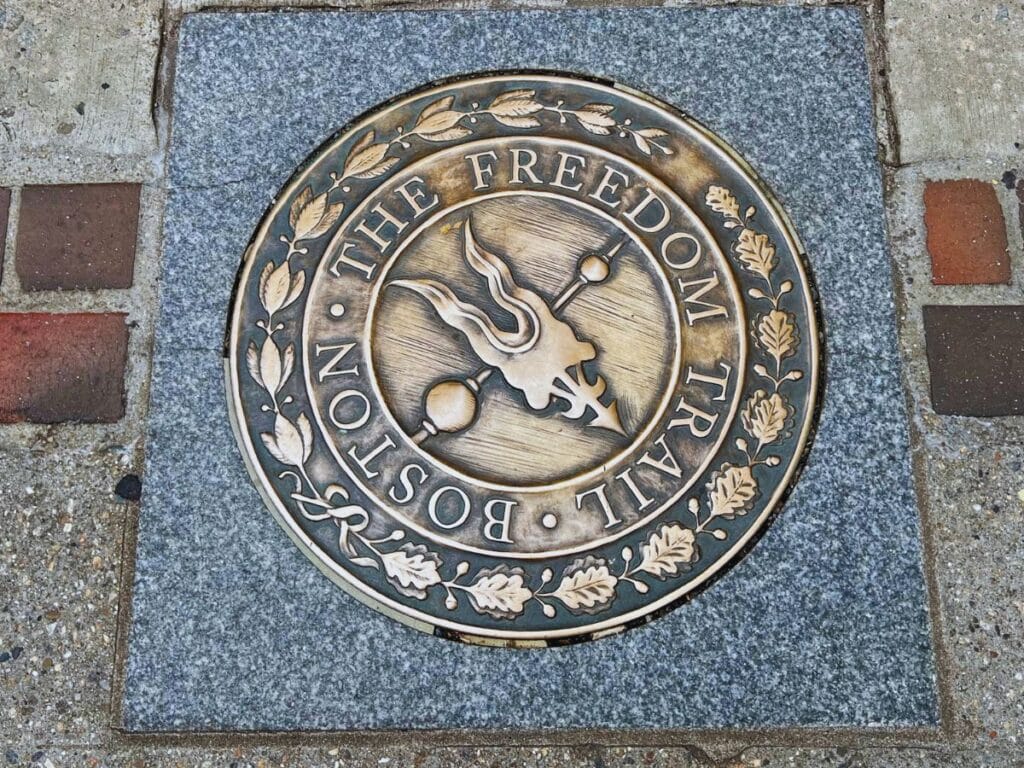
The Freedom Trail is a 2.5-mile red brick path that winds through downtown Boston, connecting 16 historically significant sites tied to the American Revolution and early U.S. history. It starts at Boston Common and ends at the Bunker Hill Monument in Charlestown.
📍 Freedom Trail Stops at a Glance
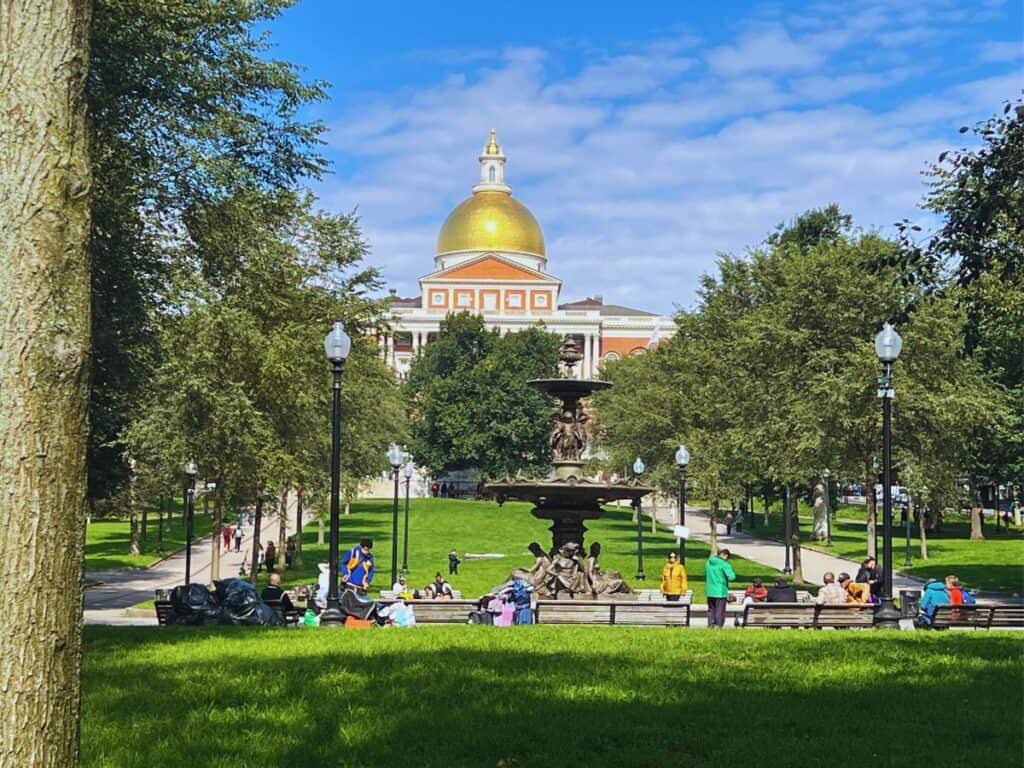
Here’s a quick overview of the 16 official sites:
| Site | Description |
|---|---|
| Boston Common | America’s oldest public park |
| Massachusetts State House | Seat of the state government with a golden dome |
| Park Street Church | Historic church with abolitionist ties |
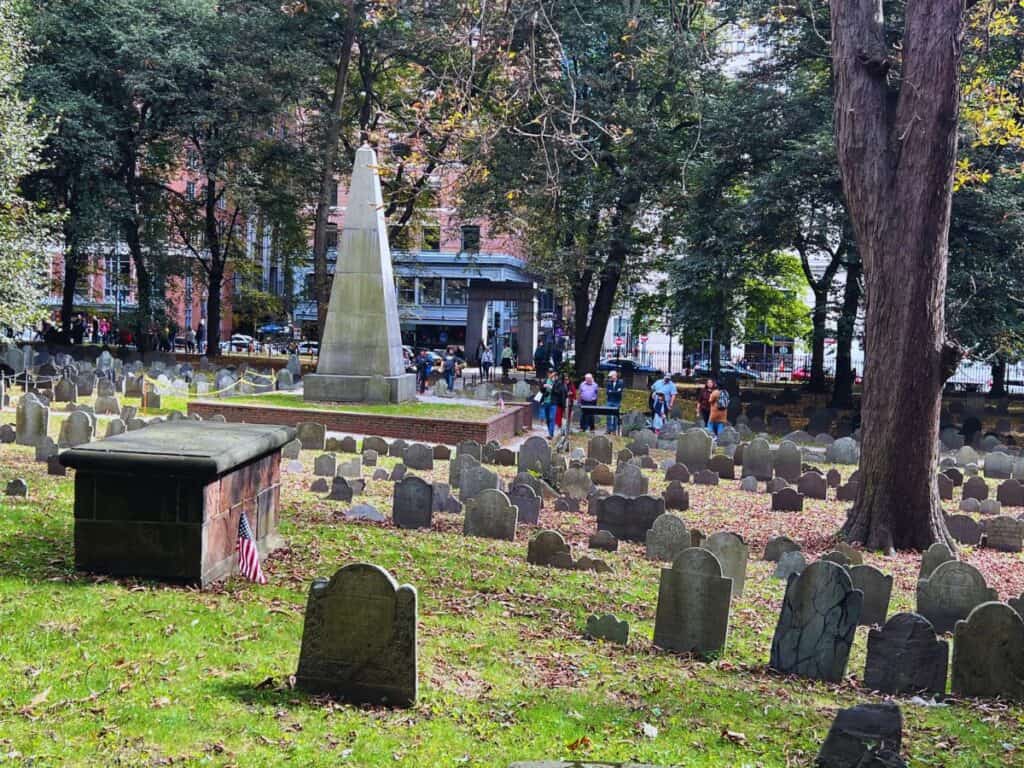
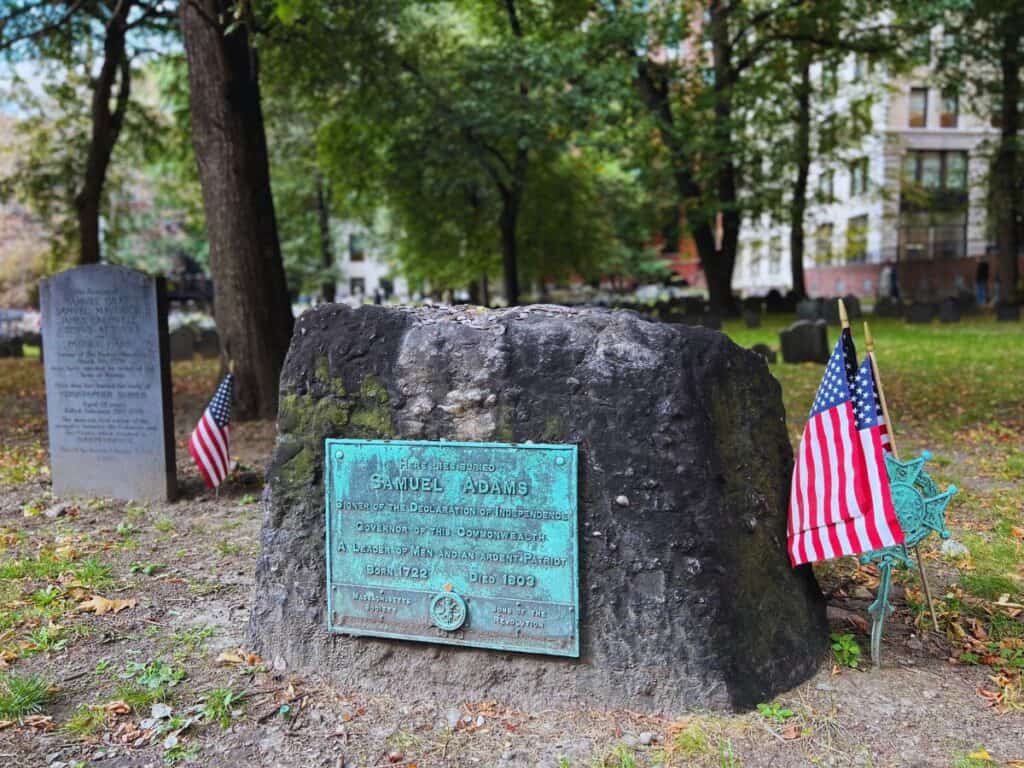
| Granary Burying Ground | Final resting place of Paul Revere, Samuel Adams & John Hancock |
| King’s Chapel & Burying Ground | Oldest burying ground in Boston |
| Boston Latin School Site | First public school in America; statue of Benjamin Franklin |
| Old Corner Bookstore | Former literary hub; now a commercial space |
| Old South Meeting House | Site of pre-Boston Tea Party protests |
| Old State House | Site of the Boston Massacre and Declaration reading |
| Boston Massacre Site | Marked location of the 1770 clash |
| Faneuil Hall | Marketplace and “Cradle of Liberty” |
| Paul Revere House | Home of the midnight rider |
| Old North Church | “One if by land, two if by sea” lantern signal site |
| Copp’s Hill Burying Ground | Colonial-era cemetery |
| USS Constitution | Oldest commissioned warship afloat |
| Bunker Hill Monument | Commemorates the first major battle of the Revolution |
Our Boston trip also included a quick stop in Salem—if you’re wondering whether October is the right time to visit, we explored that here. Spoiler: it’s festive, fascinating, and a little chaotic—but absolutely worth considering if you’re already in the area.
While the Freedom Trail is not a traditional national park, many of its sites are part of Boston National Historical Park, which is administered in partnership with the National Park Service.
Visitors can explore the trail on their own or join guided tours offered by the Freedom Trail Foundation, which feature costumed guides and historical storytelling. Whether you go solo or with a group, the trail provides a powerful way to connect with America’s past.
♿ Is the Freedom Trail Accessible?
Yes! The trail follows public sidewalks and is mostly flat, making it wheelchair accessible. Although a few historic buildings may have limited access, the path itself is easy to follow and well-marked.
💰 Freedom Isn’t Free
While walking the trail is free, Foundation-led tours and select historic sites charge admission. You can also purchase maps, guidebooks, audio tours, and apps to enhance your experience.
Typical costs:
- Guided tours: $17 for adults, $15 for seniors/students, $8 for children 6–12, and free for children under 6.
- Site admissions: Vary by location (some are free, others charge $5–$15).
🎩 Why Consider a Guided Tour?
Guided tours are an excellent option for travelers who want a structured experience with storytelling. Here’s why:
- Convenient: No planning is required—follow the guide.
- Costumed guides: Add personality and theatrical flair.
- Historical insights: Learn facts and stories you might miss on your own.
- Stress-free navigation: No worries about getting lost or missing stops.
Interested in joining a guided tour? Check availability and book here through GetYourGuide.
🚶 Why We Chose a Self-Guided Freedom Trail Tour
We opted to walk the trail on our own—and we’re glad we did. Here’s why:
- Save money: No tour fees meant more room in the budget for cannoli and chowder.
- Go at your own pace: We lingered at the sites that resonated most.
- Freedom to eat and explore: We grabbed bites at Mike’s Pastry and Samuel Adams—on our own schedule. Check out our Freedom Trail food guide for more tasty stops along the way.
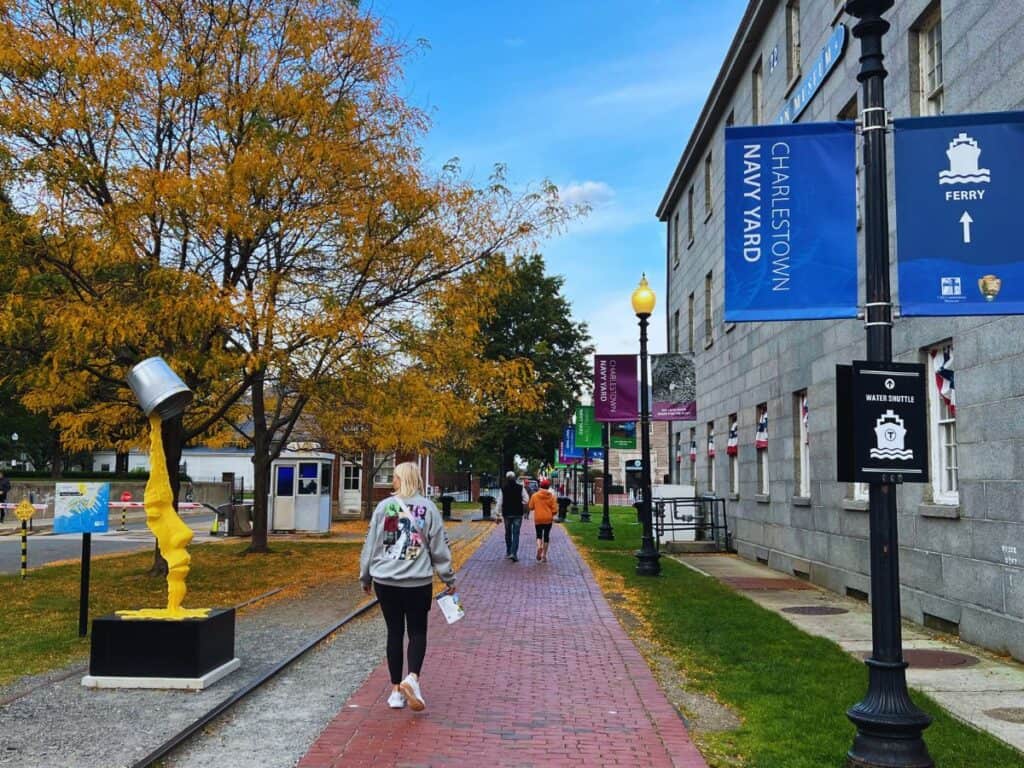
- See all 16 sites: Many popular tours feature just 11 of the trail’s 16 stops, so exploring on our own gave us the chance to see everything—including the lesser-visited naval sites that really stood out.
- Flexibility: We detoured when something caught our eye and circled back when we wanted to explore further.
Other perks? There are no time limits, no group dynamics, and no pressure to keep up. It was our day, our way. Bonus? Our final stops near Charlestown Navy Yard meant we capped the day with a scenic ferry ride to Long Wharf—an unforgettable finish to a freedom-filled adventure.
❓ Freedom Trail FAQ
How long does it take to walk the trail?
Anywhere from 2 to 6 hours, depending on the pace and the number of sites you visit.
Where does it start and end?
It begins at Boston Common and concludes at the Bunker Hill Monument.
Can I walk it in one day?
Yes! We did—and loved every minute.
Do I need a map or app?
Not necessarily. The red brick line is easy to follow, but a map or app adds context.
Are restrooms available?
Yes, at major sites like Faneuil Hall and the USS Constitution Museum.
🧭 Final Thoughts
Walking the Freedom Trail on our own gave us the chance to connect with history in a personal way. We weren’t just following a path—we were retracing the steps of revolutionaries, exploring Boston’s neighborhoods, and discovering stories that still echo today.
Whether you go guided or self-guided, the Freedom Trail is a must-do. Just don’t forget your walking shoes—and maybe a pastry or two.
Featured image credit: sepavone via Deposit Photos