

Upon hearing the name Portland, most Americans immediately think of Portland, Oregon, or the one in Maine. Did you know our planet also has a Portland, England? Neither did we until a labor strike in Paris, France, forced our cruise ship to go elsewhere.
Imagine dreaming of spending half a day in Paris and discovering that you will be going to Portland instead. To put it mildly, Julie and I were less than thrilled. Although the city name does not conjure images of romance or adventure like Paris, we had a fantastic time exploring Portland across the pond.
So, what does Portland, England, offer travelers? A lot, actually.
Disclosure: This post may contain affiliate links. If you make a purchase through one of these links, I may earn a small commission at no additional cost to you. Thanks for keeping Miles with McConkey going!
A Little Background on Portland, England
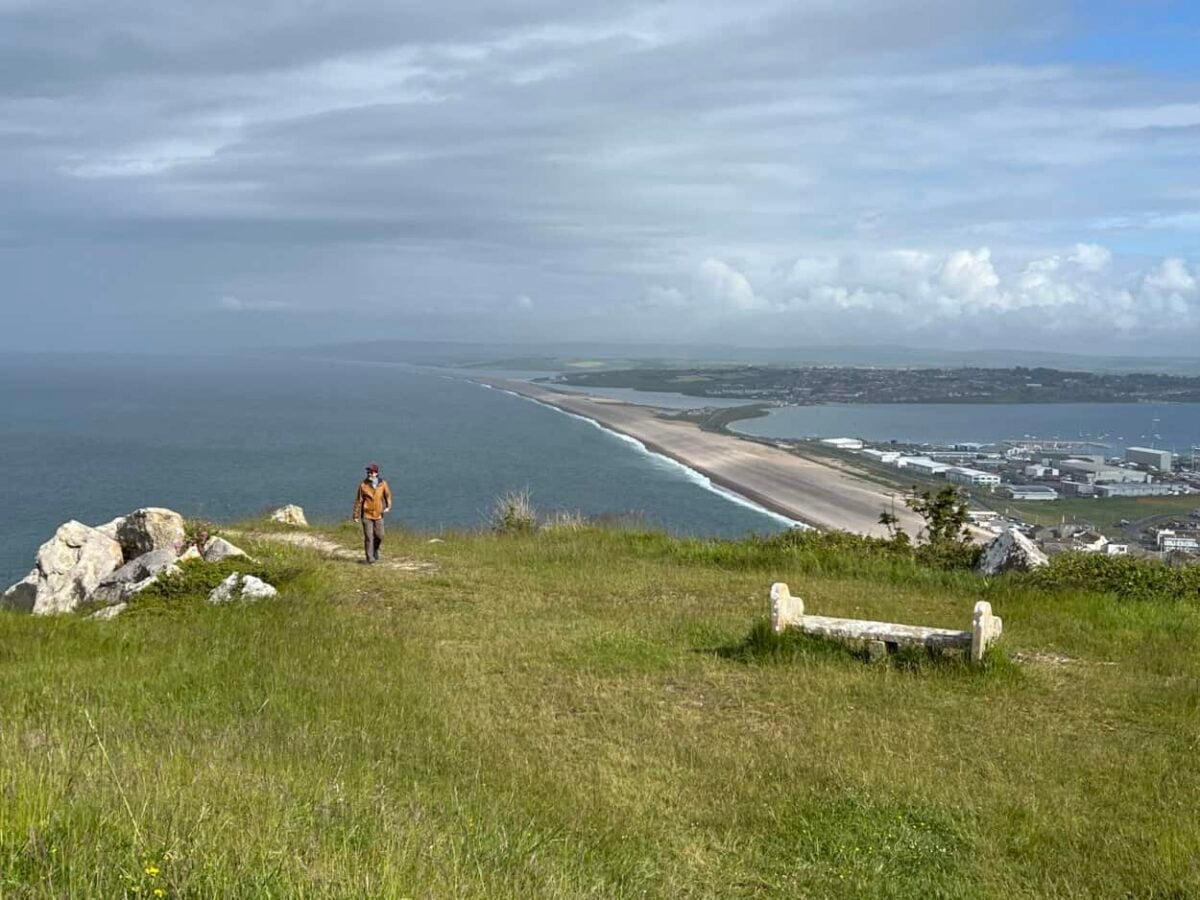
Portland is a tied island, 4 miles long and 1.5 miles across at its widest point. It is joined to the mainland by a beach and has a population of about 13,000.
You may be familiar with Portland stone. Yes, it comes from Portland across the pond. For those unfamiliar with Portland stone, it is a type of limestone famous for its use in British and world architecture. You will find it in St. Paul’s Cathedral, Buckingham Palace, the United Nations Headquarters, and some Washington, DC monuments.
Portland, England, has a fascinating history that spans everything from World War II to the Olympic Games. You will also find much natural beauty along its beach and rocky coastline. No, it does not have an Eiffel Tower, but it does have a lighthouse. So, there is plenty to explore here.
I must cover one essential travel tip before we dig into our Portland adventures.
Take a Bus From the Port
It is essential to note that Portland, England, is a working port, and cruise ship passengers cannot walk into town. Your cruise line will provide information about transportation options before you disembark.
We took a quick bus ride into town and then walked to most attractions. When ready to return to the ship, we hopped on a bus as directed by our cruise staff. Although not difficult, it is an extra step to remember when planning your day.
Portland Castle
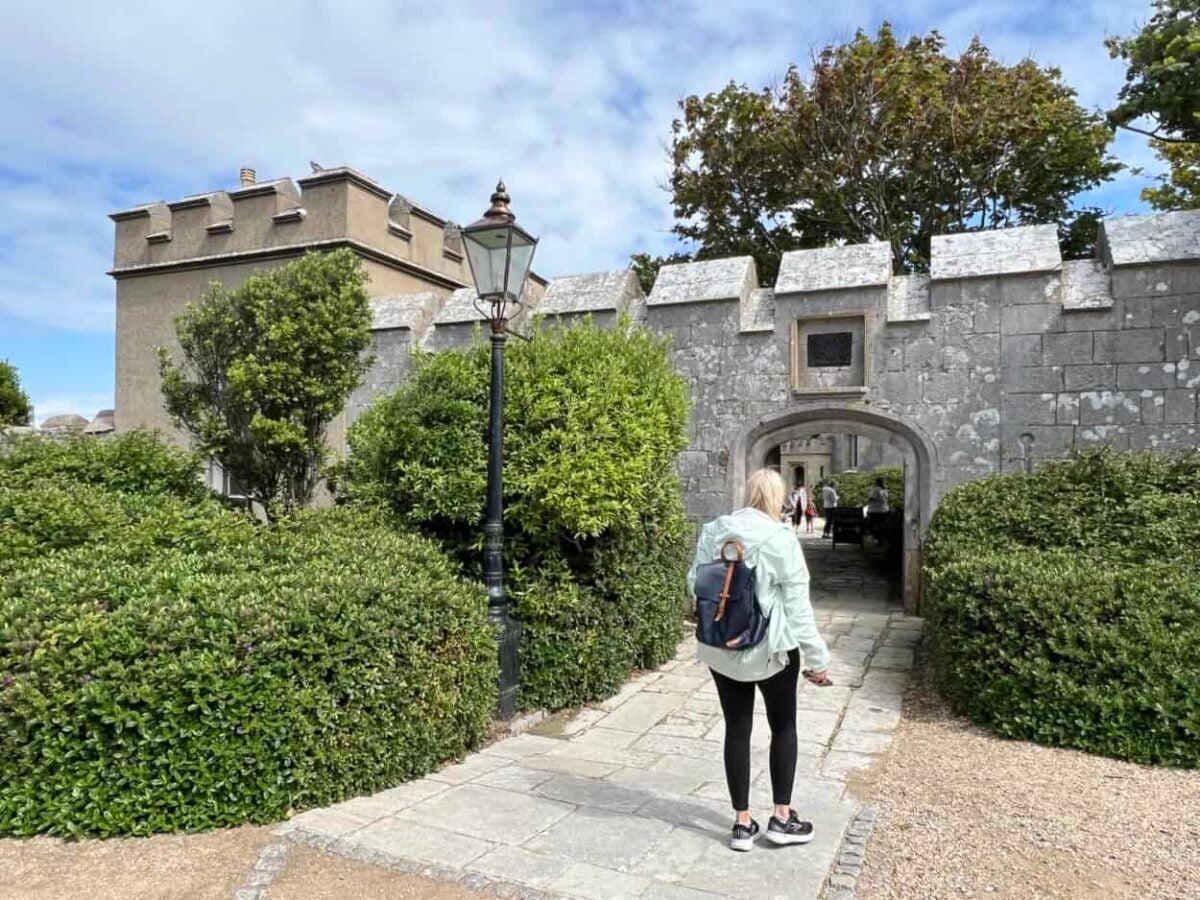
When visiting the British Isles, many travelers dream of touring castles. Portland, England, delivers with its namesake castle built by Henry VIII in the early 1540s to defend his fleet from Spanish and French invasions. Although not as large as others we saw during our cruise excursions, the Tudor castle overlooking Portland Harbour in Dorset remains one of King Henry’s best-preserved forts and is worth your time.
During World War II, Portland Castle was a training base for joint operations, including exercises for the famous D-Day landings. Today, it is a popular tourist attraction managed by English Heritage. Between the sea views from the gun platform, the kitchen, and the herb garden, tours provide a little something for everyone.
Portland Harbour

From the port and various areas in town, you can see one of the world’s largest manmade harbors, built in the mid-1800s with stone breakwaters. It started as a coaling station for the Royal Navy and was utilized in World Wars I and II. Today, it is a civilian port and a popular recreation area.
Julie and I enjoyed watching all the activities in Portland Harbour. It was quite a scene with people sailing, windsurfing, and kiteboarding. We have never seen so much activity in one harbor before. No wonder it was the site of sailing events for the 2012 Olympic and Paralympic Games.
Olympic Rings
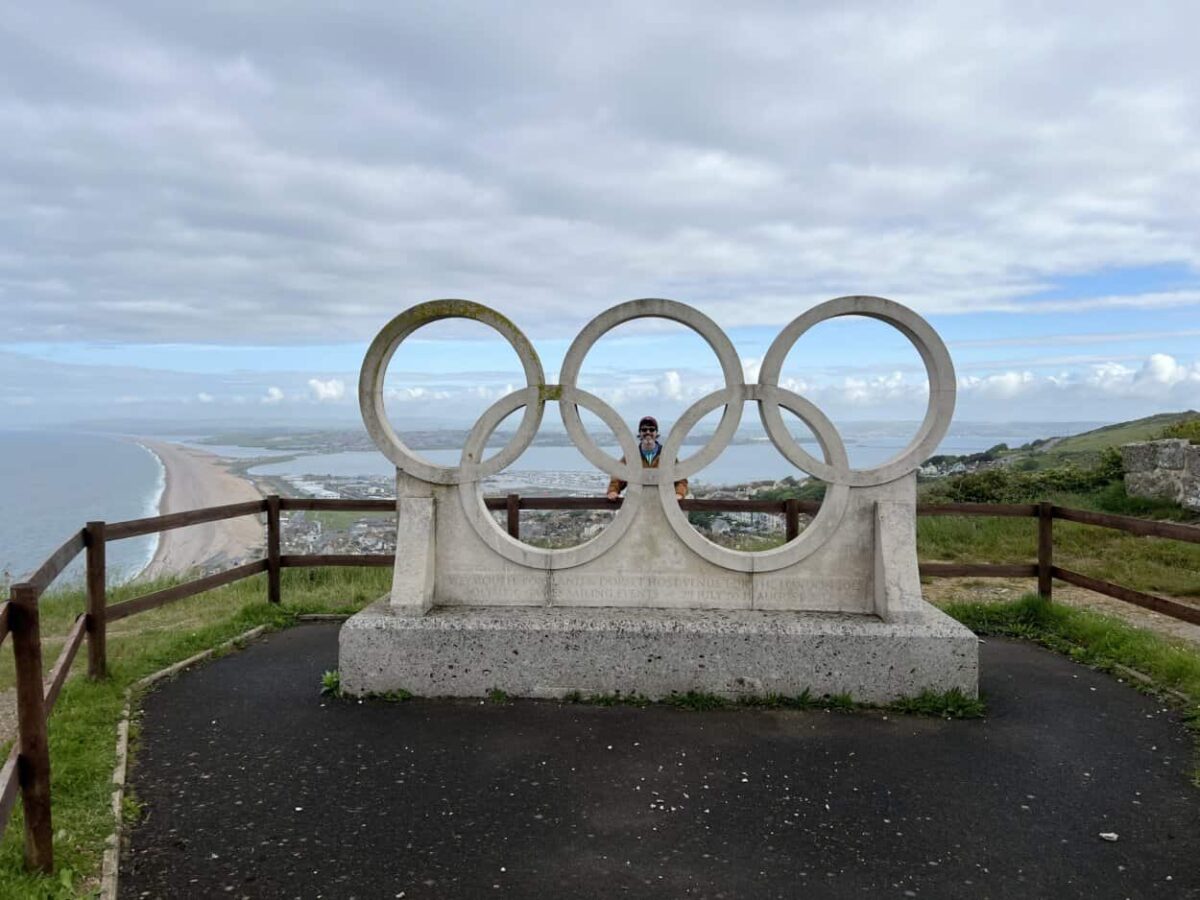
At the top of a hill overlooking Portland Harbour, you will find an Olympic rings sculpture made from Portland stone, honoring the 2012 games held here and in Weymouth Bay. Even if you are not a fan of the Olympics, the sweeping views of the coast and town below are spectacular.
The Jurassic Coast, a UNESCO World Heritage Site, stretches for 95 miles in Dorset and Devon Counties in the background. We did not expect to see natural beauty in Portland, but we found it on the hill. A smile stretched across our faces as we took in the scenery.
Julie and I walked from Portland Castle to see the Olympic Rings. While it was worth it, the steep walk took about 45 minutes. I suggest taking a bus and saving your legs to explore other attractions. Regardless of how you climb the hill, you will discover plenty more to see here.
World War II History
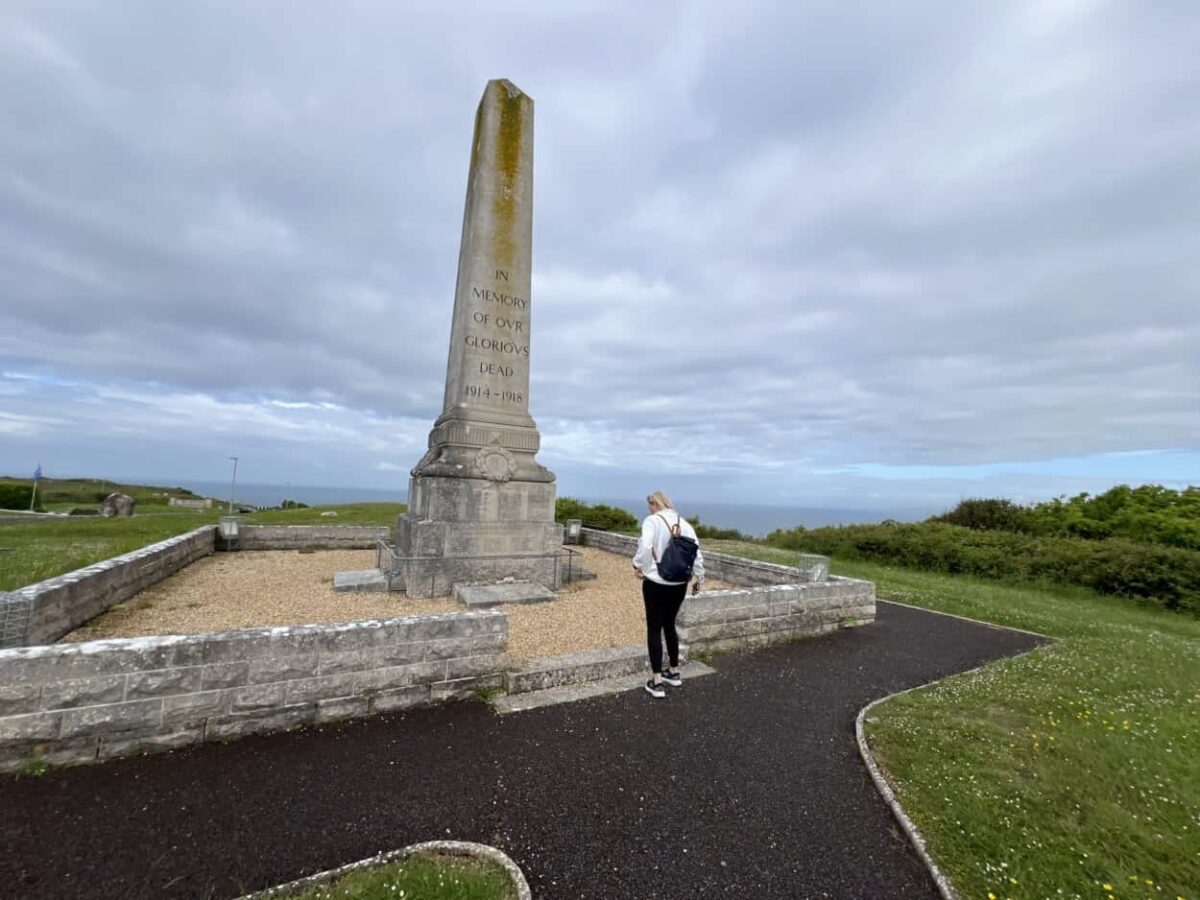
Portland, England, is chock full of World War II history. From Chesil Beach to the area’s namesake harbor and castle, you will find many points of interest about the global conflict. We accidentally stumbled across one and did not have time to see the most popular attraction.
Admittedly, Julie and I climbed the hilltop to New Ground to see the Olympic rings and the panoramic vistas. We found much more than we expected, including the Portland Cenotaph, a war memorial honoring local soldiers for their service in World Wars I and II. It is a sobering reminder of the event and how many lives it impacted, regardless of your home country.
Due to limited time, we missed out on the Castletown D-Day Centre. It is a must if you are a World War II history buff. The museum has many artifacts from the war, including weapons and vehicles. You can also see two intact concrete caissons built to create artificial harbors for the famous Normandy landings.
Memory Stones
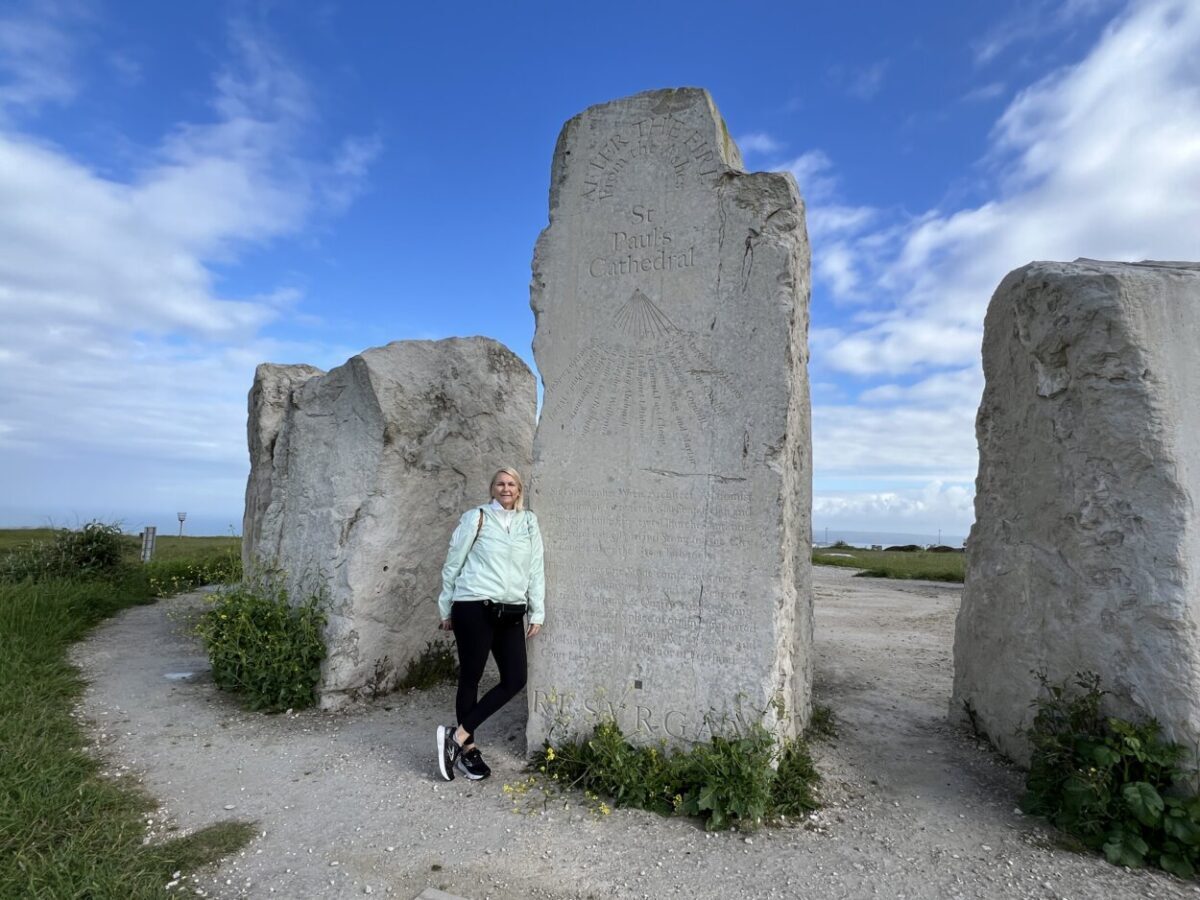
Near the Olympic rings, you will find a set of giant stones somewhat reminiscent of Stonehenge. Local artist Hannah Solfaer designed the sculpture to raise environmental awareness.
The twelve stones weigh 250 tons and form a circle overlooking Tout Quarry. Each stone has an inscription and its own significance regarding Portland’s cultural history. Shadows from the rocks mark the spring and autumn equinoxes and the summer and winter solstices.
Tout Quarry Nature Reserve and Sculpture Park
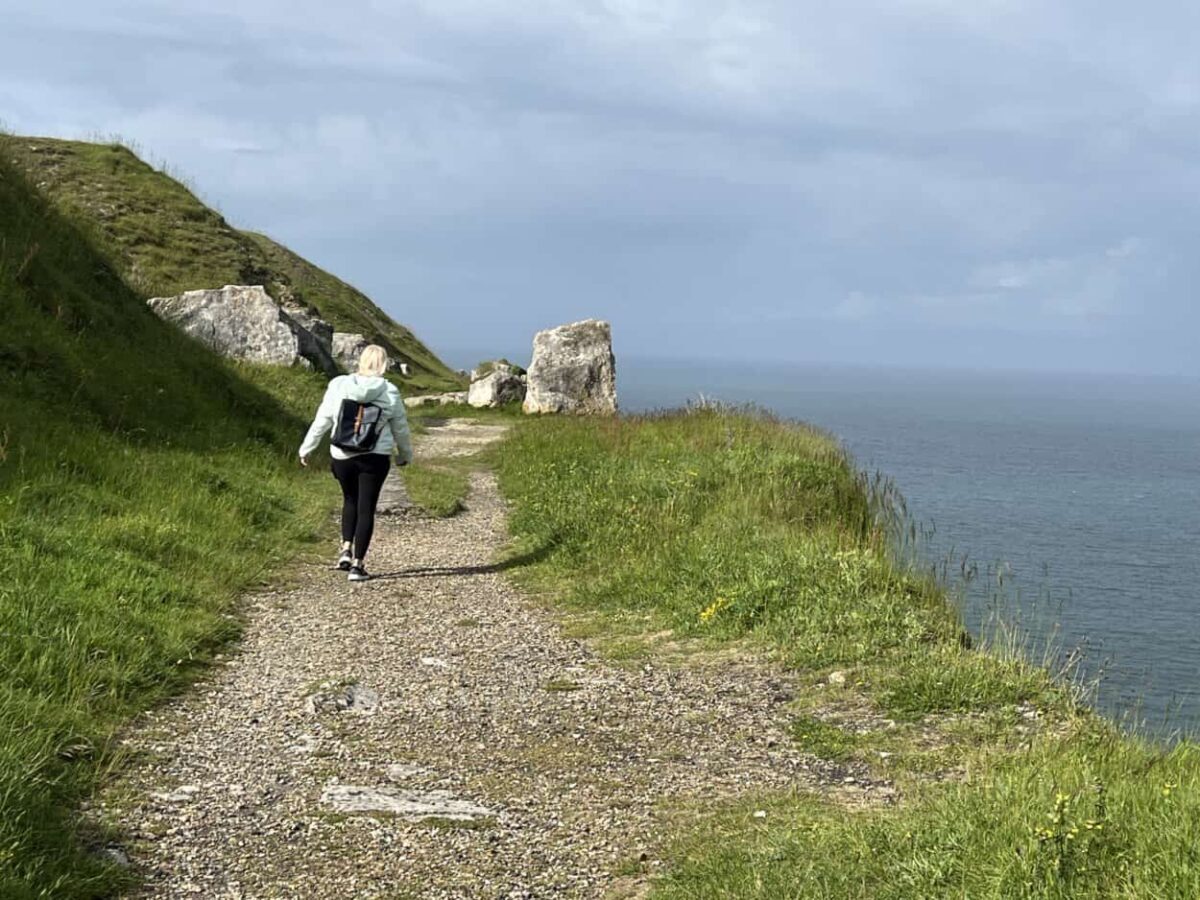
One of the most pleasant surprises at the hilltop was a park that combines history, nature, and art. Tout Quarry Nature Reserve and Sculpture Park is an abandoned stone quarry turned into a sculpture park honoring the Isle of Portland’s geology and wildlife.
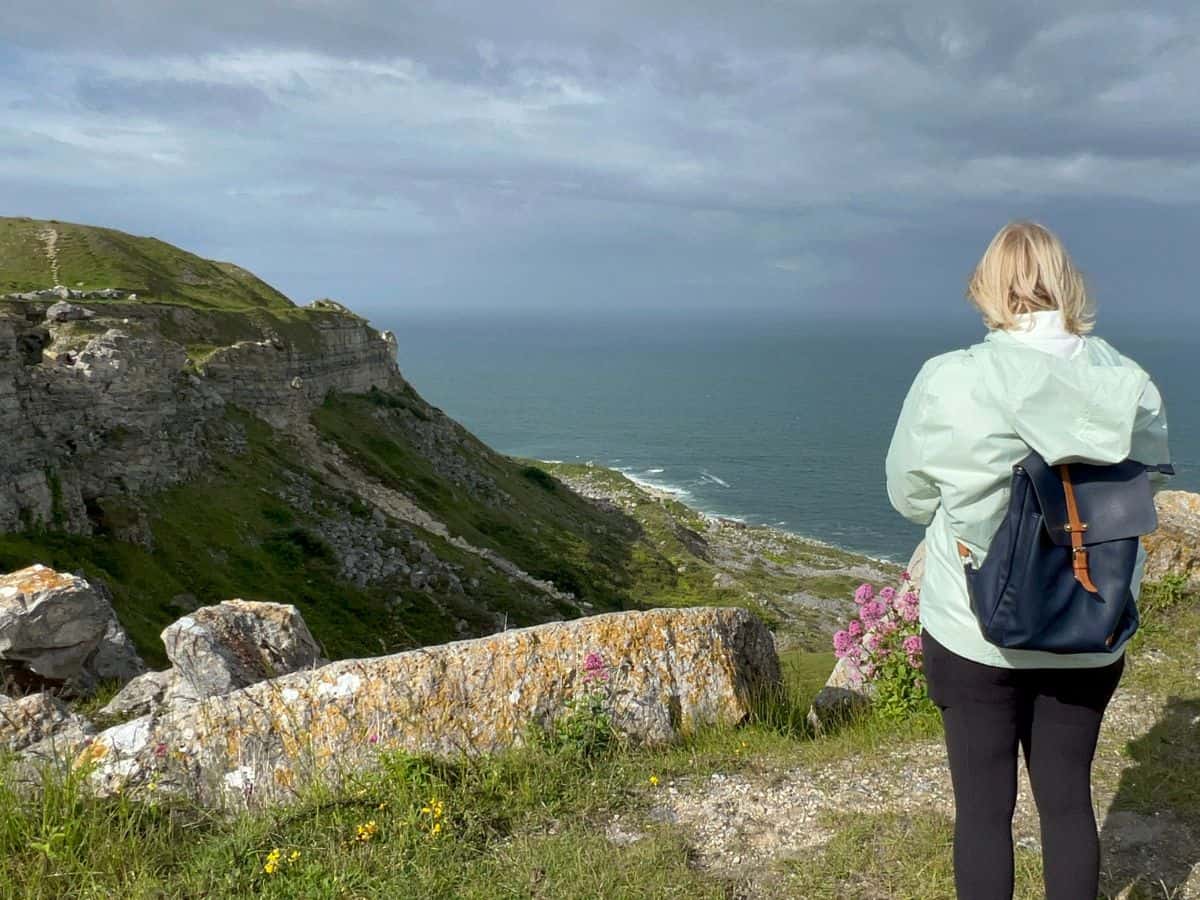
Julie and I happily hiked paths through rolling green meadows with pops of color from wildflowers. Some path sections skirted steep, rocky cliffs, with waves splashing into the coast below. The park houses tunnels and over 60 hidden sculptures along its trails. Julie and I enjoyed the experience immensely but wished we had more time to explore the park.
The View Cafe and Bar

After exploring all the hilltop offers, grab a refreshment at The View Cafe & Bar. The fun cafe serves snacks and is open daily from 9 am to 5 pm. While the inviting indoor section has beer keg seats, the outdoor area has picnic tables and panoramic views.
Enjoy coffee or tea with a biscuit, pastry, or homemade cake. The menu includes soup, salads, breakfast dishes, burgers, and sandwiches. Or, you can try a Portland Boulder, a large crispy and seasoned jacket potato with various toppings. Julie and I shared two sweets, and I had an espresso drink. Everything was tasty, re-energizing us for more exploration.
Chesil Beach
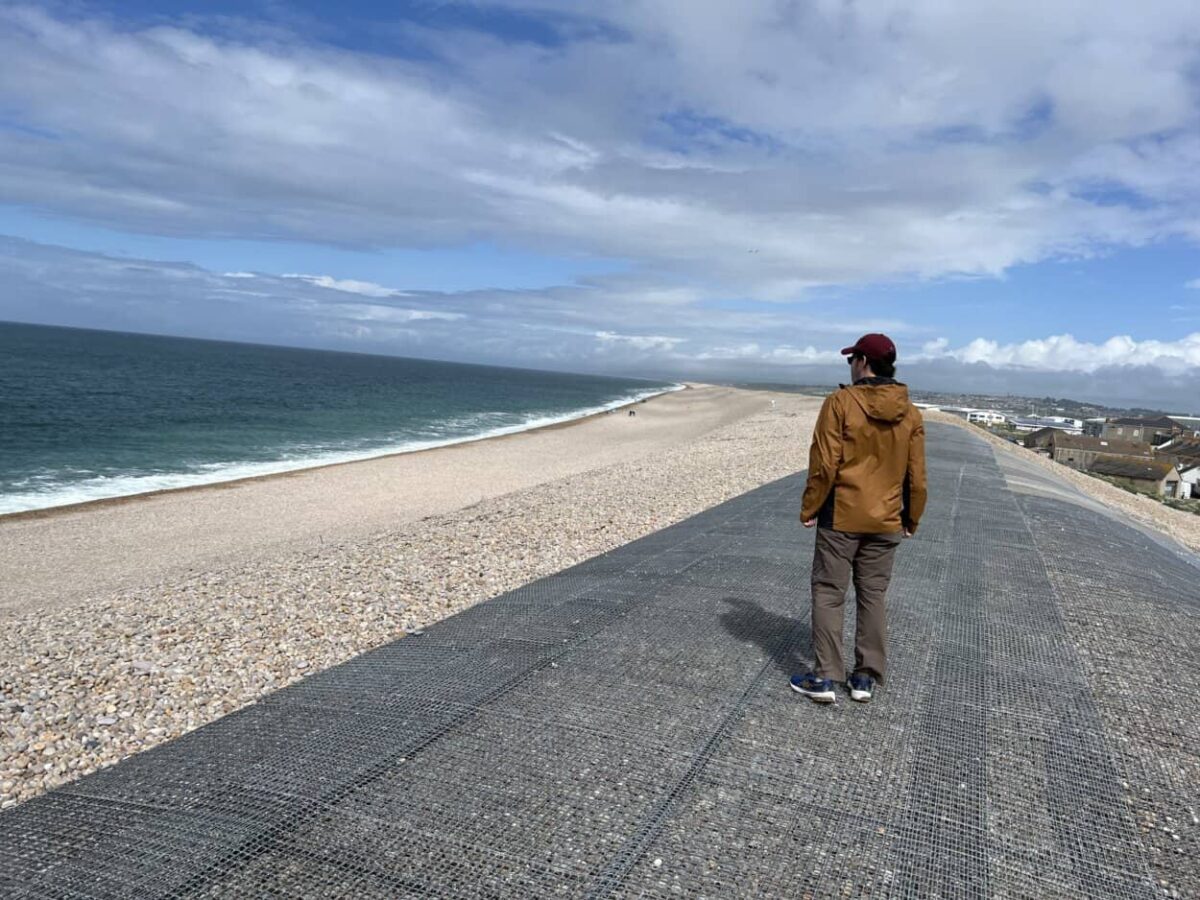
One of Dorset’s most iconic landmarks, Chesil Beach spans 18 miles and consists of pebbles ranging from potato-sized in Portland to pea-sized in Bridport. The barrier beach forms part of the Jurassic Coast World Heritage Site.
While New Ground provides an excellent view, I encourage you to head down to the beach for a closer look. It is essential to note the beach is over 40 feet high in some sections. People often refer to it as Chesil Bank. As such, there are more walkable beaches than this one. Julie and I walked a short section for the experience and are glad we did.
Behind the beach, you will discover Fleet Lagoon, a large saline lake. It is a vital wildlife habitat and home to a mute swan colony at Abbotsbury, a half-hour drive from Portland. For those interested in history, Fleet Lagoon was a testing site for World War II bouncing bombs.
Portland Bill Lighthouse
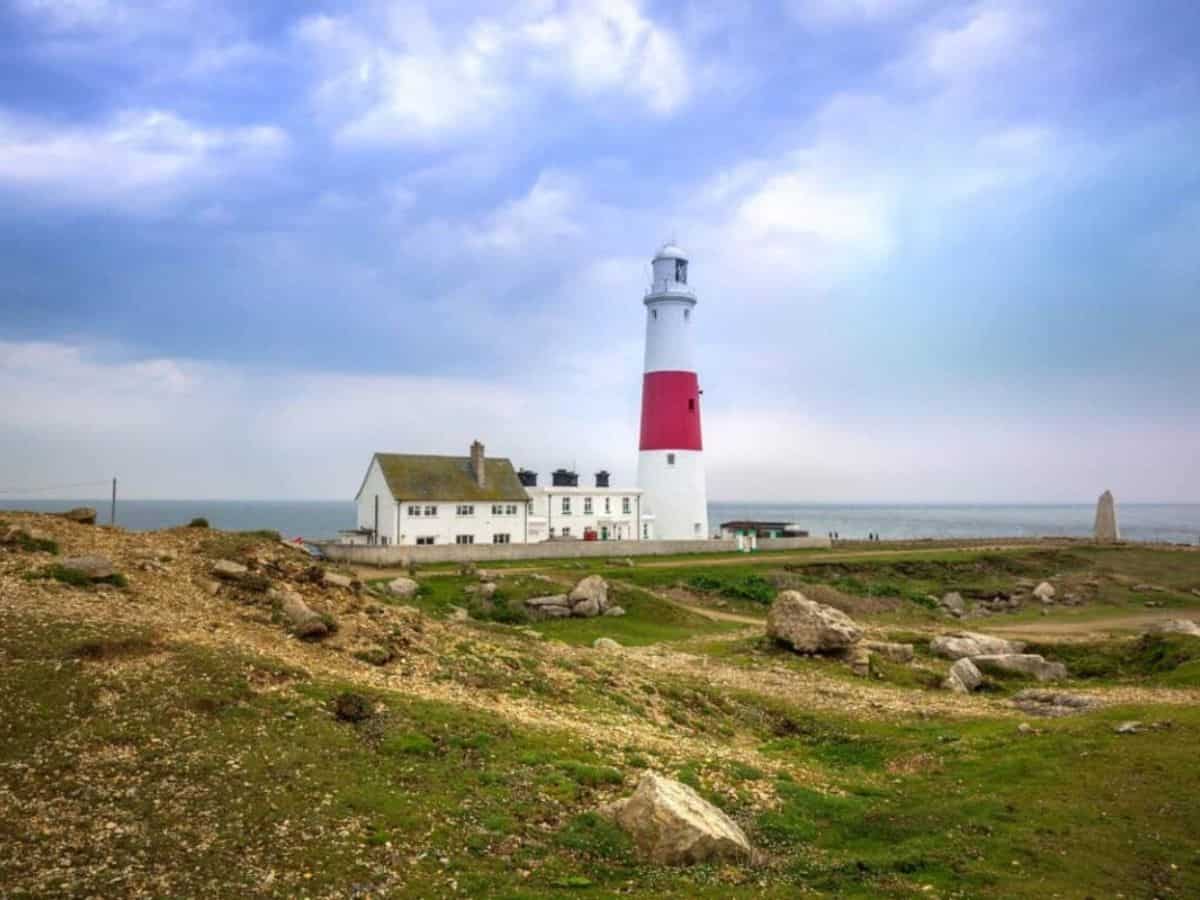
At the northern tip of the Isle of Portland, you will find a beautiful 135-foot-tall white lighthouse with a distinctive red stripe. Built in 1906, it replaced two previous lighthouses. Initially, the Portland Bill Lighthouse was a waymark for ships navigating the English Channel, safely guiding them to Portland and Weymouth. Now, it is one of Portland’s top attractions.
The lighthouse includes a visitor center with historical artifacts and interactive exhibits, including one that simulates a dark, stormy sea journey. A 153-step climb leads you to the lantern room, where you gain panoramic views of the Jurassic Coast. Before your visit, check the Portland Bill Lighthouse website to verify hours, tour availability, and prices.
Plan Your Trip to the Other Portland
While Portland, England, is likely not the first Portland that springs to mind, it is worth visiting. When planning a trip across the pond, include the tied island. No, its name does not have the zing of Paris, but you will delight in Portland’s history and nature, making for a memorable adventure.
Featured image credit: Miles with McConkey