
I still remember the moment I opened my first chemistry set as a kid. Inside was a tiny container labeled “sulfur.” I cracked it open, took a whiff, and immediately recoiled. That rotten egg smell was unforgettable. If you’ve ever visited Yellowstone, you know exactly what I’m talking about.
Disclosure: This post may contain affiliate links. If you make a purchase through one of these links, I may earn a small commission at no additional cost to you. Thanks for supporting Miles with McConkey.
So why does Yellowstone smell like sulfur?
It’s not just a quirky detail. That distinctive scent is a byproduct of the park’s geothermal and hydrothermal activity, and it plays a vital role in shaping some of Yellowstone’s most iconic features. From bubbling mudpots to technicolor springs, sulfur is part of the magic. Even movies like Shrek have called it “brimstone,” but in Yellowstone, it’s very real and very pungent.
What Causes the Smell?
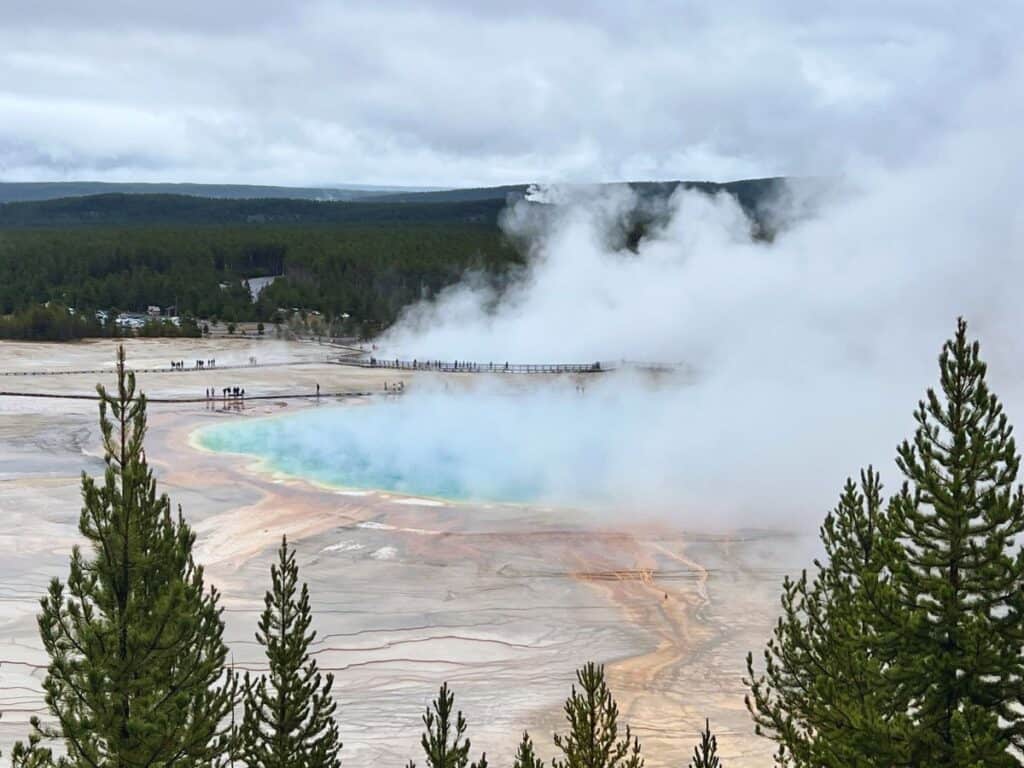
The culprit is hydrogen sulfide gas, released from underground volcanic activity. When this gas rises to the surface and interacts with oxygen and water, it creates sulfuric acid and elemental sulfur. These reactions help form the acidic environments that support geysers, fumaroles, and colorful microbial mats.
While features like Old Faithful and Grand Prismatic Spring are more alkaline than acidic, sulfur still plays a supporting role in the broader geothermal system. Without it, Yellowstone’s hydrothermal diversity wouldn’t be the same.
Is It Dangerous?
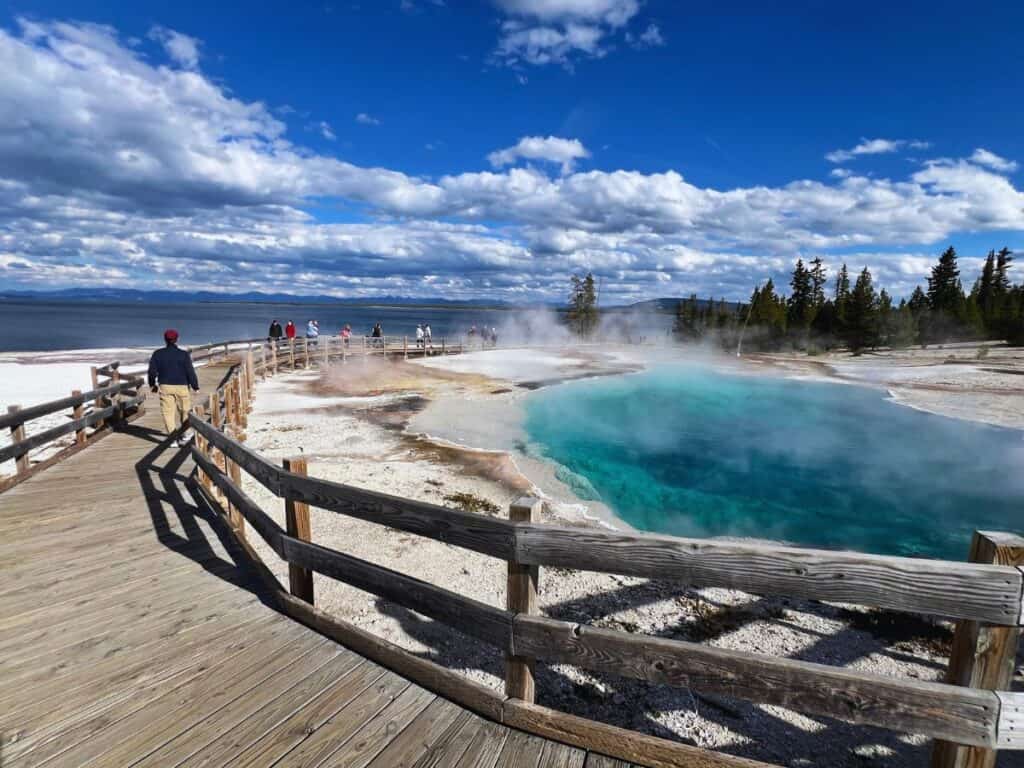
In small doses, no. The smell might be intense, but the hydrogen sulfide levels in open-air areas are not harmful to visitors. Park signage will warn you if you’re near a vent or enclosed space where gas could accumulate. Staying on boardwalks and following posted guidance is all you need to stay safe.
Smell Zones vs Smell-Free Zones
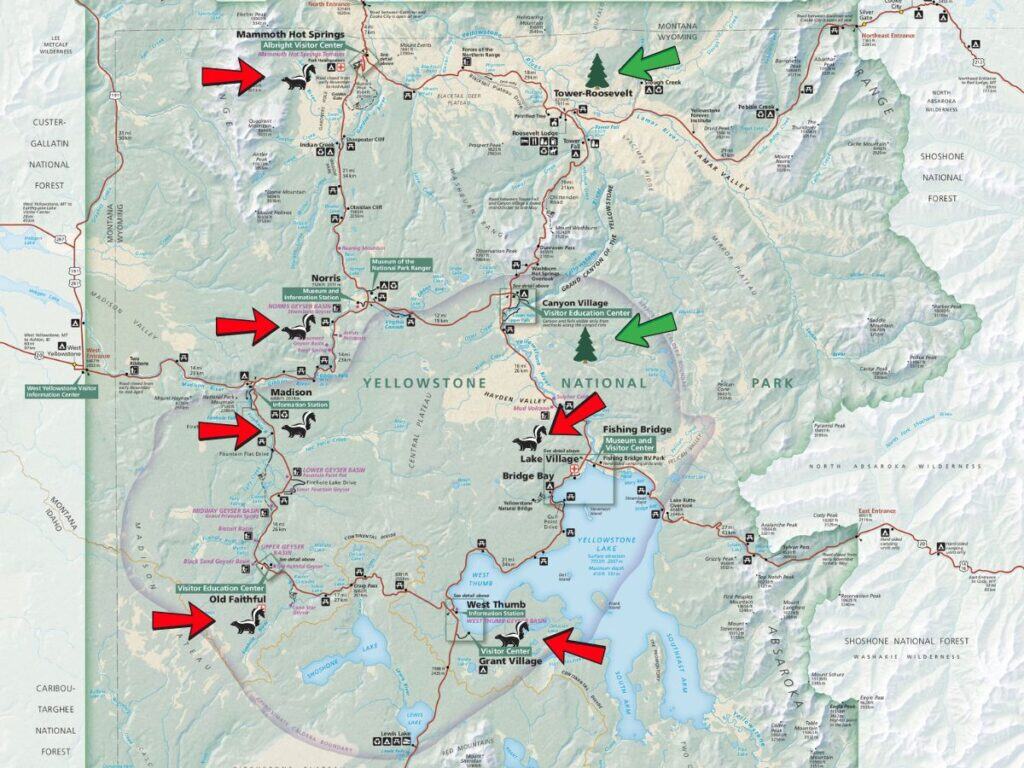
Let’s take a high-level look at Yellowstone’s eight primary regions. Some are full-on stink zones, while others are refreshingly odor-free. This overview focuses on where you are likely to encounter the sulfur smell. It is not a deep dive into each area’s attractions, which is a topic for another post.
🌲 Tower-Roosevelt: Smell-Free
Lamar Valley, Tower Fall, Roosevelt Lodge, and the Yellowstone River offer wildlife and scenery without the sulfur.
🌲 Grand Canyon of the Yellowstone: Smell-Free
This area is all about dramatic canyon views, waterfalls, and hiking. No sulfur scent here.
🦨 Mammoth Hot Springs: Hot Zone
Boardwalks wind above steaming terraces and hydrothermal features. The smell is noticeable but not overwhelming.
🦨 Lake Village + Fishing Bridge: Hot Zone
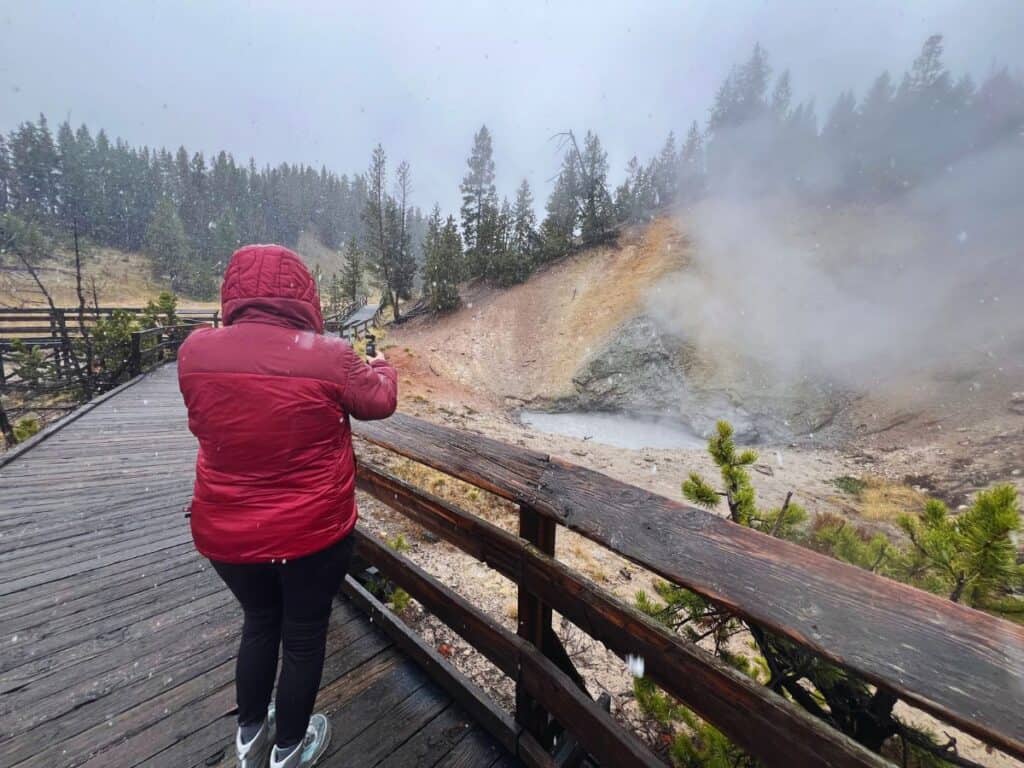
Includes Mud Volcano, Yellowstone Lake, and Fishing Bridge. Mud Volcano was the worst-smelling spot for us. It was a peaceful hike with light snow, but the pungent odor lingered.
🦨 West Thumb: Hot Zone
West Thumb Geyser Basin is known for its hydrothermal boardwalks and its distinct rotten-egg smell. Thankfully, we didn’t notice the odor in nearby Grant Village, where we stayed. We did spot plenty of elk, though.
🦨 Old Faithful: Hot Zone
The smell here was mild during our visit, possibly thanks to steady rain. Still, it’s a high-activity zone with geysers and steam.
🦨 Madison: Hot Zone
Terrace Springs and Fountain Paint Pot had a noticeable odor, especially near the mudpots.
🦨 Norris: Hot Zone
One of the park’s hottest and most dynamic thermal areas. Acidic geysers and fumaroles make this a strong-smelling zone.
Tips to Minimize the Smell
- Visit early in the day when the air is cooler and crowds are lighter.
- Go in May or September for milder temps and fewer people.
- Wear a light scarf or buff to breathe through in strong-smelling areas.
- Step back from vents or mudpots; distance helps.
- Stay upwind when possible.
- Limit time in high-sulfur zones if you’re sensitive to smells.
The scent is present year-round, but summer heat and crowds can amplify it. In winter, cold air may carry the smell differently. Some visitors find it sharper, while others notice it less.
❓ Frequently Asked Questions
If the smell still has you scratching your head or your nose, these quick answers can help clear things up.
Why does Yellowstone smell like sulfur?
The smell comes from hydrogen sulfide gas released by geothermal activity. It’s part of what makes Yellowstone so geologically unique.
Is the sulfur smell in Yellowstone dangerous?
Not in the open-air areas that visitors explore. Hydrogen sulfide is toxic in high concentrations, but the park monitors levels and posts warnings where needed.
Which areas smell the worst?
Mud Volcano tops the list, followed by Norris Geyser Basin and West Thumb. These zones have active fumaroles and acidic features.
Does the smell change with the seasons?
Yes. Summer heat and crowds can amplify it. In winter, cold air may carry the scent differently—some find it sharper, while others find it less noticeable.
Can I avoid the smell entirely?
Not entirely, but you can minimize it by visiting early, staying upwind, and limiting time in hot zones.
Final Thoughts: Sulfur, Scenery, and the Soul of Yellowstone
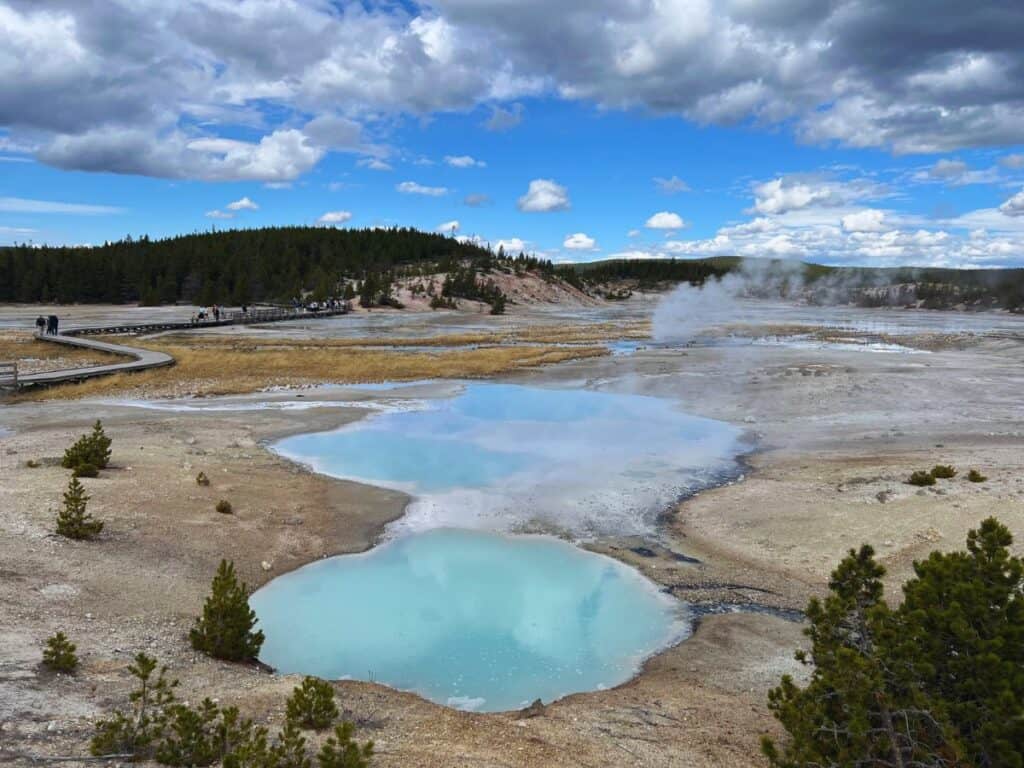
The smell might catch you off guard, but it’s part of what makes Yellowstone unforgettable. It’s a sensory reminder that you’re standing on one of the most geologically active places on Earth. And while it may not be pleasant, it’s a sign of the forces that shape this wild, wondrous landscape.
Don’t miss our full guide to Yellowstone!
We’ve got everything you need to plan your perfect trip.
Featured image credit: Miles with McConkey