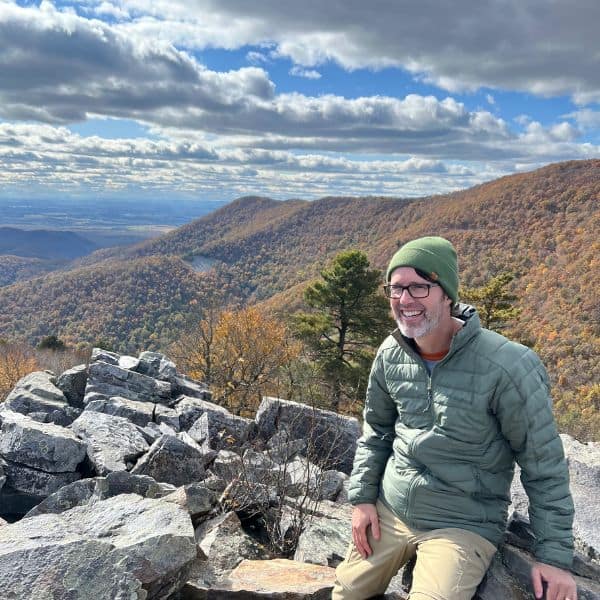

When Julie and I visited Yellowstone in early October, we only experienced a dusting of snow. Even that light snowfall gave us a flavor of what Yellowstone in winter could be like.
Snow dusted the golden valleys and green pines, and a sense of calm fell over us. The boardwalk trails were slippery, bison blocked the road more than once, and limited cell reception reminded us how remote the park can feel. We even faced a road closure that kept us from reaching Lamar Valley. Those moments offered a preview of the challenges and rewards that come with a true Yellowstone winter.
Disclosure: This post may contain affiliate links. If you make a purchase through one of these links, I may earn a small commission at no additional cost to you. Thanks for supporting Miles with McConkey.
If you plan to visit between mid‑December and early spring, here are the essentials to keep in mind.
1. Extreme Cold and Snow
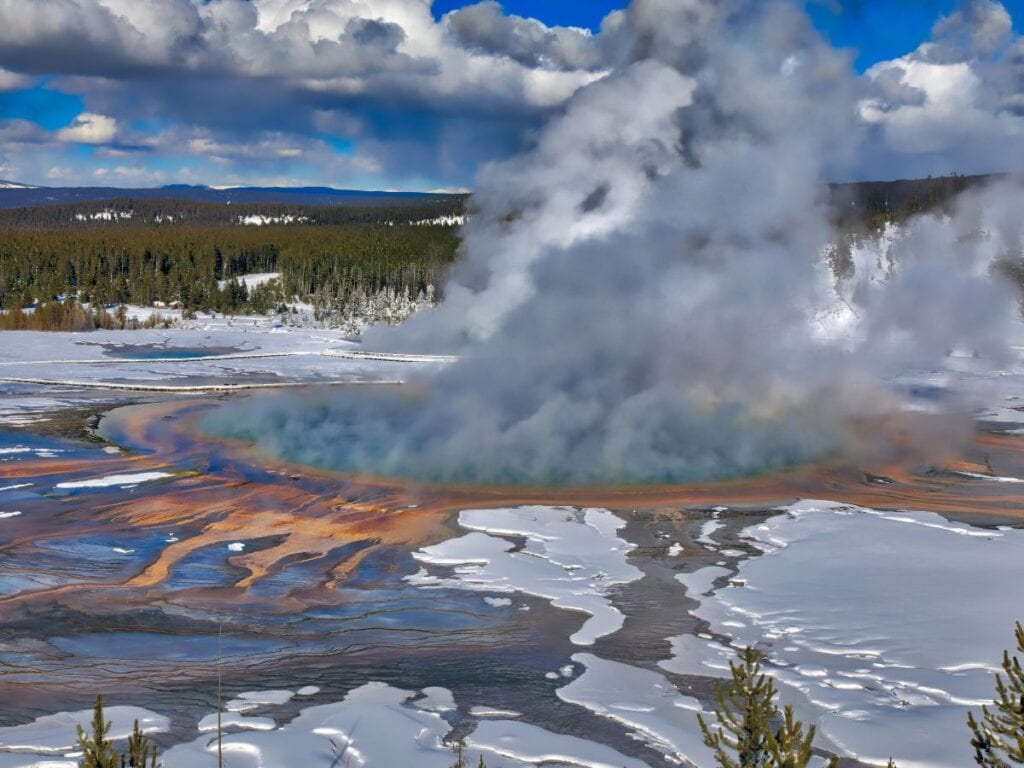
Daytime temperatures often hover between 0 and 20°F, and nights can drop well below 0°F. Heavy layers, traction aids, and winter gear are essential. Even in October, we found boardwalks slick with snow, so proper footwear makes a big difference.
2. Limited Services
Most facilities close once the snow season begins. A few visitor centers, warming huts, and small stores remain open, but services are minimal. Plan ahead for food, fuel, and rest stops.
3. Lodging and Camping Options
Inside the park, the Old Faithful Snow Lodge and Mammoth Hot Springs Hotel welcome winter guests, but reservations are essential. Mammoth Campground keeps a handful of sites open on a first‑come basis. Nearby gateway towns offer more lodging, though rooms fill quickly during peak weeks.
4. Road Closures
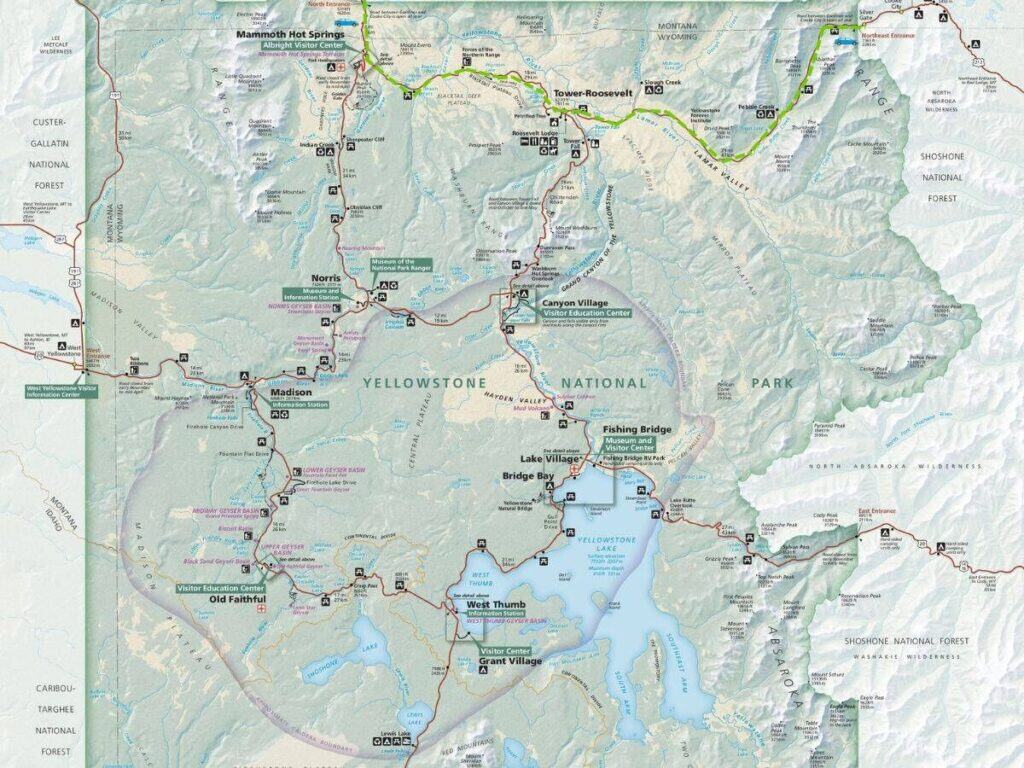
By mid‑December, most park roads close to cars. The only road open year‑round to regular vehicles runs between the North Entrance at Gardiner and the Northeast Entrance near Cooke City.
👉 Curious how road access differs in fall? See my full guide to Yellowstone in October.
5. Snowcoach and Snowmobile Access
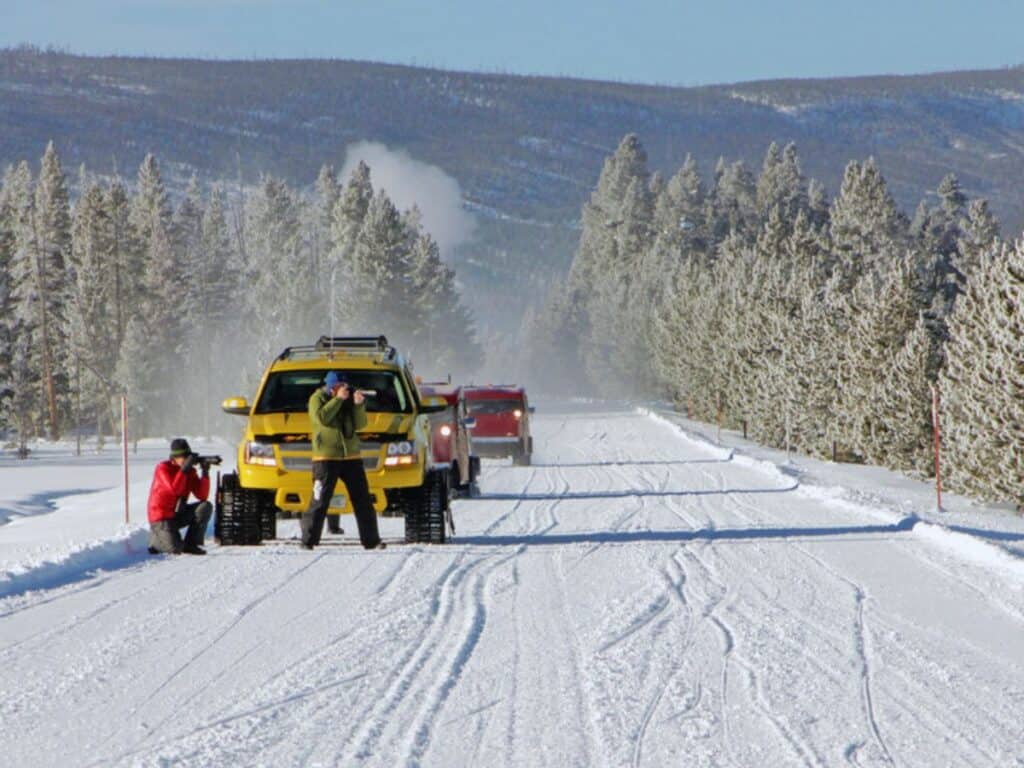
With roads closed to regular traffic, snowcoaches and guided snowmobile tours are the main way to reach Old Faithful and other interior areas. Check the NPS site for current options and reservations.
6. Wildlife Encounters
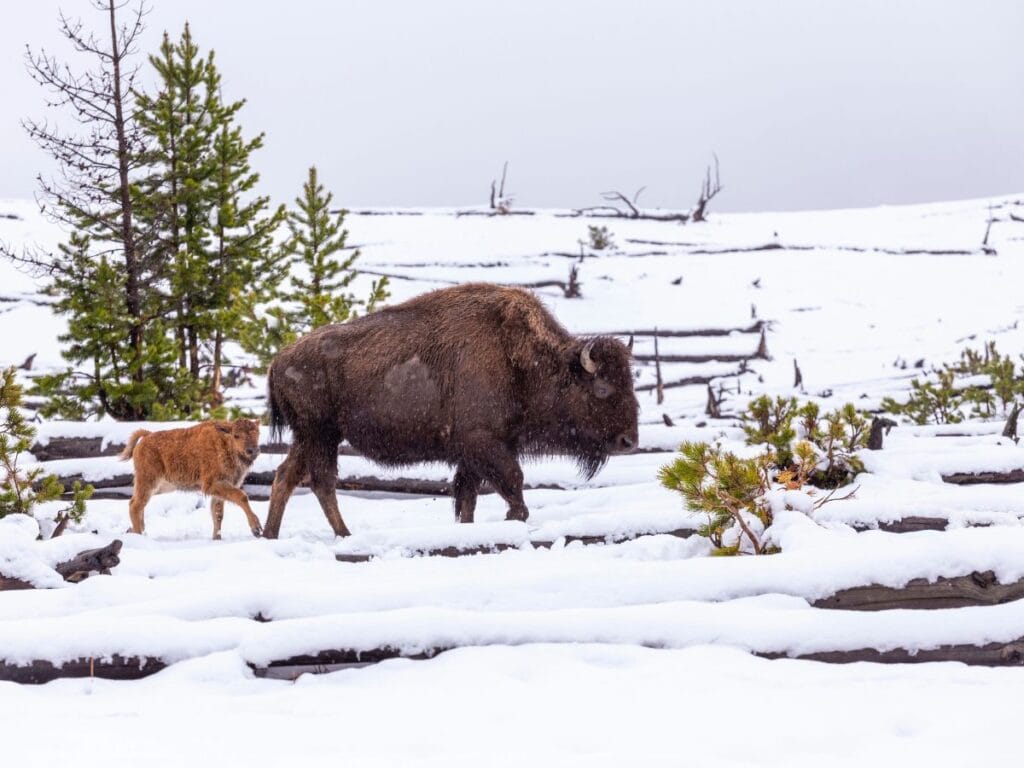
Bison, elk, and wolves remain active through winter, and you’re more likely to see them on or near roads. Deep snow makes travel difficult, so animals often use plowed or packed routes to conserve energy. Predators sometimes follow prey into these same corridors, increasing sightings. Keep a safe distance and be prepared for slower travel when herds block snowy roads. On our trip, bison stopped us more than once, and winter makes those encounters even more common.
7. Boardwalk and Trail Safety
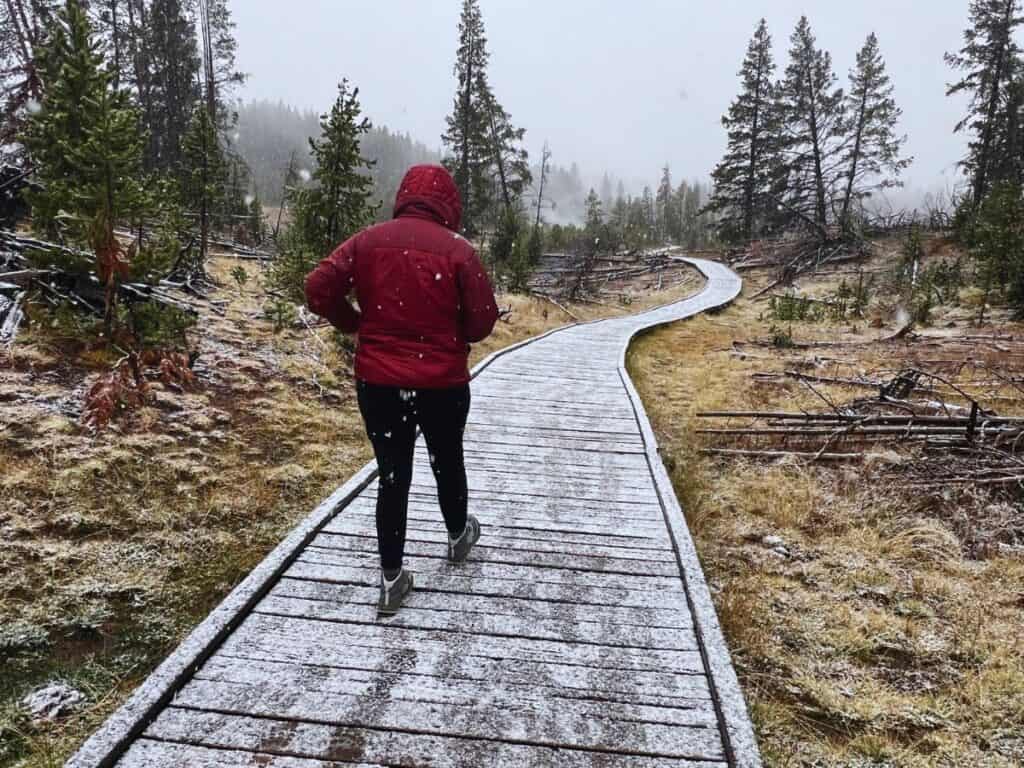
Boardwalks around geysers and hot springs can be slick with ice. Wear traction gear and move carefully. Trails are often snow‑covered, so check conditions before heading out. Our fall visit showed how quickly snow can make surfaces slippery.
8. Old Faithful in Winter
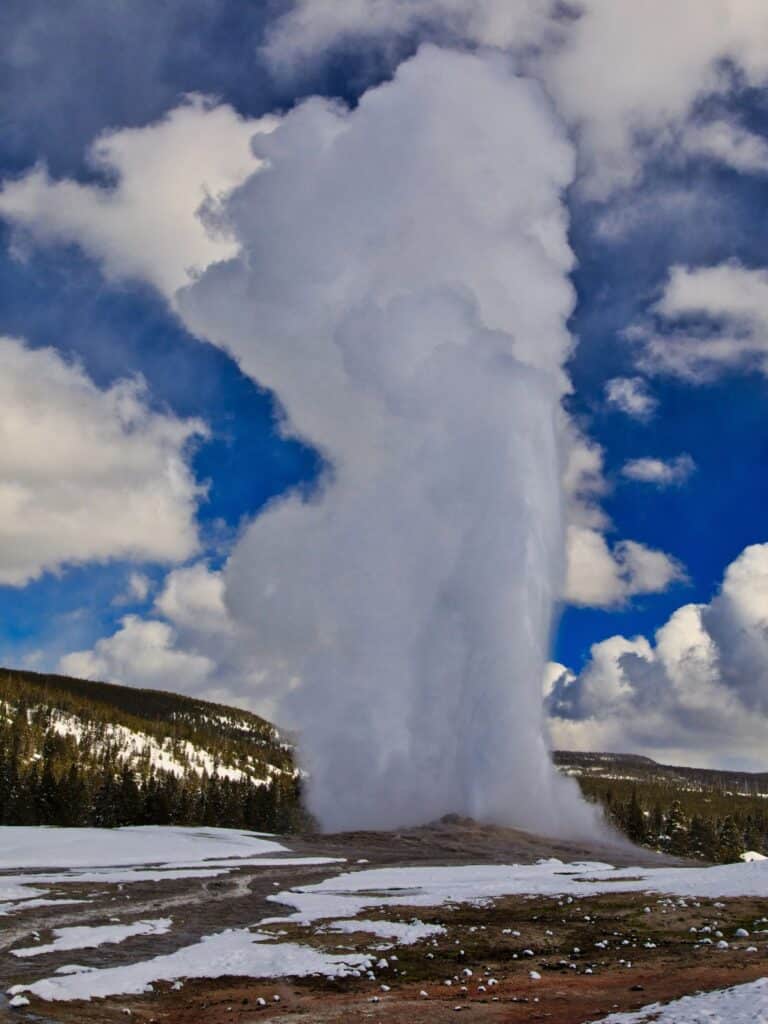
Old Faithful is one of Yellowstone’s most iconic sights, and seeing it erupt against a snowy backdrop is unforgettable. In winter, you’ll need a snowcoach or guided snowmobile tour to reach the geyser. The area feels quieter than in summer, making the experience even more special.
👉 Looking for a guided snowcoach or snowmobile tour to Old Faithful? Explore guided tour options.
9. Cell Reception and Connectivity
Cell service is limited throughout the park, especially in winter. Download an offline map from the NPS app before your visit so you can navigate without a signal. Our fall trip reminded us how quickly you can lose reception, so plan accordingly.
10. Nearby Trip Ideas
Pair your Yellowstone adventure with a visit to Grand Teton National Park. The mountains are stunning in winter, and the park offers its own set of activities like snowshoeing and wildlife viewing. For a base, downtown Jackson offers excellent restaurants, shops, and galleries, while the broader Jackson Hole valley provides ski resorts and winter recreation right at the edge of the park. Both give you plenty of options to round out your trip.
👉 Planning to explore Grand Teton as well? Check out my complete Grand Teton guide.
FAQs
Before you finalize your plans, here are answers to common questions that go beyond the basics.
How long should I plan to stay in Yellowstone during winter?
Most visitors spend 2 to 3 days, enough time for snowcoach tours and wildlife viewing. Longer stays are possible if you book lodging inside the park.
Can I drive my own snowmobile in Yellowstone?
Yes, but only with a permit through the Non‑Commercially Guided Snowmobile Access Program. Learn more on the NPS snowmobiling page.
What is the best time of day for photography in winter?
Early morning and late afternoon offer the best light, with steam and snow creating dramatic contrasts.
What’s the only way to reach Old Faithful in winter?
You can reach Old Faithful only by snowcoach or guided snowmobile tour once the roads close to regular vehicles.
Is winter a good time to see wolves?
Yes, wolves are more visible against the snow. Lamar Valley is one of the best areas for sightings.
Plan Your Trip
Ready to experience Yellowstone in winter? Use the button below to access my full guide and start planning your adventure.
Don’t miss our full guide to Yellowstone!
We’ve got everything you need to plan your perfect trip.
Featured image credit: theraja via Deposit Photos