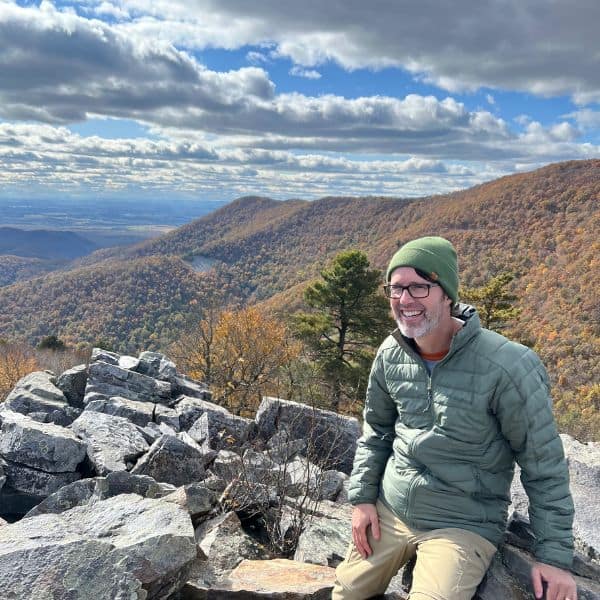
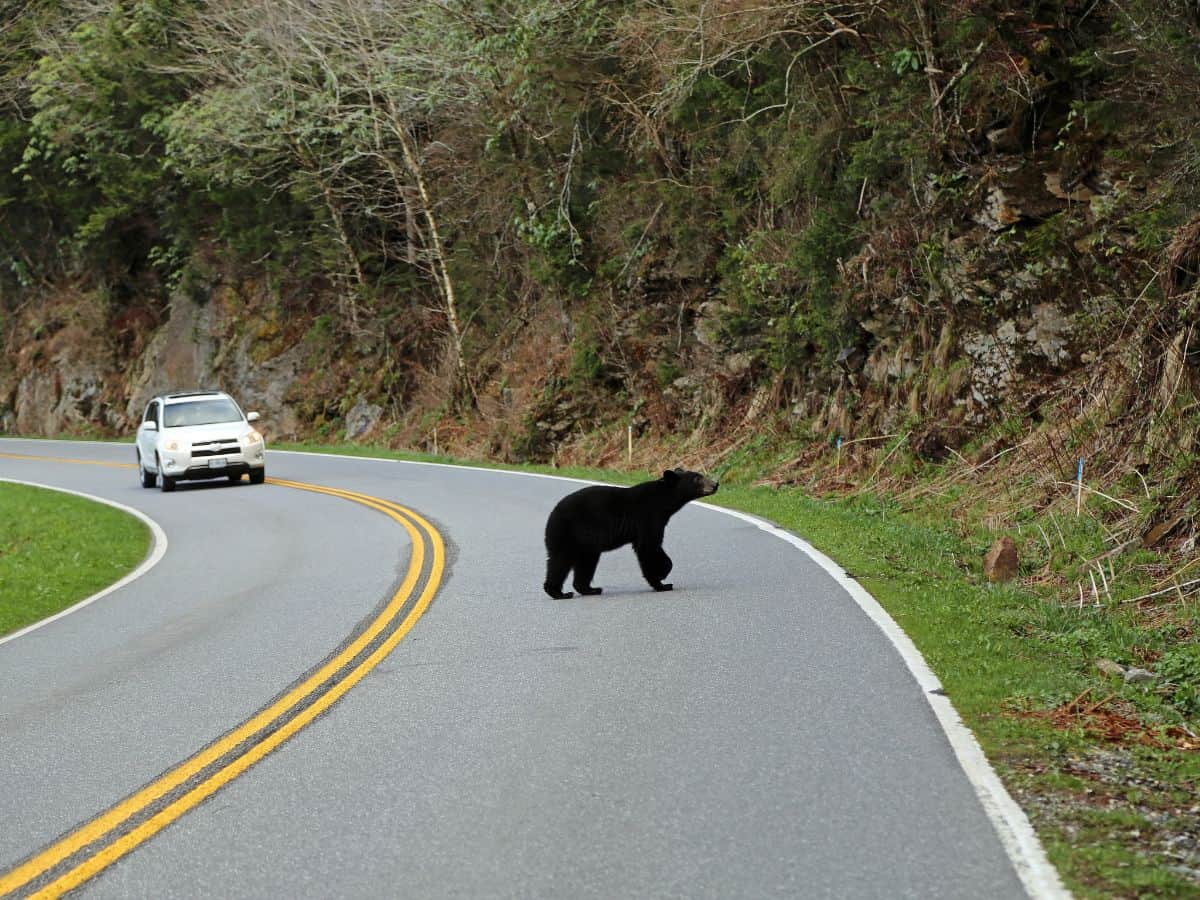
Julie and I have spent many days exploring Great Smoky Mountains National Park, and one thing becomes clear the moment September arrives: bears in fall Smoky Mountains are busy, hungry, and on the move. Fall is one of the most active seasons for black bears, and understanding their behavior helps you enjoy your visit safely and responsibly.
Autumn is also one of the most beautiful times to be in the park. Cooler mornings, colorful ridges, and quiet trails make it easy to forget how much wildlife activity is happening around you. Bears feel that seasonal shift too, and their behavior changes dramatically as they enter hyperphagia — the intense feeding period before winter.
Disclosure: This post may contain affiliate links. If you make a purchase through one of these links, we may earn a small commission at no additional cost to you. Thanks for supporting Miles with McConkey.
Why Fall Is Such a Busy Season for Bears
Black bears in the Smokies spend late summer and fall preparing for winter. During hyperphagia, they may forage for up to 18 hours a day, searching for nuts, berries, cherries, and anything else that helps them build fat reserves.
Julie and I have seen how focused bears become in early fall, especially when food sources are plentiful. Their determination is easy to spot once you know what to look for.
This feeding frenzy is normal, and it also means bears are more visible along roadsides, picnic areas, and forest edges. Their behavior isn’t aggressive by default. It’s driven by instinct and urgency as they work to gain the weight they need for winter.
Where You’re Most Likely to See Bears in Fall
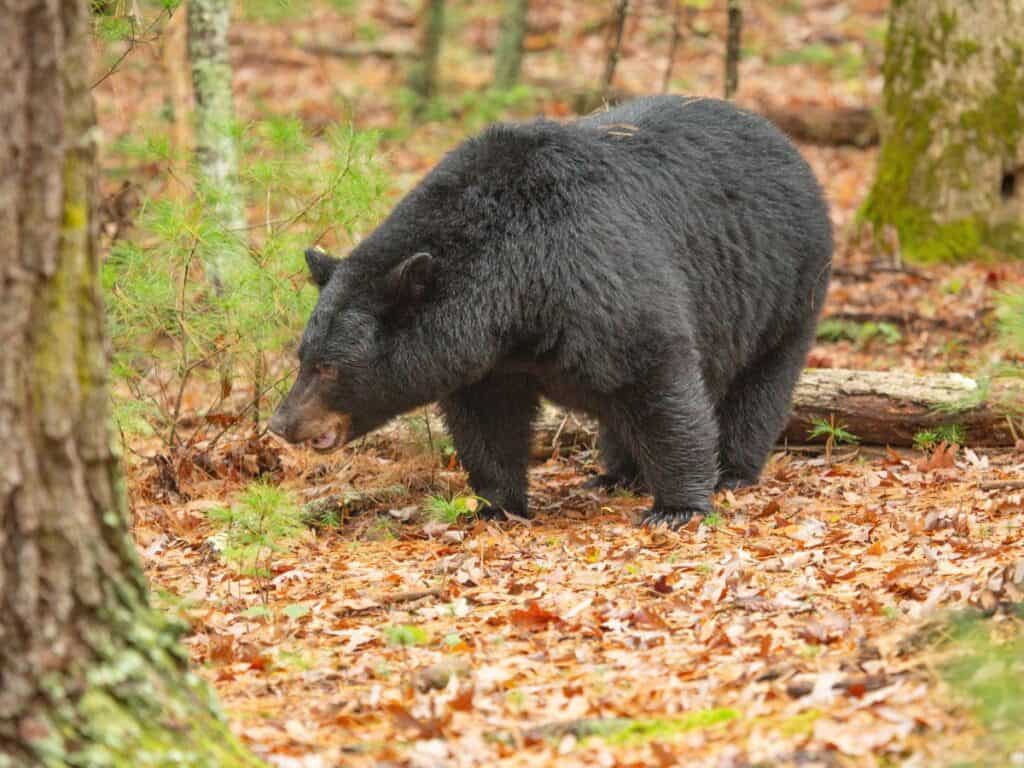
Bears inhabit all elevations of the park, but fall sightings tend to cluster in areas with abundant food. As hyperphagia kicks in, bears descend from the high ridges and move toward lower elevations where acorns and hickory nuts are plentiful. This seasonal shift helps explain why so many visitors look up “where to see bears Smokies” each autumn.
Some of the most common places to see bears in fall include:
- Cades Cove: open fields, wooded edges, and tree lines
- Roaring Fork Motor Nature Trail: a narrow, winding road with rich forest habitat
- Newfound Gap Road (US‑441): forest corridors and pull‑offs
- Picnic areas and creekside vegetation: especially where food sources are abundant
- Big Creek and Cataloochee: quieter areas with fewer crowds and good mast production
These areas line up with the park’s elevation‑driven wildlife patterns. Bears move low in spring, climb high in summer for cooler temperatures and berries, then return to the valleys in fall to feed on hard mast. With elevations ranging from 875 feet to 6,643 feet at Clingmans Dome (Kuwohi), the Smokies give bears a huge vertical range to follow seasonal food cycles.
If you’re planning a broader visit, our complete GSMNP guide covers the park’s top areas, scenic drives, and seasonal tips to help you make the most of your trip.
Our Bear Encounters in the Smokies
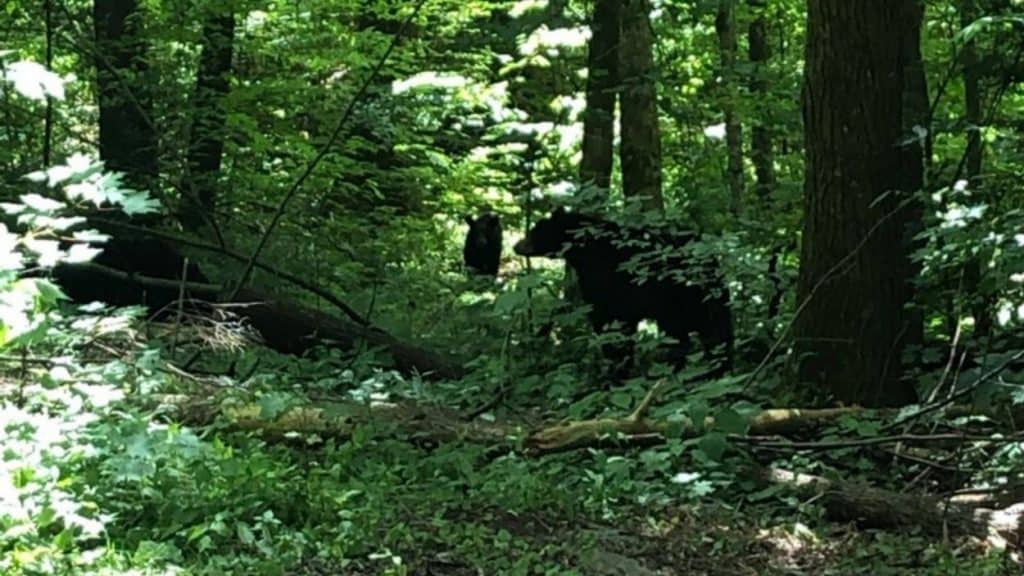
Julie and I have seen bears multiple times in GSMNP, and it is always a thrill. Most of our sightings have been from a considerable distance, often near Gatlinburg on hillsides along the main park road. Even from far away, seeing a bear move through the trees is unforgettable.
One of our most memorable encounters happened while hiking to Grotto Falls along the Trillium Gap Trail. We saw a cub on the trail, and it immediately ran off.
After finishing the hike, we walked to the restrooms and unexpectedly came across a bear family feeding nearby. They ignored the visitors, but a ranger arrived moments later and asked everyone to leave right away.
It was both a scare and a thrill. Encounters like that remind you how unpredictable bear sightings can be.
We’ve spent plenty of time in Cades Cove, a place known for wildlife viewing, but we’ve never spotted bears there ourselves.
During our late‑August visit, rangers mentioned recent bear activity near Clingmans Dome, but we didn’t see any that day. It was late afternoon, well before dusk, and the area was busy with hikers, so a sighting was unlikely.
These experiences have taught us that you never know when or where you might encounter a bear. Staying alert, keeping your distance, and letting bears move freely are the best ways to enjoy wildlife safely.
If you’re looking for more places to explore beyond wildlife viewing, check out our guide to the top areas to explore in the Smokies. It highlights scenic overlooks, quiet trails, and beautiful spots throughout the park.
Black Bears GSMNP Fall Behavior
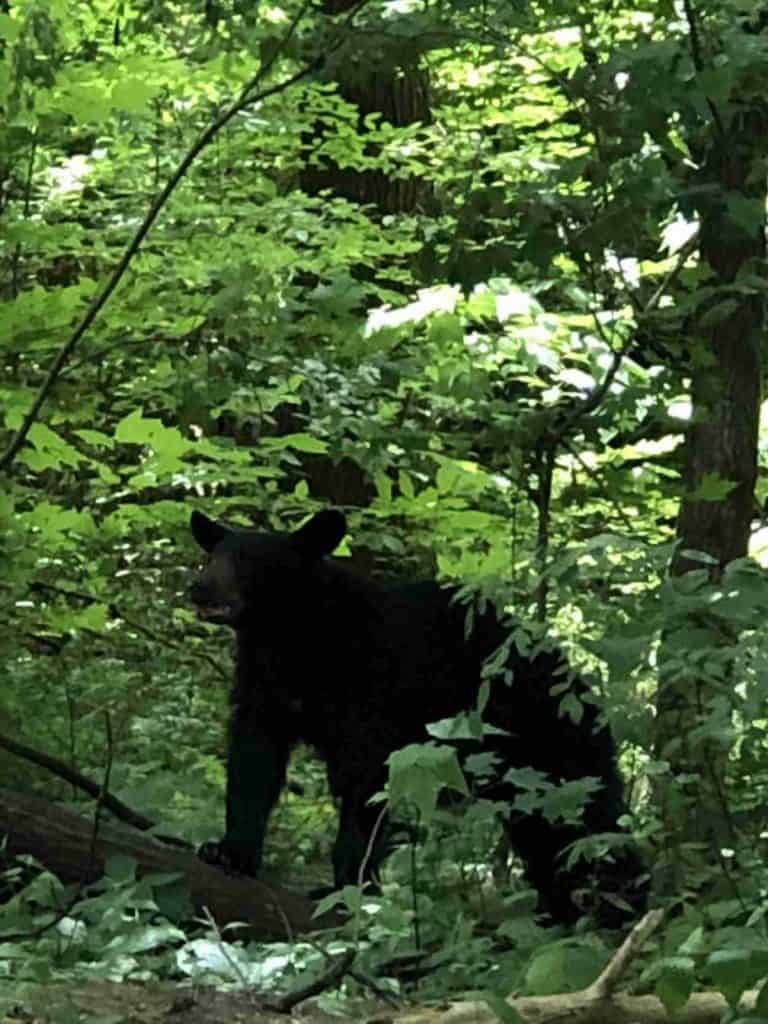
Fall behavior is shaped by food availability and preparation for winter. Here’s what you may notice:
- Bears spend long hours feeding.
- Bears climb trees for nuts and berries.
- Increased movement at dawn and dusk.
- More sightings near roads and picnic areas.
- Cubs stay close to their mothers as they learn to forage.
Much of this activity is driven by hyperphagia in black bears, the intense feeding period that pushes them to consume as much food as possible before winter.
As fall progresses, both males and females can nearly double their weight. This seasonal transformation is one of the most fascinating aspects of Smoky Mountains bear activity.
What to Do If You Encounter a Bear
Encounters can happen anywhere in the Smokies: on trails, at overlooks, or even in campgrounds. Staying calm and giving bears space protects both you and the animals. The National Park Service reminds visitors that it is illegal to approach a bear within 50 yards or at any distance that causes the bear to change its behavior.
The NPS states, “If a bear changes its behavior in response to your presence, such as stopping what it’s doing, watching you, or altering its direction, you are too close.”
Practicing good bear safety Smoky Mountains habits protects both visitors and wildlife.
If You See a Bear
- Stay calm and remain alert.
- Never approach or allow the bear to approach you.
- Back away slowly if the bear stops feeding or changes direction.
- Never run.
If a Bear Approaches or Follows You
- Change direction.
- Stand your ground if it continues.
- Shout and act assertively.
- Throw non‑food objects if necessary.
- Use bear spray only if the bear is within 20 yards.
If a Bear Is After Your Food
Set the food down and move away. Creating distance reduces the chance of a defensive reaction.
If a bear attacks and it’s not food‑related, fight back with everything you have.
General Wildlife Viewing Guidelines
- Keep 50 yards of distance from bears at all times.
- Never feed wildlife. Use bear‑proof trash cans or pack out all garbage.
- Respect closures and follow ranger instructions.
- Stay alert and slow down when driving. Wildlife frequently crosses roadways.
- View wildlife from your vehicle only when safely pulled off the road.
- If a bear approaches, increase your distance calmly. Should it continue to follow, stand your ground, be loud, throw rocks, and keep backing away slowly.
Why Food and Trash Are So Dangerous for Bears
Julie and I have seen how quickly a roadside bear jam can form when someone leaves food out or tosses scraps near a pull‑off. Even small items — apple cores, chip crumbs, watermelon rinds — can change a bear’s behavior.
The NPS warns that “once a bear gets a taste of human food, its behavior changes.”
Food‑conditioned bears:
- Lose their natural fear of people.
- Approach visitors.
- Become unpredictable.
- Often must be euthanized.
It’s heartbreaking, but it’s preventable. Bears that rely on human food live shorter lives and teach their cubs bad habits.
To help protect bears from becoming food‑conditioned:
- Keep all food secured and out of reach.
- Use bear‑proof trash cans or pack out waste.
- Lock your vehicle when food is inside.
- Report unsafe behavior or unnatural bear activity.
Fall Behavior and the Road to Winter
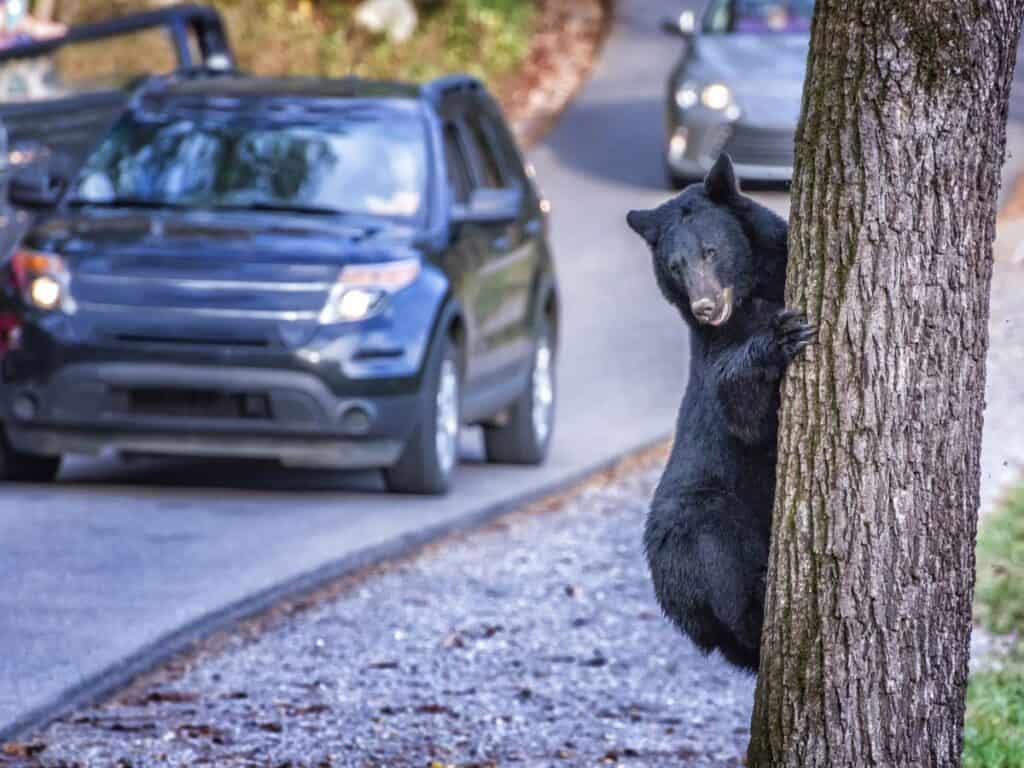
Fall feeding eventually gives way to a shift in focus toward winter denning. Between late October and mid‑December, bears settle into dens such as:
- Hollow trees
- Brush piles
- Stumps
- Cavities high above the ground
These sheltered spots help protect them from cold temperatures and winter storms.
Black bears enter torpor, a lighter form of hibernation. They don’t eat, drink, urinate, or defecate while denned, but they remain more alert than true hibernators and may wake or shift position if disturbed.
In the Smokies, bears can remain in their dens for several months, with males typically emerging in late March or early April and females with cubs appearing in late April or early May.
Planning Your Fall Visit
If you’re visiting in September or October, expect:
- Cooler mornings
- Active wildlife
- Bears feeding for long stretches
- More roadside sightings
- Beautiful fall color at higher elevations in October
Fall also brings several seasonal experiences around the Smokies that pair well with wildlife viewing. If you’re looking for a fun fall add‑on outside the park, Anakeesta’s Bear‑Varian Fall Festival is a colorful autumn celebration with bear‑inspired elements. It’s a nice complement to a wildlife‑focused Smokies visit.
If you’re planning a broader fall visit, you can also explore our guide to the GSMNP elk rut. It covers what to expect, where to look, and how to enjoy one of the park’s most dramatic wildlife seasons.
Julie and I always feel grateful when we see bears in the park. Whether it’s a distant hillside sighting or an unexpected encounter near a trail, fall always feels like the season when the Smokies come alive.
Final Thoughts
Fall is one of the best times to experience black bears in Great Smoky Mountains National Park. With a little awareness and respect, you can enjoy one of the most active wildlife seasons of the year while helping keep bears safe.
If you’re planning a fall trip, pair your wildlife viewing with scenic drives, quiet hikes, and early‑morning starts. The Smokies shine in fall, and watching bears prepare for winter is one of the most memorable experiences you can have in the park.
FAQ: Bears in Fall Smoky Mountains
Visitors often have a few lingering questions about bear activity in fall, so we’ve gathered the most common ones here to help you plan with confidence.
Bears are typically most active at dawn and dusk, especially during hyperphagia when they may feed for long stretches. Mid‑day sightings still happen, but early and late hours offer the best chance.
Cades Cove, Roaring Fork Motor Nature Trail, Newfound Gap Road, and Cataloochee are among the most reliable areas. These spots line up with seasonal food sources and elevation shifts.
The National Park Service requires visitors to stay at least 50 yards away. If a bear stops feeding, watches you, or changes direction, you’re too close. Practicing good bear safety Smoky Mountains habits protects both you and the wildlife.
Black bears enter torpor, a lighter form of hibernation. They settle into dens between late October and mid‑December and may remain inside for several months. Males usually emerge in late March or early April, while females with cubs appear later in spring.
Encounters are possible anywhere in the park, especially near food sources. Fall is one of the busiest seasons for Smoky Mountains bear activity, but sightings are never guaranteed. Staying alert and giving bears space is the best approach.
Stay calm, keep your distance, and back away slowly. Never run. If a bear approaches, stand your ground, be loud, and act assertively. Use bear spray only if the bear is within 20 yards.
Featured image credit: kojoty via Deposit Photos