We weren’t exactly excited to visit Congaree National Park. Honestly, we expected a flat, soggy forest with little to offer beyond trees sitting in a floodplain. But in person, the park surprised us — and then some.
The best things to do in Congaree National Park revolve around quiet beauty, resilience, and unexpected moments. The trees may not rival the towering giants of Redwood National Park, but walking the forest floor and looking up, you can’t help but admire their height, adaptability, and grace. Bald cypress “knees” poke through the soil like strange sculptures, and moss clings to trunks in a way that feels almost enchanted.
We spent our first visit hiking and birding, and we left with a deep appreciation for the park’s peaceful setting, layered history, and immersive trails. Here’s what stood out — and what we recommend for your own visit.
Disclosure: This post may contain affiliate links. If you make a purchase through one of these links, I may earn a small commission at no additional cost to you. Thanks for keeping Miles with McConkey going!
Hike the Boardwalk Loop Trail

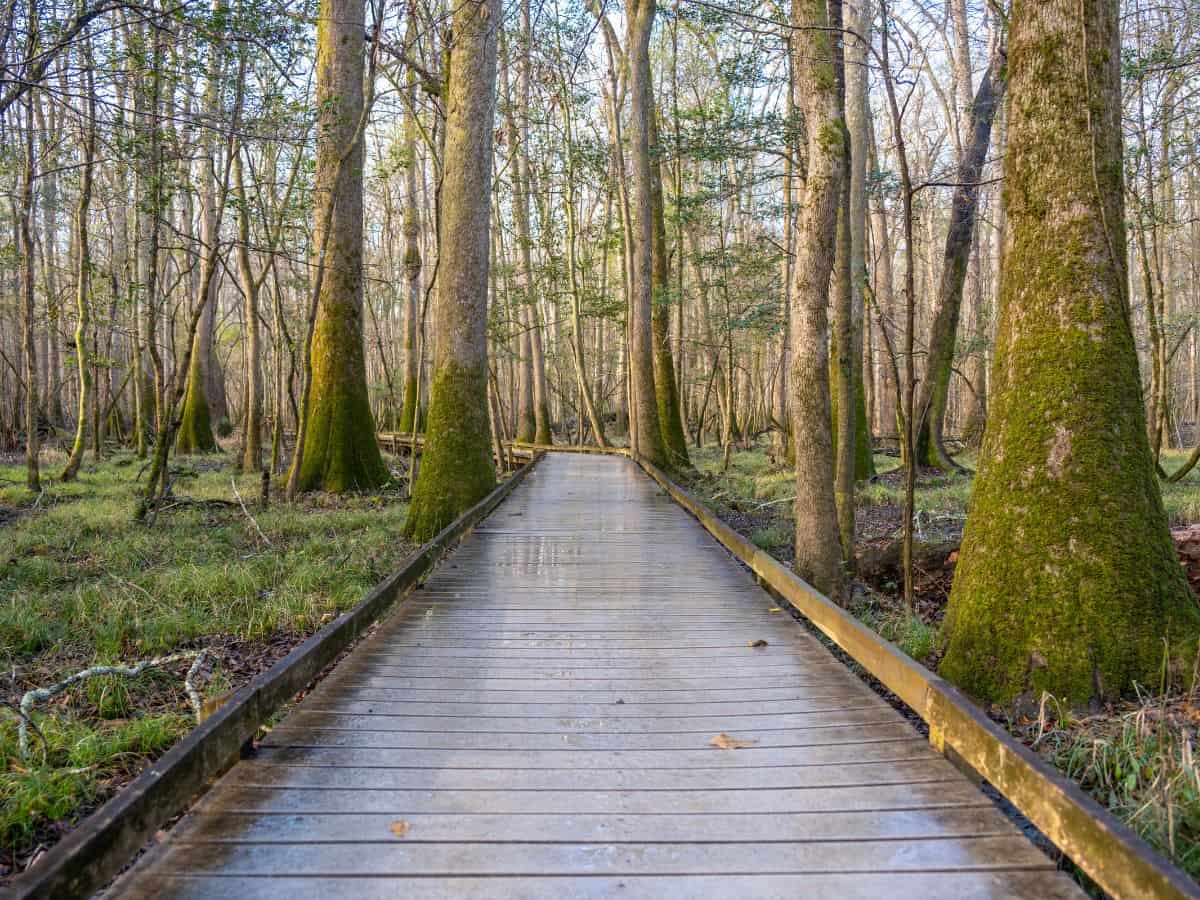
If you only do one thing in Congaree, make it the 2.6-mile Boardwalk Loop Trail. It’s the longest boardwalk trail we’ve ever walked, and it takes you through the heart of the park — past towering trees, swampy sections, and quiet corners where birdsong echoes through the canopy.
The boardwalk itself is striking. It turns a peaceful forest walk into something magical, especially when water rises over the lower sections. On our visit, a few areas were flooded, but we could still pass through. It felt surreal — like stepping into a dream.
💡Quick Tip
Boardwalk Loop Trail Highlights: The 2.6-mile Boardwalk Loop Trail features 20 numbered points of interest that highlight Congaree’s habitat and cultural history. To get the full experience, be sure to grab a self-guided walk brochure from the visitor center — the trail markers alone won’t tell the story. It’s a perfect intro for families, soft adventurers, and anyone eager to learn as they explore.
⚠️ Travel Notice
The boardwalk trails are undergoing updates in 2025 and 2026. Be sure to check the official park website before visiting for the latest conditions and closures. Because Congaree sits in a floodplain, water levels can change quickly. We always recommend checking the park site before heading out.
Birding in the Floodplain Forest
Congaree is quietly becoming one of our favorite birding destinations. We saw and heard plenty of birds — wrens hopping through low brush, red-bellied woodpeckers hammering from high limbs, and a couple of great egrets wading through still water.
We chuckled more than once, convinced we were about to spot something rare, only to realize it was a squirrel launching from treetop to treetop. The mix of wetlands and forest creates a haven for birdlife, and the quiet setting rewards patient observation.
We spent long stretches on the Boardwalk Loop and Firefly Trail, pausing at quiet bends and benches to watch and listen. Next time, we plan to arrive earlier in hopes of spotting owls — still high on our wish list.
Paddle Cedar Creek by Canoe or Kayak
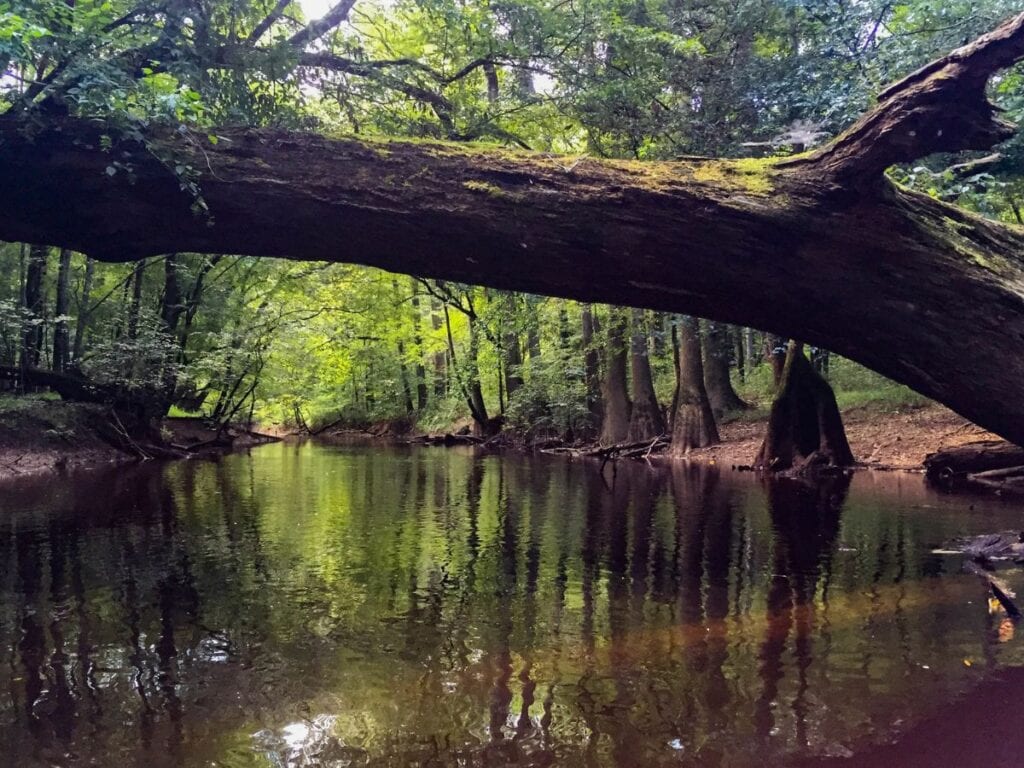
We didn’t paddle on our first visit, but it’s at the top of our list for next time. Exploring Congaree by canoe or kayak offers an entirely different perspective — gliding through blackwater creeks beneath towering trees, with chances to spot otters, turtles, wading birds, and even the occasional alligator.
Cedar Creek is the main paddling route, winding about 15 miles through the park. You’ll need to bring your own gear or rent from outfitters in Columbia. Guided trips are available, and launch points like Bannister’s Bridge and South Cedar Creek Landing make access easy.
Water levels fluctuate, so check conditions before you go. The sweet spot for paddling Cedar Creek is typically between 4 and 7 feet. Below that, you may face portages; above that, navigation can get tricky.
Visit the Harry Hampton Visitor Center
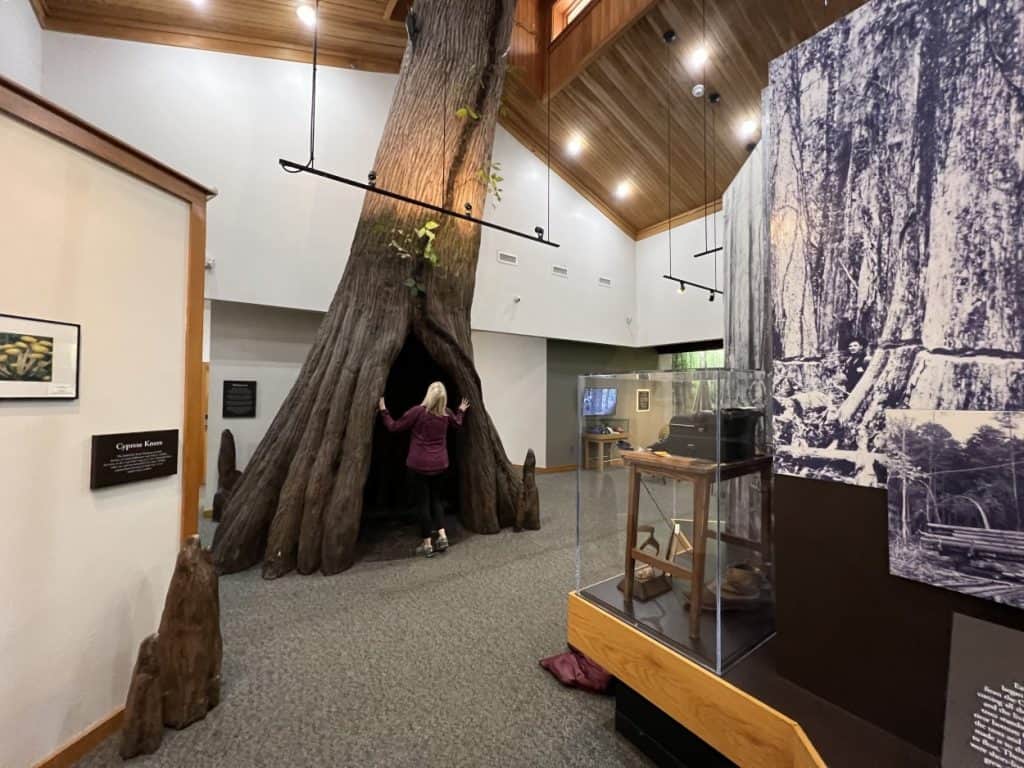
Don’t skip the visitor center. It’s more than a place to grab a map — it’s an immersive introduction to the park’s habitat and history. The exhibits and artwork are excellent, and the rangers are incredibly helpful.
One ranger even walked with us at the start of our hike to check the water depth along the lower boardwalk. That kind of hands-on support makes a big difference, especially in a park shaped by water.
Just outside the visitor center, you’ll spot the park’s quirky Mosquito Meter — a six-level gauge that warns you if bug spray should be your best friend.
Join a Ranger-Guided Walk or Talk
As staffing allows, Congaree offers ranger-led programs throughout the year, including walks, talks, and seasonal events. These programs add depth to your visit and help you gain a deeper understanding of the park’s ecology, wildlife, and cultural history.
Check the park calendar or ask at the visitor center to see what’s available during your trip.
Experience the Firefly Phenomenon
Each spring, Congaree hosts one of the most unique natural events in the National Park System: synchronous fireflies. For about two weeks between mid-May and mid-June, these fireflies flash their lights in unison, creating a dazzling display across the forest floor.
To protect the habitat and enhance the viewing experience, the park employs a lottery system to manage crowds. If you’re lucky enough to win a spot, it’s worth the effort — the experience is unforgettable.
Want to know how Congaree’s fireflies compare to other parks — and where else you can catch the show? Learn more about synchronous fireflies in national parks.
Try Fishing in the Park’s Quiet Waters
Fishing is allowed throughout Congaree with a valid South Carolina license. You can fish from shore or a non-motorized boat, but not within 25 feet of artificial structures like boardwalks or bridges.
Cedar Creek and the Congaree River offer opportunities to catch bass, catfish, sunfish, and more. Catch and release is encouraged, and all state regulations apply. It’s a peaceful way to connect with the park’s ecosystem — just be sure to pack out all gear and trash.
Camp Under the Canopy

Congaree offers two frontcountry campgrounds — Longleaf and Bluff — plus backcountry camping for those seeking solitude. All sites are tent-only, and reservations are required.
Longleaf Campground is walk-in campground with fire rings and picnic tables. Bluff Campground is a one-mile hike from the parking area, offering a more secluded experience. Backcountry camping requires a free permit and is best for experienced campers who want to immerse themselves in the wilderness.
There are no RV hookups or car camping options, and no running water at the campgrounds. Water is available at the visitor center, and vault toilets are provided at Longleaf.
🧭 Planning Tips for Visiting Congaree
- Check trail conditions before your visit — the park floods regularly, and closures are common.
- Grab a self-guided brochure at the visitor center for the Boardwalk Loop Trail — numbered markers won’t make sense without it.
- Visit early in the day for better birding and wildlife sightings (especially owls).
- Bring bug spray — the mosquito meter is real, and it’s not shy.
- Water levels matter for paddling Cedar Creek — aim for 4 to 7 feet for best conditions.
❓ FAQs About Visiting Congaree
Have questions before your visit? Here are some quick answers to help you plan with confidence and make the most of your time in the floodplain forest.
Is Congaree good for kids or families?
Yes — especially the Boardwalk Loop Trail, which is stroller-friendly and includes 20 educational stops.
Can you kayak or canoe in the park?
Absolutely. Cedar Creek offers a 15-mile paddling trail. Bring your own gear or rent from outfitters in Columbia.
Are pets allowed?
Yes, leashed pets are welcome on trails. Just be mindful of ticks and muddy conditions.
What’s the best time to visit?
Spring and fall offer mild temps and fewer bugs. Firefly season (mid-May to mid-June) is magical but requires a lottery ticket.
Do I need a reservation or permit?
No, for day visits. Yes, for camping (frontcountry requires a reservation; backcountry requires a free permit).
Final Thoughts

The best things to do in Congaree National Park aren’t about adrenaline or postcard moments — they’re about slowing down, tuning in, and seeing the floodplain forest with fresh eyes. Whether you’re hiking elevated boardwalks, listening for owls on quiet trails, or planning a paddle through still water, the park offers a peaceful blend of nature and curiosity.
Our favorite moments came from looking closer — moss-draped trunks, the flash of a great egret, the echo of a woodpecker overhead. That’s the magic of Congaree. It’s not flashy, but it’s deeply rewarding.
If you’re mapping out your trip, our full Congaree planning guide covers everything from seasonal timing to trail updates — so you can explore confidently and make the most of your visit.
Featured image credit: kvddesign via Deposit Photos