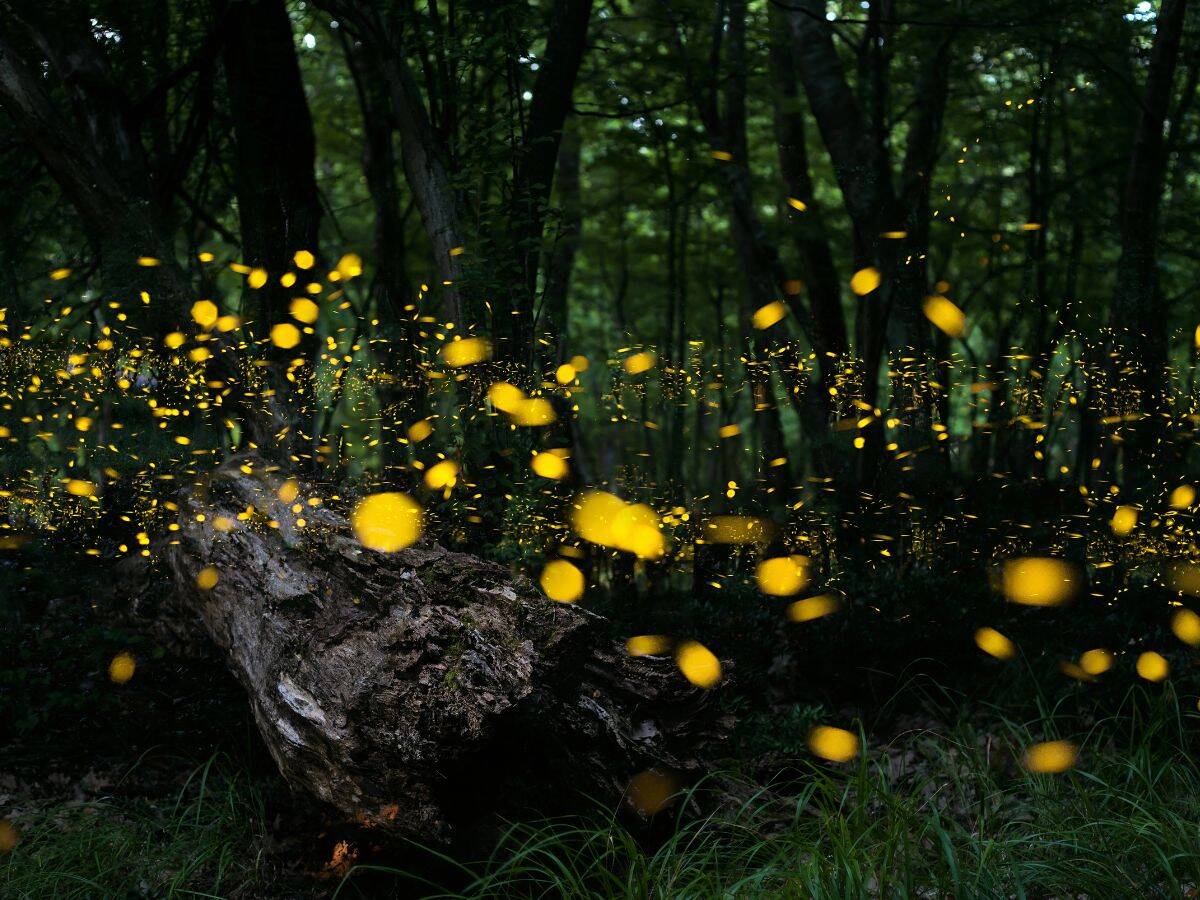
I grew up calling them lightning bugs — those tiny flickers of light that danced across summer evenings like nature’s confetti. I can still picture my now-grown kids chasing them barefoot through the yard, ice cream melting down their fingers, faces lit with wonder. It’s a memory stitched into the fabric of family, and one that resurfaces every time I hear about the phenomenon of synchronous fireflies in national parks.
As a national park fanatic, I was floored to learn that in a few select places, fireflies don’t just glow — they flash in perfect unison, transforming the forest into a living light show. It’s one of the most coveted wildlife spectacles in the U.S., and despite multiple attempts, Julie and I have never won the lottery to attend. Selfishly, I hesitated to write about it, fearing I might further reduce our chances. But the truth is, most people don’t even know this exists — and once they do, they’re genuinely excited. So here’s everything we’ve learned, tried, and hope to experience one day.
Disclosure: This post may contain affiliate links. If you make a purchase through one of these links, I may earn a small commission at no additional cost to you. Thanks for keeping Miles with McConkey going!
Where to See Synchronous Fireflies in National Parks
Only a handful of places in North America host synchronous firefly displays, and just two are managed by the National Park Service:
🌲 Great Smoky Mountains National Park (Tennessee/North Carolina)
- Species: Photinus carolinus
- Event Timing: Late May to early June
- Lottery Opens: Early May via Recreation.gov
- Viewing Area: Elkmont
- Peak Viewing: Typically an 8-night window
🌳 Congaree National Park (South Carolina)
- Species: Photuris frontalis (nicknamed “Snappy Syncs”)
- Event Timing: Mid to late May
- Lottery Opens: Early April
- Viewing Area: Near Harry Hampton Visitor Center
- Peak Viewing: Roughly 10 nights
Both parks use a lottery system to manage access — more on that below.
Why Is There a Lottery for Firefly Viewing?

The lottery isn’t just about crowd control — it’s about protecting the fireflies and their habitat. Here’s why it matters:
- Light pollution disrupts mating signals — even flashlights can interfere
- Off-trail foot traffic crushes females, who often wait on the forest floor
- Overcrowding leads to habitat degradation, trash, and noise
- Wildlife safety: These are bear country parks, and managing flow helps reduce risk
By limiting access, the parks preserve the experience for both visitors and the fireflies. And honestly, it makes the event feel even more special — like winning a golden ticket to nature’s own concert.
Tips for Entering the Firefly Lottery
Julie and I haven’t cracked the code yet, but here’s what we’ve learned from trying:
- Set calendar reminders 1–2 weeks before the lottery opens (April for Congaree, May for GSMNP)
- Select the maximum number of dates allowed — 2 for GSMNP, 3 for Congaree
- Block off the actual event dates in case you win
- Monitor park websites for updates or changes to the lottery rules
- Have your Recreation.gov account and payment info ready before the window opens
💳 Note: Both Congaree and GSMNP charge a modest lottery application fee (typically around $1–2). If selected, an additional viewing or parking fee may apply, depending on the park’s rules.
Viewing Etiquette and Tips
If you’re lucky enough to attend, here’s how to make the most of it — and protect the magic:
- Use red-filtered flashlights only (or cover with red cellophane)
- Avoid bright lights, phone screens, and flash photography
- Bring a low chair or blanket — you’ll be sitting in the dark for a while
- Stay on designated trails to avoid harming fireflies or their habitat
- Pack out all trash — even crumbs can attract wildlife
❓ FAQs About Synchronous Firefly Viewing
Even though we haven’t experienced these events firsthand, we’ve learned quite a bit from researching, planning, and trying to win the lottery. Here are answers to common questions that can help you prepare:
Do I need a lottery pass to see synchronous fireflies in national parks?
Yes — both Congaree and Great Smoky Mountains require winning a lottery to access designated viewing areas during peak displays.
Can children attend the events?
Absolutely. Families are welcome, and many bring camp chairs or blankets to make the experience comfortable for the young ones. Just be mindful of noise and lights.
When do the lotteries open?
Congaree’s lottery typically opens in early April, while GSMNP’s opens in early May. Set calendar reminders a few weeks early so you’re ready.
What makes fireflies flash in sync?
Synchronous fireflies are part of a species that uses coordinated flashing during mating. It’s a rare phenomenon — and each species has its own rhythm and pattern.
Can I use a flashlight or take photos during the event?
Use only red-filtered flashlights and avoid flash photography — bright light can disrupt the fireflies and ruin the viewing experience.
Non-Synchronous Firefly Spots Worth Exploring
While synchronous displays are rare, several parks offer excellent firefly viewing during summer months:
Shenandoah National Park (Virginia)
- Known for healthy firefly populations in humid forest zones
- Best viewing near Big Meadows and along Skyline Drive
- Explore our Shenandoah guide
Indiana Dunes National Park (Indiana)
- Fireflies thrive in the park’s wetlands and savanna zones
- Evening walks near Cowles Bog or Great Marsh Trail can be rewarding
- Check out our favorite birding spots in Indiana Dunes
Assateague Island National Seashore (Maryland/Virginia)
- Home to a rare species called the Bethany Beach firefly, recently confirmed on the island
- Quiet evening walks through marshes and dunes can offer subtle flickers and peaceful ambiance
Are There Other Synchronous Firefly Sites?
Outside the NPS system, Allegheny National Forest in Pennsylvania is gaining attention for its synchronous firefly population. It hosts the annual Pennsylvania Firefly Festival and offers a more informal viewing experience — no official NPS lottery, but still worth planning ahead.
Related Wildlife Experiences Worth Exploring
If you love the idea of rare wildlife moments, you might also enjoy:
These posts offer firsthand insights and trip-planning tips for wildlife lovers — no lottery required.
Final Thoughts: Still Chasing the Glow
We haven’t seen the synchronous fireflies yet — but we’ve tried. And we’ll keep trying. Because some things are worth chasing, even if they stay just out of reach. If you’re reading this and feeling curious, I hope you’ll mark your calendar, enter the lottery, and maybe — just maybe — get to witness one of nature’s most breathtaking light shows.
And if you do? Send us a photo. Or better yet, a story.
Featured image credit: Narval via Deposit Photos