

Choosing a bus in Denali can feel confusing, especially with the road closure and multiple options. If you’re trying to understand Denali transit vs tour bus choices, you’re not alone. Most visitors arrive with the same question: which one actually gives you the best experience?
Julie and I have taken both types of buses, explored the first 15 miles in our own car, and even splurged on a helicopter tour. Surprisingly, we saw far more wildlife from the buses than we did from the air. The bus system may not sound glamorous at first, but it consistently delivers some of the most rewarding experiences in the park.
Disclosure: This post may contain affiliate links. If you make a purchase through one of these links, I may earn a small commission at no additional cost to you. Thanks for supporting Miles with McConkey.
How the Denali Bus System Works in 2026
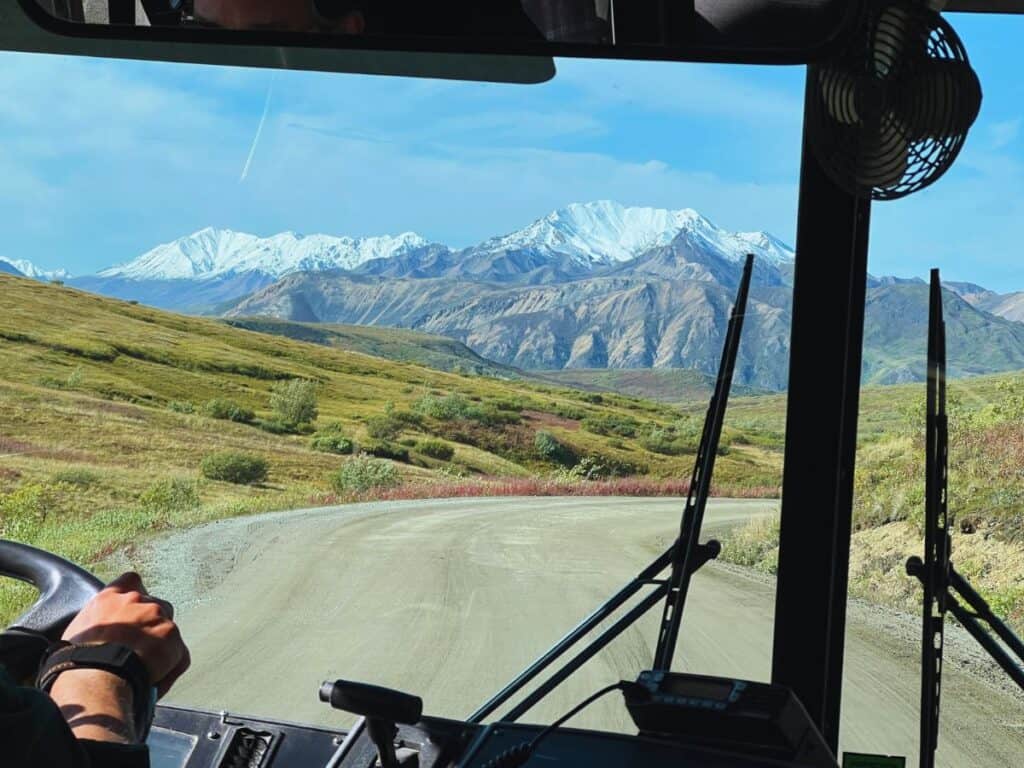
Denali has only one road: the 92‑mile Denali Park Road. Bus trips are available only in summer (mid‑May through mid‑September), and due to the ongoing Pretty Rocks landslide, all transit and tour buses currently travel only to Mile 43. Private vehicles may drive the first 15 miles to Savage River, but beyond that point, you must take a bus.
There are three types of bus services in the park:
- Free shuttles around the entrance area
- Transit buses (green, non‑narrated, flexible)
- Tour buses (tan, narrated, structured)
If you want to explore deeper into the park, see wildlife, or reach trailheads beyond Mile 15, you’ll need a transit bus or a tour bus. The free shuttles only operate in the entrance area and do not travel past Savage River.
What Is the Denali Transit Bus?
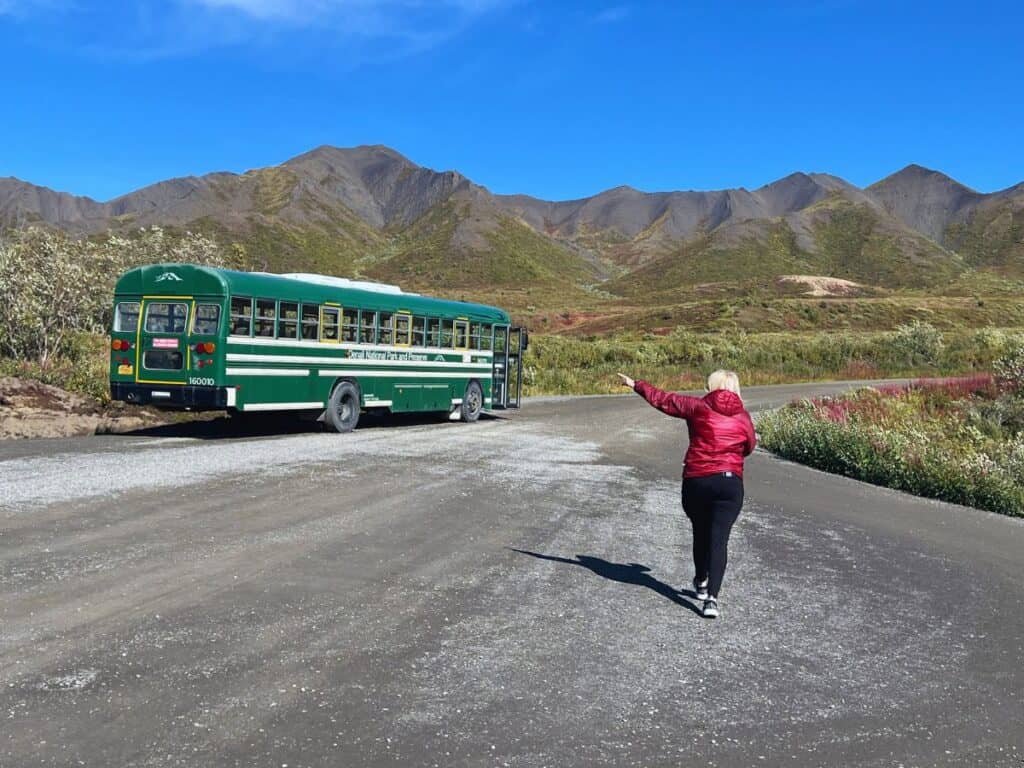
Transit buses are the most flexible way to explore Denali beyond Savage River. They’re designed for visitors who want freedom: the ability to hop off, hike, explore, and re‑board another bus later.
Key features:
- Green buses
- Non‑narrated (drivers share basic info but not a full program)
- Hop‑on, hop‑off flexibility
- Stops for wildlife, scenery, and restrooms
- Goes to Mile 43
- Children 15 and under ride free
- $33.50 per adult for the East Fork Transit (2026)
Julie and I used the transit bus to reach trailheads and explore areas without official trails. We hopped off several times and flagged down another bus when we were ready to continue. It’s a great fit for hikers, photographers, and anyone who wants to experience Denali on their own terms.
What Is the Denali Tour Bus?
Tour buses are structured, narrated experiences led by trained naturalists. They’re ideal for visitors who want to sit back, relax, and learn about the park without worrying about logistics.
Key features:
- Tan buses
- Narrated by a naturalist
- Scheduled stops only
- No hop‑on, hop‑off flexibility
- Stops for wildlife and scenery
- Snacks or lunch included
- Two main tours in 2026:
- Natural History Tour (to Mile 17) — $116.75
- Tundra Wilderness Tour (to Mile 43) — $144.75
If you don’t plan to hike and simply want a comfortable, informative ride, the tour bus is the better fit. The narration adds depth to the scenery, and the experience feels more relaxed.
Denali Transit Bus vs Tour Bus: Key Differences at a Glance
The biggest difference in Denali narrated vs non‑narrated buses comes down to flexibility and the type of experience you want.
| Feature | Transit Bus | Tour Bus |
|---|---|---|
| Narration | No | Yes |
| Flexibility | Hop on/off anywhere | Stay on same bus |
| Wildlife Stops | Yes | Yes |
| How Far It Goes | Mile 43 | Mile 17 or Mile 43 |
| Cost | $33.50 | $116.75–$144.75 |
| Best For | Hikers, explorers, photographers | First‑timers, non‑hikers, families |
| Color | Green | Tan |
Which Denali Bus Is Best for Wildlife Viewing?
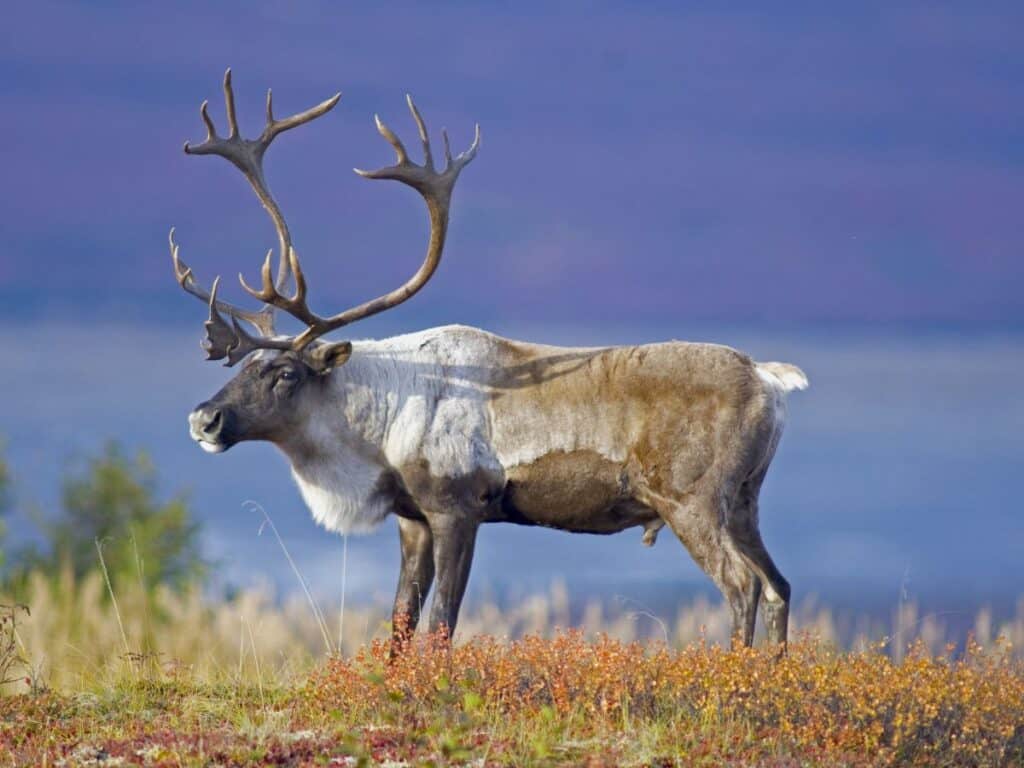
Both buses stop for wildlife, but the transit bus gives you more opportunities because you can hop off, explore, and re‑board later. That said, the tour bus offers narration that helps you understand animal behavior and habitat.
Julie and I saw more wildlife on the transit buses than anywhere else in the park, even within the first 15 miles. Moose, caribou, and bears are all possible sightings.
If wildlife is your priority, either bus works, but the transit bus gives you more freedom to linger in promising areas.
Which Bus Goes Farther Into Denali?
In 2026, both the East Fork Transit and the Tundra Wilderness Tour go to Mile 43, the current turnaround point due to the Pretty Rocks closure.
The scenery beyond Mile 15 is stunning. If you want to experience Denali’s deeper valleys and higher passes, you’ll need one of these two options.
Which Bus Is Best for First‑Time Visitors?
If you’re wondering which Denali bus tour is best, the answer depends on how you like to explore. Here’s the simplest way to decide:
Choose the Tour Bus if you want:
- A relaxed, narrated experience
- A structured schedule
- Insights from a naturalist
- A comfortable, no‑stress day
Select the Transit Bus if you want:
- Freedom to hop off and explore
- The best value
- More time in nature
- A chance to hike or wander off‑trail
Choose Your Own Car (first 15 miles) if you want:
- Maximum flexibility
- Your own window views
- A quieter wildlife‑spotting experience
Julie and I loved driving the first 15 miles ourselves. When wildlife appeared, we didn’t have to compete with other passengers for a view.
How to Book Denali Bus Tickets
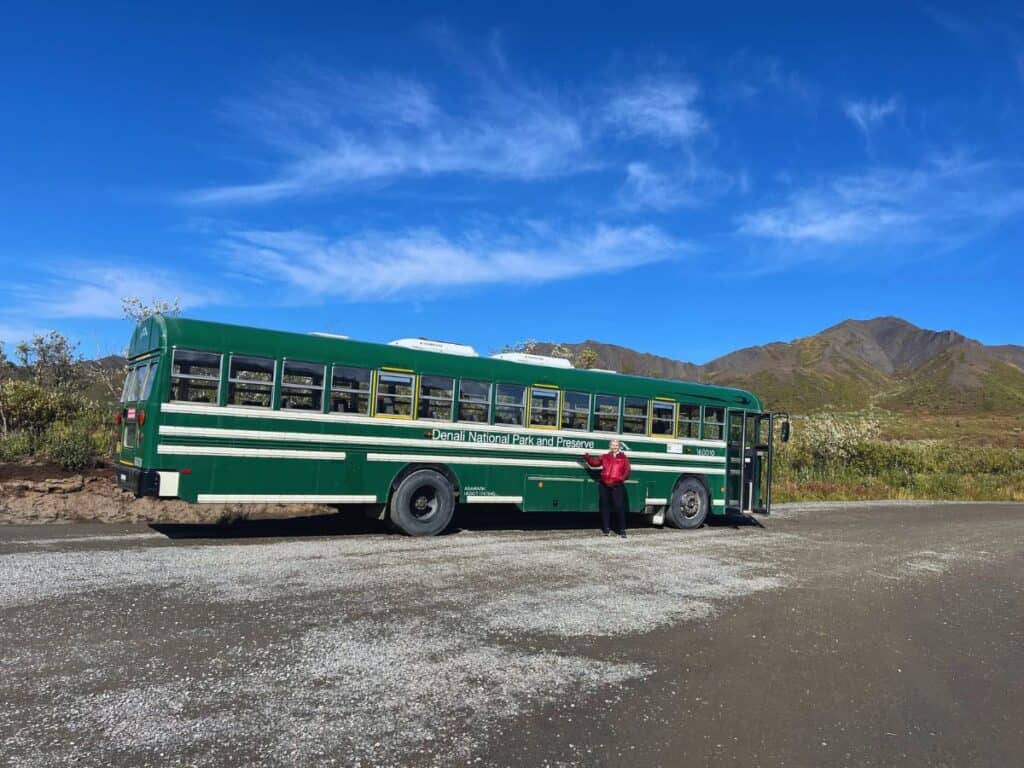
All reservations — transit, tour, and campground — are handled by the Doyon/ARAMARK Joint Venture.
You can book:
- Online
- By phone (1‑800‑622‑7275)
Reservations typically open on December 1 for the following summer.
Note for campers: The park also operates camper buses. These are a specialized version of the transit bus with extra storage for gear and are only available to visitors with campground reservations or backcountry permits.
For everyone else, Julie and I recommend booking your seats well in advance. Denali takes more time, money, and planning than most national park trips, and the last thing you want is to arrive and discover the buses you hoped to ride are already full. Reserving early gives you peace of mind and ensures you get the experience you’ve been dreaming about.
Tips for Riding the Bus in Denali
- Sit on the driver’s side heading into the park for mountain views.
- Bring food and water — nothing is sold once you leave the depot.
- Expect rest stops every 90 minutes.
- Bring a trash bag; not all stops have bins.
- Weather changes quickly, so pack layers.
- Arrive 20 minutes early at the Denali Bus Depot (Mile 0.75).
Motion Sickness Considerations
If you’re prone to motion sickness, plan ahead. Denali Park Road isn’t the bumpiest we’ve experienced, but it isn’t perfectly smooth either, and you’ll spend a lot of time scanning the horizon for wildlife and scenery.
Julie tends to get motion sick if she isn’t driving, so she always packs Dramamine on our trips. For planned activities like this, she takes it in advance so she can relax and enjoy the experience. If you suspect the ride might affect you, consider preparing the same way.
Free Shuttles Around the Park Entrance
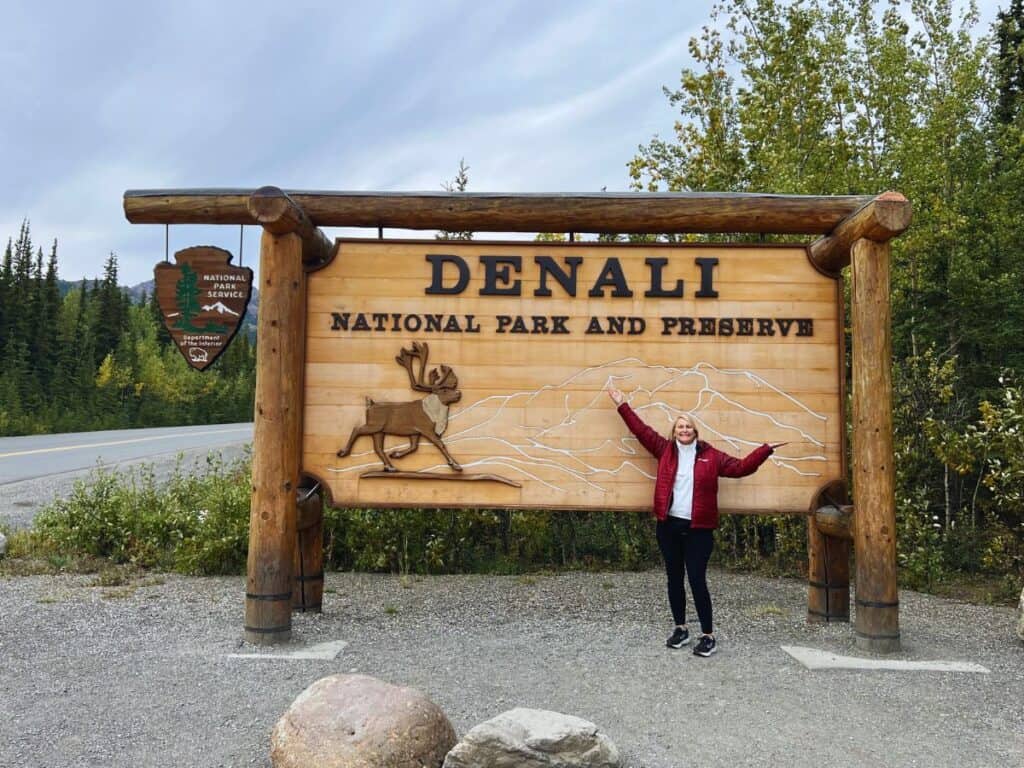
If you’re comparing the Denali shuttle vs tour bus experience, remember that the free shuttles only operate in the entrance area and do not travel past Savage River. The park runs three different free shuttles, and each one is genuinely helpful for exploring the first 15 miles without the hassle of driving or parking.
Savage River Shuttle
- Runs every 30 minutes
- Goes to Mountain Vista and Savage River
- Great for short hikes and wildlife viewing
Riley Creek Loop Shuttle
- Circulates major visitor facilities
- Perfect for orientation and short walks
Sled Dog Demonstration Shuttle
- Free round‑trip service to the kennels
- No parking available at the kennels
- A must‑see program if your schedule allows
FAQ: Denali Transit vs Tour Bus
Here are the questions we hear most often from visitors trying to choose between the transit and tour buses.
Yes. Moose, caribou, and even bears are possible sightings. Julie and I saw eight moose on this stretch alone.
Absolutely. Both transit and tour buses stop for wildlife and scenery.
No. Only transit buses allow hop‑on, hop‑off flexibility.
Yes. For $33.50, you get access to deeper parts of the park and excellent wildlife opportunities.
Tour buses offer narration and structure, but children ride free on transit buses.
Nearly all buses depart from the Denali Bus Depot.
Related Posts
Ready to Plan Your Trip?
Use the block below to explore our complete guide to Denali National Park, including wildlife tips, hiking recommendations, and everything you need for a smooth visit.
Don’t miss our full guide to Denali!
We’ve got everything you need to plan your perfect trip.
Featured image credit: Miles with McConkey