
It’s true; pictures can’t do justice to the experience. As a lover of national and state parks, I was initially underwhelmed by the online images of Fort Abraham Lincoln State Park. But stepping foot in North Dakota’s oldest state park, established in 1907, was a revelation. It’s a place that defies imagination, far surpassing my expectations.
Gusty winds breathe life into the vast prairies, forming rolling green waves. The sweeping view of the Missouri River is more spectacular than the camera can capture. History’s gravity falls upon you as you explore the park. You can practically feel the ghosts of soldiers and Indigenous peoples who once walked these fields. Abound with American history and natural beauty, Fort Abraham Lincoln State Park is a must-visit destination.
Disclosure: This post may contain affiliate links. If you make a purchase through one of these links, I may earn a small commission at no additional cost to you. Thanks for keeping Miles with McConkey going!
Building a Fort

Two 6th United States Infantry companies began building a military post at the Missouri and Heart Rivers confluence in June 1872. The perfect location provided sweeping views over the vast landscape at a vital time in American history as we prepared to lay tracks for the Northern Pacific Railroad, fulfilling our young country’s dream of westward expansion. Initially called Fort McKeen, we renamed it Fort Abraham Lincoln a few months later.
The following year, a cavalry post was added. By 1874, the military post held three companies of the 6th and 17th Infantries and six companies of the 7th Cavalry. The nine-company command comprised 650 men, making it among the most extensive and critical forts on the Northern Plains. George Armstrong Custer was the first post commander of the expanded fort, serving from 1873 until his death at the Battle of the Little Bighorn in 1876.
Fort Abraham Lincoln State Park Essential Information

The park sits at 4480 Fort Lincoln Road, Mandan, ND 58554. It is open daily from 7 am to 10 pm. The entrance fee is $7 per vehicle, or you can purchase an annual permit for $35.
While you can tour most of the park independently, a guided tour during summer is required to see the commanding officer’s quarters. An interpretive pass, sold in the Commissary Store and Visitor Center, is available for an additional $8 per person and grants entry to the guided tour.
Pets are permitted in the park but must remain on a leash. You will find a dog drinking station outside the Visitor Center.
The Commissary Store sits at the front of the park, offering handcrafted espresso drinks, snacks, souvenirs, and books.
What can you see and do at the park?
Custer House and Cavalry Square
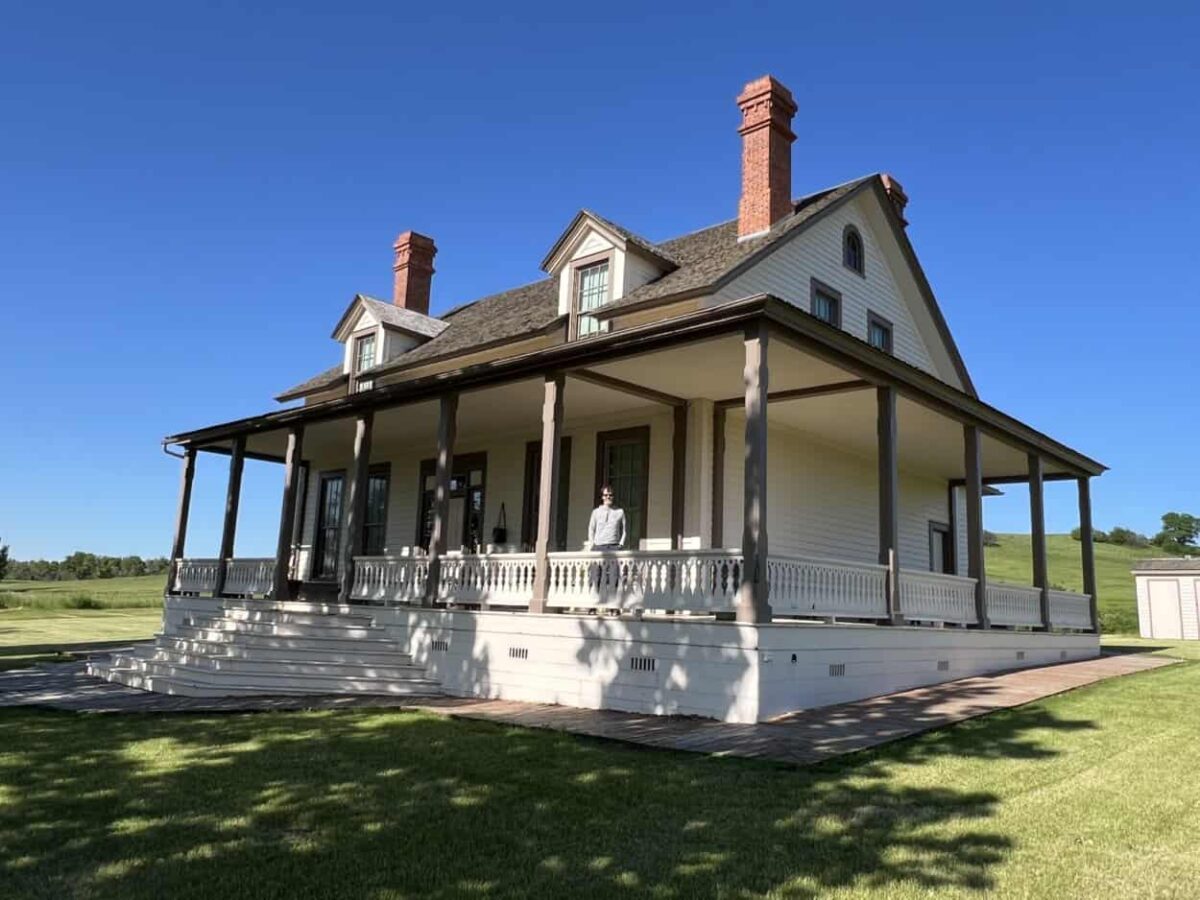
Near the front of the park, a boardwalk path slices through the lovely meadow, guiding you to the cavalry post, comprising a commissary, officer’s quarters, commanding officer’s quarters, granary, barracks, and stables. George Armstrong Custer and his wife, Elizabeth “Libbie” Bacon Custer, lived in the commanding officer’s quarters, his last home and command. Custer and his 7th Cavalry rode from here to the famous Battle of the Little Bighorn.
During our visit, a man clad in a military uniform from the 1870s welcomed us to the park, played a tune on his bugle, and posed for a picture in front of Custer’s house. The significance of the location and its impact on our history starts to sink in. It is a surreal feeling, making this one of the most unique parks Julie and I have ever visited.
Barracks
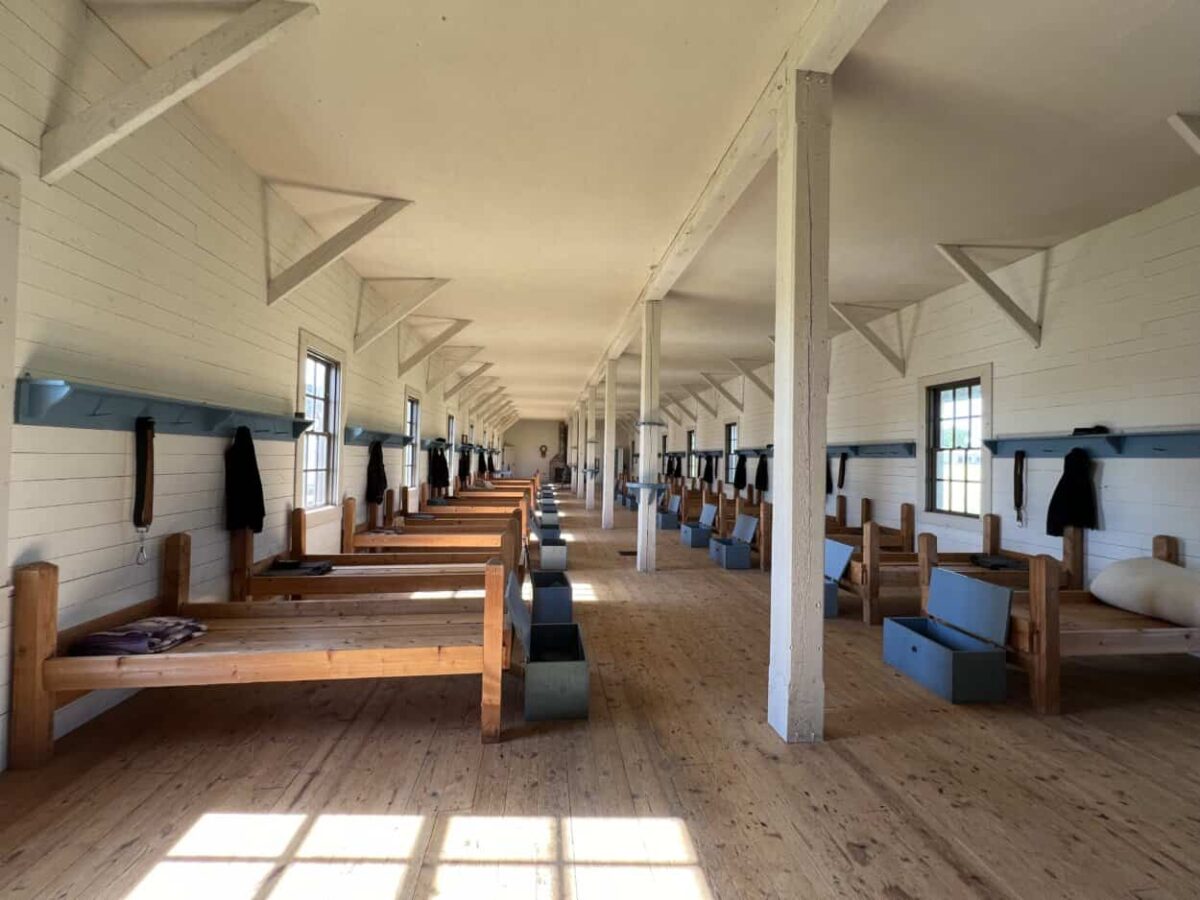
Across the field from the Custer House is the barracks. Julie and I walked through the long, narrow halls that once housed various United States cavalry companies. The cramped quarters, with lines of beds, tables of lanterns, and secured rifles, give a glimpse of what life was like. Information panels on the walls provide additional details about the fort and its soldiers.
As we made our way through the barracks, we discovered the kitchen and mess hall, flooding our minds with images of soldiers at mealtime. Props and information placards give additional insight. The park does an excellent job of providing interesting facts and bringing history to life.
Stables
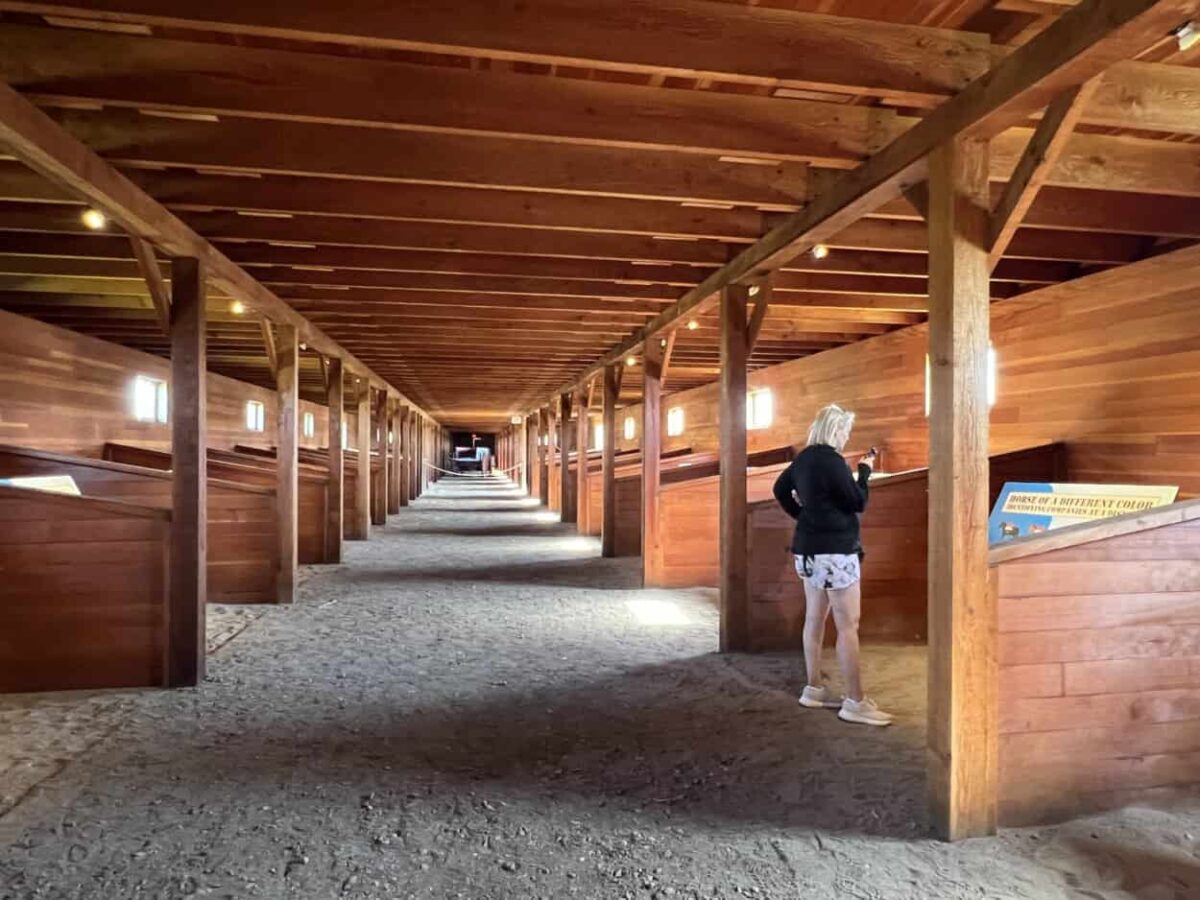
Although near the barracks, the stables sit across the park’s main road and have a separate parking area. The stables house wagons on one side and open stalls on the other. Each open stall contains an information placard covering interesting topics such as the project to reconstruct the stables, identifying the cavalry company by the horse’s color, how to measure a horse, a day in the stable, tools of the trade, the McClellan saddle, and more.
Julie and I learned a lot exploring the stables, thoroughly enjoying the educational experience. Just outside the stables, you will find a shelter with an excellent view of the Missouri River. It is worth the short walk.
Visitor Center and Museum
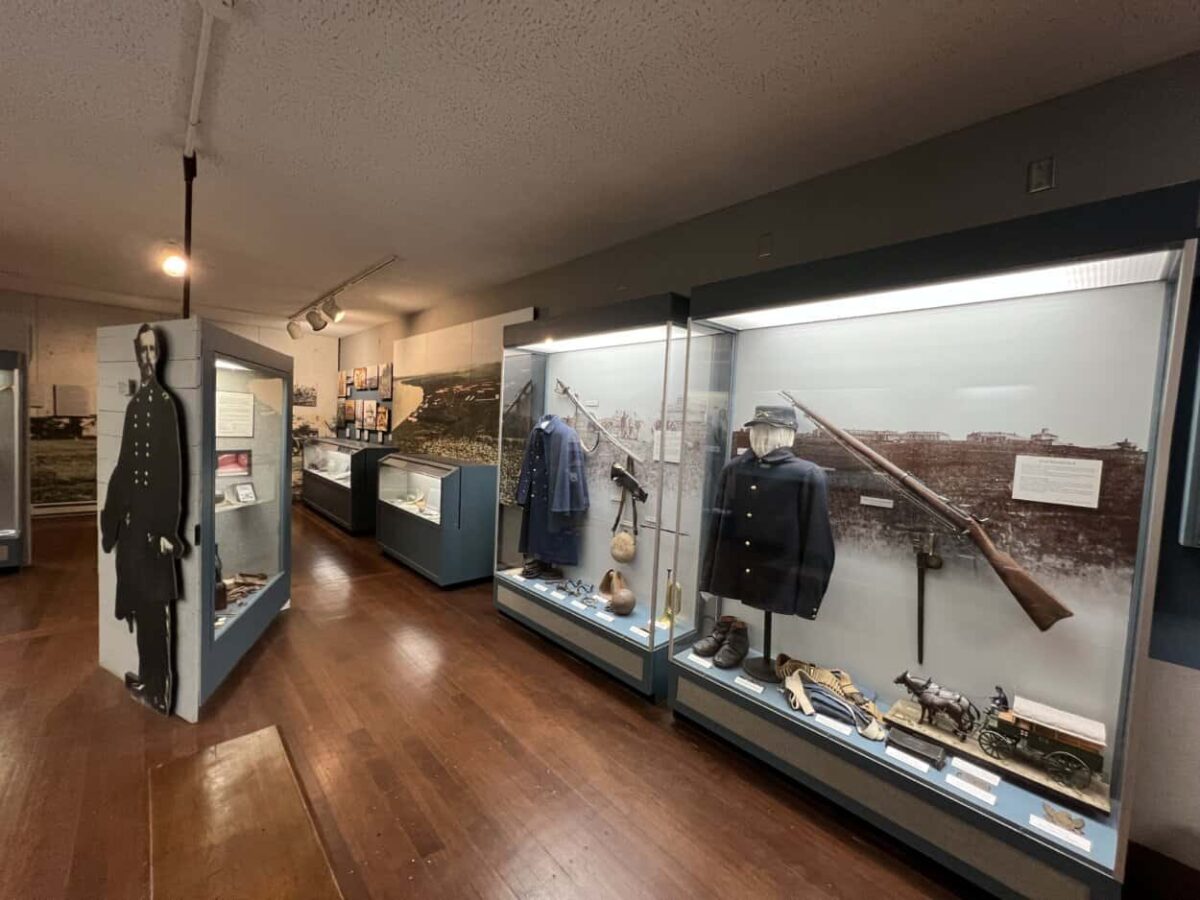
Continue following the main road until you see the Visitor Center and Museum. It houses fantastic exhibits and artifacts covering the Mandan Nation, the Lewis and Clark Expedition, and the history of the fort and the United States military. The Mandan and military exhibits are substantial. I particularly enjoyed the exhibits, which included soldier uniforms and weapons, as well as the Mandan artifacts and paintings of Indigenous peoples.
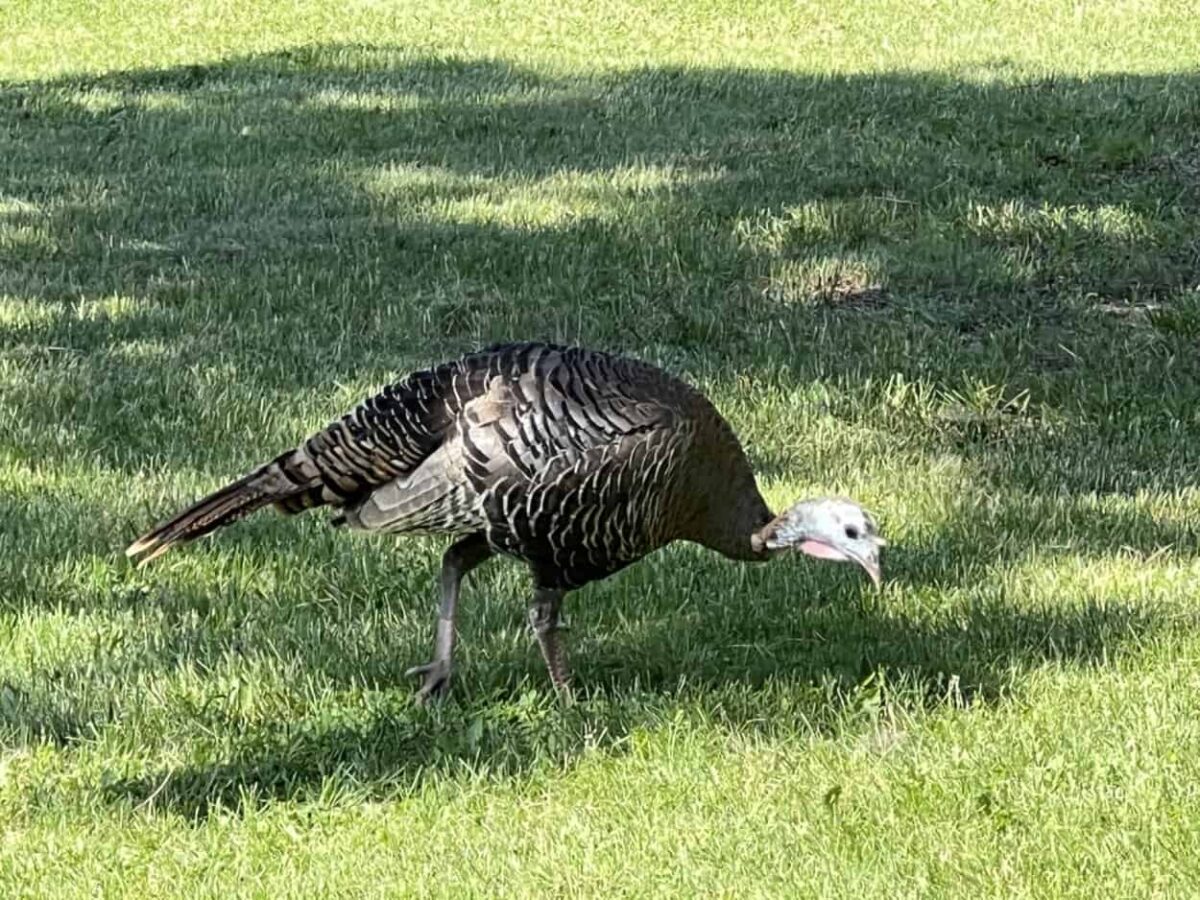
The Visitor Center also has an educational film. With so much to explore here, it is well worth your time. If you enjoy American history, it is a dream come true. For those who enjoy wildlife watching, look for wild turkeys outside the Visitor Center. We spotted a few during our visit.
On-A-Slant Village
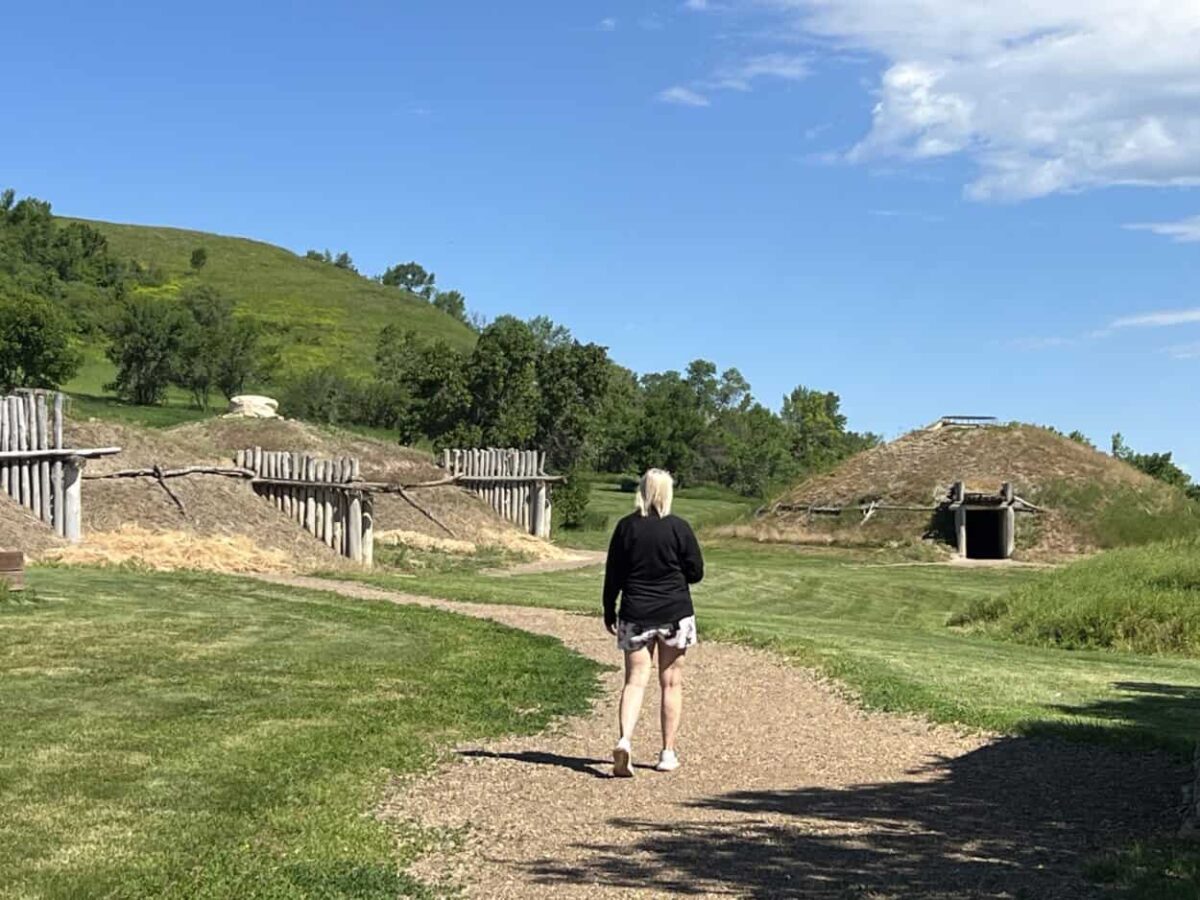
A wooden footbridge adjacent to the Visitor Center and Museum leads you to On-A-Slant Village, occupied by the Mandan from 1575 to 1781. The village is named for the sloping ground upon which it sits. An agricultural Indian tribe, the Mandan, moved into the area from the south. The community was in ruins when the Lewis and Clark Expedition crossed the region in 1804. We believe a smallpox epidemic decimated the Mandan population.
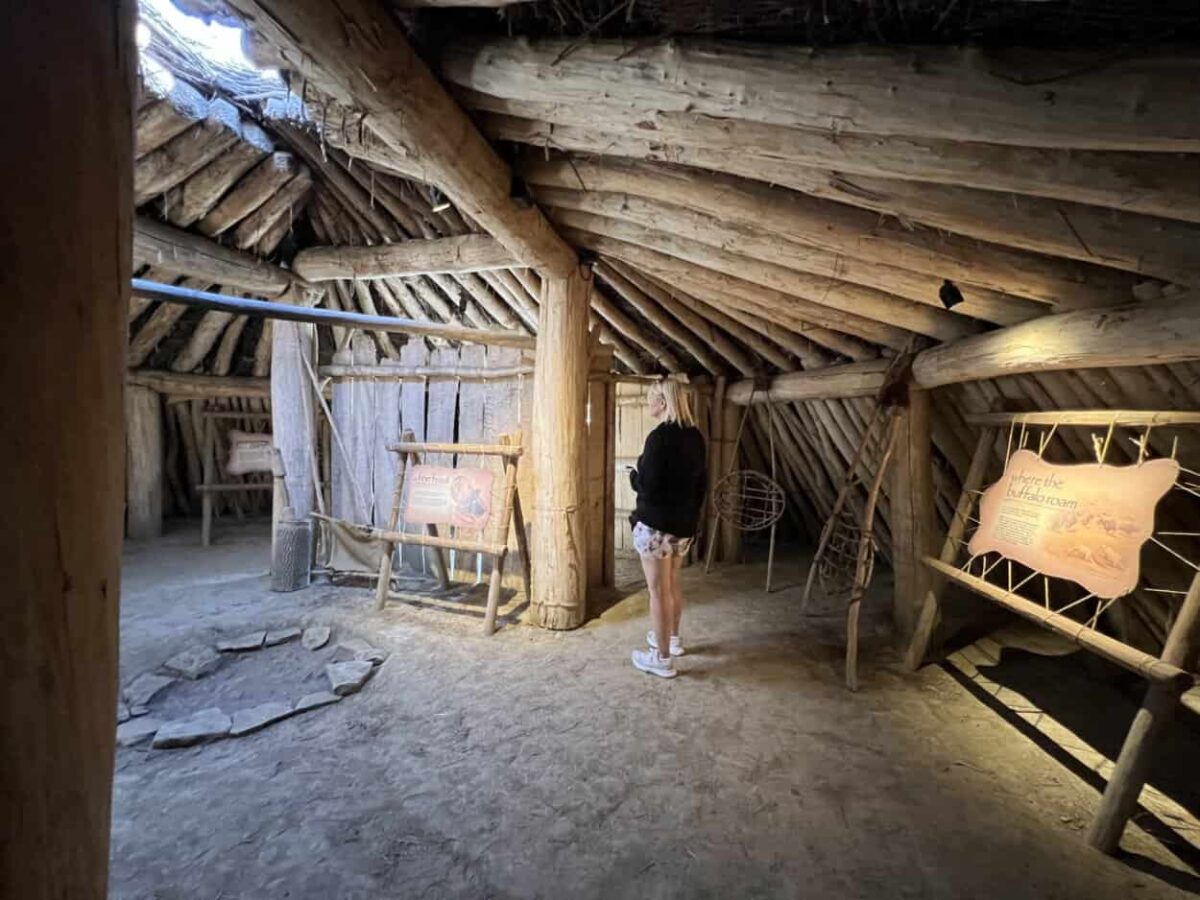
Julie and I found this park section fascinating. The earth lodges are much bigger inside than they appear from the outside. You can learn more about the dwellings and daily Mandan life inside the lodges. One of the lodges has tables with pictographs so kids can create stories utilizing Mandan symbols. Much like the barracks and stables, you will find informational signs with many interesting facts about the Mandan.
Blockhouses
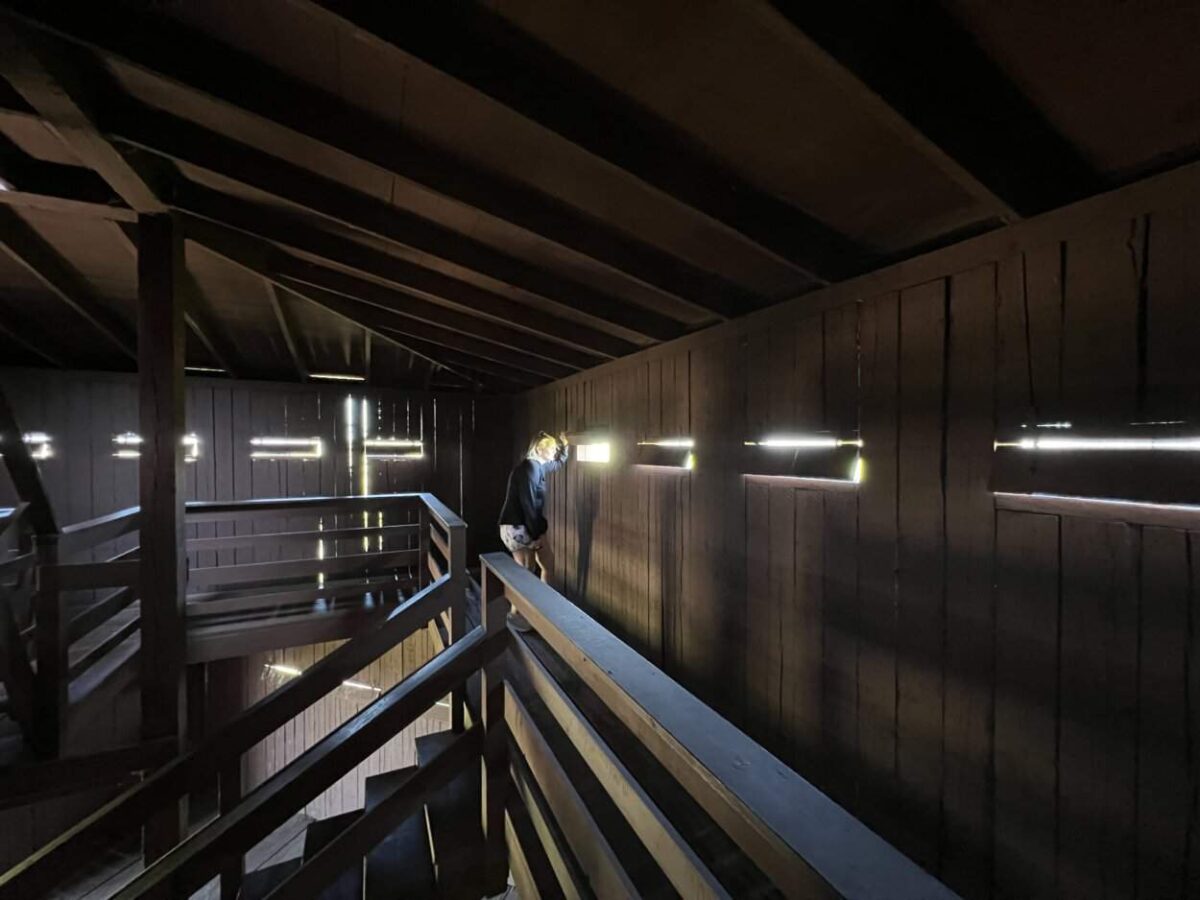
Further along the park’s main road, you will discover odd-looking brown houses that stand out like a sore thumb on the sprawling prairies. The blockhouses were part of the Fort Abraham Lincoln infantry post, serving as observation points and defensive fortifications.
Julie and I were excited to find you can go inside the buildings and climb to the top. The upper deck provides panoramic views of the prairies and Missouri River Valley. From this vantage point, it is easy to see why Fort Abraham Lincoln was such a pivotal location in our westward expansion and defensive strategies.
Recreational Activities
While the park’s treasure trove of American history and sweeping prairie and river views are enough to satisfy the average visitor, Fort Abraham Lincoln State Park offers plenty of recreational opportunities. Popular activities include hiking, biking, camping, fishing, birding, and picnicking.
The multi-use trails pass through prairies and woodlands, some yielding spectacular views of either the Missouri River or the Heart River. Please note that you may encounter horseback riders on the trails.
Special Events

The park holds various special events throughout the year. Halloween in June occurs the second week in June. Campers can decorate their campsites, and children can participate in fun events like scavenger hunts, hayrides, costume parades, and trick-or-treating.
For those who genuinely want to see history come to life, visit during the Fort Abraham Lincoln Living History Garrison event, typically held in July. Watch people in soldier uniforms perform military drills and guard duties, giving you a better idea of what life was like for a soldier in the 1870s.
Each weekend in October, the park offers a legendary Halloween event with four unique haunted house experiences within the reconstructed historic military buildings.
Other Things To Do in the Area
Anyone who enjoys American history, parks, boutique shopping, or recreational activities on land and water will have plenty of options when visiting the region. Mandan and Bismarck sit on opposite sides of the Missouri River. Both cities offer charming boutique shops and art galleries. You can enjoy tasty cuisine ranging from pub grub in local craft breweries to fine dining with river views. The North Dakota Heritage Center & State Museum is an excellent place to visit and learn more about the state’s history. Lovely small parks skirt the Missouri River, with peaceful walking and biking paths.
Theodore Roosevelt National Park is a two-hour drive west. If you enjoy roadside attractions, check out the giant-sized scrap metal sculptures on the Enchanted Highway. It is a little over an hour’s drive from Mandan.
Plan Your Adventure

When viewing internet images of its prairies and blockhouses, Fort Abraham Lincoln State Park may appear dull. Do not judge this book by its cover. The park is steeped in American history, from the Mandan Nation to the Lewis and Clark Expedition to the soldiers who defended our territories and the westward expansion efforts. The gravity of that history hits you in a way that pictures cannot convey. History comes alive in Fort Abraham Lincoln State Park. And it is a lesson you do not want to miss.
Craving more off-the-radar escapes? Fort Abraham Lincoln State Park is just one of many lesser-known gems waiting to be discovered. Explore our full guide to hidden gem state parks in the USA — perfect for travelers who love stories, solitude, and stunning landscapes.
Featured image credit: Miles with McConkey