

Julie and I love visiting national park sites, even those that are not full-fledged national parks. We had heard of Craters of the Moon National Monument and Preserve but did not know what to expect.
After visiting, I can tell you this place is special. It looks like another world and feels like a national park. Of all the places we have visited that do not have the official national park title, this one has the most infrastructure and the best accessibility. I am hopeful that it will receive the deserved status in the future, which will only enhance its appeal.
If you do not have Craters of the Moon National Monument and Preserve on your bucket list, do yourself a favor and add it. Let’s explore the park’s details so you can plan your adventure.
Disclosure: This post may contain affiliate links. If you make a purchase through one of these links, I may earn a small commission at no additional cost to you. Thanks for keeping Miles with McConkey going!
What Exactly is the Craters of the Moon?
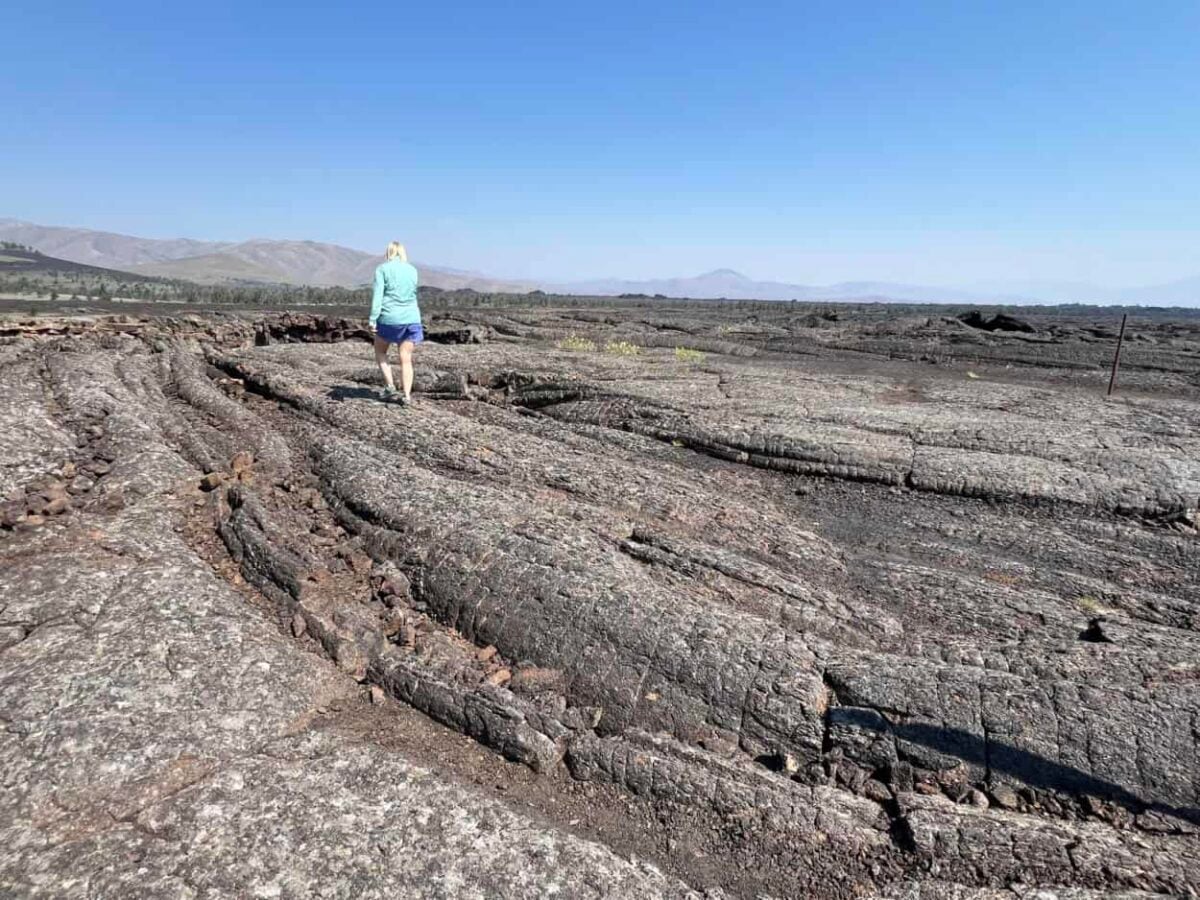
The park comprises a vast ocean of lava flows and scattered islands of cinder cones formed by volcanic activity between 2,100 and 15,000 years ago. Julie and I marveled at the stark contrast between the lush green mountains on the horizon and the park’s rugged black terrain that seemed to stretch forever.
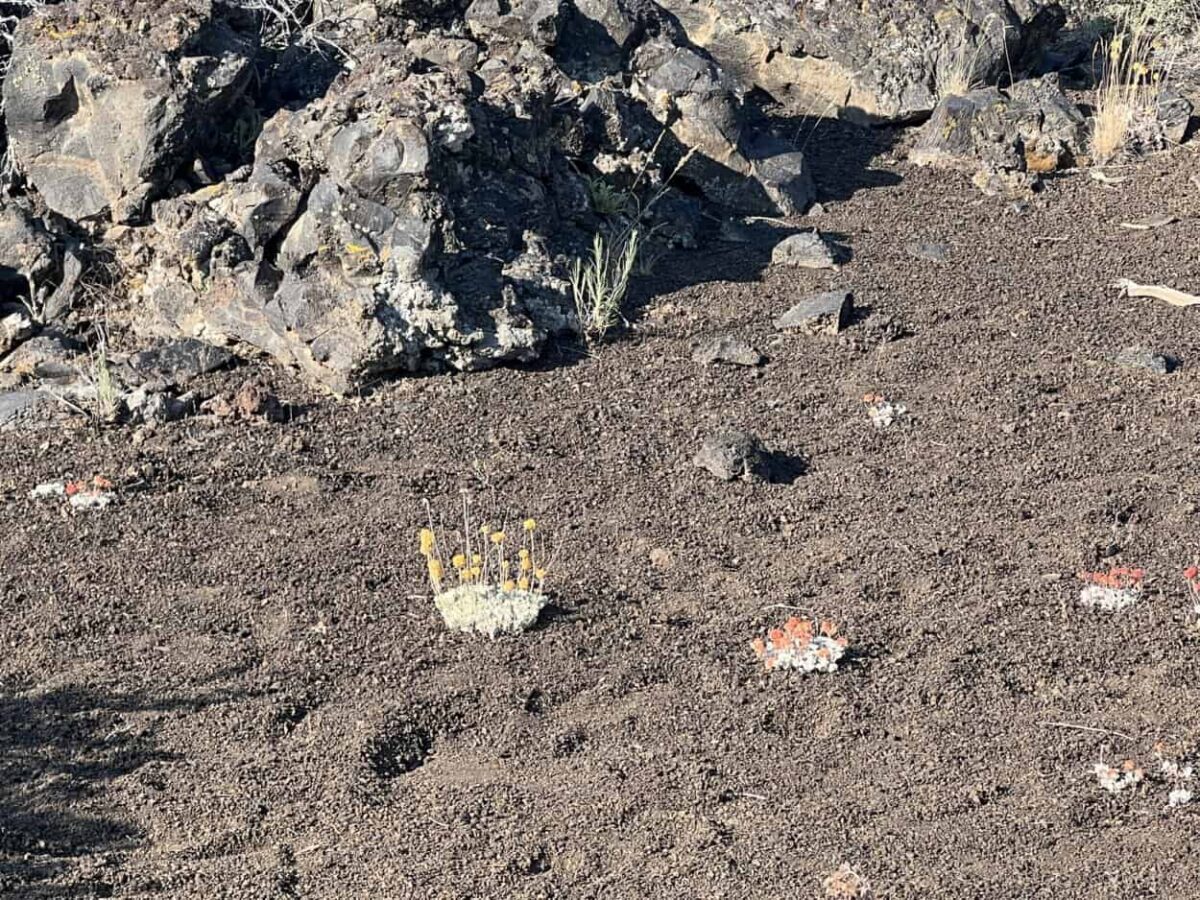
A few signs of life appear here and there with scraggly sagebrush and emerging colorful blooms rising from the black ash. It is an odd reminder that life eventually finds a way.
Against the vast terrain of lava flows and black ash, those colorful blooms stand out like fresh paint on a canvas. Even a grasshopper appears neon green in this strange world.
Centennial Celebration
President Calvin Coolidge established the national monument on May 2, 1924, noting its “weird and scenic landscape.” The National Park Service will honor its 100th birthday in 2024 with centennial events from May through September. These include full moon hikes and ranger-led stargazing parties.
Getting There
When traveling to Craters of the Moon National Monument and Preserve, use the following physical address: 1266 Craters Loop Road, Arco, ID 83213.
The park is in southern Idaho, 18 miles southwest of Arco on U.S. Highway 20/26/93. It is about 24 miles from Carey, 84 miles from Idaho Falls, and 90 miles from Twin Falls. Roads in the park and those leading you to the park are paved.
Hours of Operation and Entrance Fees
Craters of the Moon is open 24 hours a day, seven days a week. Park admission is $20 per vehicle, or you can buy an annual pass for $35. Another option is to purchase an America the Beautiful annual pass for $85, valid at all United States national park sites.
It is essential to note that the park’s main road is open to vehicles as conditions allow, typically from mid-April through late November.
Weather
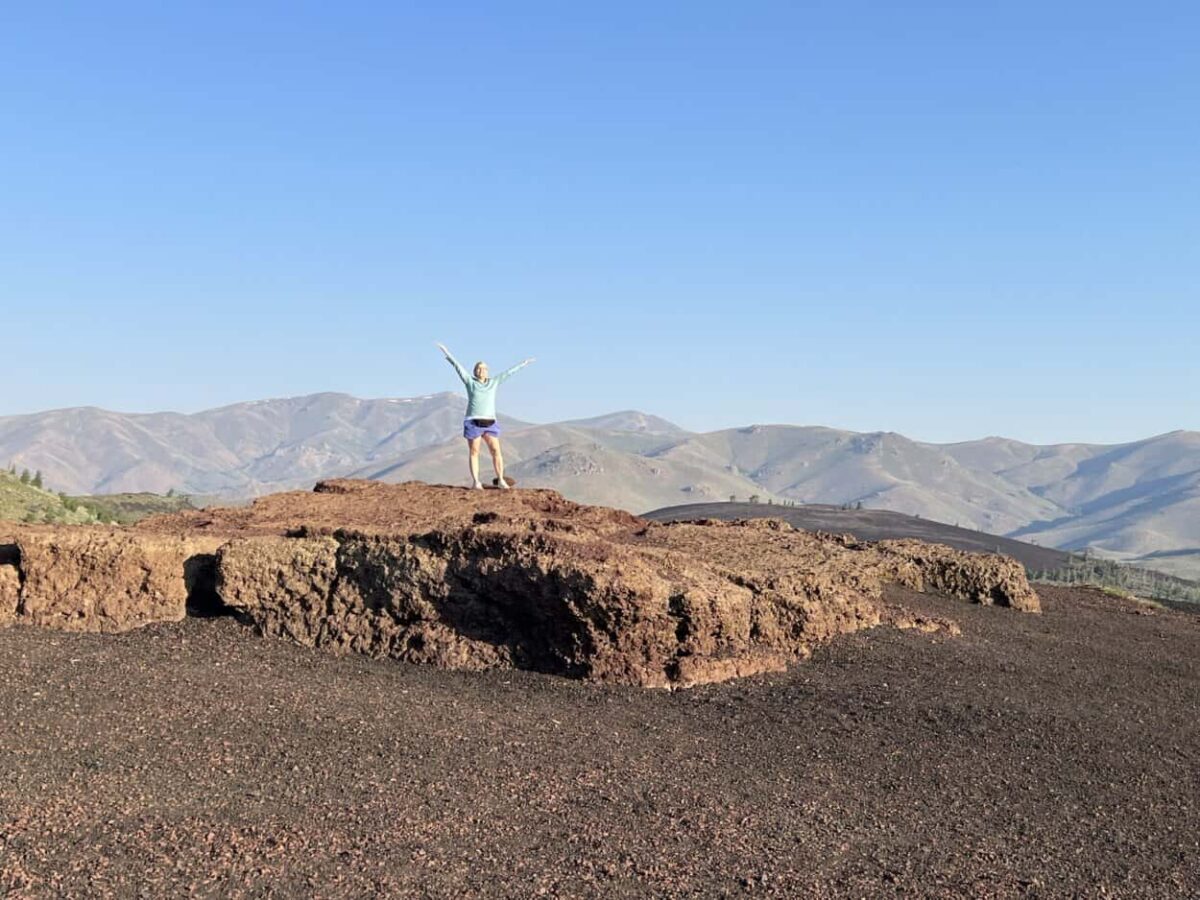
Craters of the Moon National Monument and Preserve has hot summers and cold winters. In February, the average snow depth can range from 2 inches at the park’s south end to 26 inches at the park’s north end. Air temperatures typically peak in the 90s in summer. The surface temperature of the black lava terrain can reach 170 degrees under the hot sun. Afternoon winds from 15 to 30 miles per hour regularly sweep across the park.
Robert Limbert Visitor Center
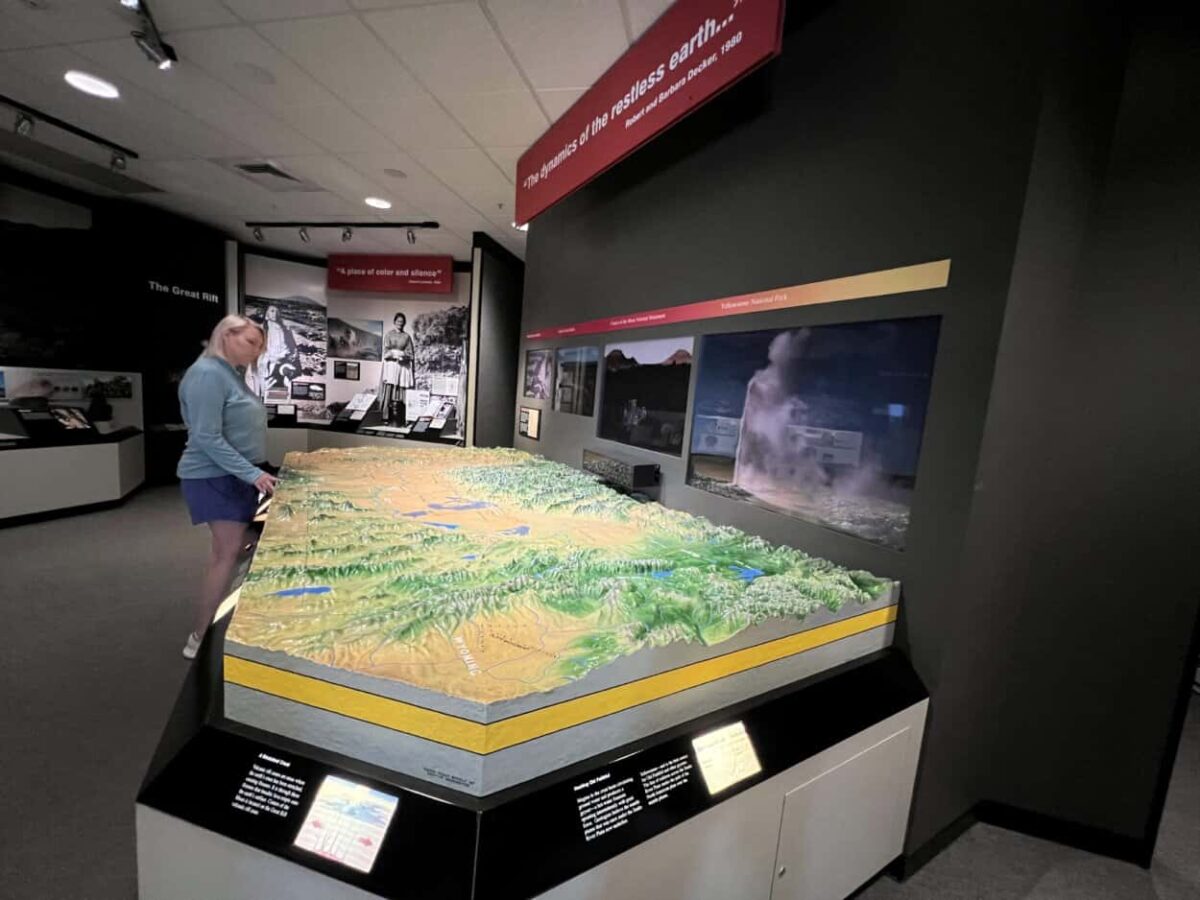
Usually, I suggest stopping at a park’s visitor center first to obtain a map and insight from park rangers who can help you plan your day. However, we visited during a heat wave, during which the temperature exceeded 100 degrees every day that week. So, we arrived before the visitor center opened to squeeze in a few activities with tolerable temperatures. Hours vary seasonally, but the visitor center regularly opens at 8:30 or 9 am. Visit the park website to verify the hours before your visit.
Julie and I went to the visitor center late that morning. The park rangers are some of the most helpful we have encountered. One even brought out a book to help us identify a bird we saw that morning. The visitor center has nice museum exhibits, a bookstore, and a park film. You can also access vending machines and restrooms here.
It is essential to note that you must obtain a permit from the visitor center if you plan to explore the park’s caves. The permit is free, but park rangers will ask a few questions to ensure you do not unknowingly spread white-nose syndrome, a fungal disease harmful to bats.
Loop Road

Craters of the Moon National Monument is easy to navigate by driving along the 7-mile Loop Road. You will discover well-marked overlooks and trailheads for the main attractions. Everything is so well maintained it feels like a full-fledged national park.
North Crater Flow Trail
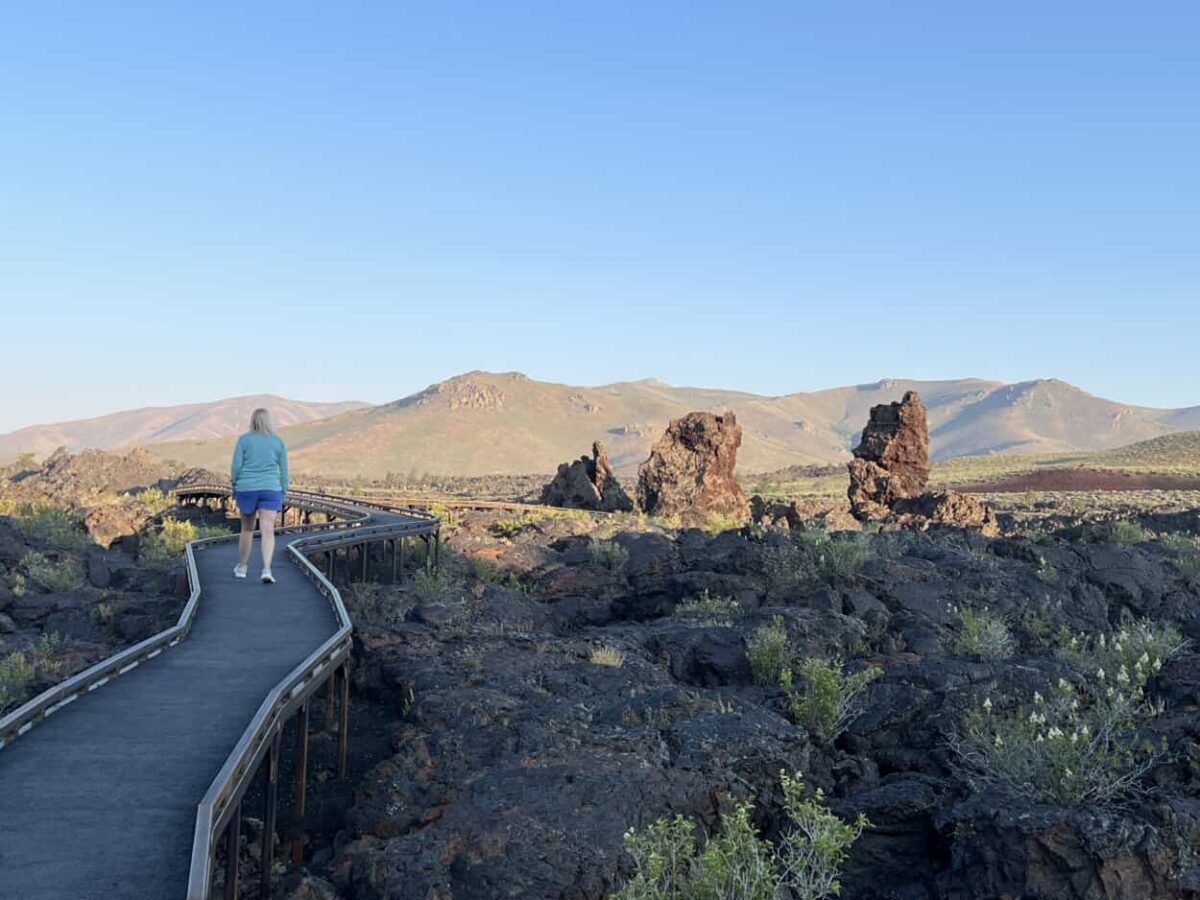
You will encounter the North Crater Flow Trail near the front of the park. Although short, the 0.3-mile paved, accessible boardwalk loop trail is well worth your time. The suspended path takes you over some of the youngest lava fields in the park. You can learn about the area by reading informational signs on the trail.
Julie and I savored the natural beauty here. The striking, lush green mountains on the horizon starkly contrast the black molten lava-covered grounds. As President Coolidge said, the landscape is indeed weird but scenic. With such incredible views, this hike set an exciting tone for the rest of our day.
Devil’s Orchard Nature Trail
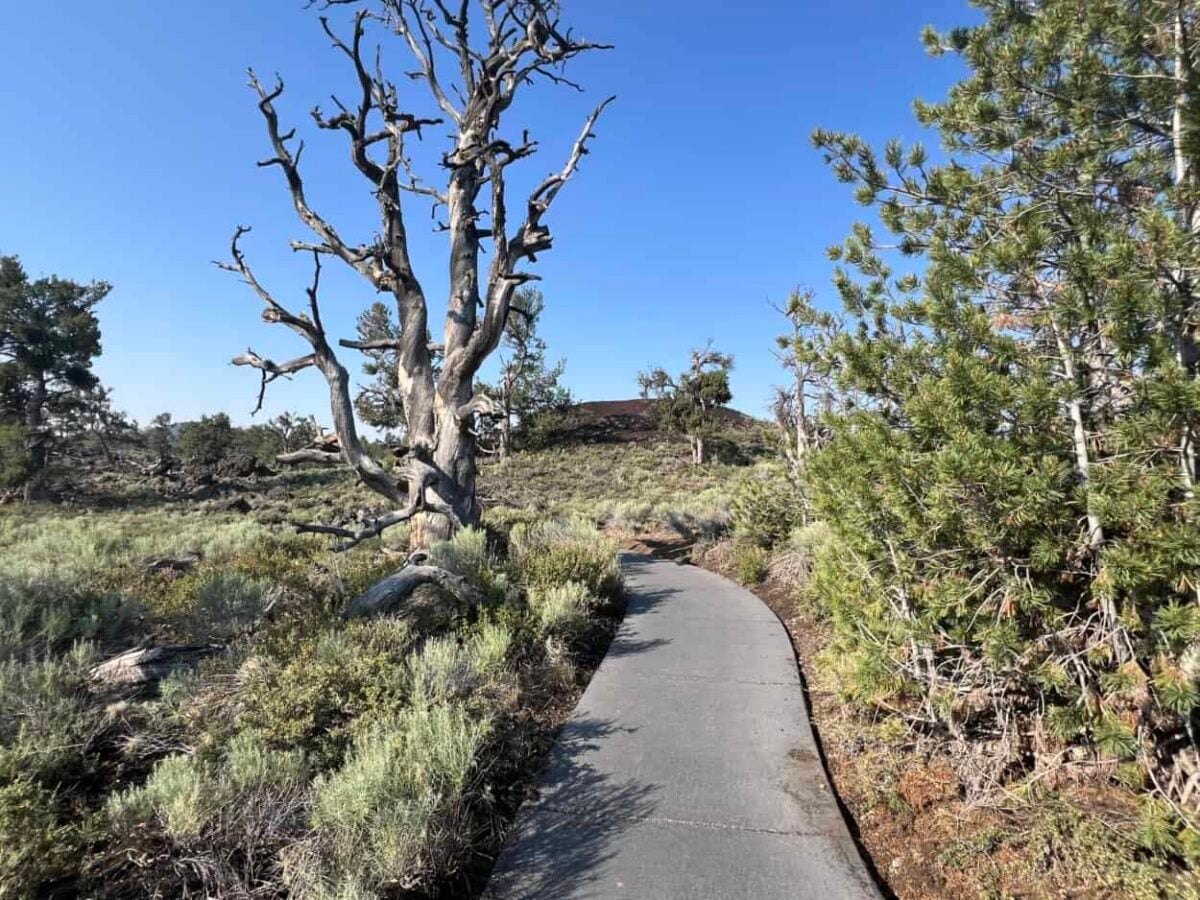
You will find the Devil’s Orchard Nature Trail a little further along Loop Road. It is a 0.5-mile paved, accessible loop that takes you through scattered lava islands and gnarled trees. Julie and I chuckled at how the trees resembled those on the Angry Orchard hard cider packaging.
Although ominous, the terrain is beautiful in a weird way. It genuinely feels like another planet. We encountered many flies in this area, making us think the trail was devilish. Please do not let that deter you from exploring the area. The flies further enhanced the devilish theme but did not cause any problems.
Inferno Cone

Loop Road becomes a one-way loop after the Devil’s Orchard Nature Trail. Your next primary attraction is a barren cinder cone. For those who wonder, cinder cones form when gas-rich volcanic froth erupts high into the air and then piles into a mound.
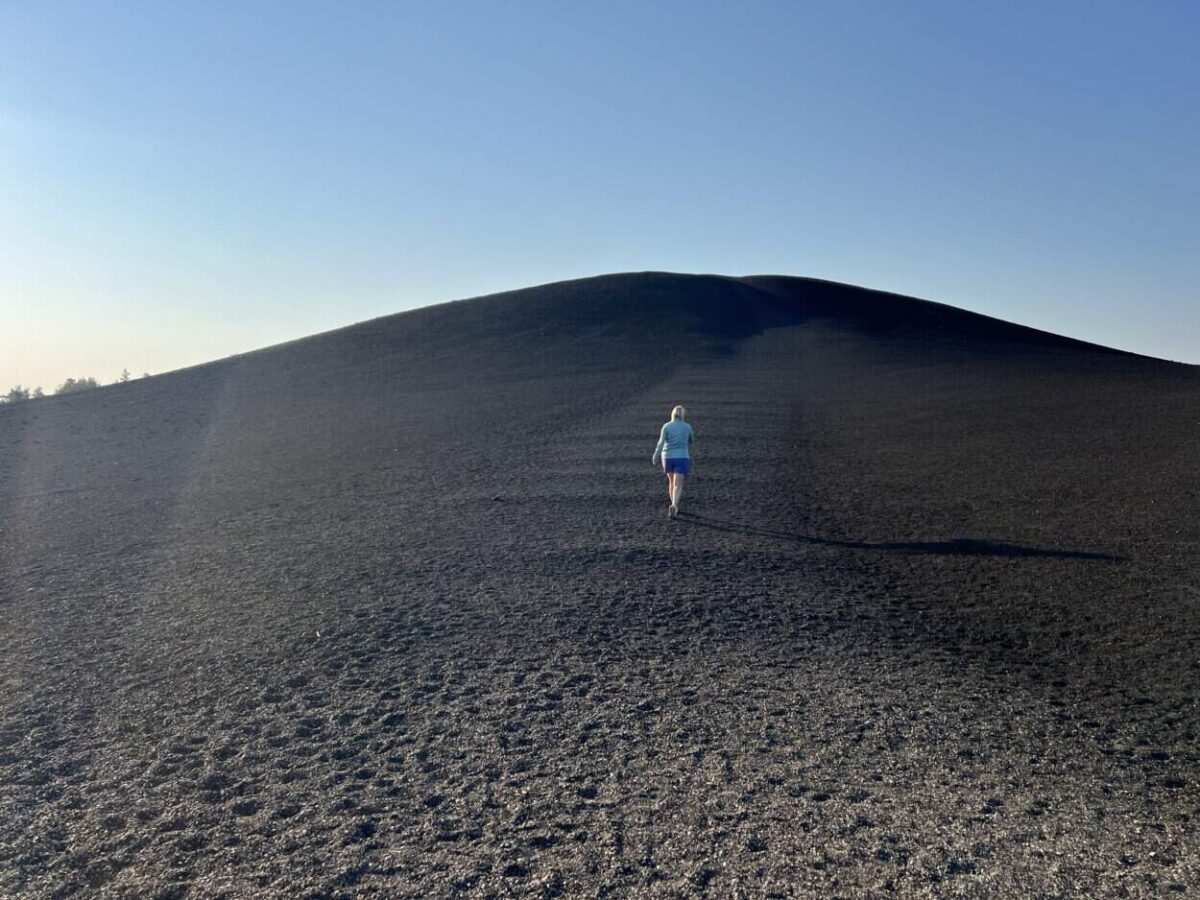
Since we arrived early, we had the Inferno Cone to ourselves, which was magnificent. Although short, the 0.2-mile hike is steep. The climb is worthwhile as you gain 360-degree views of Big Cinder Butte and the Great Rift.
Inferno Cone consists of finely crushed black lava rock. While we never felt endangered, I suggest wearing shoes with good traction. The steep slope left us feeling winded. You keep thinking you should be at the top, but your progress looks minimal. It is deceptive in appearance, but those rewarding views at the top far outweigh a little huffing and puffing along the way.
Spatter Cones

Your next stop on Loop Road is Spatter Cones. A paved path wraps around the side of a spatter cone, culminating in a small area at the top with a view of the volcano. The climb is short and easy, and looking into a volcano’s vent is cool.
One of the miniature volcanoes in this area is affectionately known as Snow Cone due to its ability to hold ice all summer. You can peer into the cone and see the ice. Julie and I were astounded to see the ice during a week when the temperature repeatedly surpassed 100 degrees.
Big Craters
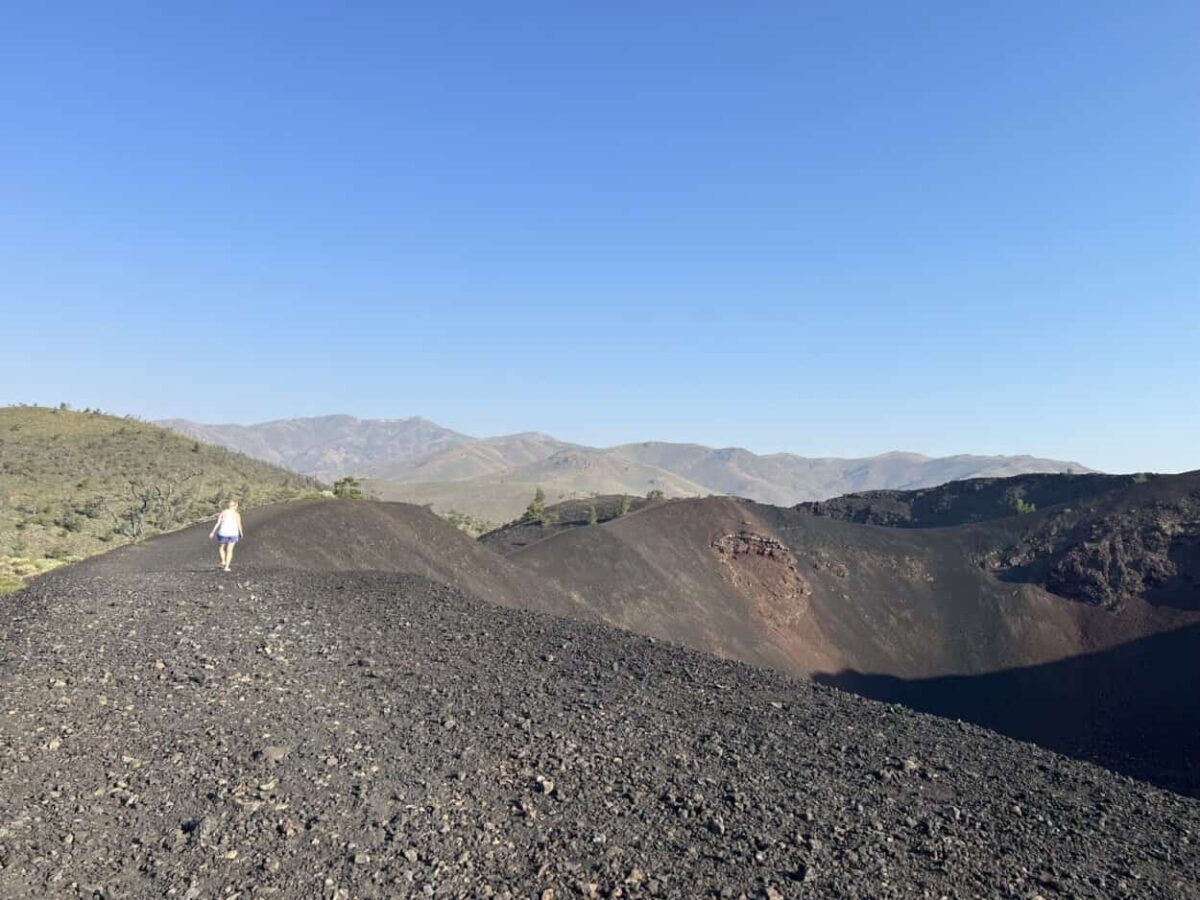
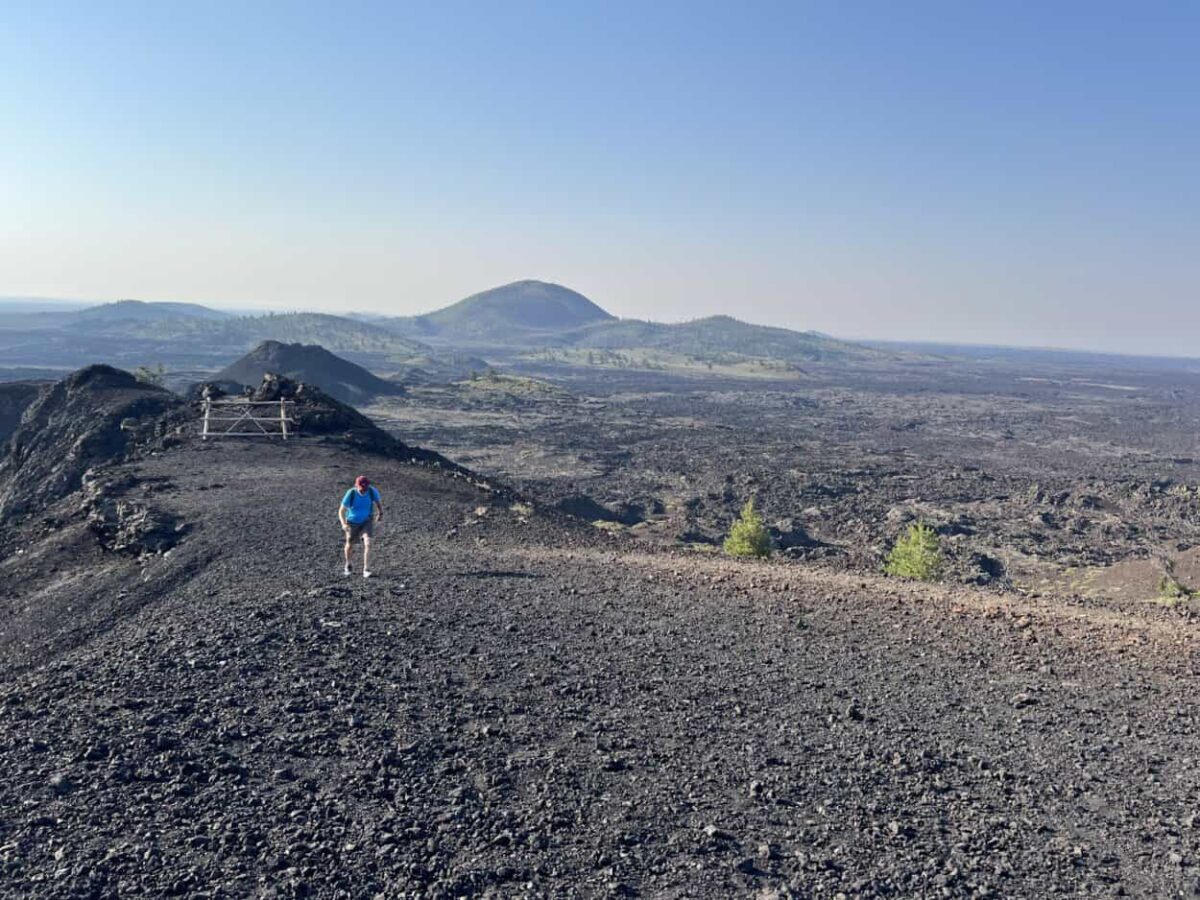
You can access Big Craters in two ways. Near the front of the park, North Crater Trail is a strenuous 3.6-mile round-trip hike that crosses North Crater and Big Craters. Or, you can take the much easier 0.25-mile hike from the Spatter Cones area up a steep hill along the edge of Big Craters.
I have no doubt the North Crater Trail is a rewarding experience. However, Julie and I took the easy path due to the extreme heat. We walked along the edge of the crater rim and had spectacular views of the surrounding terrain. The experience was rewarding, giving us a deeper appreciation for the unique park site.
Essential Information About the Park’s Caves
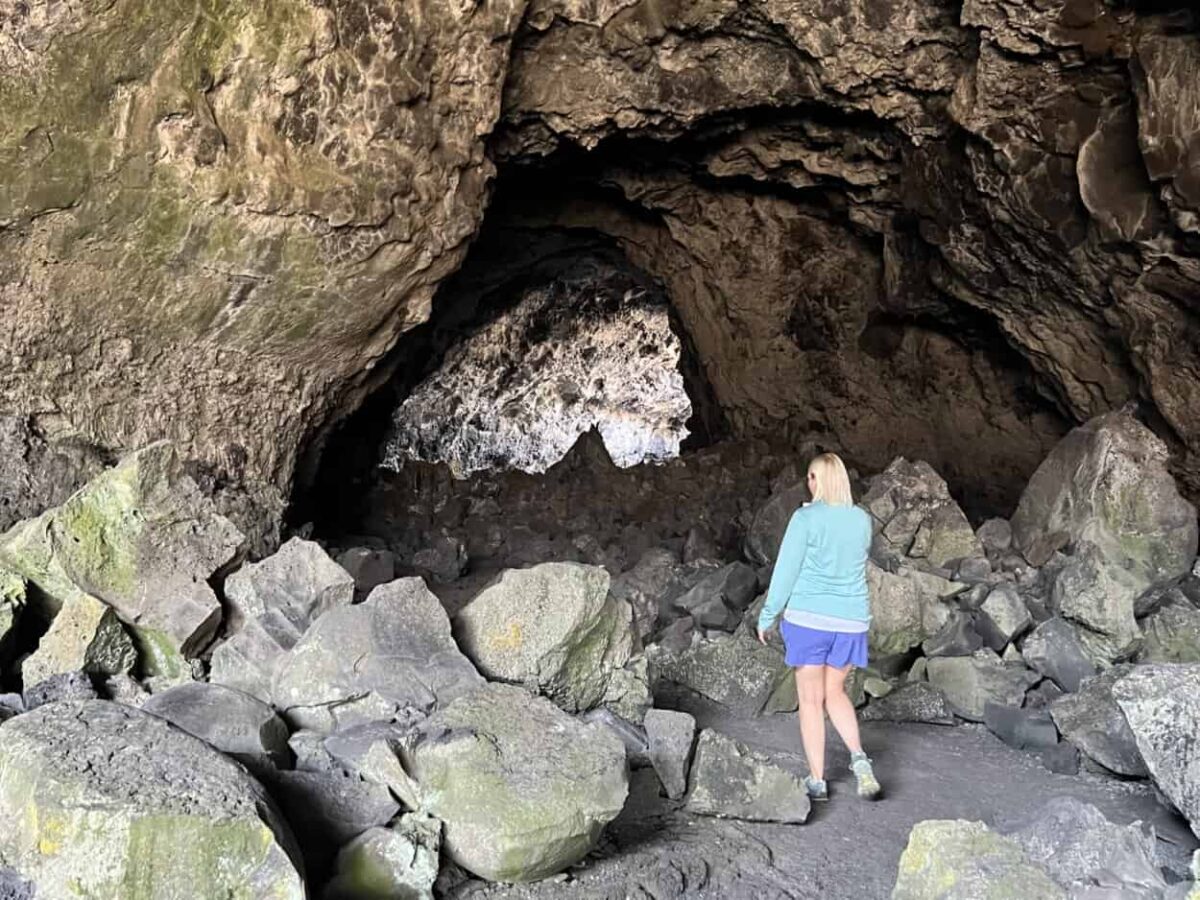
Continue following Loop Road until you come to the well-marked parking area for the caves. A free permit from the visitor center is required to enter the caves. Julie and I experienced everything above in the early morning hours. We then drove back to the visitor center to talk to the rangers and to obtain a permit. If the visitor center is open when you arrive, we suggest obtaining your permit first.
The park contains three caves that are currently closed to protect the bats. However, you can explore two caves. We found both to be a lot of fun. Give yourself an hour or more if you plan to explore both caves. We took about 1.5 hours to complete our caving mission.
To access the lava tube caves, you will hike a 0.8-mile trail across the lava. We suggest wearing close-toed shoes with good traction and bringing a flashlight. The smooth path is paved, but you will need traction when you enter the caves. It requires scrambling in spots. I fear heights and tight spaces, but I had no issues in either cave. Just take your time and mind your footing as you walk through the caves.
Dewdrop Cave
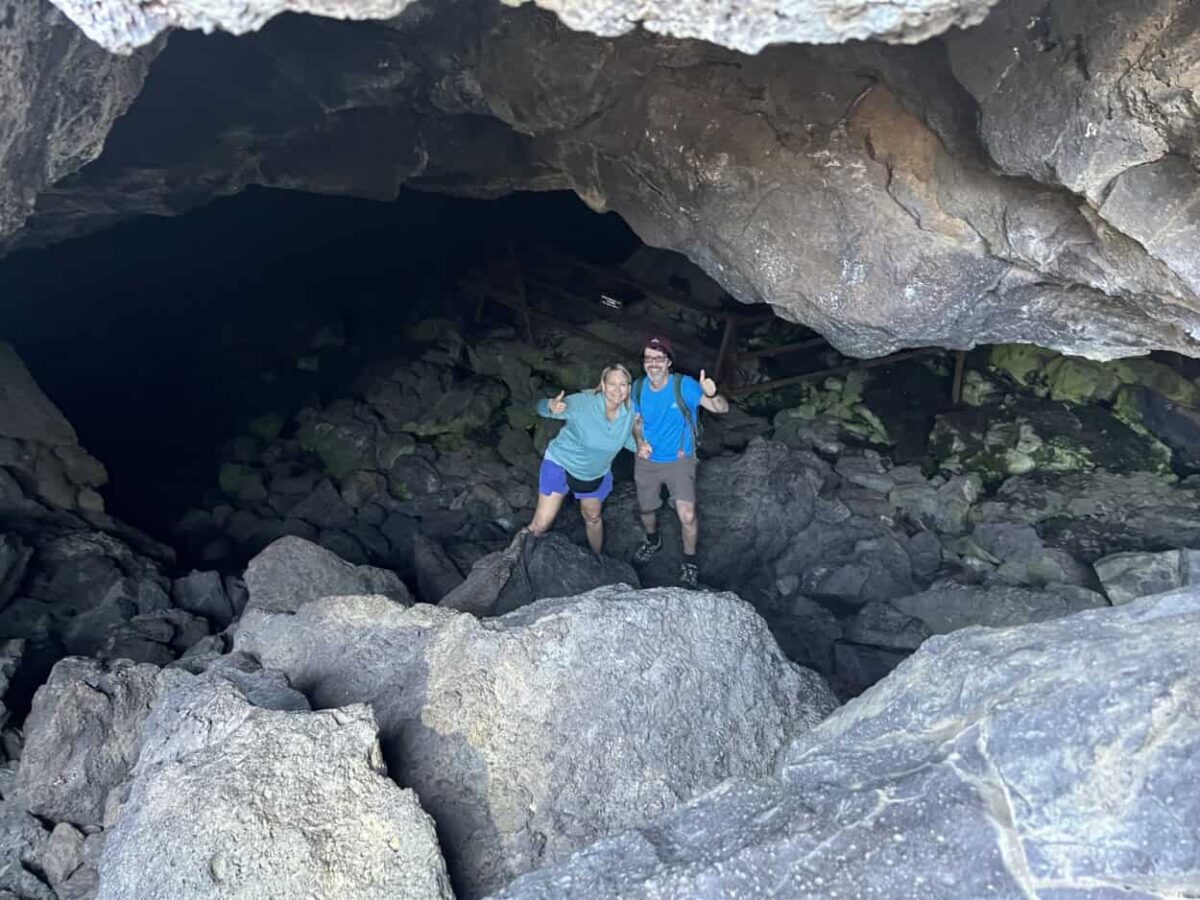
First, you will see Dewdrop Cave. It has an open, bouldered entrance where you can scramble into the cave. Entering the cave is not difficult, but it does engage your entire body in navigating the rocks.
Something about entering a cave makes you feel like an adventurous kid. Julie and I felt a sense of accomplishment after successfully climbing up and out of the cave. We hope you will find the experience enjoyable, as we did.
Indian Tunnel
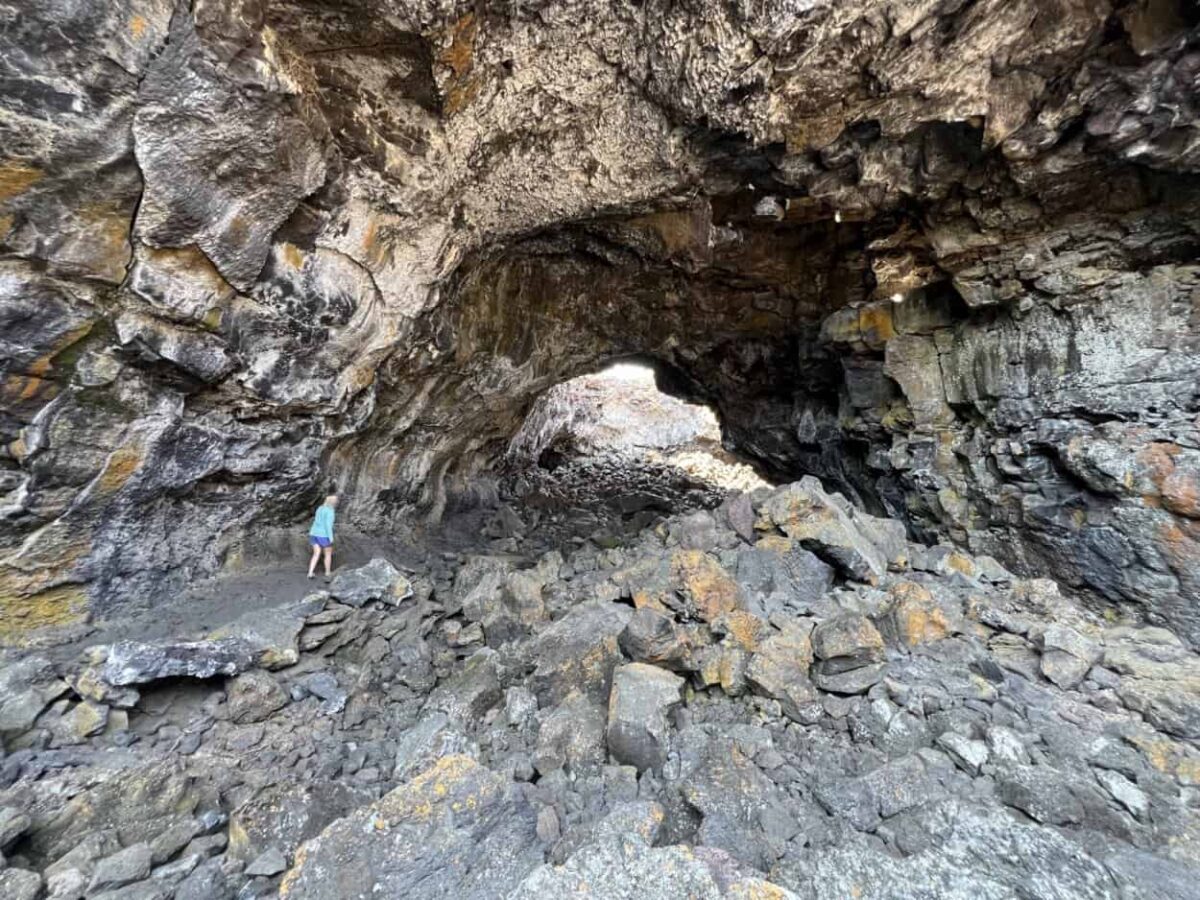
The second and more challenging cave is the Indian Tunnel. It is 800 feet long and has stairs at the entry. While exploring the cave is a lot of fun, it is essential that you pay attention to your surroundings. The surface is uneven and has many rocks of different sizes. You will encounter a very dark section where you may want a flashlight. We used ours, and it helped immensely.
The cave makes you feel small and is another reminder of how special this place is. We thoroughly enjoyed the experience.
To exit the cave, you must climb through a cramped hole—it sounds much worse than it is. Upon exiting the cave, you will see metal posts marking the way back to the cave’s entrance, where you can pick up the paved path back to the parking area.
Wildlife

Craters of the Moon National Monument and Preserve is home to mammals like bats, mule deer, pikas, yellow-bellied marmots, and pronghorns. While perched atop Inferno Cone, Julie and I spotted a mule deer walking across the lava fields far below us. We did not see any yellow-bellied marmots here but encountered a few in some of the other southern Idaho parks.
Near the Indian Tunnel, we spotted two new bird species (for us): a mountain bluebird and a violet-green swallow. Against the black terrain, both birds pop with bright colors. The park ranger I mentioned in the visitor center helped us identify the violet-green swallow. She was excited that we saw one.
Other Attractions
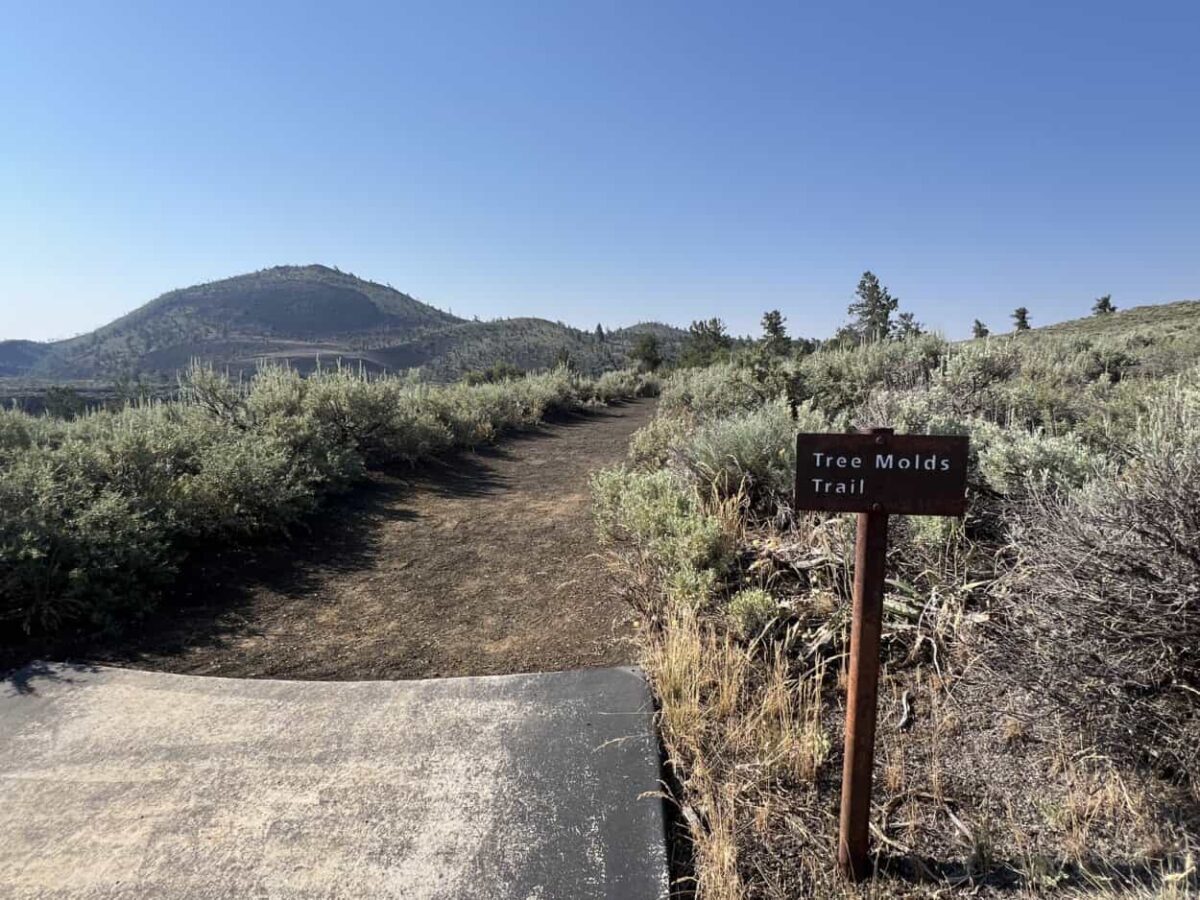
If you are a serious hiker or have additional time, Craters of the Moon has a few other attractions. Tree Molds Trail is a 2-mile round-trip hike through the Craters of the Moon wilderness, featuring molds of ancient trees encased in lava. Broken Top Loop Trail is a 1.8-mile round-trip trail with many different volcanic features. Wilderness Trail is an 8-mile round-trip hike that follows the Great Rift.
At night, the park transforms into a black canvas glittering with bright stars. Craters of the Moon earned its International Dark Sky Park certification in 2017.
Where To Eat

The park does not have any restaurants. For breakfast, lunch, or dinner, we suggest Pickle’s Place in Arco, a twenty-minute drive from the park. Julie and I stopped there for a late lunch.
The staff is friendly, and the food is delicious. I ordered a club sandwich. It may sound ordinary, but the restaurant serves it on a parmesan-romano roll instead of toast, which elevates the sandwich. Everything we had was fresh and tasty. All of the other dishes we saw looked fantastic. A broad smile on the face of every diner confirmed our evaluation.
Plan Your Adventure
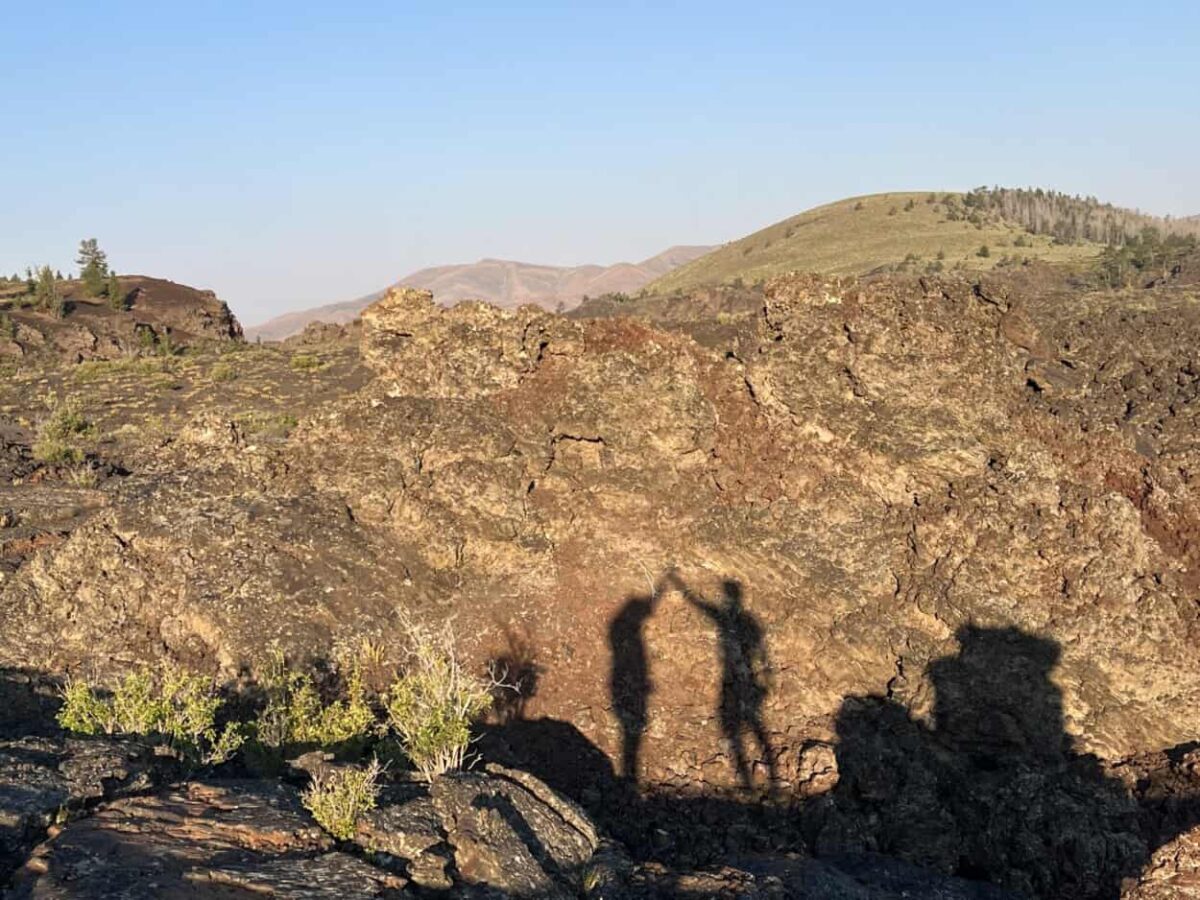
While Craters of the Moon National Monument and Preserve in southern Idaho may not be the moon, it feels like another world. It provides unique experiences like climbing a cinder cone, peering into a volcano vent, and navigating a lava tube cave. The national monument offers such a rewarding experience that it deserves national park status and a spot on your travel bucket list.
To help you plan the perfect visit, we’ve gathered all our tips, trail guides, and insider resources in one place — explore them at your own pace.
Featured image credit: Miles with McConkey