
It is natural to assume you can drive through or around a national park to experience all it offers. Theodore Roosevelt National Park breaks the mold with three disconnected park units. However, one of those park districts draws far more visitors than the others. So, why is Theodore Roosevelt National Park South Unit so popular, and what can you expect during your visit? The North Dakota Department of Commerce invited Julie and me to explore the park to answer this question.
Disclosure: This post may contain affiliate links. If you make a purchase through one of these links, I may earn a small commission at no additional cost to you. Thanks for keeping Miles with McConkey going!
Making Sense of the Three Park Units
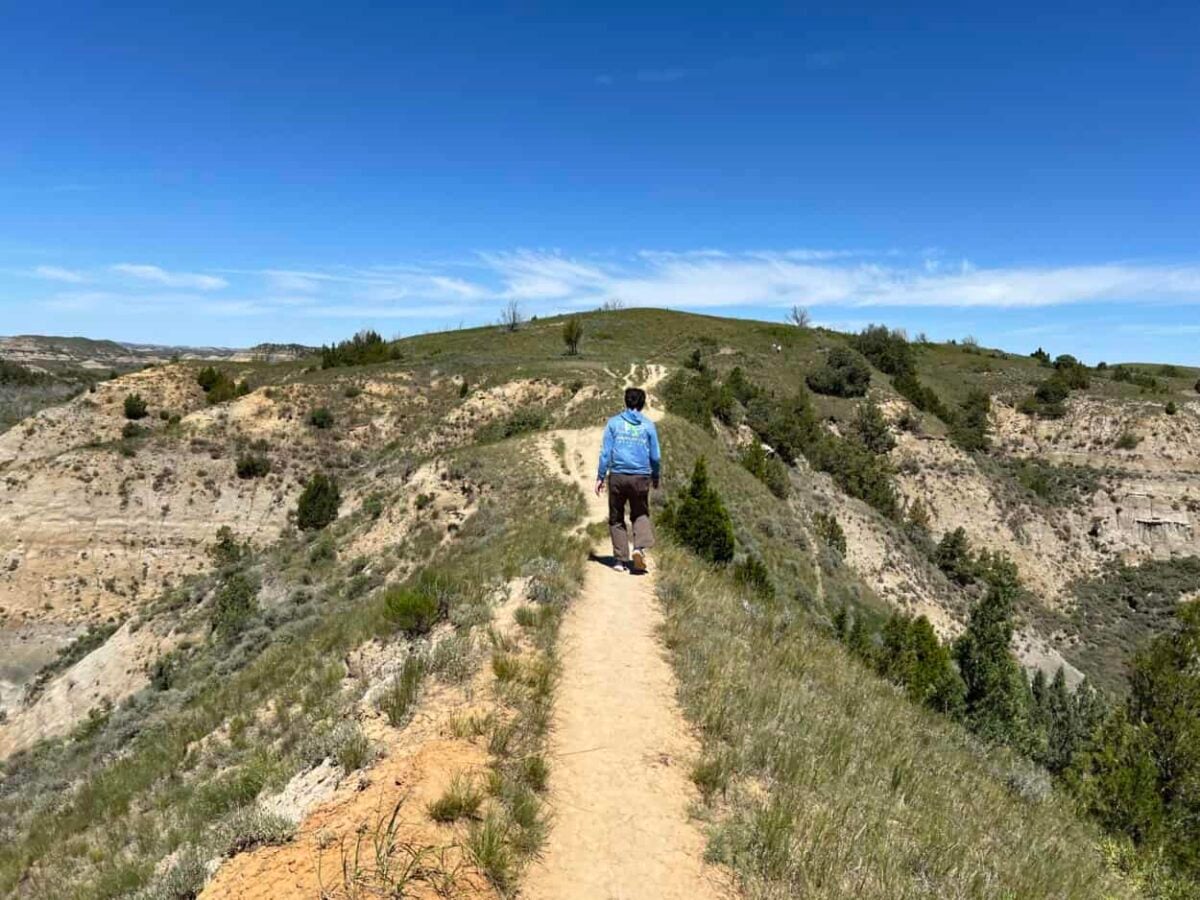
Theodore Roosevelt National Park has three districts: Elkhorn Ranch Unit, North Unit, and South Unit. Elkhorn Ranch offers an opportunity to see the historical site of Theodore Roosevelt’s home ranch after his wife and mother passed away. The park unit lacks scenic drives and hiking trails, focusing more on history and appreciating nature’s solitude. With an hour’s drive or more on unpaved roads, it is not surprising that Elkhorn Ranch is the least-visited park unit.
A 68-mile drive separates the two primary districts. While the North Unit sits near Watford City, the South Unit’s gateway town is Medora. Both districts offer hiking trails, scenic drives, and wildlife.
The Secret Goes Beyond Location

Regarding National Park Service visitation numbers, Theodore Roosevelt National Park typically finishes in the middle of the pack. But why does the South Unit receive the most visitors within its three park districts?
In many cases, it is merely a matter of logistics. Travelers regularly visit Theodore Roosevelt National Park as part of a road trip that includes Yellowstone National Park or South Dakota’s Mount Rushmore and Badlands National Park. Most people feel that visiting the South Unit is enough or assume that they have seen everything there is to see.
While Julie and I love the South Unit, the North Unit offers enough unique attractions to make it worth your time. We suggest visiting both.
Beyond its location, Theodore Roosevelt National Park South Unit provides memorable experiences. Plus, the gateway town of Medora is a magical experience in its own right. We will cover vital park information and then guide you through the park’s highlights and gateway town so you can make the most of your adventures in the North Dakota Badlands.
Time Zones
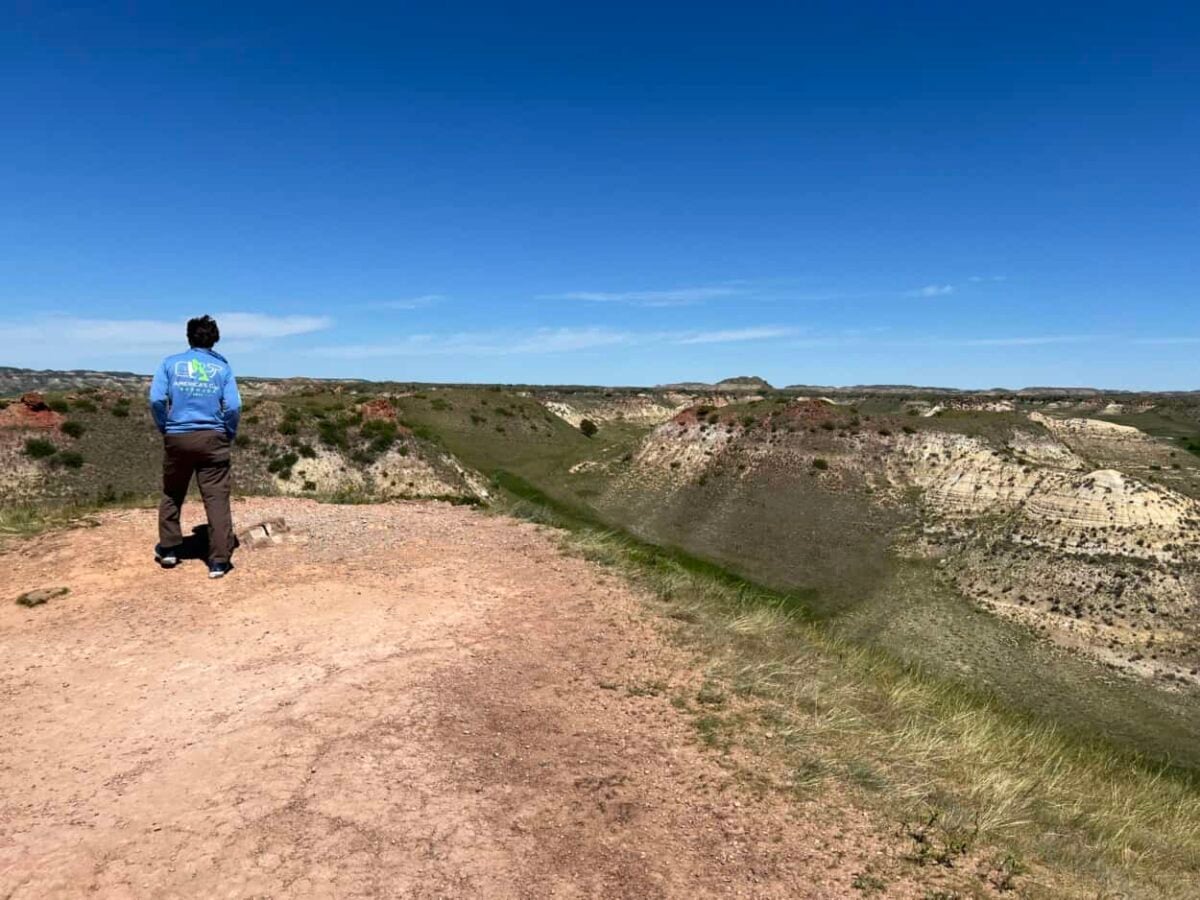
It is essential to note the South Unit is in the Mountain Time Zone, and the North Unit is in the Central Time Zone. If you plan to visit both sections on the same day, we recommend starting in the North Unit to gain an hour when you arrive in Medora.
How Much Time Do You Need?
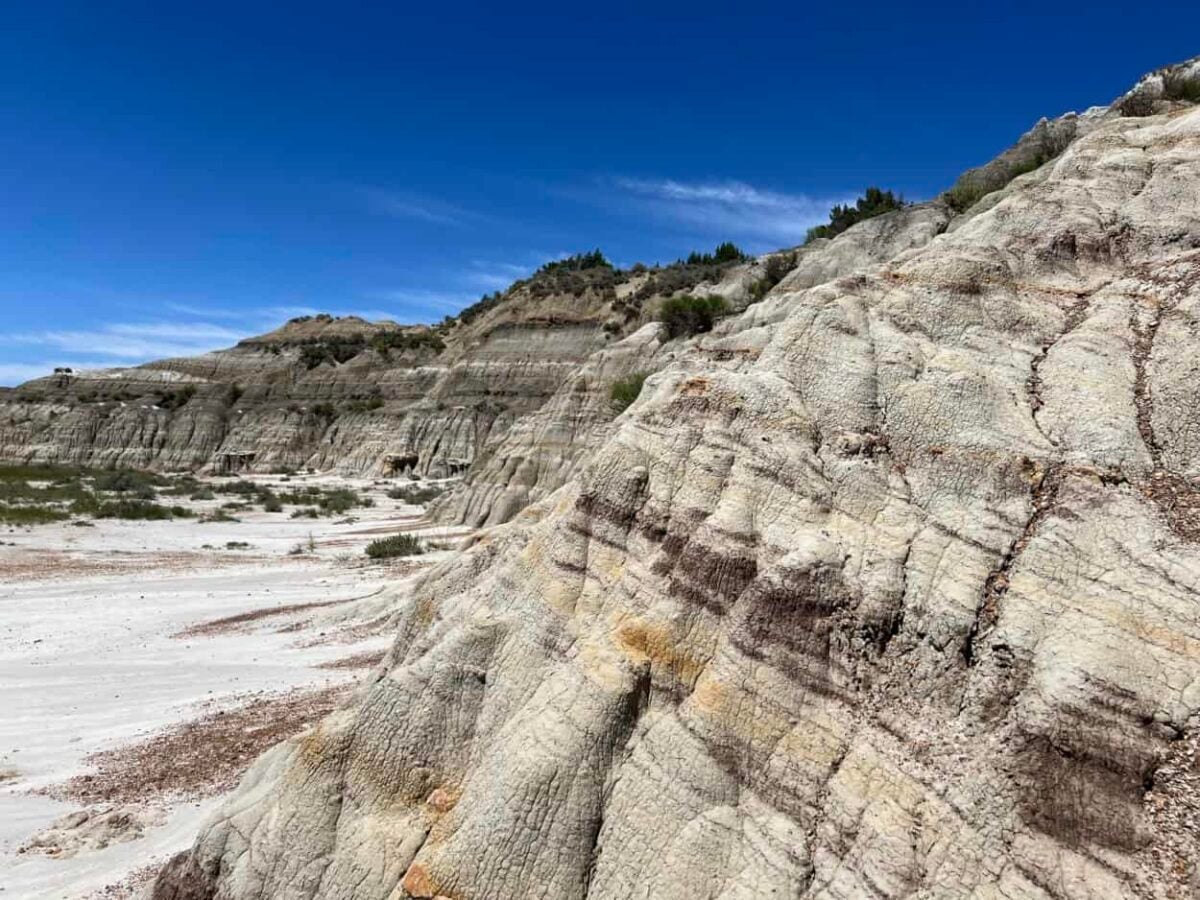
A half-day to a full day in the South Unit should be sufficient if your primary objective is to complete the scenic drive and spot wildlife. You can also manage a short hike in that time frame. Julie and I visited the North and South Units on the same day, completing a couple of short hikes and spotting tons of wildlife. It was quite an adventure and something we will never forget.
If you prefer longer hikes to see more of the park, plan to spend a whole day or more in each park district.
Getting There
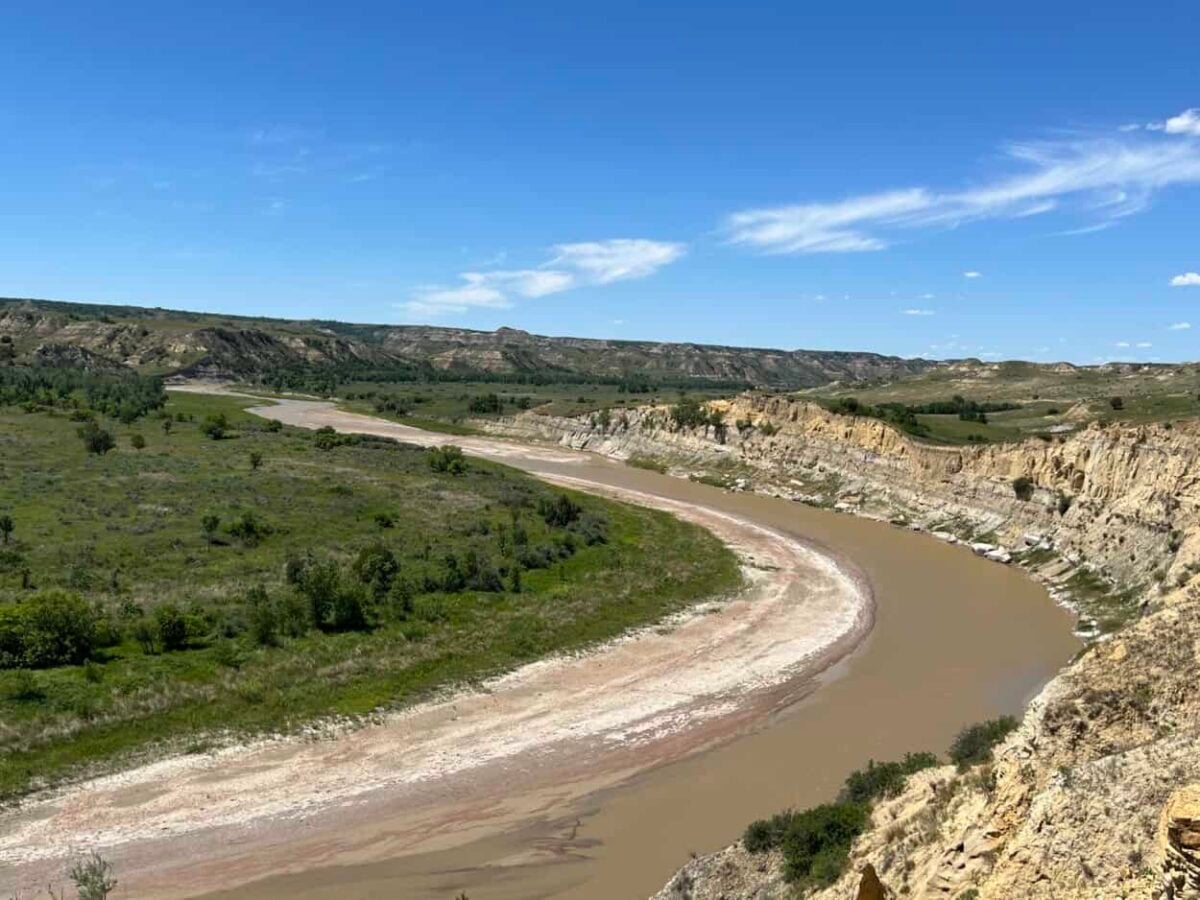
The South Unit sits about 27 miles east of the Montana state line and 33 miles west of Bismarck. You can access the South Unit park entrance from exits 24 and 27 on Interstate 94. Input this address for GPS directions: 201 East River Road North, Medora, ND 58645.
Weather
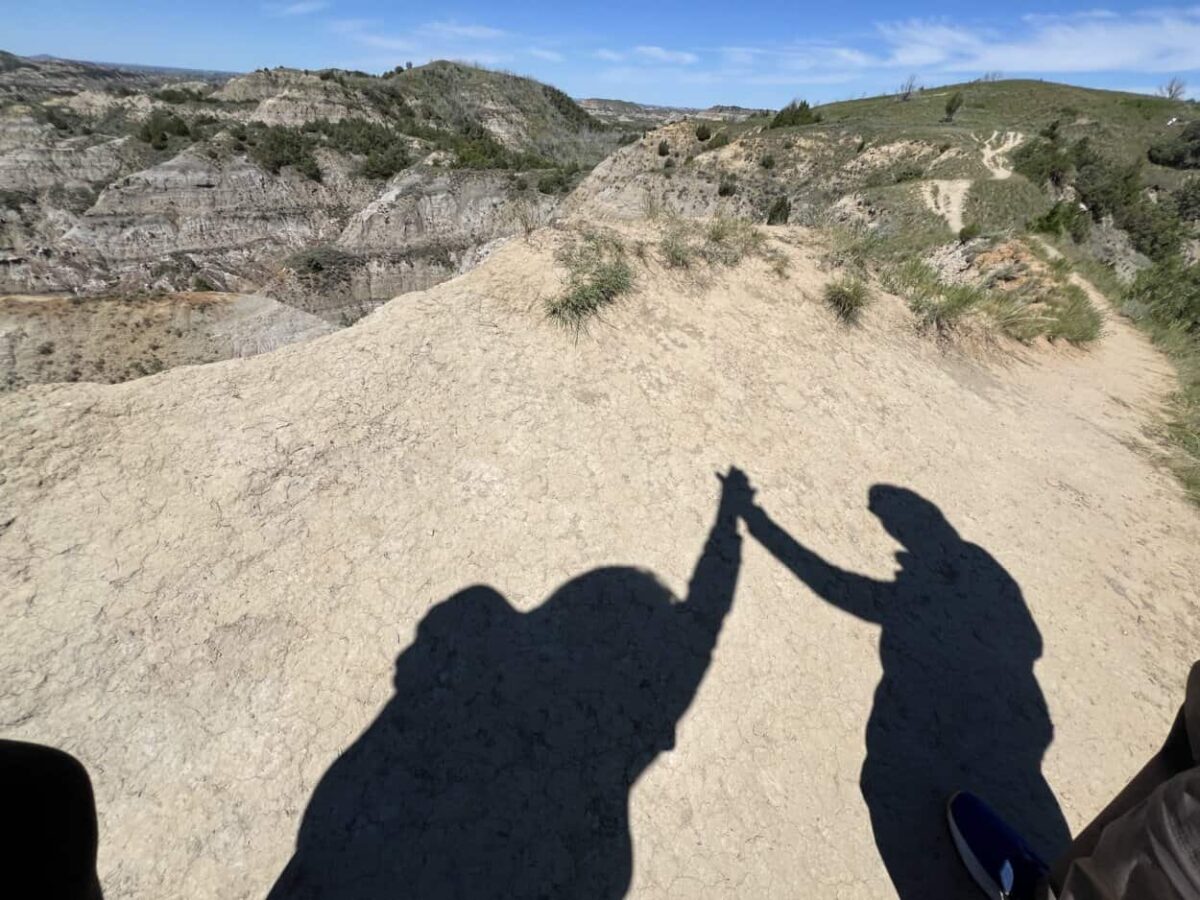
I must warn you to expect strong winds regardless of what season you visit. While Julie and I experienced 17-mile-per-hour winds during our visit, a park ranger advised us that wind speeds regularly exceed that.
Summer temperatures typically top out in the 70s or 80s, and winter usually has lows in the single digits. We recommend packing layers regardless of the season. You may want a windbreaker, even in summer. Gusty conditions can stir up dust, so we suggest wearing sunglasses to protect your eyes.
Please do not let the weather deter you from visiting. With all the park offers, it is worth it.
If you’re deciding when to go, our guide to the best time to visit breaks down seasonal weather, wildlife activity, and crowd levels so you can plan a trip that matches your style.
Hours of Operation and Entrance Fees
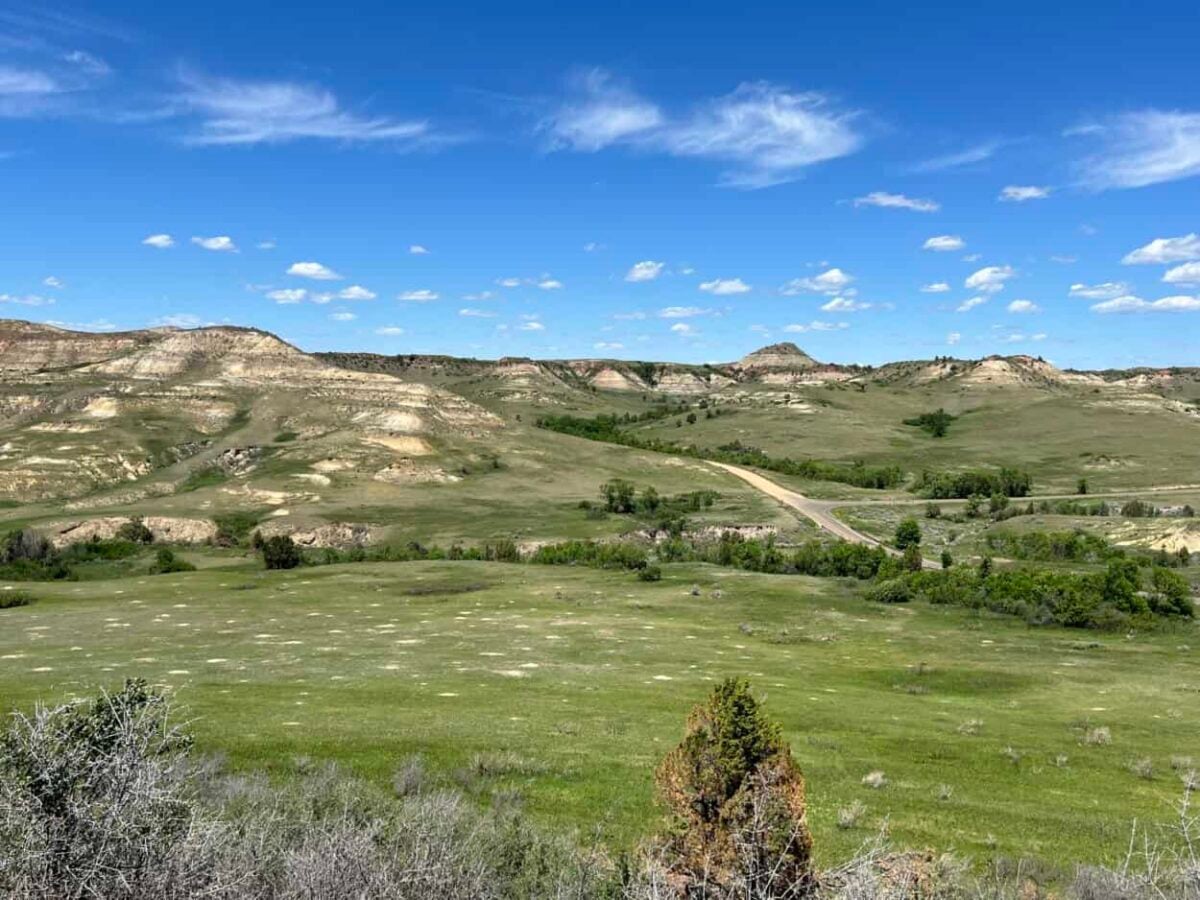
Theodore Roosevelt National Park South Unit is open 24 hours a day, seven days a week.
Park admission is $30 per vehicle, or you can buy an annual pass for $55. Another option is to purchase an America the Beautiful annual pass for $80, valid at all United States national parks.
Now that we have covered essential park information, let’s explore the park’s highlights.
Painted Canyon
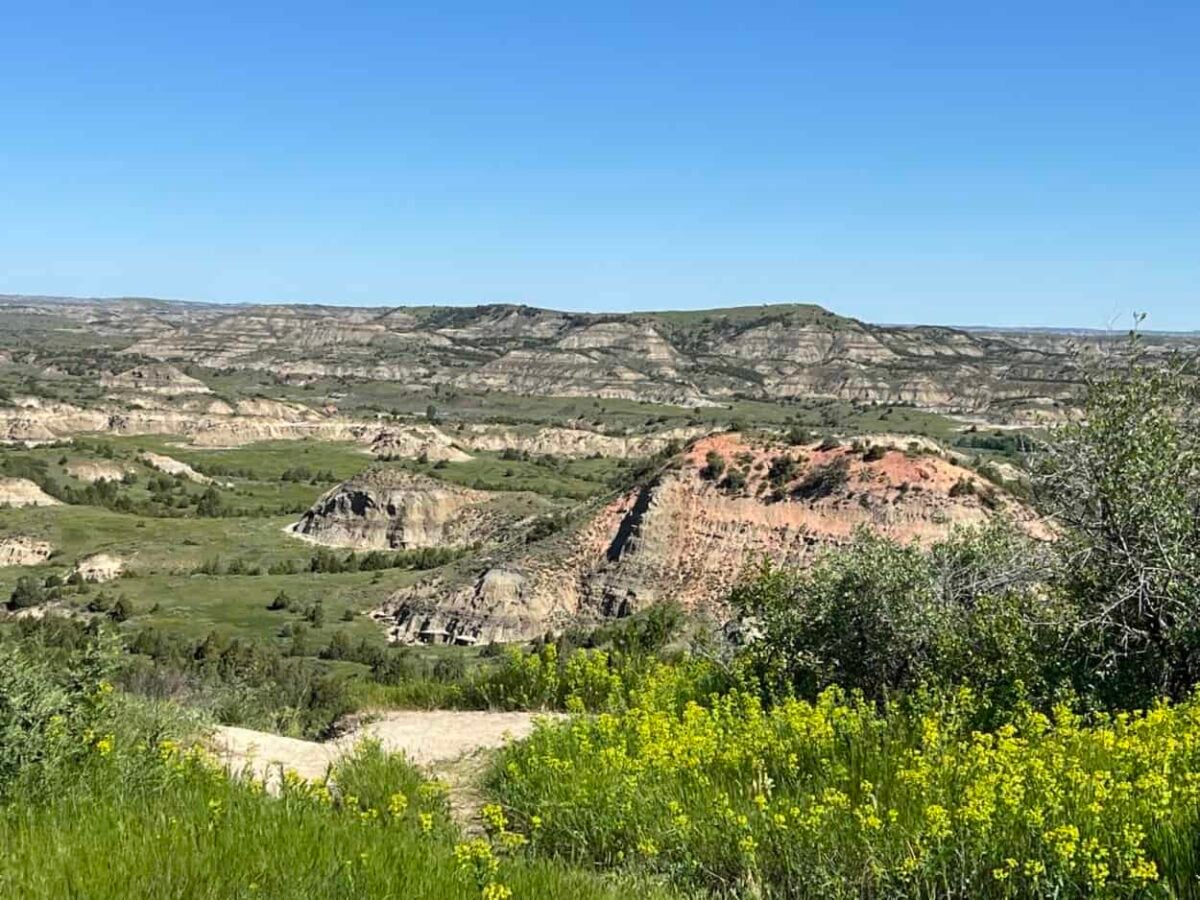
On your way into the park, take exit 32 from Interstate 94. Here, you will find the Painted Canyon Visitor Center and restroom facilities. Many visitors treat this as a rest stop before exploring the South Unit.
Park rangers are on hand to provide guidance, and the center has some excellent exhibits. Behind the Visitor Center, you have panoramic views of Painted Canyon and access to hiking trails. We enjoyed the sweeping views of the sprawling striated badlands, a precursor for what lies ahead.
Visitor Center and Maltese Cross Cabin
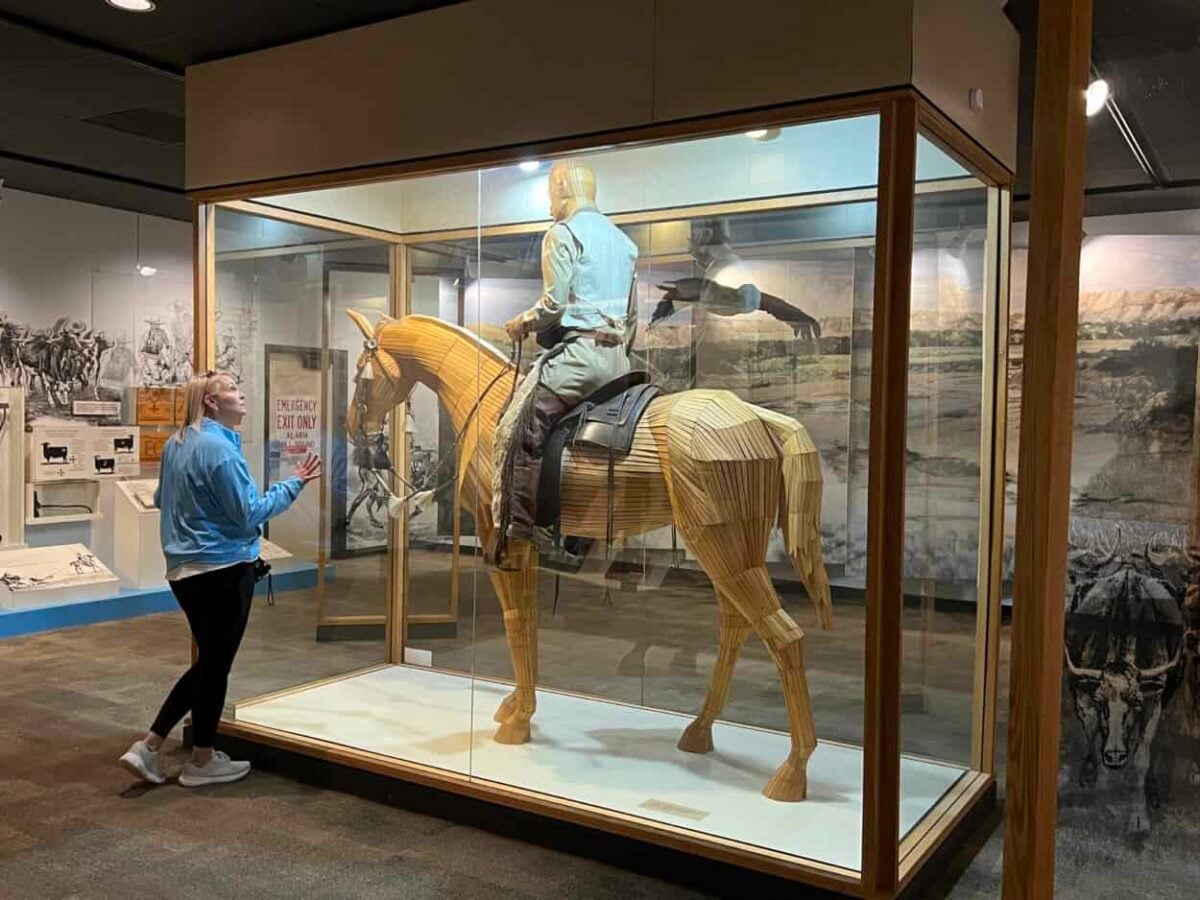
The South Unit Visitor Center sits just inside the park entrance and is worth your time. While the North Unit’s Visitor Center is small, the South Unit is more extensive, functioning as a welcome center, gift shop, and museum. You can watch a film and explore exhibits on the area’s geology and Theodore Roosevelt’s presidency and time in the Badlands. Park rangers can answer questions and offer guidance to help you plan your day in the park.
Behind the Visitor Center, you will discover the Maltese Cross Cabin, Theodore Roosevelt’s temporary home in his mid-20s, when he split time between his New York City home and his two Dakota Territory ranches. While self-guided tours are available year-round, you can take a ranger-led tour of the cabin in summer.
Scenic Loop Drive
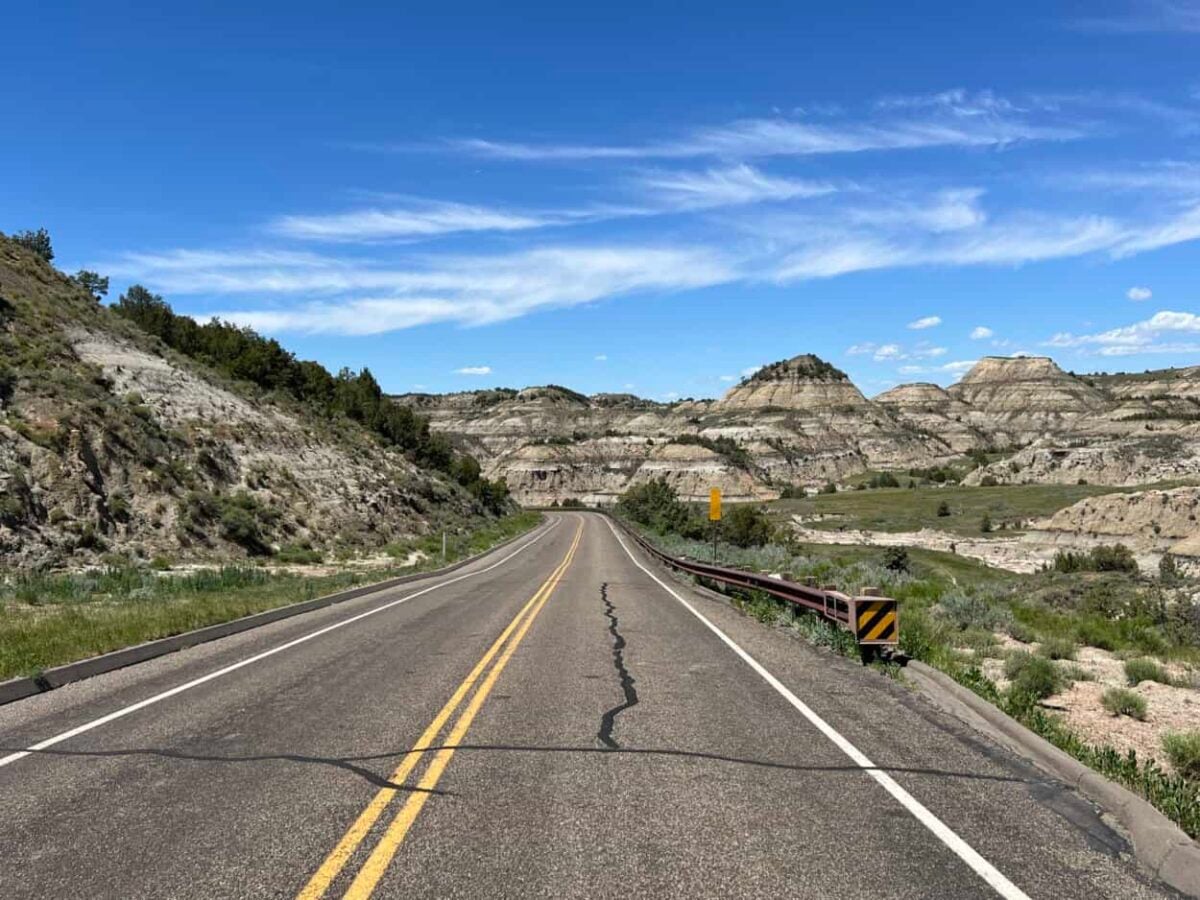
As a directionally challenged person, I love how easy it is to navigate Theodore Roosevelt National Park South Unit. There is only one road, a 36-mile loop called Scenic Loop Drive, so you cannot get lost. To make matters easier, mile markers along the paved road note your progress. You will discover numerous pullouts with overlooks and exhibit panels so you can learn about the park while savoring the views.
During our visit, Scenic Loop Drive was closed between Miles 22 and 28, so we had to drive it as a 22‑mile out‑and‑back for a total journey of 44 miles. Despite the construction, we were still able to see the park’s primary attractions and plenty of wildlife. The full loop reopened on November 25, 2025, so future visitors can once again enjoy the complete 36‑mile drive.
Bison
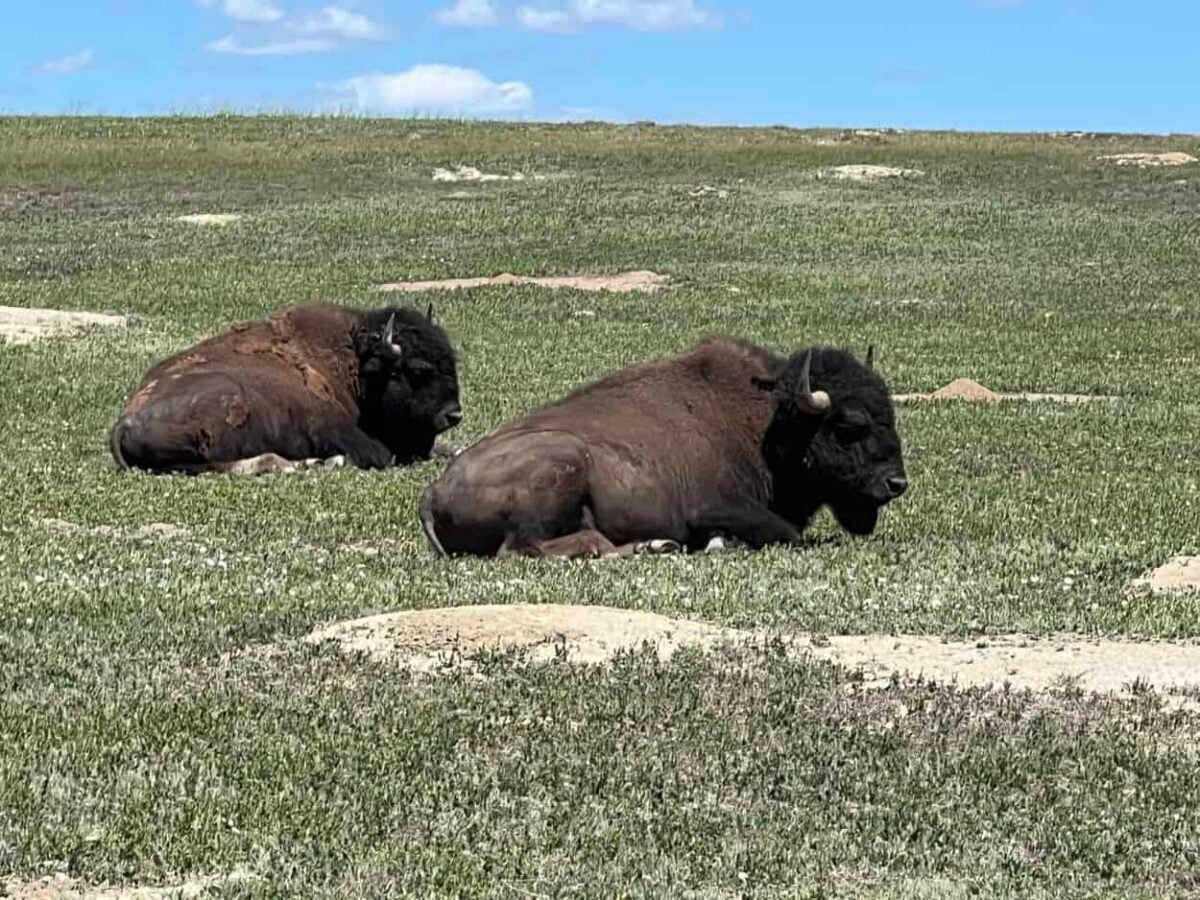
Beyond the otherworldly badlands, many visitors aim to observe wildlife in Theodore Roosevelt National Park. Bison and wild horses top the list for most. The good news is that many guests spot bison simply by driving through the park.
Bison roam throughout the entire South Unit and may be anywhere. When I say anywhere, I mean it. Stay alert as you drive. Julie and I encountered bison many times, either on the road or along its side. They may appear as large herds, lone bison, or pairs.
Seeing these massive mammals is an absolute thrill. Remember to be respectful and give them space.
Wild Horses
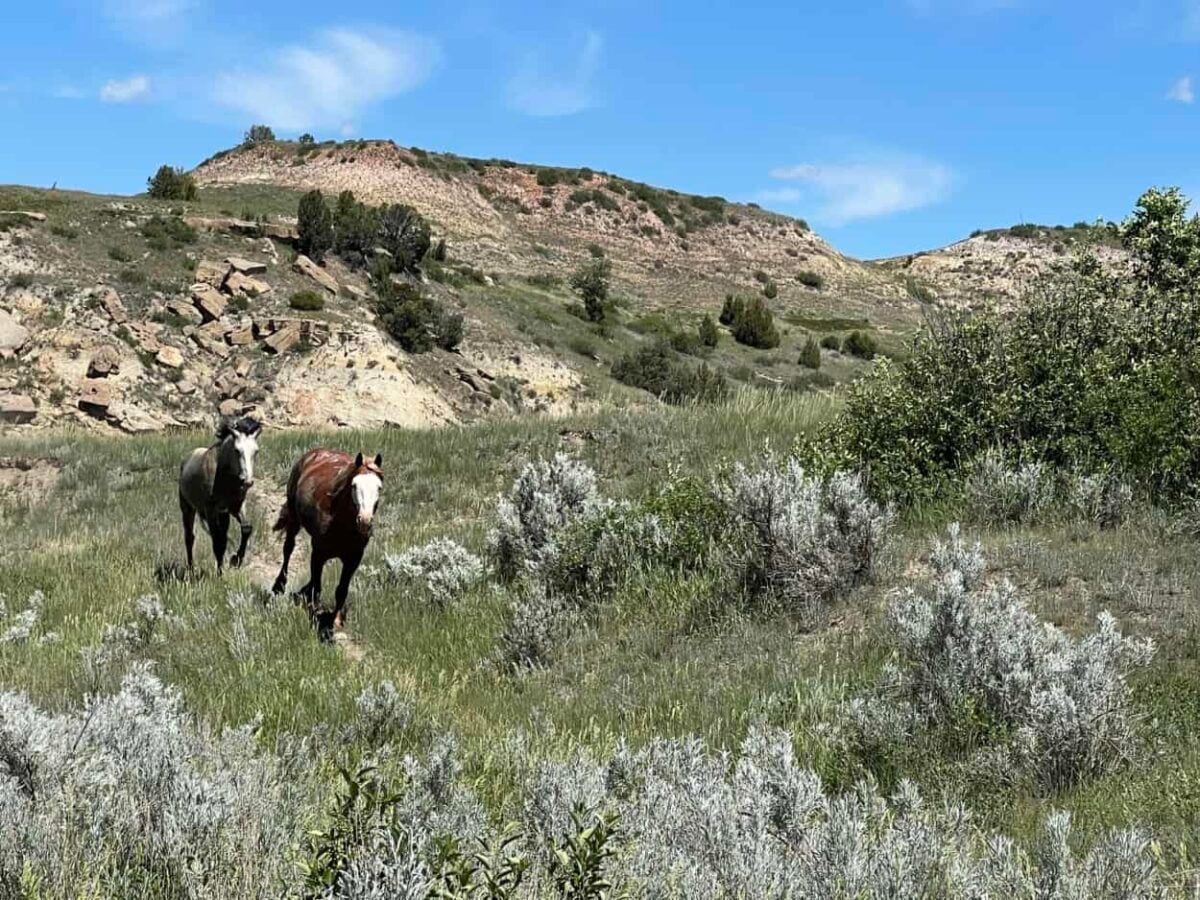
Although wild horses do not inhabit the park’s North Unit, the beautiful animals run freely throughout the South Unit. Two ran right past our car as we drove through the park. They caught us off guard, giving us a shock and a lifelong memory.
Seeing a wild horse is possible but may require more patience and a bit of luck. They often head toward the park’s interior to avoid people. With that said many guests spot them driving through the park. Carefully scan the horizon as you drive and look for water sources. We spotted our wild horses near Paddock Creek.
Other Animals
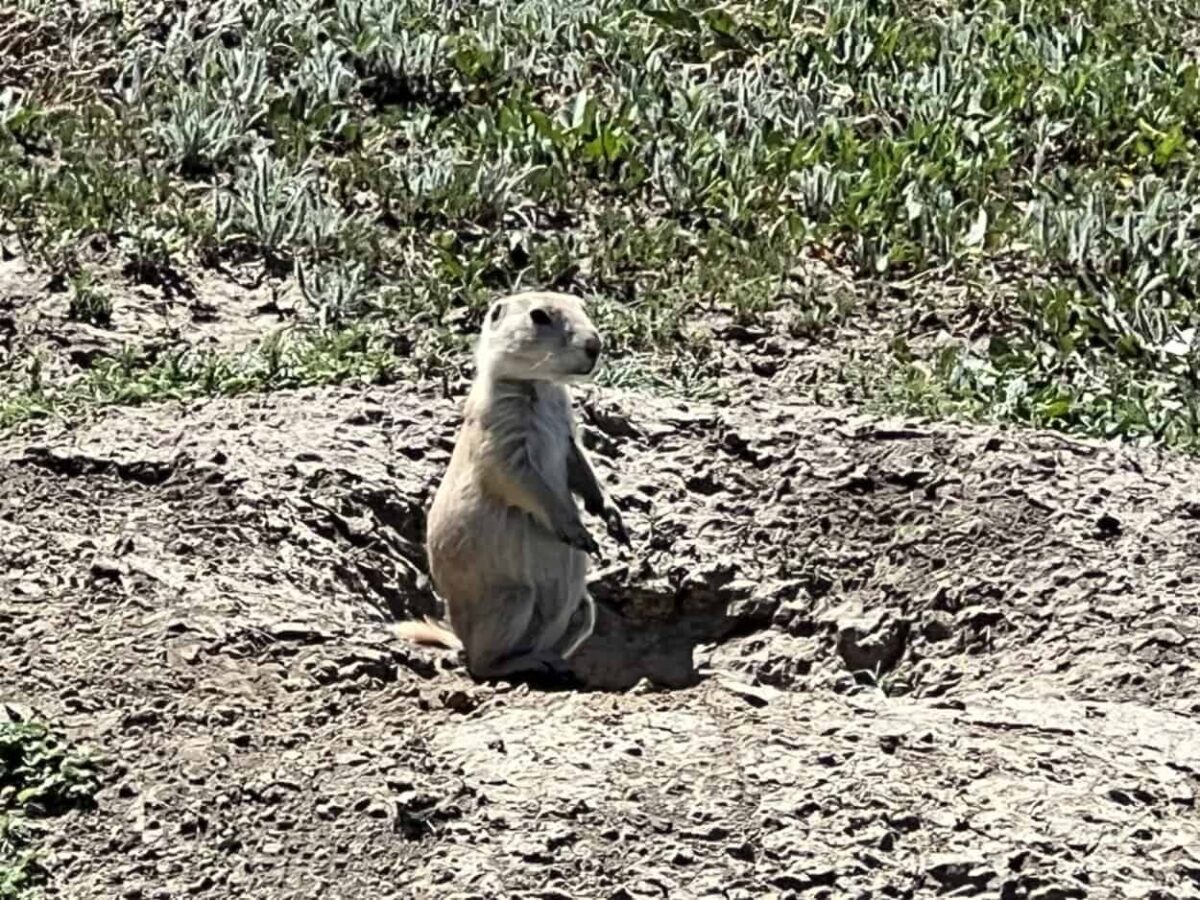
Many other animals, including prairie dogs, elk, and pronghorns, inhabit the park. Prairie dogs are easy to find. Driving through the park, you will pass a few prairie dog towns. Just look for mounds of dirt in the grasslands. The cute critters will tug at your heartstrings as they chatter to one another, dig in the dirt, and pop their tiny heads out of their burrows to see if you are still watching.
Like wild horses, you can only see elk in the South Unit. Admittedly, elk are challenging to find. Some visitors spot them in the South Unit’s southeast corner near Buck Hill or Painted Canyon. While we did not see one in the park, we spotted one in Medora. More on that in a moment.
Although you can see prairie dogs any time of day, your best chances of elk and pronghorn sightings are in the early morning or late evening. We saw a pronghorn along the Little Missouri River. Visitors regularly spot them grazing in the grasslands.
Wind Canyon Trail
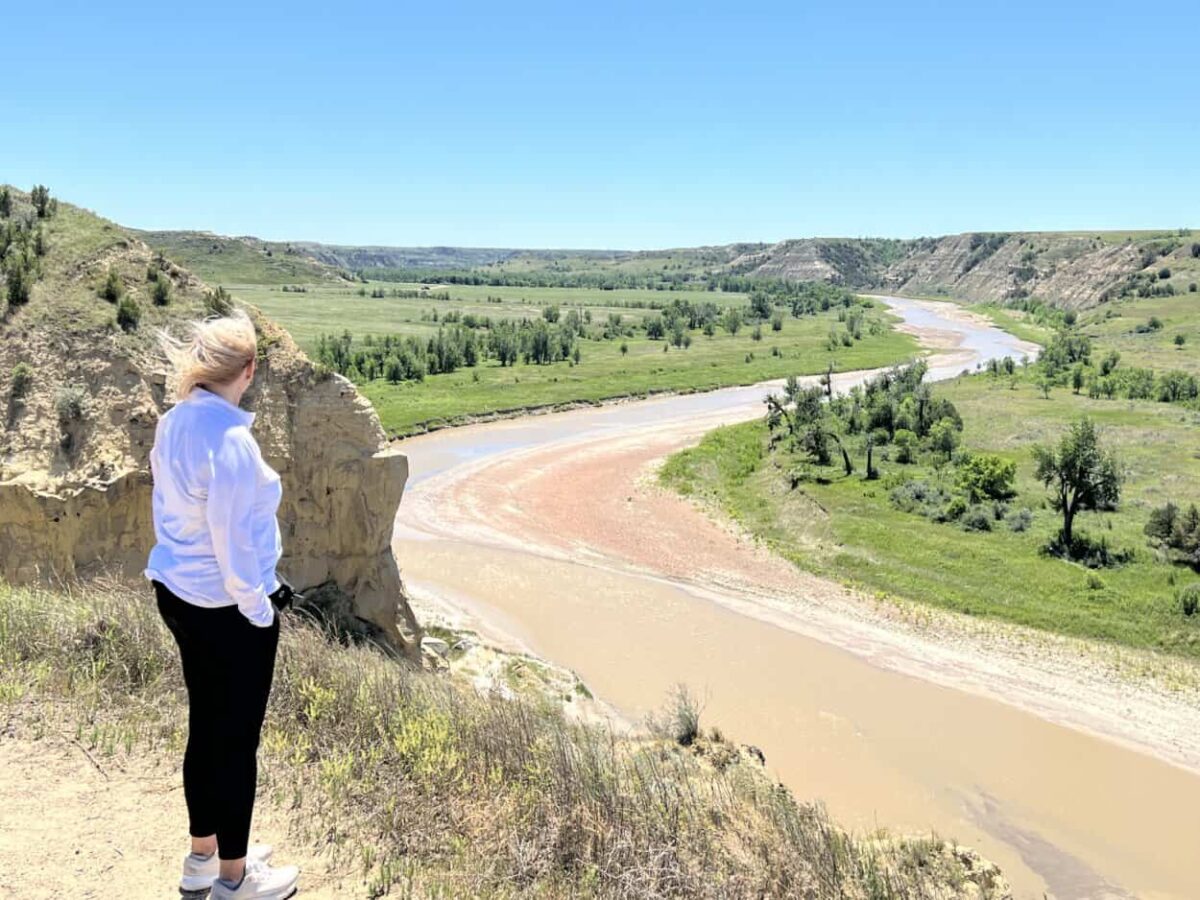
Often photographed as the iconic shot of North Dakota, Wind Canyon is a must-see attraction in the South Unit. A 0.4-mile hike yields sweeping views of the Little Missouri River snaking through the valley. Vegetation spreads across the floor, eventually giving way to striped badlands on the horizon. It is breathtaking.
If you look closely along the river, you may see wildlife. Julie and I spotted our pronghorn here.
The trail includes an optional steep climb to the top of the ridge. We enjoyed the vantage point from here, finding it worth the effort. While the Wind Canyon Trail provides stunning views at any time of day, it is an excellent spot for watching sunset.
Boicourt Trail

A 0.3-mile out-and-back hike, Boicourt Trail provides a vantage point above the vast prairie. The first part is paved, eventually leading to a dirt path to the top of a hill.
Stay alert for wildlife. Visitors often spot bison herds or wild horses in the prairie. Julie and I saw a small herd of bison, but in our case, they were near the road. The spot is also great for observing the sunset.
Buck Hill
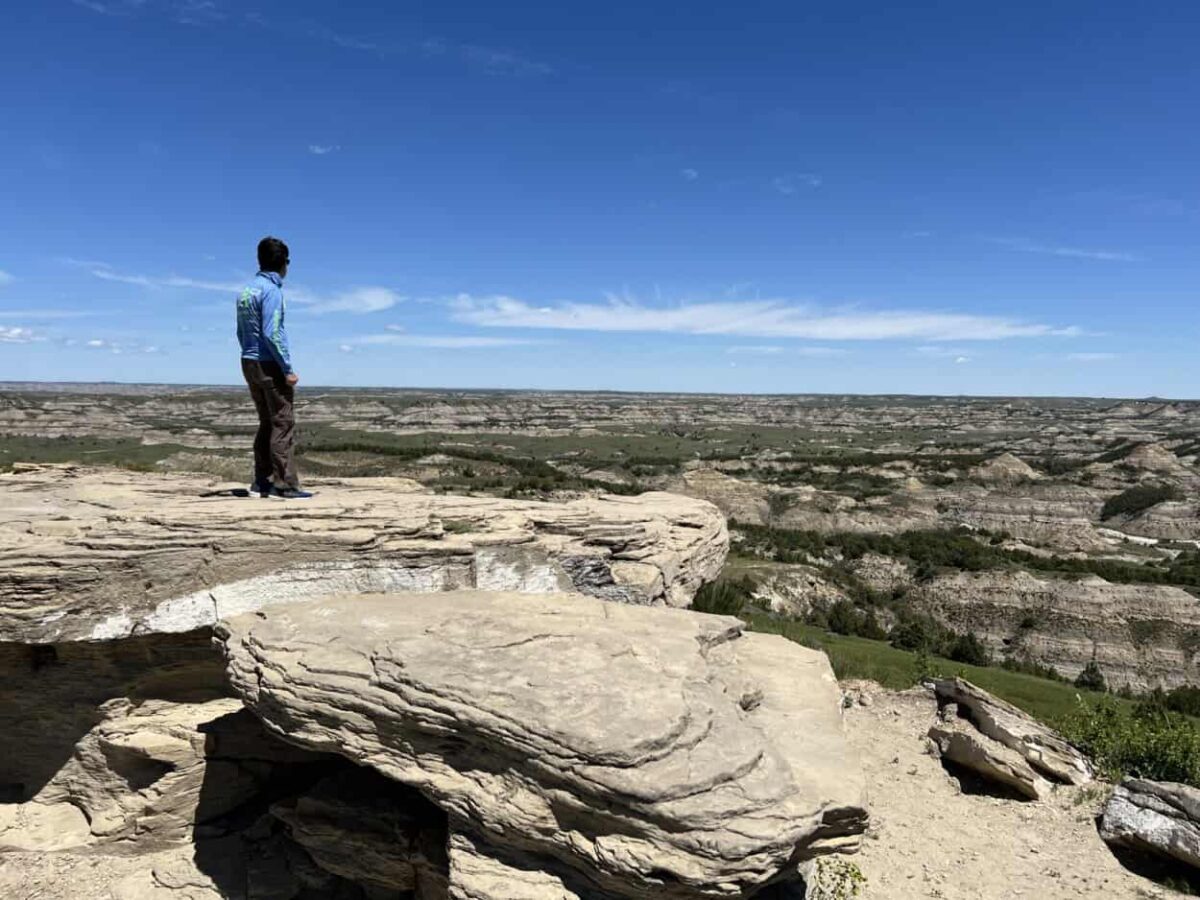
Although Buck Hill is a short 0.2-mile out-and-back hike, it is steep. It is one of the park’s highest points and worth the huffing and puffing you will experience during the climb. While the entire path is on an incline, the first section is paved, and the second half comprises steps. At the top, you will find a natural rocky platform, perfect for pictures and savoring views of the grasslands and badlands.
I mentioned the park is regularly windy, but we especially noticed the gusts here. Be mindful of this when capturing photos on the uneven rocky platform.
Skyline Vista
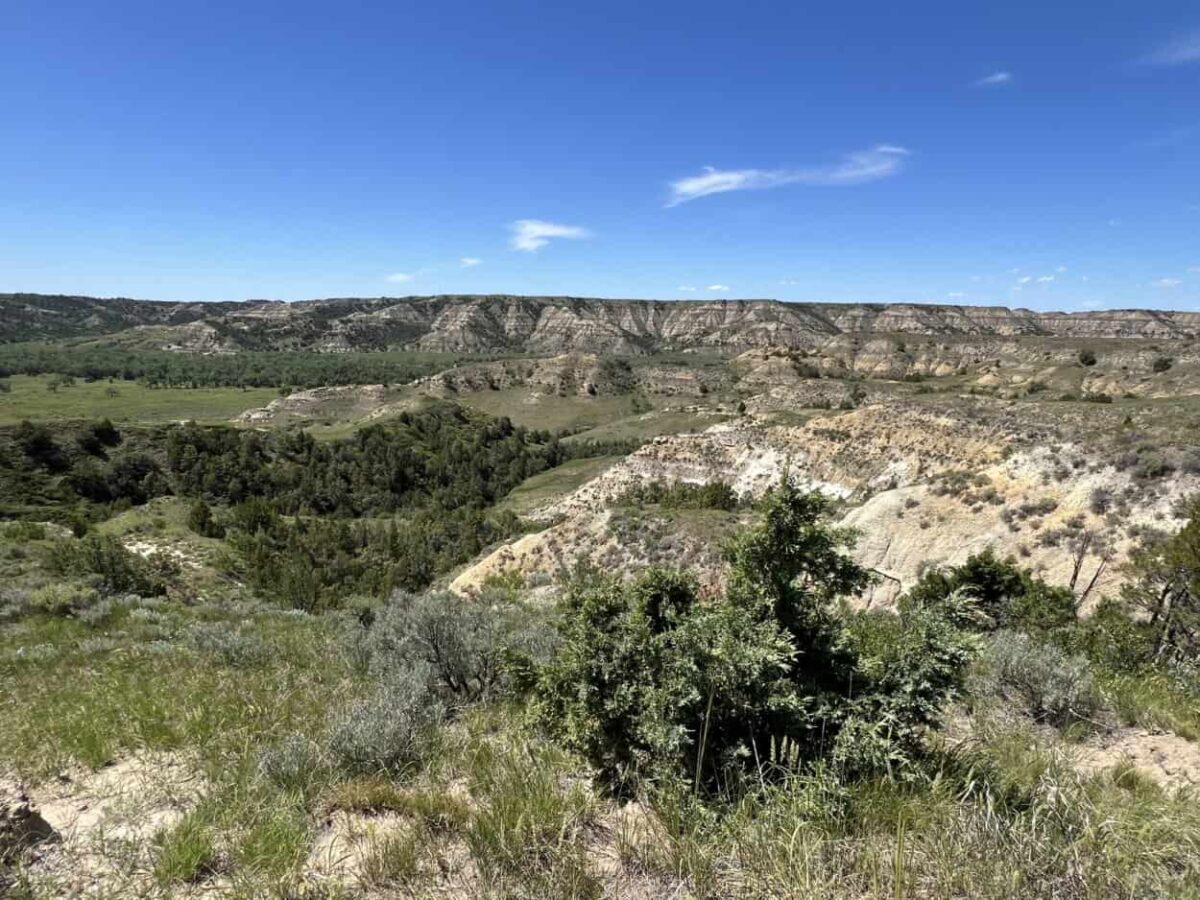
A level paved 0.2-mile out-and-back hike results in lovely views of the Little Missouri River, grasslands, and badlands. Despite Theodore Roosevelt National Park’s rugged landscapes and exotic wildlife, it is surprisingly accessible. With cars driving along the highway in the distance, Skyline Vista represents this irony perhaps more than any other spot in the park. I could not help but chuckle at the contradiction as I surveyed the scene.
While we did not see any wildlife here, visitors regularly spot animals from the overlook.
Peaceful Valley Ranch
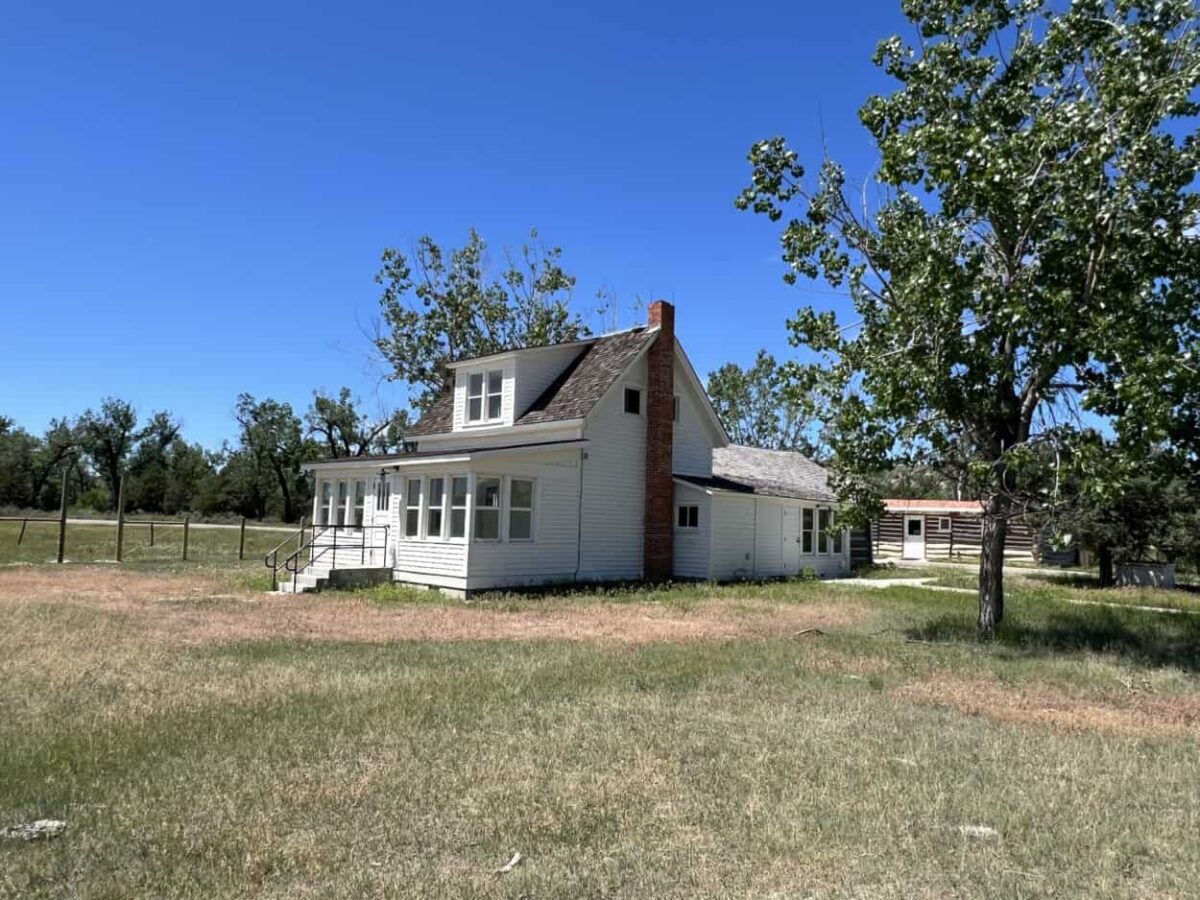
The Peaceful Valley Ranch contains the only remaining original ranch house in Theodore Roosevelt National Park South Unit. If you enjoy history, it is worth a quick stop.
Its complex was a ranch in the late 1800s, a dude ranch in the 1920s, the Civilian Conservation Corps (CCC) and the Works Progress Administration (WPA) headquarters in the 1950s and 1960s, and a hub for guided horseback rides from the late 1960s until 2014. The ranch house, along with two other surviving buildings, is on the National Register of Historic Places.
Longer Hikes
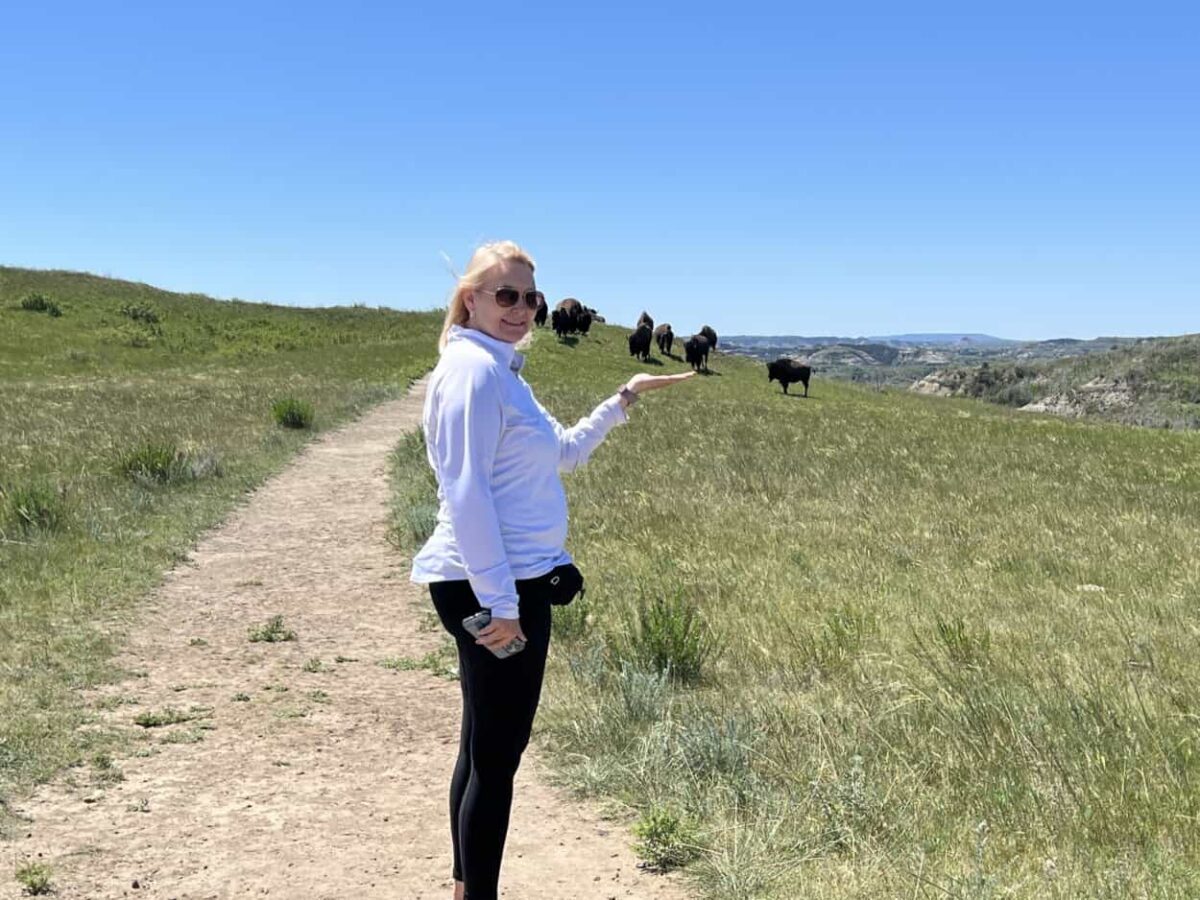
The South Unit offers several options for those who want a more in-depth experience than the scenic drive and short walks from its pullouts. Two stand out in particular.
The Petrified Forest Loop is a 10.4-mile hike in the South Unit’s remote northwest corner. It takes you through ancient petrified forests and badlands wilderness. The park houses America’s third-highest concentration of petrified wood. For curious minds, Petrified Forest National Park in Arizona boasts the world’s highest concentration of petrified wood.
The famous Maah Daah Hey Trail spans 140 miles through steep clay badland buttes and rolling prairies between all three park units. You can hike an 8.4-mile section in the South Unit. Please note this figure is one-way, so your trek will be 16.8 miles. Many consider the Maah Daah Hey Trail North Dakota’s best-kept secret. Those who endeavor this section of the trail get rewarded with breathtaking views and the experience of a lifetime.
Where To Stay
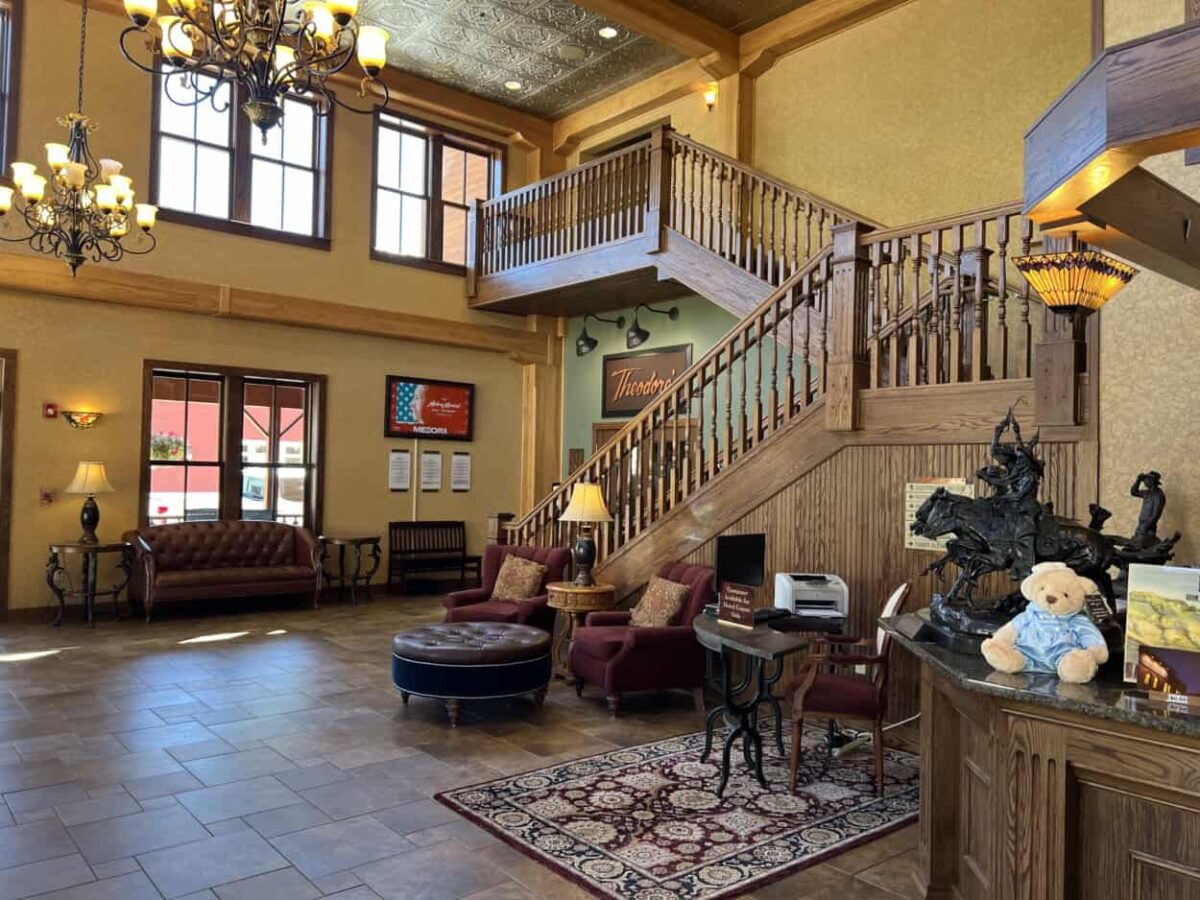
We stayed at the Rough Riders Hotel in Medora, the South Unit’s gateway. The hotel is less than a minute’s drive from the park’s entrance. As soon as you enter the charming town, you get transported to the Old West, with cute shops and history filling the streets and badlands painting the horizon.
Julie and I are impressed at how the walkable town managed to maintain its identity and charm without catering to mainstream commercialization. It is challenging to fathom a year-round population of barely over 100 and a summer population of more than 500.
The hotel theme honors Theodore Roosevelt and the Old West from the lobby to its rooms. It is a refreshing change of pace. The staff is as friendly as it gets, and you will find places to kick back and relax with a drink outside on the deck or a hearty meal inside the hotel restaurant. After exploring the park, it is the perfect place to recount the day’s adventures.
Medora Musical

The area offers many things to do, from shopping to exploring history and nature. If you visit in summer, the Medora Musical is a must. Everybody we met, and I mean everybody, asked us, “Did you go to the musical?”
The family-friendly musical is unlike anything we have seen and is as much a part of the local culture as the national park. It honors the namesake town, its people, Theodore Roosevelt, and the American spirit. Variety acts, including singing, dancing, a band, and live animals, take center stage at the Burning Hills Amphitheatre. You will walk away with a warm heart and a lifelong memory.
Before the show, an elk grazed on the hilltop, emblazoned with the town name. Seeing the beautiful animal made us smile and reminded us how special this place is.
Where To Eat
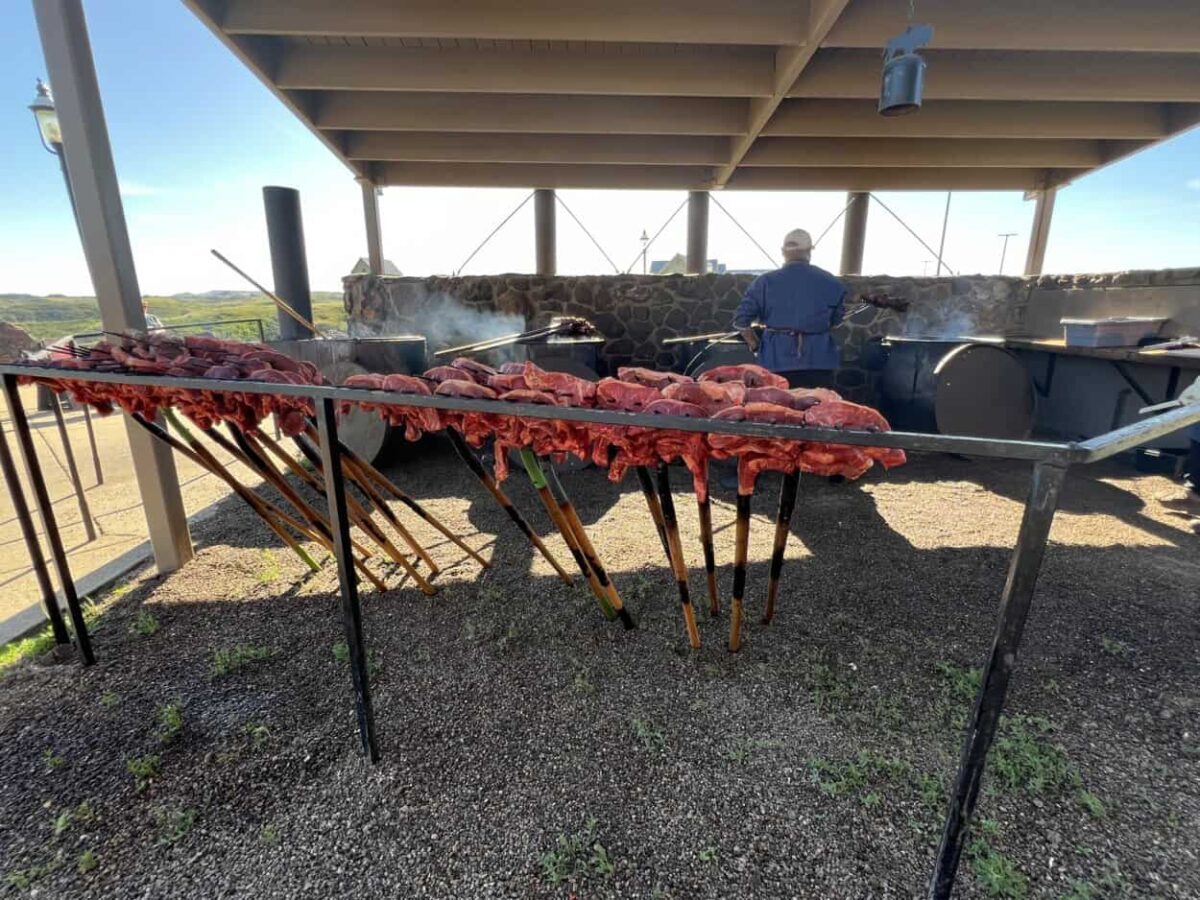
Julie and I had two wonderful dining experiences in Medora that we want to share. If you attend the musical, do yourself a favor and go to Pitchfork Steak Fondue. Not only is it a unique experience, it sits next door to the Burning Hills Amphitheatre.
Cowboy chefs use pitchforks to fondue New York Strip steaks in barrels of oil at an outdoor North Dakota-style family picnic. The venue yields spectacular views of painted badlands and rolling grassland prairies. Pair your medium-well steak with your favorite barbecue-style buffet sides, such as baked beans, fruit, baked potatoes, garlic toast, coleslaw, and vegetables. For dessert, you can choose a brownie or cinnamon-sugar donuts. Julie and I enjoyed the tasty food in the fresh air and cowboy atmosphere, setting the stage for a memorable evening.
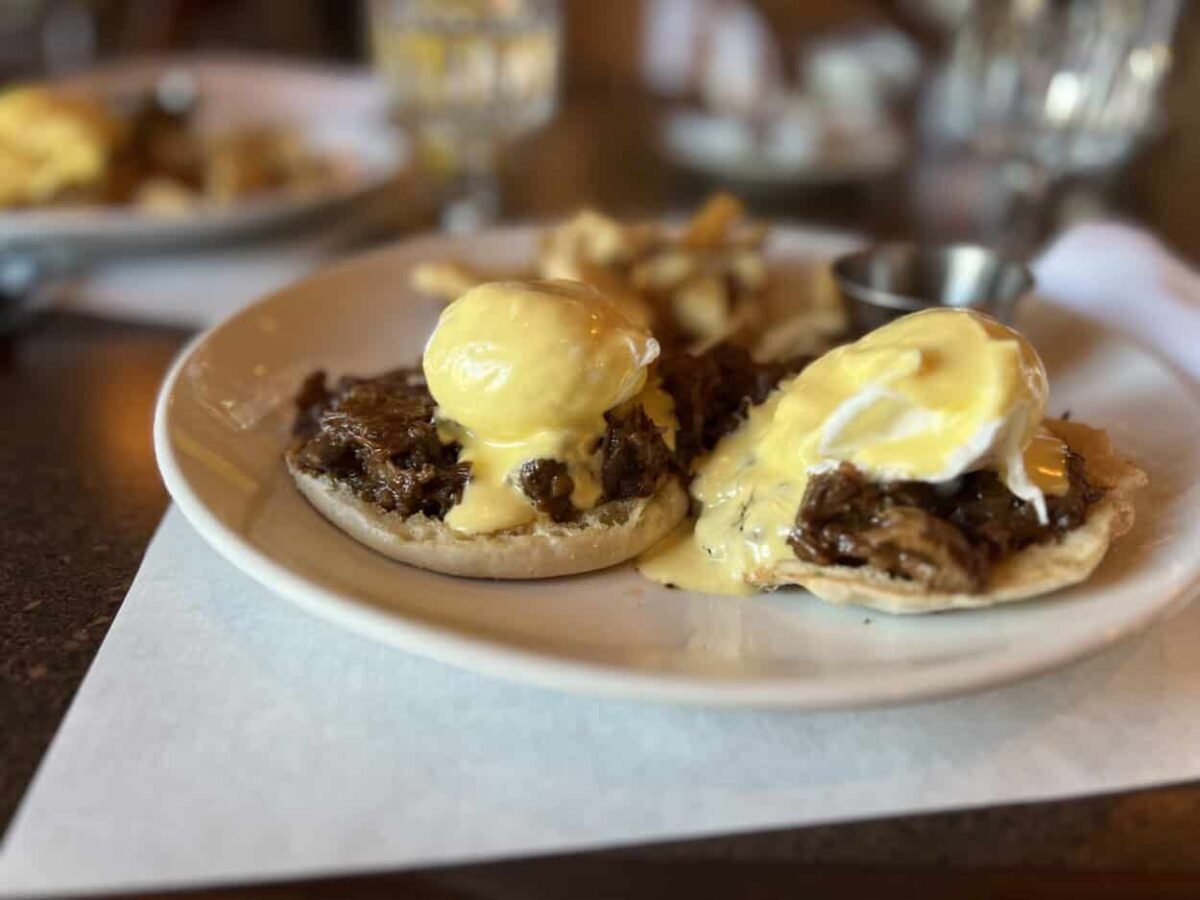
For a hearty start to your day, head to Theodore’s Dining Room, conveniently located inside the Rough Riders Hotel, just off the main lobby. The eatery features gourmet grub, including signature omelets, chuckwagon pancakes, creme brule French toast, a colossal caramel roll, pork & eggs, biscuits & gravy, and bison benedict. I ordered the bison benedict and loved the subtle barbecue flavor that perfectly complemented the poached egg. After that and a cup of bold coffee, I was ready to explore.
Plan Your Adventure
With short, rewarding hikes and a scenic drive that allows you to observe stunning landscapes and exotic wildlife, it is easy to see why Theodore Roosevelt National Park South Unit is so popular. The park and its gateway town gave Julie and me unique experiences and lifelong memories. Whether you want adventure or to find your smile again, North Dakota’s open spaces and natural beauty are just what the doctor ordered.
Featured image credit: Miles with McConkey