
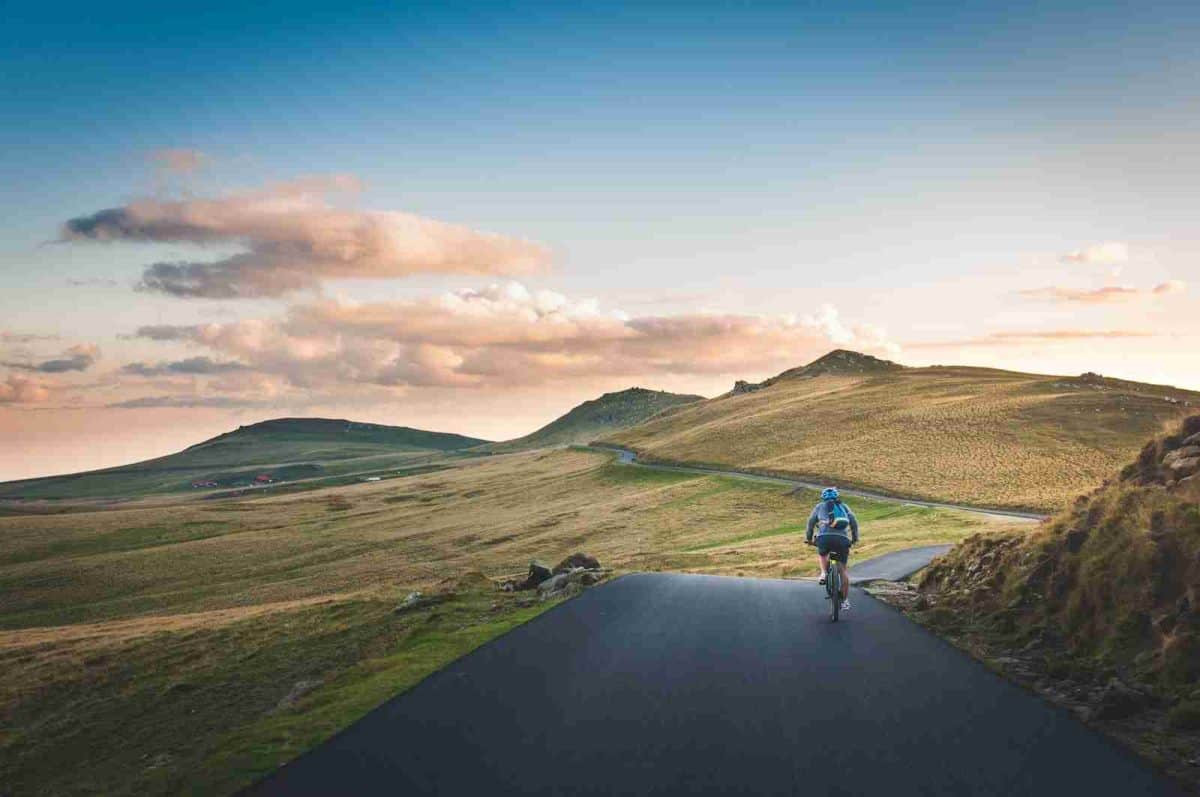
Could electric bicycles (e-bikes) someday become a primary exploration method in our national parks? Due to a surge in popularity, the National Park Service (NPS) recently sought public input to help further evaluate the viability of e-bikes throughout the national park system.
What is an E-Bike?
For those unfamiliar with e-bikes, they are bicycles with a motor and rechargeable batteries that assist the rider with pedaling. Riders can cycle further and faster with motor-enhanced foot power.
Class System
Laws for e-bikes can vary by state or country. The bicycle industry generally categorizes e-bikes by a three-class system based on top speed and components.
A motor only engages with class 1 e-bikes while the rider pedals. That pedal assistance stops when the bike reaches a speed of 20 miles per hour.
A class 2 e-bike offers pedal assistance but also has a throttle. A rider may use the motor exclusively to power the bike up to 20 miles per hour.
Class 3 e-bikes typically have a speedometer and assist up to 28 miles per hour.
Growth of the E-Bike Market
Technological advancements in bicycle components, quickly rechargeable batteries, and lightweight motors have led to the increased adoption of e-bikes as an efficient, eco-friendly, and convenient travel method.A market research study by Fortune Business Insights reveals a global e-bike market evaluation of $37.47 billion for 2022. The study projects the e-bike market to reach $43.32 billion this year.
Kevin Madzia, Information Technology Manager at Century Cycles in Peninsula, Ohio, says, “Currently, e-bike rentals are 15% to 20% of our overall bike rentals. 2022 probably saw the largest increase in our e-bike rental volume, between 10% and 15%. We expect a smaller percentage increase in 2023, possibly about 5%.”
Current Status of e-Bikes in National Parks
Naaman Horn, Public Affairs Specialist for the NPS Intermountain Regional Office, says, “E-bikes are a new emerging device being seen and used in parks and public lands.
This mode of transportation can have many benefits for parks and visitors, including making travel easier, expanding access for those with physical limitations, supporting active transportation to parks, and providing healthy recreation opportunities.
We are evaluating the potential national-level impacts of e-bike use in parks and considering any cumulative effects on resources and visitors across the national park system.
Park superintendents are authorized to allow e-bikes, where appropriate, on roads and trails where traditional bicycles are permitted.
Feedback from members of the public and local, State, Tribal, and Federal agencies will help us understand the potential impacts of e-bike use in parks across the country.”
White Sands National Park is one of the sites within Horn’s region. Bicyclists are permitted on Dunes Drive but may not participate in off-road biking. Currently, very minimal cycling activity occurs at the park.
A Unique Perspective
Cyclists may wonder what qualifies Century Cycles to comment on e-bike usage in national parks. The answer is that 100% of their e-bike rental customers ride in the Cuyahoga Valley National Park (CVNP).
Madzia says, “We are located in the middle of the park, and the Ohio & Erie Canal Towpath Trail (the Towpath) runs through our town. Although the Towpath is almost 100 miles long from end to end, the section within the CVNP is roughly 22 miles long, and we are located about in the middle of that 22-mile stretch.”
Many park visitors speculate on the volume of e-bikes in the national parks. Although each park site is different, bicycling is one of the most popular activities in CVNP. Madzia states, “Bike rental volume varies by season, but we average about 20 e-bike rentals per week.”
Safety and Complaints
When asked if CVNP has seen a surge in accidents due to increased e-bike rentals, Madzia said, “No.” As far as complaints go, he elaborated, “There have always been and always will be complaints from user groups about other user groups using the trails. Runners and walkers complain that cyclists pass too fast or don’t give warning. Cyclists complain that runners and walkers don’t hear their warnings because they’re too engrossed in phone conversations or listening to music.. There are also many complaints that walkers don’t supervise their children or pets properly. Since e-bikes have become more popular, some of these complaints involve e-bikes, but the overall number of complaints has not really increased.”
Another Perspective
Bar Harbor, Maine, is the gateway to Acadia National Park, one of the most popular parks along the east coast. The park has two unique types of bicycle paths.
Its main roads are paved and accommodate cars and bicycles, while the carriage roads consist of crushed rocks and allow pedestrians, bicyclists, and horse-drawn carriages.
Amanda Pollock, Public Affairs Officer for Acadia National Park, says, “Only Class 1 e-bikes are allowed on carriage roads in the park. Class 2 and Class 3 e-bikes are prohibited on carriage roads. All classes of e-bikes are permitted on roads open to motor vehicles.”
Pollock is excited that e-bikes will allow more visitors to explore the park’s forty-five miles of rustic carriage roads. However, she cautions riders, “When using Acadia’s carriage roads, it’s important to yield properly to other users (bikes to all others, pedestrians to horses).”
Pivotal Decision for Our National Parks
Whether or not mass adoption of e-bikes across our national park system occurs remains to be seen. Many factors go into such a decision. Some parks preserve areas of cultural and historical significance, while others protect delicate ecosystems with various wildlife and vegetation.
On the one hand, e-bikes make travel easier, expand access for visitors with physical limitations, reduce the carbon footprint compared to cars, and provide healthy recreation opportunities. However, the NPS must balance convenience and enhanced visitor experience with the potential impact on natural and cultural resources. They want to maintain the parks’ beauty, history, and values.
The NPS must also consider safety issues with more bicycle riders. Although exploring a national park by e-bike is compelling, the NPS must implement appropriate parameters and safety precautions to protect the parks and visitors. If all visitors, regardless of transportation mode, can learn to share the road, e-bikes offer an exciting way to explore natural wonders.
This article originally appeared on Media Decision.
Featured image credit: David Marcu
More Articles from Miles with McConkey