

Olympic National Park is one of the most diverse places you can visit in the Pacific Northwest, and the best things to do in Olympic National Park are the ones that stay with you long after you leave. Beaches, rainforests, mountains, and lakes all sit within the same region, yet each area feels completely different.
You do not need to see everything to have an unforgettable trip. These are the experiences that stood out most during our visit and the ones I would recommend to anyone planning their first adventure here.
If you are visiting for the first time, you may also find my guide to tips for first-time visitors helpful. It covers the things I wish I had known before arriving.
Disclosure: This post may contain affiliate links. If you make a purchase through one of these links, I may earn a small commission at no additional cost to you. Thanks for supporting Miles with McConkey.
Let’s dig into the experiences that make Olympic National Park so memorable.
Explore the Beaches
The beaches of Olympic National Park are some of the most dramatic on the West Coast, and with so many to choose from, it can be tough to know where to begin. These are the ones that gave us the most unforgettable moments.
Rialto Beach
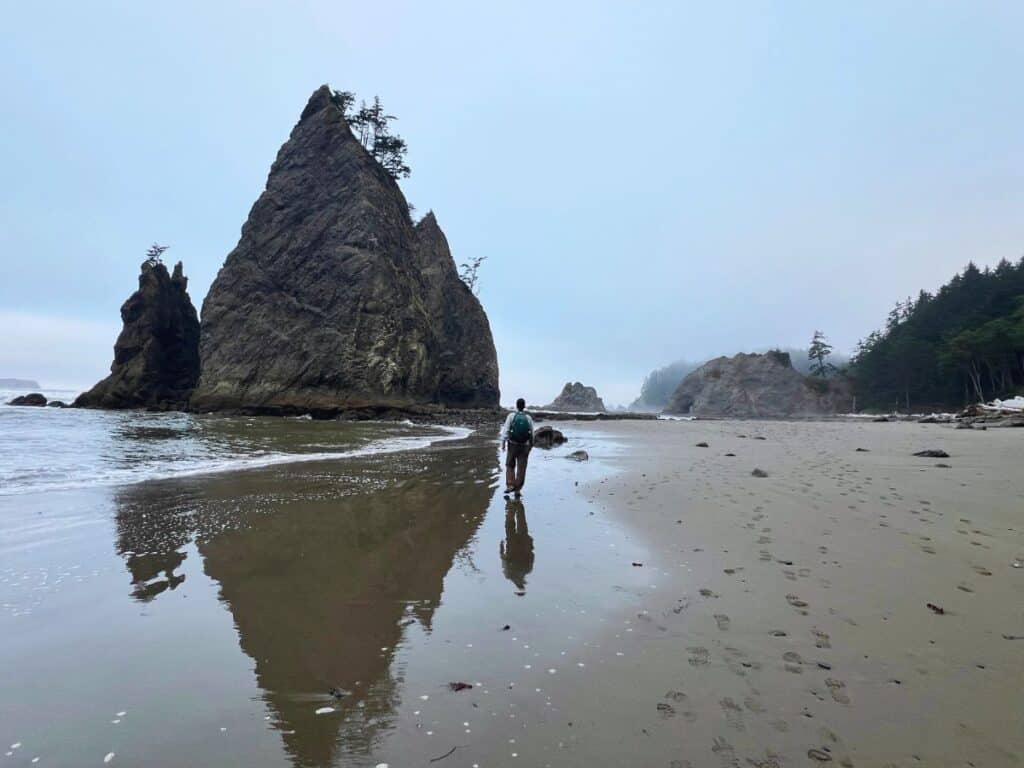
Rialto was the beach that surprised me the most. Just before sunset, an owl perched quietly in a tree near the parking lot, watching us as if it were welcoming us in its own calm way. After spending a few minutes with it, we walked onto the sand and found a piece of driftwood to sit on. The waves rolled in steady rhythms, the sky shifted into deep orange, and even though plenty of people had gathered for sunset, the moment felt peaceful and joyful, almost spiritual. It was one of those rare shared experiences where everyone seemed to pause and appreciate the same beauty.
We returned the next morning for low tide, when you can walk north along the beach to Split Rock and continue on to Hole in the Wall. I love sea stacks, and the scene delivered. The farther we walked, the more dramatic the coastline became. Crossing through Hole in the Wall at low tide feels like a secret adventure or unlocking a new level in a video game. It is one of the most unique experiences in the park.
We loved Rialto so much that we came back again the following evening to savor another sunset. With wildlife, a rewarding low tide walk, and two unforgettable sunsets, Rialto easily ranks as my number one beach in Olympic National Park.
Ruby Beach

Ruby Beach is the kind of place that makes you stop walking without even realizing it. The sea stacks rise straight out of the water, and the driftwood piles look like sculptures shaped by storms. There is a bench near the top of the trail that gives you a perfect view of the entire beach, and we sat there for a while just taking it all in.
We explored the beach for quite some time, soaking in the views of sea stacks and driftwood from every angle. On the way out, we lingered at the bench again, trying to hang onto that elevated view for a few more minutes. Truthfully, I did not want to leave, but I also wanted to see more of the park.
It is easy to see why Ruby is one of the most photographed spots in Olympic. It is beautiful from every angle.
Second Beach

Second Beach begins with a forest walk, where sunlight filters through the trees in long, soft beams. The trail feels peaceful and quiet until you reach the final descent, which is steep but manageable. When the beach comes into view, it feels like a reward. Sea stacks rise from the sand, driftwood lines the shore, and the whole scene feels untouched.
This is a great choice if you want a short hike that leads to a dramatic beach. Just remember that the climb back up from the sand starts with a steep ascent, so give yourself a little time and take it at your own pace.
Third Beach
Third Beach offers another forest-to-beach experience, but it feels more remote than the others. The trail winds through quiet woods before opening onto a wide stretch of sand where the sea stacks sit farther in the distance. The whole area has a calm, unhurried atmosphere that makes you slow down without even trying.
We enjoyed the walk and the sense of space once we reached the shoreline. It felt like a place where you could wander without a plan, listening to the waves and watching the light shift across the water. Third Beach may not be as dramatic as Rialto or Ruby, but it has a peaceful charm that makes the visit worthwhile.
Which Beach Should You Choose
Honestly, none of the beaches are bad. If I had to rank them, I would choose Rialto first, then Ruby, then Second, then Third. Rialto had the sunset, the owl, Split Rock, and Hole in the Wall. It is hard to go against that combination.
If you are planning your visit around weather or tides, my best time to visit Olympic National Park guide breaks down what each season feels like and what to expect.
Visit the Rainforests

The rainforests of Olympic are some of the most peaceful places I have ever walked through. The trees are covered in moss, the air feels cool and quiet, and everything seems to move at a slower pace. While the park has several rainforest areas, these are the ones we explored on our trip.
Hoh Rain Forest
The Hoh is the most famous rainforest in the park, and starting early makes a big difference. We arrived in the morning and saw a few deer crossing the road and grazing near the trailhead, a quiet moment that set the tone before the crowds arrived. The moss drapes from the branches like curtains, the forest floor feels soft under your feet, and even with other visitors around, the whole place feels ancient and calm.
We hiked both the Hall of Mosses and the Spruce Nature Trail and enjoyed them equally. Hall of Mosses is the iconic trail most people talk about, and it really is fantastic. The Spruce Trail has a bit less traffic and offers optional side adventures along the Hoh River, which makes it feel more open and exploratory. If you have time, I highly recommend doing both. They complement each other well, giving you a fuller sense of the rainforest.
Quinault Rain Forest
Quinault offers similar beauty with fewer crowds, and it feels peaceful from the moment you step onto the trail. We walked the Maple Glade Rain Forest Trail, a quiet loop where we heard birds calling through the trees in an otherwise still forest. The moss, ferns, and filtered light create a soft, calming atmosphere that makes you slow down and notice the details. It is a great choice if you want the rainforest experience without the busier feel of the Hoh.
See the Park’s Waterfalls
Olympic has several waterfalls, but two of them stood out during our visit.
Marymere Falls
Marymere Falls is a peaceful walk through a beautiful forest near Lake Crescent Lodge. The rushing water and moss-covered trees create a soothing atmosphere, and the trail feels calm from the moment you step onto it. As we made our way along the path, we watched red-breasted mergansers swimming upstream. It was one of those small moments that made the hike feel even more special and reminded us how alive the park is.
Sol Duc Falls
Sol Duc Falls is one of the most unique waterfalls in the park. The trail crosses footbridges and leads to a viewpoint where the water cascades below in several channels. The sound of the falls blends with the surrounding forest, creating an atmosphere that feels both powerful and peaceful. It is a memorable stop and well worth the short hike.
Take in the Views at Hurricane Ridge
Hurricane Ridge offers some of the best mountain scenery in the park, and it is one of the places where Olympic feels its most expansive.
Sunrise at Hurricane Ridge

We arrived before sunrise and watched fog settle into the valleys below. As the light changed, the mountains shifted from blue to gold, and the whole scene felt inspiring from high above the valley. Several deer crossed the path in front of us, big and calm with antlers, moving up the hillside to feed. They ignored us completely, as if we were just another part of the landscape. For a moment, everything felt still. It was one of the most peaceful experiences of our trip.
Drive Obstruction Point Road
Obstruction Point Road is narrow and gravel, with a few bends that sit close to the edge of a dropoff. When cars approach from the opposite direction, there is very little room to pass. A couple of spots made my stomach churn as I looked over the side and saw how far the land dropped away. But the farther we drove, the more the rugged, remote beauty of this part of the park revealed itself. The views are wide open, the mountains feel close, and the quiet lets you see wildlife in areas that feel untouched.
Relax at Lake Crescent
Lake Crescent is one of the most peaceful places in Olympic National Park. The water is deep blue, the mountains rise straight from the shoreline, and the whole area feels calm in a way that makes you want to slow down.
Julie and I were mesmerized by the tranquil, mountain-reflecting water as we stood on the docks and sat in the Adirondack chairs near the lodge. We could have lingered for hours, but we also wanted to hit the trails.
Do not skip this area. The beaches and rainforests often get the hype, and rightfully so, but the park’s lakes are bigger and more stunning than most people expect.
Enjoy the Lakeside Views
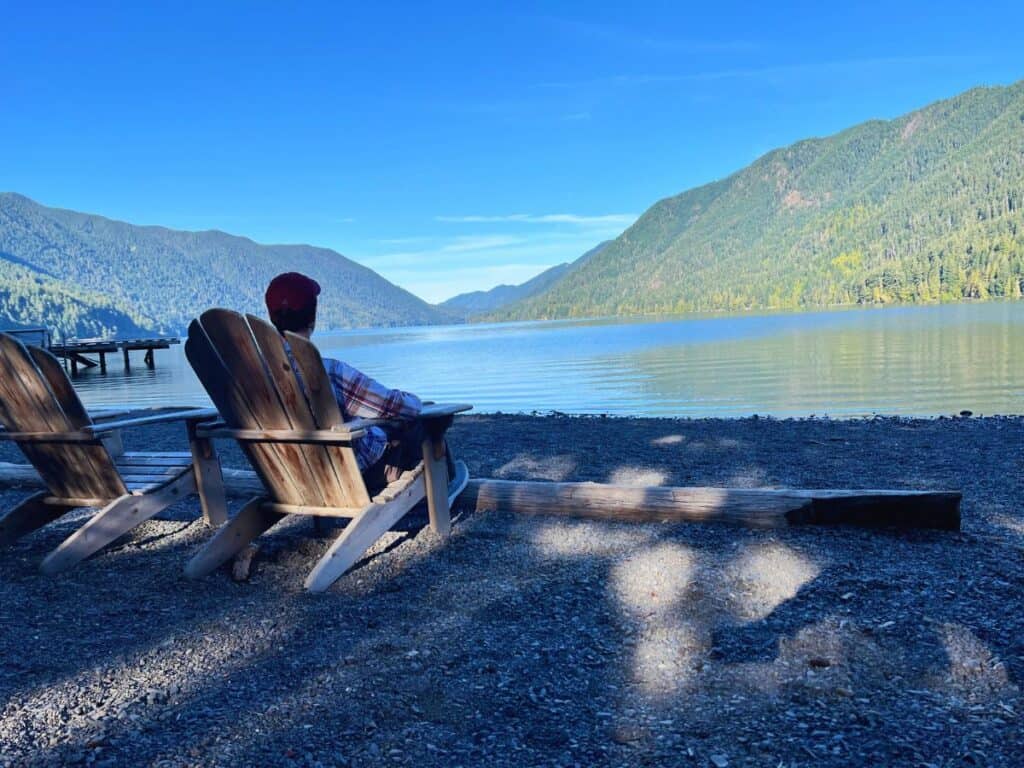
We started our morning in the Adirondack chairs, watching the reflections ripple across the surface of the lake. Breakfast at the lodge is a great way to begin the day if you want a slow, relaxing start. The whole scene feels peaceful and grounded, the kind of moment that stays with you long after you leave.
Walk to Devil’s Punch Bowl
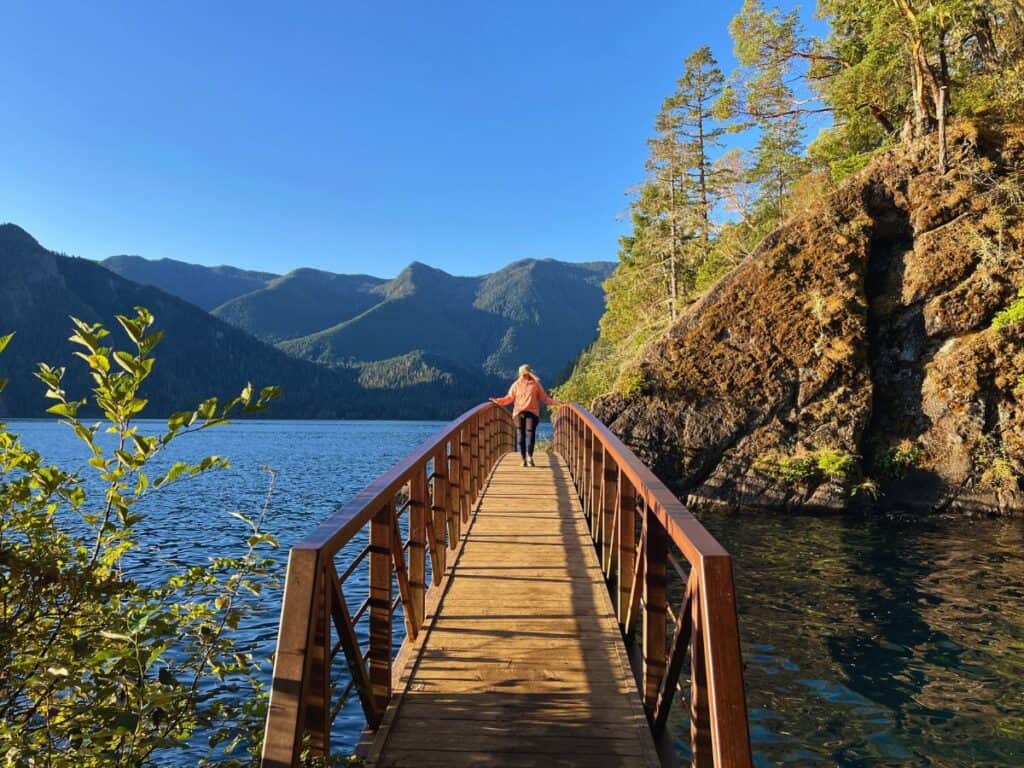
The walk to Devil’s Punch Bowl is short and easy, and the trail stays quiet even when the area gets busy. Just before you reach the footbridge, the path splits. One direction leads straight to the bridge overlooking the deep blue water, and the other leads to a small tunnel carved into the hillside.
The signs make it clear, but if you skip the full loop, you could miss the tunnel entirely. The loop is short and worth the time. The tunnel adds another layer to the experience, making the walk feel a little more adventurous.
I will admit that I was not impressed by the photos I saw beforehand, but in person, it felt completely different. Walking onto the footbridge and seeing the mountains in the distance, the blue water below, and the lush green all around gave me chills. Julie loved this spot most of all, and it quickly became one of her favorite things in the entire park.
From the calm waters of Lake Crescent, we made our way toward the coast for a stop that felt completely different from anything else in the park.
Visit the Tree of Life
The Tree of Life sits on Kalaloch Beach and is one of the most unusual sights in the park. Most of its roots hang completely exposed, suspended in the air between two eroded cliffs, yet the tree continues to survive against all odds. Standing beneath it feels a little surreal. You can hear the waves, see the roots stretching out like ribs, and wonder how something so fragile-looking can still be alive.
It is a quick stop, but it is worth seeing in person. The Tree of Life is one of those places that makes you pause for a moment and appreciate the strange resilience of nature.If you want to learn how to say the names of places like Kalaloch, Hoh, and Quinault correctly, my guide on how to pronounce Olympic’s most beloved places can help.
FAQ
Before wrapping up, I wanted to answer a few questions that often come up for visitors.
Yes. The park is spread out, but each region has its own cluster of highlights. Beaches sit near each other, Lake Crescent pairs well with Marymere Falls, and Hurricane Ridge stands on its own. Planning by region helps reduce drive time.
You do not need reservations to enter the park, but some lodges and campgrounds book early. Hurricane Ridge can have seasonal road closures, so checking conditions before you go is helpful.
Most beaches are safe to explore, but the waves can be powerful and unpredictable. Driftwood logs can shift with the tide, and tide‑pooling areas can get slippery, so keeping a close eye on kids is important. Rialto, Ruby, and Second Beach are popular choices for families.
Yes. Many visitors pair the Hoh Rain Forest with nearby beaches like Ruby or Rialto. It makes for a full but rewarding day that shows off two very different sides of the park. If you want to hike multiple beaches and explore more than one rainforest area, multiple days are a better fit.
If you are comfortable with narrow gravel roads and steep drop-offs, the views are incredible. It feels remote and rugged, and you may see wildlife in the park’s quieter areas. If you prefer wider, paved roads, Hurricane Ridge alone still delivers amazing scenery.
Final Thoughts
Olympic National Park rewards curiosity. Every region feels different, and each one offers a moment that stays with you long after you leave. These were the experiences that shaped our trip — the ones that made us slow down, look closer, and appreciate how wild and varied this place truly is. Whether you explore one region or several, Olympic has a way of giving you exactly the kind of adventure you need.
Don’t miss our full guide to Olympic!
It’s packed with tips and insights to help you plan a trip you’ll love.
Featured image credit: Miles with McConkey